Can You Buy a Property With an IRS Lien?

Summary
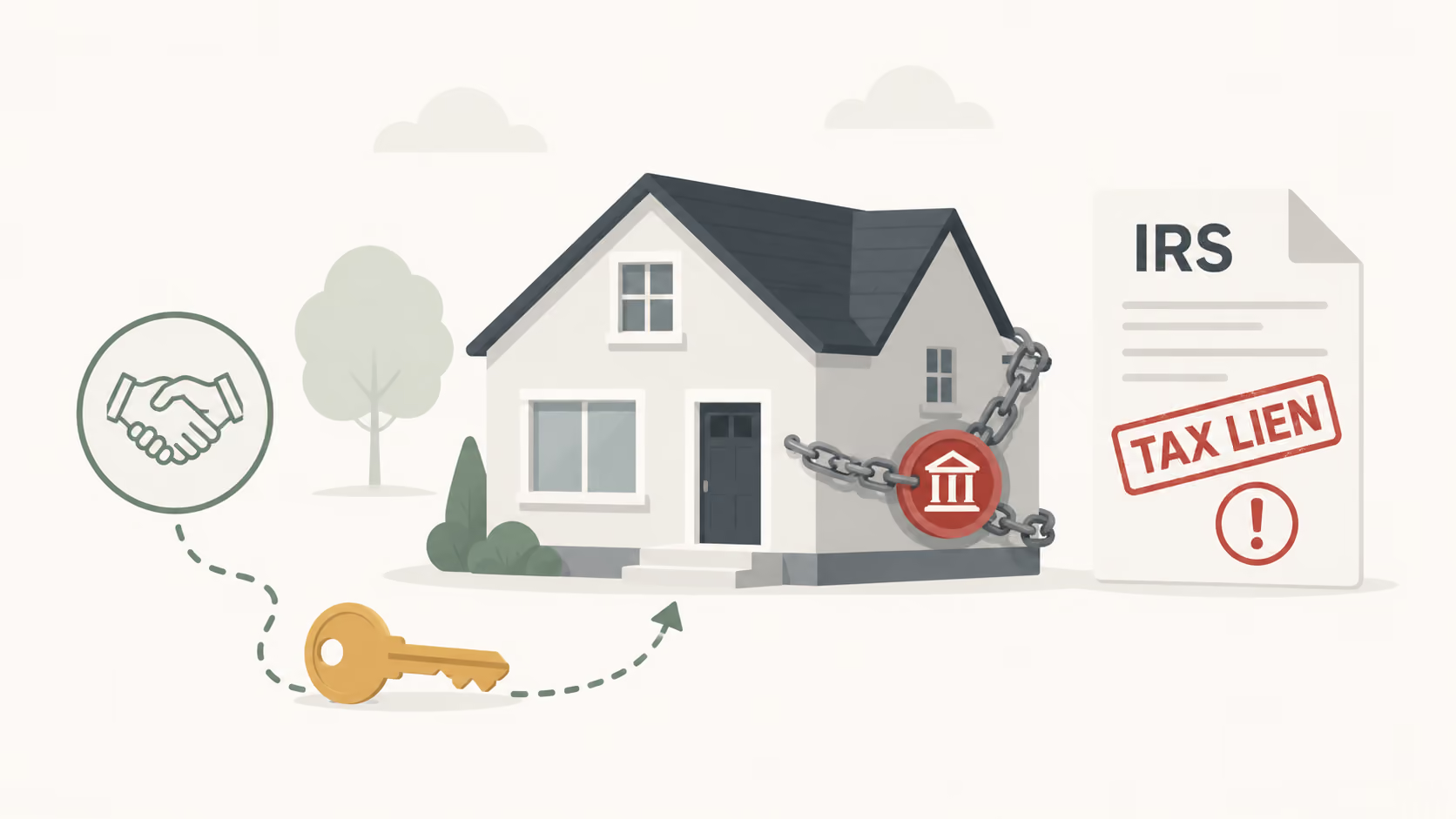
Yes, you can buy property with an IRS lien, but it requires careful planning and the right financing strategy. The team at Brightbridge Realty Capital specializes in helping investors navigate these complex transactions with bridge loans and alternative financing solutions.
Discovering that a property you want to buy has an IRS lien attached doesn't have to kill your deal. While it certainly complicates the transaction, experienced investors know that properties with tax liens often represent significant opportunities for below-market acquisitions. The key is understanding how these liens work and having the right financing partner who can move quickly when traditional lenders won't.
IRS liens create urgency that works in your favor as a buyer. Property owners facing federal tax obligations often need to sell fast, which means you're negotiating from a position of strength. However, these deals require expertise in lien resolution, title work, and most importantly, access to flexible financing that can close while you sort out the tax complications.
Most conventional lenders won't touch properties with federal tax liens, viewing them as too risky or complex for their standard underwriting processes. This is exactly why savvy investors partner with specialized lenders who understand these deals inside and out. When you know how to structure the transaction and payoff correctly, properties with IRS liens become profitable opportunities rather than problems to avoid.
Understanding IRS Liens and Property Purchases
An IRS lien represents the government's legal claim against a property due to unpaid federal taxes by the current owner. This lien attaches to all assets owned by the taxpayer, including real estate, and must be addressed before clear title can transfer to you as the buyer. The lien amount includes the original tax debt plus penalties and interest that continue accruing until paid in full.
The good news is that IRS liens don't prevent property sales - they just complicate them. The Internal Revenue Service actually prefers property sales because they provide a clear path to collect what they're owed. When structured properly, the sale proceeds pay off the lien at closing, allowing you to take clean title without inheriting the tax debt.
However, timing becomes critical in these transactions. You need financing that can close quickly while the lien payoff amount is calculated and verified. Traditional lenders often take 30-45 days just for underwriting, during which time the lien amount increases and deal terms can change. The experts at Brightbridge Realty Capital have found that bridge financing provides the speed and flexibility these deals require.
The key factors that determine whether your purchase will work include:
- Lien amount vs. property value: The total debt must leave enough equity to make the deal profitable after your purchase
- Seller cooperation: The property owner must be willing to work with the IRS to facilitate the payoff process
- Title company expertise: Your closing team needs experience with federal tax lien releases and payoff procedures
- Financing flexibility: Your lender must understand these transactions and move faster than conventional mortgage timelines
Many investors assume they need to negotiate with the IRS directly, but that's not how these purchases work. You're buying from the property owner, who remains responsible for satisfying their tax debt through the sale proceeds. Your role is ensuring the numbers work and having financing ready to close when the lien payoff amount is confirmed.
The most successful investors in this space understand that IRS lien properties require a different approach to due diligence and deal structuring. You're not just evaluating the property's condition and market value - you're also analyzing the tax debt situation and timeline for resolution.
Financing Options for Properties with IRS Liens
Bridge loans represent the most effective financing solution for properties with federal tax liens because they're designed for exactly these types of complex situations. Unlike conventional mortgages that require clean title before funding, bridge lenders evaluate the deal based on the property's value after lien resolution. This allows you to close quickly while the title issues are being cleared.
The team at Brightbridge Realty Capital structures these deals by calculating the total project cost including purchase price, lien payoff, and any immediate repairs needed. The loan amount covers everything needed to acquire clean title and stabilize the property. This comprehensive approach eliminates the cash flow gaps that kill many lien property deals for undercapitalized investors.
Speed matters more in lien situations than almost any other type of real estate transaction. Interest and penalties continue accruing on the tax debt, which means delays cost money for both you and the seller. Bridge financing can close in 7-10 days once terms are agreed upon, compared to 30-60 days for conventional loans that likely won't approve these deals anyway.
Your financing strategy should address these critical elements:
- Total project capital: Loan amount covering purchase price, lien payoff, closing costs, and immediate property improvements
- Quick closing capability: Ability to fund within days of lien payoff confirmation rather than weeks
- Flexible underwriting: Evaluation based on after-repair value and deal economics rather than rigid title requirements
- Exit strategy alignment: Loan terms that support your plan whether that's refinancing, selling, or holding as rental property
Hard money loans can work for IRS lien properties, but they typically require more cash down and offer shorter terms than bridge financing. The higher cost of capital eats into your profit margins, which are already compressed by the lien payoff requirements. Most experienced investors prefer bridge loans for the better terms and longer stabilization period.
Cash purchases obviously provide the most flexibility, but even cash buyers benefit from bridge financing in these deals. Using a bridge loan preserves your cash for other opportunities while still providing the speed and certainty these transactions require. You can always pay off the bridge loan quickly if you prefer, but having the financing in place gives you options.
Deal Structure and Risk Management
Successful IRS lien property purchases require careful coordination between multiple parties to ensure the transaction closes smoothly and you receive clear title. Your purchase contract should include specific contingencies related to lien payoff verification and title clearance. The deal structure must protect you from cost overruns if the final lien amount exceeds initial estimates.
Smart investors use a two-step closing process for these deals. First, you close on the financing and take the title subject to the lien. Immediately afterward, the lien is satisfied from the loan proceeds and the title company records the release. This approach prevents timing issues that can derail the transaction if lien payoffs and purchase closings aren't perfectly synchronized.
Fouladi and his team of loan experts have structured hundreds of these transactions and emphasize the importance of working with title companies experienced in federal tax lien releases. Not every closing agent understands the IRS payoff process or knows how to coordinate the required documentation. The wrong title company can turn a straightforward deal into a nightmare of delays and complications.
Your risk management strategy should include these protective measures:
- Lien payoff contingency: Contract language allowing you to walk away if the final payoff amount exceeds agreed-upon limits
- Title insurance requirements: Coverage that protects against any remaining lien claims after the supposed release
- Inspection timeline coordination: Property evaluation scheduled around lien verification to avoid unnecessary costs
- Backup financing options: Secondary loan sources in case your primary lender encounters unexpected issues
The biggest risk in these deals isn't the IRS lien itself, but rather poor planning that leads to cost overruns or timeline failures. Properties with tax liens often have other issues like deferred maintenance, utility shutoffs, or additional creditor claims. Your due diligence process needs to uncover these problems before you're committed to closing.
One advantage of working with experienced bridge lenders is their ability to spot potential deal-killers early in the process. The loan experts at Brightbridge Realty Capital review the entire transaction structure, not just the property value, which helps investors avoid costly mistakes. Their underwriting process identifies risks that inexperienced investors often miss until it's too late to back out gracefully.
FAQs
Can I get a conventional mortgage on a property with an IRS lien?
Conventional mortgages typically won't approve properties with outstanding IRS liens because these government claims create title defects that violate standard lending guidelines. Banks require clear, marketable title before funding, and federal tax liens prevent this until they're satisfied. Brightbridge Realty Capital's approach to funding focuses on bridge loans specifically designed for these complex situations, allowing investors to close quickly while lien resolution occurs. The bridge financing covers both the purchase price and lien payoff, enabling you to acquire clean title and then refinance into conventional financing if desired.
How long does it take to close on a property with an IRS lien?
Timeline depends heavily on your financing choice and the complexity of the lien situation. Bridge loans can close within 7-10 days once lien payoff amounts are verified, while conventional lenders often won't even consider these deals. The experts at Brightbridge Realty Capital have found that the IRS typically takes 3-5 business days to provide payoff quotes and lien release documentation once requested. Total transaction time usually runs 2-3 weeks from contract to closing, compared to 60+ days for traditional mortgages that ultimately get rejected anyway. Speed becomes crucial because interest continues accruing on the tax debt.
What happens if the lien amount is higher than expected?
Smart purchase contracts include contingencies that protect you from lien payoff overruns beyond predetermined limits. If the final IRS payoff demand exceeds your budgeted amount by more than an agreed-upon threshold, you can renegotiate the purchase price or walk away from the deal. The team at Brightbridge Realty Capital always reviews these contingency clauses during loan structuring to ensure investors have adequate protection. Your bridge loan should also include flexibility to adjust the loan amount within reason if minor payoff variations occur. This contingency planning prevents surprises that could make profitable deals unprofitable.
Do I inherit the tax debt when buying a property with an IRS lien?
No, you don't inherit the previous owner's tax obligations when the lien is properly satisfied at closing. The IRS lien attaches to the property but remains the legal responsibility of the taxpayer who incurred the debt. When structured correctly, your purchase transaction pays off the lien through closing proceeds, and the IRS releases their claim against the property. BBRC founder Zak Fouladi emphasizes the importance of obtaining proper lien release documentation to ensure clear title transfer. However, if the lien isn't properly satisfied, it could remain attached to the property, which is why experienced title companies and lenders are essential.
Can I negotiate with the IRS to reduce the lien amount?
As the property buyer, you typically don't negotiate directly with the IRS about lien amounts - that's between the taxpayer and the government. However, the current property owner may be able to arrange payment plans or settlements that reduce the total payoff required at closing. Partners in real estate loans at Brightbridge Realty Capital often see situations where sellers work with tax professionals to minimize lien payoffs before sale. Your role is ensuring the final numbers work for your investment goals and having financing ready to close when lien terms are finalized. Sometimes the seller's motivation to close quickly gives you leverage to negotiate a lower purchase price that offsets high lien amounts.
What types of properties with IRS liens make good investments?
Properties with substantial equity beyond the lien amount offer the best opportunities, particularly in strong rental markets where DSCR financing will be available after acquisition. Single-family homes and small multifamily properties work well because they're easier to rehab and refinance quickly. The loan experts at Brightbridge Realty Capital look for deals where the combined purchase price and lien payoff total no more than 70-75% of after-repair value, leaving room for profits and unexpected costs. Avoid properties where lien amounts approach or exceed market value, as these rarely provide adequate returns even with below-market purchase prices.
How do I find properties with IRS liens for sale?
These opportunities come through multiple channels including wholesalers, direct mail campaigns targeting tax lien lists, courthouse research, and networking with attorneys handling tax resolution cases. Many property owners facing IRS liens need to sell quickly, creating below-market opportunities for prepared investors. Experts at Brightbridge Realty Capital recommend building relationships with tax professionals, bankruptcy attorneys, and wholesalers who regularly encounter these situations. Public records research can identify properties with recently filed tax liens, allowing you to approach owners proactively. The key is having financing ready to move quickly when opportunities arise, as motivated sellers often accept the first reasonable offer.
What documentation do I need for financing a lien property purchase?
Your lender will require standard property and borrower documentation plus specific items related to the lien situation. This includes the IRS lien filing, estimated payoff quotes, purchase contract with lien contingencies, and title commitment showing all encumbrances. Fouladi and his team of loan experts also review property condition reports, repair estimates, and your exit strategy plans to ensure the deal economics work after lien resolution. You'll need proof of experience with similar transactions or strong net worth to qualify for bridge financing on these more complex deals. Having all documentation organized upfront speeds the underwriting process significantly when timing matters for closing.


