How Long Does Escrow Typically Take?
Summary
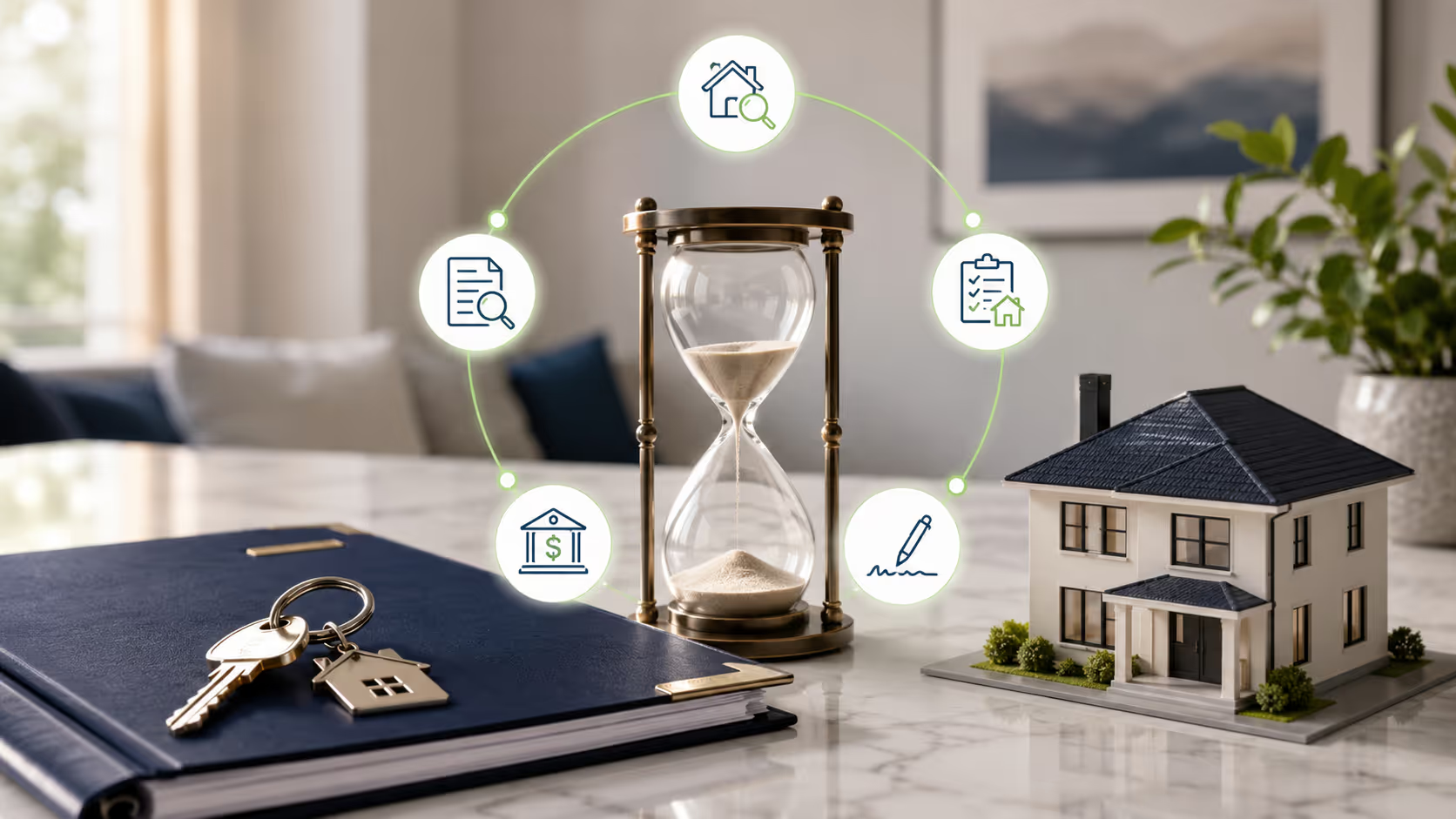
Escrow typically takes 30-45 days for traditional financing, but investment property deals can vary significantly based on financing type and property complexity. The team at Brightbridge Realty Capital helps investors navigate these timelines effectively.
The escrow timeline question keeps every real estate investor awake at night, especially when you're juggling multiple deals or racing against contract deadlines. You've found the perfect property, negotiated the price, and now you're staring at calendar dates wondering if your financing will close on time. The truth is that escrow timelines vary dramatically based on your financing strategy, property type, and deal complexity.
Most investors assume all escrow periods follow the same 30-day script they hear about in residential real estate circles. That assumption costs deals and creates unnecessary stress when reality hits. Investment properties operate on different timelines, with different challenges, and different solutions than owner-occupied homes.
Understanding these timelines upfront allows you to structure better offers, negotiate realistic contract terms, and avoid the costly extensions that eat into your profits. Let's break down the real timeline expectations for different financing scenarios and property types that matter to serious investors.
Traditional Financing Timelines and Investor Realities
Traditional bank financing for investment properties typically requires 45-60 days from contract to closing, not the 30 days you might expect from residential lending. Banks move slowly on investor deals because they require extensive documentation, multiple property appraisals, and committee approvals that don't exist in standard homebuyer transactions. Your deal competes with their entire loan pipeline, and investment properties rarely get priority treatment.
The documentation requirements alone add weeks to traditional timelines. Banks want two years of tax returns, profit and loss statements for rental properties, lease agreements, management contracts, and detailed financial projections for the subject property. Each document gets reviewed by multiple departments, creating bottlenecks that push your closing date further out.
Property condition issues compound these delays significantly. Traditional lenders often require repairs before funding, environmental studies for older properties, and detailed inspections that can take weeks to schedule and complete. When issues arise, you're looking at additional delays while contractors provide estimates and complete work before your lender will proceed.
Here are the key factors that extend traditional financing timelines:
- Documentation review cycles: Multiple departments review investor files, creating 2-3 week delays between submission and approval decisions
- Property condition requirements: Banks often require pre-closing repairs, inspections, and environmental assessments that add 10-20 days
- Committee approval processes: Investment loans require committee approval rather than automated underwriting, adding 1-2 weeks minimum
- Title and survey complications: Investment properties often have complex ownership histories requiring additional research and documentation
The experts at Brightbridge Realty Capital see investors lose deals regularly because they assume traditional financing will close in 30 days. Sellers know these limitations and often favor cash offers or faster financing options when multiple offers compete. Your financing choice directly impacts your competitiveness in today's market.
Smart investors build 60-day timelines into their traditional financing strategies and negotiate extension options upfront. This approach protects your earnest money and gives you flexibility when inevitable delays occur.
DSCR and Alternative Lending Speed Advantages
DSCR loans revolutionize escrow timelines because they eliminate the personal income documentation that slows traditional lending. Instead of analyzing your tax returns and employment history, DSCR lenders focus purely on the property's rental income potential and your down payment. This streamlined approach typically closes in 21-30 days rather than the 45-60 days required for traditional financing.
The speed advantage comes from simplified underwriting requirements that focus on deal metrics rather than borrower complexity. DSCR lenders evaluate the property's rent roll, local market rents, and basic borrower qualifications without diving into personal financial histories. Your loan approval depends on the property's ability to service the debt, not your individual tax situation or employment documentation.
Portfolio lenders and private money sources move even faster because they control their entire approval process internally. Without external investors, government regulations, or committee structures, these lenders can approve and fund deals in 14-21 days when all documentation is complete. The trade-off is typically higher interest rates, but the speed advantage often justifies the cost for competitive deals.
Key speed factors in alternative lending include:
- Simplified documentation requirements: Focus on property performance rather than extensive personal financial history reduces review time
- Internal decision making: Portfolio lenders avoid external approval processes that add weeks to traditional timelines
- Property-focused underwriting: Evaluation based on rental income and market data rather than complex borrower analysis
- Streamlined appraisal processes: Established relationships with appraisers and automated valuation models reduce property evaluation time
Bridge financing offers the ultimate speed when you need to close quickly and refinance later. Bridge lenders can close in 7-14 days because they focus primarily on the asset value and your exit strategy rather than long-term cash flow analysis. This option works perfectly when you're competing against cash buyers or need to close before your permanent financing is ready.
The loan experts at Brightbridge Realty Capital structure financing strategies that match your timeline requirements with the best available rates and terms. Speed isn't always the primary goal, but having options allows you to compete effectively and structure better deals.
Property Type and Deal Complexity Factors
Single-family rental properties typically close faster than multi-unit buildings because appraisals are simpler and comparable sales data is more readily available. A three-bedroom house in a suburban neighborhood has dozens of recent comparables, while a 12-unit apartment building requires specialized appraisal expertise and income analysis that takes additional time. Your property type directly impacts your escrow timeline regardless of financing choice.
Multi-family properties require rent rolls, lease agreements, operating expense documentation, and detailed financial analysis that single-family properties don't need. Lenders want to see current occupancy rates, lease terms, tenant quality, and historical operating expenses before approving financing. Each additional unit adds complexity and documentation requirements that extend the underwriting timeline.
Commercial and mixed-use properties operate on entirely different timelines because they require specialized appraisals, environmental studies, and zoning verification that residential properties skip. A retail building with office space above needs commercial appraisers, environmental assessments, and detailed lease analysis that can add 2-4 weeks to your closing timeline. The more complex your property, the longer your escrow period needs to be.
Timeline factors by property complexity include:
- Appraisal complexity: Single-family homes get standard residential appraisals while multi-family requires specialized income approach analysis
- Documentation volume: More units mean more leases, more tenant information, and more financial records to review and verify
- Inspection requirements: Commercial properties often need environmental assessments, structural engineering reports, and specialized inspections
- Regulatory compliance: Mixed-use and commercial properties may require zoning verification, permit research, and compliance documentation
Condition issues multiply timeline impacts on complex properties. A foundation problem in a single-family house might require one contractor estimate, while the same issue in a 20-unit building needs engineering reports, multiple contractor bids, and detailed repair cost analysis. The stakes are higher, so lenders take more time to evaluate and approve solutions.
Fouladi and his team of loan experts at Brightbridge Realty Capital help investors understand these timeline realities upfront so they can structure appropriate contract terms and avoid costly delays. Knowing what to expect allows you to negotiate better deals and avoid the extensions that reduce your profits and stress your relationships with sellers.
FAQs
What's the fastest possible escrow timeline for investment property purchases?
Bridge financing through private lenders can close in as little as 7-10 days when all documentation is ready and the property is straightforward. However, this speed comes with higher interest rates and shorter loan terms. Brightbridge Realty Capital's lending specialists work with investors who need these rapid closings to compete against cash buyers. The key is having your documentation prepared in advance and working with lenders who control their entire approval process internally rather than relying on external underwriters or committees.
Why do investment property escrows take longer than residential purchases?
Investment properties require additional documentation like rent rolls, lease agreements, operating expense history, and detailed financial analysis that owner-occupied homes don't need. Lenders also apply stricter scrutiny to investment deals because they carry higher risk. The team at Brightbridge Realty Capital explains that banks typically require committee approval for investment loans rather than automated underwriting, adding 1-2 weeks to the process. Additionally, investment property appraisals are more complex because they must consider both market value and income potential, requiring specialized appraisers who have longer turnaround times.
How can I speed up my investment property closing timeline?
Preparation is everything for faster closings. Have all your documentation ready before you make offers, including financial statements, proof of funds, and pre-approval letters. Consider DSCR loans or portfolio lenders who can close in 21-30 days rather than traditional banks that need 45-60 days. Experts at Brightbridge Realty Capital recommend establishing relationships with multiple lenders so you have options when timing is critical. Also, order inspections and appraisals immediately after contract acceptance rather than waiting for lender requirements, and negotiate extension options in your purchase contract to protect against unexpected delays.
What documents should I prepare in advance to avoid escrow delays?
Essential documents include two years of tax returns, current financial statements, proof of funds for down payment and closing costs, existing property lease agreements and rent rolls, and pre-approval letters from your lender. For multi-family properties, also gather operating expense records, tenant applications, and maintenance records. Loan experts at Brightbridge Realty Capital emphasize that having clean, organized documentation packages can cut 1-2 weeks off your closing timeline. Digital organization helps too - scan everything and keep it readily accessible for quick lender submission when you find the right deal.
Do multi-family properties always take longer to close than single-family rentals?
Generally yes, because multi-family properties require more complex appraisals, detailed rent roll analysis, and additional documentation for each unit. However, the financing type matters more than property type in many cases. A 4-unit building with DSCR financing might close faster than a single-family house with traditional bank financing that requires extensive personal income documentation. The experts at Brightbridge Realty Capital help investors choose financing strategies that optimize timeline based on both property complexity and loan requirements. Portfolio lenders who specialize in multi-family deals often move faster than traditional banks even on complex properties.
Should I negotiate longer escrow periods to avoid timeline stress?
Smart investors negotiate realistic timelines based on their financing choice rather than defaulting to 30-day periods that work for cash buyers. If you're using traditional bank financing, request 45-60 days to avoid costly extensions. However, longer timelines can hurt your competitiveness against other offers. Brightbridge Realty Capital's approach focuses on matching your timeline to your financing strategy while negotiating extension options that protect your earnest money. Consider offering shorter timelines with alternative financing like DSCR loans or bridge financing to make your offers more attractive while still ensuring successful closings.
What happens if my escrow doesn't close on time?
Most purchase contracts include automatic extension provisions, but these often come with penalties or additional earnest money requirements. Sellers may also have the right to cancel and keep your earnest money if you can't close within the contracted timeframe. BBRC founder Zak Fouladi has seen investors lose deals and forfeit significant earnest money due to financing delays. That's why having backup financing options and realistic timeline expectations from the start protects your investment. Some investors negotiate multiple extension options upfront, paying small fees for flexibility rather than risking large earnest money deposits on tight timelines.
How do title issues affect escrow timelines, and can I prevent them?
Title problems can add 1-4 weeks to your closing timeline depending on complexity. Common issues include unreleased liens, boundary disputes, or missing estate documentation from previous owners. Investment properties often have more complex ownership histories that create title challenges. Partners in real estate loans at Brightbridge Realty Capital recommend ordering title reports immediately after contract acceptance rather than waiting for lender requirements. This early identification allows time to resolve issues without delaying your closing. Also, consider title insurance policies that cover common problems, and work with experienced real estate attorneys who can expedite resolution of title defects.


