Beyond the Brochure: What to Look for in Hudson Valley Rehab Centers

Summary
Choosing a Hudson Valley rehab? Discover expert tips, programs, and facilities for physical recovery or addiction treatment.
Why Choosing the Right Hudson Valley Rehab Center Matters

Hudson Valley rehab centers serve a diverse and growing population with a wide spectrum of needs—from substance abuse recovery and mental health support to physical therapy after a major surgery or life-altering injury. The region, known for its scenic beauty and historic towns, presents a unique backdrop for healing. However, this same area faces challenges common to many parts of the nation, including the ongoing opioid crisis and an aging population requiring more post-acute care. Whether you're seeking addiction treatment in Poughkeepsie, skilled nursing care in Newburgh, or specialized therapies in White Plains, the region offers a wealth of options across Dutchess, Rockland, Sullivan, Orange, and Westchester Counties.
Choosing the right facility is one of the most critical decisions a person or family can make. It's a choice that goes far beyond location and amenities; it's about finding a partnership in health, a place where evidence-based care and genuine compassion intersect to create an environment ripe for recovery.
Quick Answer: What to Look for in Hudson Valley Rehab Centers
- Type of Care Needed: First, identify the primary need. Is it for substance abuse (requiring inpatient, outpatient, or detox services), physical rehabilitation (often in a skilled nursing or hospital setting), or a specialized therapy (like cardiac, orthopedic, or pelvic floor rehab)? Many individuals may require dual-diagnosis care for co-occurring mental health and substance use disorders.
- Accreditation and Licensing: Ensure the facility is licensed by the New York State Department of Health or the Office of Addiction Services and Supports (OASAS). Look for additional certifications from reputable bodies like CARF or The Joint Commission, as these signal a higher commitment to quality and safety.
- Staff Expertise and Qualifications: The quality of care is directly tied to the professionals delivering it. Inquire about the credentials of therapists, medical staff, and recovery specialists. Are they licensed, board-certified, and experienced in your specific area of need?
- Treatment Approach and Philosophy: A center's philosophy should align with your goals. Look for evidence-based methods like Cognitive Behavioral Therapy (CBT), Medication-Assisted Treatment (MAT) for addiction, or personalized physical therapy plans based on functional goals. A patient-centered approach is non-negotiable.
- Payment Options and Insurance: Navigating costs is a major hurdle. Confirm which insurance plans are accepted (Medicaid, Medicare, private), and ask about sliding scale fees, payment plans, or self-pay rates. The admissions team should be transparent and helpful.
- Location and Environment: Consider proximity to home for family support, as well as the accessibility and overall atmosphere of the facility. A clean, safe, and respectful environment is essential for healing.
Choosing a rehabilitation center is about finding a place where true healing can begin—where staff are not only highly trained but also compassionate and deeply committed to the long-term success of their patients. Testimonials from facilities like Hudson Valley Rehabilitation & Extended Care Center often highlight this crucial human element. One family member shared that the nursing staff "consistently and lovingly cared for [their] father during the most difficult time of his life," underscoring that the right people make all the difference.
The Hudson Valley is home to large, established providers like Lexington Center for Recovery, which has been a pillar of addiction treatment in the region since 1982, and Twin County Recovery Services, offering vital care in the more rural Columbia and Greene counties. For physical rehabilitation, world-class facilities like NewYork-Presbyterian Hudson Valley Hospital provide hospital-based programs with prestigious accreditations for treating a range of conditions from complex orthopedic injuries to post-cardiac event recovery.
Understanding what to look for beyond glossy brochures and polished websites is critical. This comprehensive guide will walk you through the full spectrum of Hudson Valley rehab services, from detox to long-term care. We'll explore how to evaluate program quality and staff expertise, what the day-to-day patient experience looks like, and how to navigate the often-complex landscape of costs and payment options.
I'm Daniel Lopez, a loan officer at BrightBridge Realty Capital. My professional life is dedicated to the financial side of healthcare infrastructure. By financing healthcare and senior living projects, including rehabilitation centers throughout the Hudson Valley, I've gained a unique, behind-the-scenes perspective on what separates a good facility from a great one. This insight into the operational and quality standards of the local rehab landscape helps me serve clients looking to invest in or develop properties that meet these critical community needs, and it informs the detailed analysis in this guide.
Learn more about Hudson Valley rehab:
Understanding the Spectrum of Rehabilitation in the Hudson Valley
When we talk about Hudson Valley rehab, we're referring to a broad and intricate network of services designed to help individuals recover from various conditions, regain functional independence, and ultimately improve their quality of life. The Hudson Valley offers a comprehensive array of rehabilitation options, from high-intensity inpatient programs to flexible outpatient services, catering to both physical and behavioral health needs across the lifespan.

The types of rehabilitation services offered in the Hudson Valley are diverse, addressing everything from acute, life-threatening events to the management of chronic conditions and addiction. Providers in the region are increasingly focused on offering customized, person-centered programs. Key services include:
- Physical Therapy (PT): Focused on restoring movement, strength, balance, and function after an injury, surgery, or illness. This is a cornerstone of most orthopedic and neurological recovery.
- Occupational Therapy (OT): Helps individuals regain the skills needed for daily living and work (activities of daily living, or ADLs). This can involve adapting tasks, learning to use assistive devices, or modifying the home environment.
- Speech-Language Pathology (SLP): Addresses communication disorders (aphasia), cognitive-communication deficits (memory, problem-solving), and swallowing disorders (dysphagia), which are common after a stroke or brain injury.
- Substance Abuse and Mental Health Treatment: A wide range of programs for drug and alcohol addiction and co-occurring mental health conditions, including detoxification, inpatient, and various levels of outpatient care.
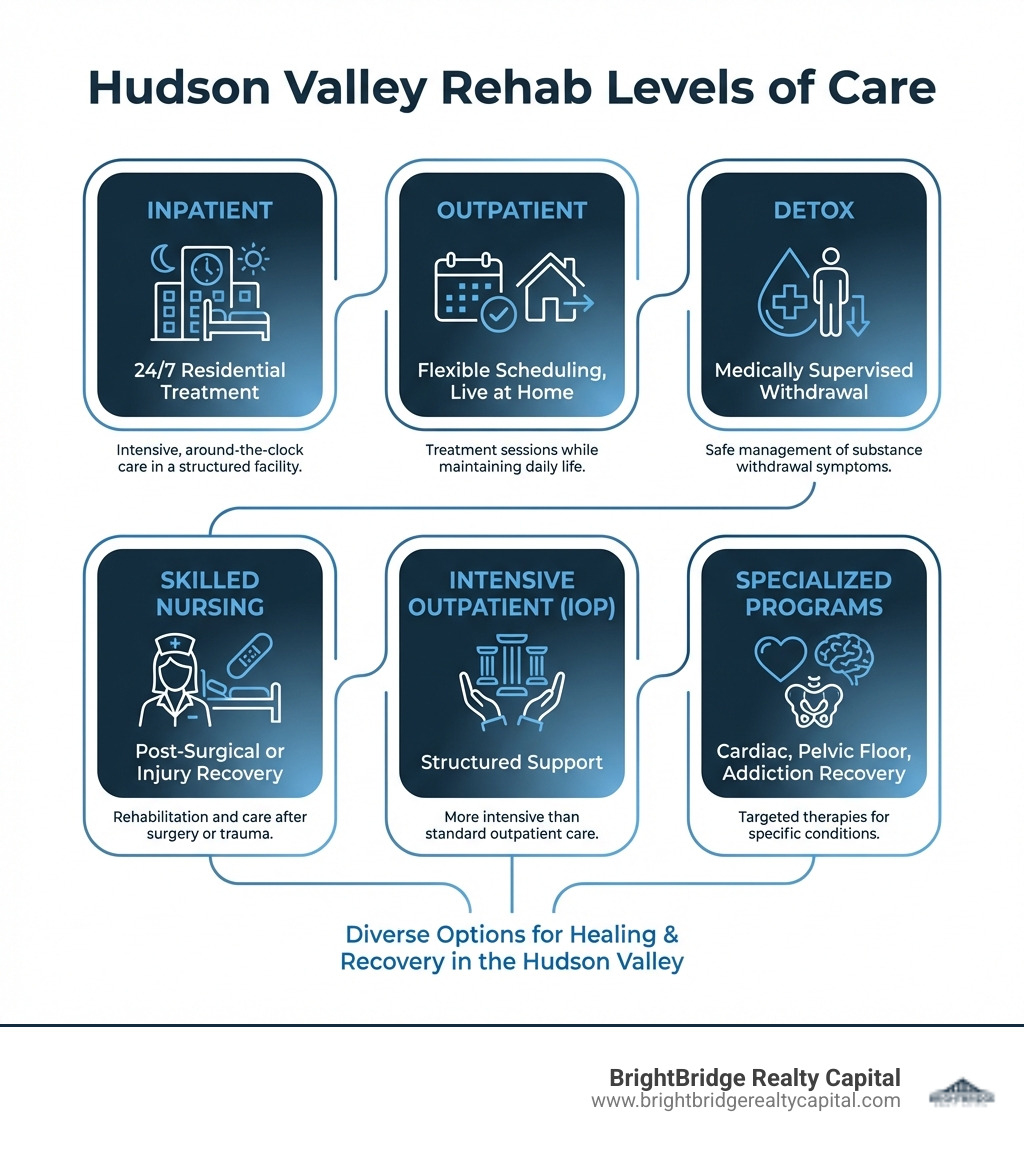
- Skilled Nursing Care: For individuals who are not yet stable enough to return home after a hospital stay. These facilities, like Hudson Valley Rehabilitation & Extended Care Center, provide 24-hour nursing care alongside intensive therapy.
- Specialized Programs: Custom therapies for specific conditions such as cardiac rehabilitation (post-heart attack), neurological disorders (Parkinson's, MS), chronic pain management, and even niche areas like pelvic floor dysfunction or vertigo.
Here's a closer look at the main categories:
Substance Abuse and Addiction Recovery
The need for robust addiction treatment in the Hudson Valley is significant. Like many regions, it has been deeply affected by the opioid epidemic. Data from the New York State Department of Health shows that Hudson Valley counties have consistently reported high numbers of opioid-related overdoses and emergency department visits. This public health crisis has spurred the development of a multi-faceted approach to treatment.
For those struggling with a substance use disorder (SUD), Hudson Valley rehab centers offer a continuum of care:
- Inpatient Programs: This is the most intensive level of care, providing 24/7 residential treatment in a structured, sober environment. Patients reside at the facility for a period of 30, 60, or 90 days, engaging in intensive individual and group therapy, medical supervision, and holistic activities.
- Outpatient Programs: Designed for individuals with a stable home environment who can live at home while attending scheduled therapy sessions. This includes Intensive Outpatient Programs (IOP), which offer a high degree of structure (typically 9-15 hours of therapy per week) without requiring residency, and standard outpatient, which is less intensive.
- Detoxification (Detox): A medically supervised process to safely manage acute withdrawal symptoms. This is the first step for many and is crucial for substances like alcohol, benzodiazepines, and opioids, where withdrawal can be dangerous or life-threatening.
- Opioid Treatment Programs (OTP): Specialized programs, certified by OASAS and the DEA, that provide Medication-Assisted Treatment (MAT) combined with counseling. MAT is the gold standard for opioid use disorder and includes medications like methadone, buprenorphine (Suboxone), or naltrexone (Vivitrol) to reduce cravings and prevent relapse.
- Dual-Diagnosis Treatment: Many individuals with SUD also have a co-occurring mental health disorder like depression, anxiety, or PTSD. Effective treatment requires an integrated approach where both conditions are treated simultaneously by a cross-trained team.
One of the largest providers is Lexington Center for Recovery, a cornerstone of substance use treatment in the Hudson Valley for over four decades. They offer a vast network of programs across Dutchess, Rockland, Sullivan, and Westchester Counties, with a mission to provide recovery programs that respect each person's dignity. Another key provider is Twin County Recovery Services Inc, serving the more rural Columbia and Greene counties. They offer evidence-based care, including inpatient, IOP, and MAT, and excel at connecting clients to vital community resources for housing and employment. For a broader overview of addiction recovery options, you can explore resources like Mid Hudson Addiction Recovery.
Physical and Post-Surgical Rehabilitation
Physical and post-surgical rehabilitation focuses on restoring physical function, mobility, and independence after an injury, illness, or major surgical procedure. This care is often delivered in a skilled nursing facility (SNF), an inpatient rehabilitation facility (IRF), or a hospital's acute rehab unit.
Facilities like Hudson Valley Rehabilitation & Extended Care Center in Highland, NY, operate as SNFs, providing comprehensive care for individuals needing short-term rehabilitation following:
- Orthopedic injuries and surgeries: Joint replacements (knee, hip, shoulder), complex fractures, spinal surgery (laminectomy, fusion), and amputations.
- Cardiac conditions: Recovery after a heart attack, coronary artery bypass graft (CABG), or valve replacement surgery.
- Neurological conditions: Stroke recovery, traumatic brain injury (TBI), spinal cord injury, and management of progressive diseases like Parkinson's or multiple sclerosis (MS).
- General debility: Loss of strength and function after a prolonged illness, complex surgery, or extended hospital stay (e.g., post-COVID recovery).
These centers focus on a multidisciplinary approach, with a team of doctors, nurses, and therapists working together to help patients improve their functional and medical status, with the primary goal of a successful and safe return home or to a lower level of care.
Specialized Therapeutic Programs
Beyond general physical and substance abuse rehabilitation, many Hudson Valley rehab centers offer highly specialized programs that demonstrate a commitment to comprehensive, state-of-the-art care. These programs often involve therapists with advanced certifications and training.
- Cardiac Rehabilitation: A structured, multi-phase program of monitored exercise, education, and counseling to help heart patients recover quickly and improve their overall cardiovascular health.
- Dizziness & Vertigo Treatment: Specialized physical therapists use vestibular rehabilitation techniques, including specific maneuvers and exercises, to treat balance disorders like BPPV (benign paroxysmal positional vertigo).
- Pelvic Floor Pain Therapy: A specialized area of PT/OT that addresses chronic pain, dysfunction, incontinence, and issues related to pregnancy and postpartum recovery.
- Lymphedema Management: Certified lymphedema therapists provide treatment for swelling that can occur after cancer surgery or radiation.
- Chronic Pain Management: Multidisciplinary approaches that combine physical therapy, psychological support (pain psychology), and medication management to help patients reduce chronic pain and improve function.
NewYork-Presbyterian Hudson Valley Hospital's Center for Rehabilitation is an excellent example, offering physical therapy, occupational therapy, and exercise physiology for a wide variety of conditions. Its hospital-based program ensures adherence to stringent state and national accreditation requirements and a high standard of care, making it a trusted resource in the region.
Evaluating the Core of a Top Hudson Valley Rehab Program
Choosing a Hudson Valley rehab center requires a deeper investigation than simply reading a brochure or browsing a website. To make an informed decision, you must dig into the core elements that define a program's quality and effectiveness: its guiding mission, the expertise of its staff, the therapeutic approaches it employs, and the accreditations that validate its standards.

Mission, Philosophy, and Staff Expertise
A center's mission statement and philosophy are crucial indicators of its approach to patient care. Many leading Hudson Valley centers emphasize a holistic, patient-centered philosophy. For instance, Lexington Center for Recovery aims to offer a program that "respects the dignity and individuality of each person," while Hudson Valley Rehabilitation & Extended Care Center highlights its commitment to "healing and compassion." Look for programs that prioritize compassionate, trauma-informed care in a supportive environment, individualized treatment plans, patient dignity, and robust family involvement, which is critical for long-term success.
The qualifications and expertise of the therapists and staff are paramount. A beautiful facility is meaningless without a skilled and caring team. Top Hudson Valley rehab centers employ a multidisciplinary team:
- Medical Professionals: Physicians (often board-certified in physical medicine and rehabilitation, or physiatry), addiction medicine specialists, and psychiatrists. They oversee the medical aspects of care, manage medications, and address co-occurring health issues.
- Licensed Therapists: This includes Physical Therapists (DPT), Occupational Therapists (OTR/L), Speech-Language Pathologists (CCC-SLP), and licensed mental health counselors (LMHC, LCSW) who hold current New York State licenses.
- Nursing Staff: Registered Nurses (RNs) and Licensed Practical Nurses (LPNs), especially in inpatient and skilled nursing settings, provide 24/7 medical monitoring, wound care, and medication administration.
- Specialized Skills: Look for therapists with advanced certifications in areas like orthopedic clinical specialization (OCS), neurologic clinical specialization (NCS), Certified Alcohol and Substance Abuse Counselor (CASAC) credentials, or training in specific modalities like EMDR for trauma.
- Support Staff: The team is rounded out by case managers who coordinate care and discharge planning, dietitians who manage nutritional needs, and recreational therapists who use activities to improve well-being.
NewYork-Presbyterian Hudson Valley Hospital, for instance, highlights its "highly trained therapists" with "prestigious accreditations" and "specialized skills," which is the standard you should look for.
Key Therapies and Treatment Modalities
The effectiveness of a Hudson Valley rehab program largely depends on its use of evidence-based practices—approaches that are supported by rigorous scientific research and have been proven effective.
For physical rehabilitation, core therapies include:
- Physical Therapy (PT): Focuses on improving strength, flexibility, balance, endurance, and mobility through therapeutic exercise, gait training, and manual therapy techniques.
- Occupational Therapy (OT): Helps patients regain independence in activities of daily living (ADLs) like dressing, bathing, and cooking. This often involves training in the use of assistive devices and strategies for energy conservation.
- Speech-Language Pathology (SLP): Addresses issues with communication, cognition (memory, attention), and swallowing.
- Exercise Physiology: Programs designed by exercise physiologists to create personalized exercise regimens that promote recovery, improve cardiovascular health, and enhance overall wellness.
For substance abuse and addiction recovery, a combination of therapeutic modalities is most effective:
- Cognitive Behavioral Therapy (CBT): A cornerstone of modern therapy, CBT helps patients identify and change the negative thought patterns and behaviors that contribute to addiction and relapse.
- Dialectical Behavior Therapy (DBT): Particularly effective for individuals with emotional dysregulation and co-occurring disorders, DBT teaches skills in mindfulness, distress tolerance, and interpersonal effectiveness.
- Medication-Assisted Treatment (MAT): The use of FDA-approved medications (like Vivitrol, Suboxone, or Methadone) in combination with counseling and behavioral therapies. Research overwhelmingly indicates MAT significantly reduces relapse risk and overdose deaths for opioid and alcohol use disorders. Twin County Recovery Services, for example, offers MAT as a core part of their program.
- Motivational Interviewing: A collaborative, goal-oriented style of communication designed to strengthen a person's own motivation and commitment to change.
- Group and Individual Therapy: Group therapy provides a supportive environment for individuals to share experiences and learn from peers, while individual counseling allows for one-on-one work to address personal issues and develop relapse prevention strategies.
Accreditations and Quality Standards
Accreditations are vital, third-party validations of a center's commitment to excellence, patient safety, and continuous improvement. They ensure that a facility meets rigorous operational and clinical benchmarks.
- State & National Requirements: All legitimate rehabilitation centers must be licensed by the state of New York. For substance abuse programs, this licensing comes from the New York State Office of Addiction Services and Supports (OASAS). For skilled nursing and hospital-based programs, it's the New York State Department of Health (DOH). These bodies conduct regular inspections and handle complaints.
- Quality Inspections: Facilities undergo regular quality inspections by state health departments. These inspections assess various factors, including severity (the potential for harm from a deficiency) and scope (how widespread the issue is). You can often find these reports online.
Beyond basic state licensing, look for accreditations from reputable national organizations:
| Accreditation Body | Focus | Significance |
|---|---|---|
| CARF | Rehabilitation & Human Services | An international gold standard, demonstrating commitment to quality, accountability, and continuous improvement in service delivery. |
| The Joint Commission | Healthcare Organizations & Programs | The predominant standards-setting body in healthcare, signifying adherence to high standards for patient safety and quality of care. |
| NYS OASAS/DOH | State Regulatory Compliance | The basic legal requirement to operate in New York, ensuring compliance with state health and safety regulations. |
For example, you can find detailed quality inspection reports for facilities like Hudson Valley Rehabilitation & Extended Care Center on the NYS Health Profile website. Doing this due diligence is a critical step in your evaluation process.
The Patient Journey: What to Expect Day-to-Day
Understanding the patient experience is key to demystifying the rehab process and choosing the right Hudson Valley rehab center. We want to know what the admission process entails, what daily life is like within the structured environment, how families are involved in the healing process, and what the long-term goals for a sustainable recovery look like.
The Admission Process for a Hudson Valley rehab center
The admission process is the formal entry point to recovery and should be handled with efficiency, compassion, and discretion. Given the emotional stress often involved for both patients and families, leading centers aim to make it as smooth and supportive as possible.
- Initial Contact and Screening: The process usually begins with a phone call or online inquiry. An admissions coordinator will conduct a brief, confidential screening to determine if the program is a potential fit.
- Comprehensive Assessment: If the initial screen is positive, a more detailed clinical assessment is scheduled. This is a thorough evaluation of the individual's medical history, substance use history (if applicable), mental health status, and specific rehabilitation needs. This assessment is crucial for developing the initial individualized treatment plan.
- Insurance and Financial Verification: The center's admissions team will work with you to verify insurance benefits, explain coverage details (deductibles, co-pays), and discuss all payment options. This financial counseling is vital for transparency and preventing future stress.
- Medical Clearance and Admission Requirements: For physical rehab, this typically requires a doctor's referral and hospital records. For addiction treatment, it may involve a medical evaluation to determine the need for detox. All patients' rights, including privacy under HIPAA, are explained.
- What to Bring (and What Not to Bring): Once admitted, patients receive a list of approved items, usually including comfortable clothing, toiletries, and necessary personal documents. Equally important is the list of prohibited items, which typically includes non-prescribed medications, alcohol, weapons, and often, personal electronics like smartphones to minimize distractions and promote focus on recovery.
Testimonials for Hudson Valley Rehabilitation & Extended Care Center often praise the "helpful and considerate" admitting staff for making the "admissions process smooth," which is the hallmark of a well-run, patient-focused facility.
A Day in the Life: Structure and Support
A structured daily schedule is a cornerstone of effective rehabilitation. It removes the chaos and uncertainty that often accompanies illness or addiction, providing a stable and predictable framework for healing.
Sample Day in an Inpatient Substance Abuse Program:
- Morning: Wake-up, breakfast, followed by a morning meditation or goal-setting group. The rest of the morning is typically filled with a process group (group therapy) and an educational session on topics like the science of addiction or relapse prevention.
- Afternoon: Lunch, followed by individual therapy with a primary counselor, specialized groups (e.g., trauma, grief), and often some form of recreational or holistic therapy like yoga, art therapy, or a fitness session.
- Evening: Dinner, followed by a 12-step meeting (AA/NA) or another community support group, and then some personal time for reflection, journaling, or reading before lights out.
Sample Day in a Skilled Nursing/Physical Rehab Program:
- Morning: Assistance with morning care and dressing, breakfast, followed by a 60-90 minute session of physical and/or occupational therapy in the facility's gym.
- Afternoon: Lunch, followed by a second therapy session (perhaps speech therapy), nursing care (wound care, medication management), and some rest time. Case management may meet with the patient and family to discuss progress.
- Evening: Dinner, social or recreational activities, family visitation, and preparation for the next day.
The goal across all settings is to provide a supportive therapeutic milieu where patients can focus entirely on their recovery, surrounded by professionals and peers who understand the journey.
Family Involvement and Long-Term Success
Recovery does not happen in a vacuum. Family involvement is a powerful predictor of long-term success, and the best Hudson Valley rehab programs integrate the family as part of the treatment team.
- Family Counseling and Education: Many programs offer family therapy sessions to improve communication, rebuild trust, and educate loved ones about the nature of the illness (whether addiction or a physical condition). This helps set realistic expectations and teaches families how to be effective allies in recovery.
- Visitation Policies: Centers have specific visitation hours and guidelines designed to balance the need for family connection with the therapeutic needs of the patient and the community.
- Discharge and Aftercare Planning: This is arguably the most critical phase. Before a patient is discharged, the treatment team works with them and their family to develop a comprehensive aftercare plan. This is a detailed roadmap for continued success and may include:
- Appointments with outpatient therapists or doctors.
- Referrals to support groups (like AA, NA, SMART Recovery, or stroke support groups).
- A structured relapse prevention plan, identifying triggers and developing coping strategies.
- Connections to sober living homes or other supportive housing options. Twin County Recovery Services, for example, excels at connecting individuals to community resources for housing.
- Enrollment in a facility's alumni program for ongoing peer support.
Facility, Location, and Financials
While clinical excellence is paramount, the practical aspects of a Hudson Valley rehab center—its physical environment, geographic location, and financial policies—are just as important for a successful and stress-free recovery experience. These factors can significantly impact everything from a patient's daily comfort to a family's ability to participate in their loved one's care.
The Importance of the Physical Environment
A facility's physical environment plays a significant, often subconscious, role in the healing process. A clean, safe, and well-maintained space communicates respect for the patients and the seriousness of the recovery mission. When evaluating a facility, consider:
- Setting and Atmosphere: Does the facility feel clinical and sterile, or warm and welcoming? Is it a hospital-based unit, a standalone center in a quiet suburban area, or a more rustic, campus-like setting? Each has its pros and cons. Hospital units offer immediate access to high-level medical care, while standalone centers may provide a more homelike, less institutional feel.
- Cleanliness and Safety: The facility should be impeccably clean. Look for features that promote safety, such as handrails in hallways, accessible bathrooms, and secure entryways.
- Amenities: While luxury amenities are not necessary for recovery, a comfortable and functional environment is. This includes well-equipped therapy gyms, pleasant common areas for socializing, and access to outdoor spaces like gardens or patios, which can be incredibly beneficial for mental well-being.
- Accessibility: The facility must be fully compliant with the Americans with Disabilities Act (ADA), ensuring that individuals with mobility challenges can navigate the space with ease. NewYork-Presbyterian Hudson Valley Hospital, for example, highlights its easy access and convenient parking as a key patient benefit.
Location, Accessibility, and Contact Information
The Hudson Valley is a large geographic region. A center's location can directly impact a patient's ability to attend outpatient programs and a family's ability to visit and participate in support programs.
- Proximity and Travel: Many families prioritize facilities that are close to home to make visits more manageable. For outpatient care, a short commute is essential for consistent attendance. Consider the travel time from your home and the availability of public transportation if needed.
- Regional Distribution: The density of rehab facilities varies by county. Westchester and Rockland counties tend to have a higher concentration of services, while counties like Sullivan and Greene may have fewer, more spread-out options. It's important to research what is available in your immediate area.
- Telehealth and Virtual Services: The COVID-19 pandemic accelerated the adoption of telehealth. Many providers now offer virtual assessments, individual therapy sessions, and even Intensive Outpatient Programs (IOPs) online. This can be a fantastic option for those in rural areas or with transportation challenges.
- Contact Information: Keep a clear record of contact details. For example, Hudson Valley Rehabilitation & Extended Care Center is located at 260 Vineyard Ave, Highland, New York 12528-2343. You can Get Directions to Hudson Valley Rehab, visit their website at www.hudsonvalleyrehab.com, or call them directly at 845-691-7201.
Cost of Hudson Valley rehab and Payment Options
The cost of rehab is a significant concern for nearly every family. In New York, the average cost of addiction treatment can be substantial, with inpatient care often costing tens of thousands of dollars. Understanding the financial arrangements upfront is crucial.
- Insurance Coverage: Most Hudson Valley rehab centers accept a mix of private health insurance, Medicaid, and Medicare. The first step is always to call the admissions department and have them conduct a verification of benefits (VOB) with your insurance provider.
- Navigating Insurance: Be prepared to discuss pre-authorization requirements, in-network vs. out-of-network benefits, deductibles, co-pays, and your out-of-pocket maximum. The Mental Health Parity and Addiction Equity Act (MHPAEA) is a federal law that requires most health plans to cover mental health and substance use disorder treatment no more restrictively than they cover medical/surgical care.
- Medicaid & Medicare: A significant number of facilities in New York accept Medicaid and Medicare, which is vital for many residents. Twin County Recovery Services, for instance, is known for its accessibility to Medicaid recipients.
- Sliding Scale Fees: Some non-profit centers offer a sliding fee scale based on income and family size, making treatment more affordable for those with limited resources.
- Private Pay and Financing: For those without insurance or who prefer not to use it for privacy reasons, self-pay options are available. Some centers may offer payment plans or partner with third-party healthcare lending companies.
We always recommend having a direct, detailed conversation with the admissions or finance department of any center you are considering to get a clear, written estimate of all potential costs.
Frequently Asked Questions about Hudson Valley Rehab Centers
Navigating the world of rehabilitation can be confusing. Here are clear, detailed answers to some of the most frequently asked questions about Hudson Valley rehab centers.
How long does rehab in the Hudson Valley typically last?
The length of a rehab stay is highly individualized and depends on the type of care, the severity of the condition, and the patient's unique progress. There is no one-size-fits-all answer.
- Program Duration: For substance abuse recovery, common inpatient program lengths are 30, 60, or 90 days. Outpatient programs can last for several months. For short-term physical rehab in a skilled nursing facility, the average length of stay is often between 2-4 weeks, driven by recovery progress and insurance authorization.
- Individual Progress: The length of stay is not arbitrary. It is determined by the treatment team in consultation with the patient and family, based on achieving specific clinical goals and milestones. If a patient is progressing faster or slower than expected, the plan is adjusted.
- Long-Term Care: For some individuals with severe disabilities or chronic health issues, a skilled nursing facility may become a long-term residential care solution.
Does insurance cover the cost of rehab?
Yes, in most cases, insurance does cover a significant portion of the cost of rehab in the Hudson Valley. However, the extent of coverage varies dramatically between plans.
- Insurance Verification: The most critical first step is to have the rehab center's admissions team perform a verification of benefits (VOB). This will clarify your plan's specific coverage for the level of care you need, including deductibles, co-pays, and any potential out-of-pocket maximums.
- In-Network vs. Out-of-Network: Using an in-network facility will almost always result in significantly lower out-of-pocket costs. Going out-of-network can be very expensive, so confirm a facility's network status with your insurance company directly.
- Medical Necessity: Insurance companies will only pay for treatment that they deem "medically necessary." The rehab center will have to justify the need for care through a process called utilization review, often requiring pre-authorization before admission and concurrent reviews during the stay to approve continued treatment.
- Affordable Care Act (ACA) and Parity Laws: The ACA designates mental health and substance use disorder services as essential health benefits. Furthermore, the Mental Health Parity and Addiction Equity Act (MHPAEA) mandates that insurance plans cannot apply more restrictive limitations to these benefits than they do to medical/surgical benefits.
What is the difference between inpatient and outpatient rehab?
The primary differences are the living arrangements and the intensity of the clinical services provided.
- Levels of Care:
- Inpatient (Residential) Rehab: Patients live at the treatment facility 24/7. This provides a highly structured, immersive therapeutic environment free from the triggers and stressors of the outside world. It is the highest level of care and is recommended for individuals with severe conditions, a high risk of relapse, or an unstable home environment.
- Outpatient Rehab: Patients live at home and travel to the facility for scheduled therapy sessions (typically 1-3 times per week). This offers maximum flexibility, allowing individuals to maintain work, school, or family responsibilities while receiving support.
- Intensive Outpatient Programs (IOP): A step down from inpatient but more intensive than standard outpatient. IOPs typically involve 9-15 hours of therapy per week (e.g., 3 hours a day, 3-5 days a week). Patients participate in structured programming but return home each night.
- Partial Hospitalization Programs (PHP): The most intensive outpatient option, PHPs offer programming for 5-8 hours a day, 5 days a week. It's often used as a direct alternative to inpatient care or as a step-down transition from an inpatient stay.
What is a 'success rate' in rehab and how is it measured?
This is a complex question. Be wary of any facility that advertises a simple, high "success rate" (e.g., "90% successful!"). Meaningful success in recovery is multifaceted and difficult to capture in a single number.
- Defining Success: Does success mean total abstinence for life? Does it mean a reduction in substance use, improved family relationships, stable employment, and better mental health? Most clinicians favor a broader definition that encompasses overall quality of life.
- Measurement Challenges: Reputable facilities measure outcomes through alumni surveys, tracking metrics like sobriety, employment status, and legal issues at intervals of 6 months, 1 year, and 5 years post-treatment. However, low response rates can skew data. Instead of asking for a single number, ask how they measure success and what their long-term alumni support looks like.
Can someone be forced to go to rehab in New York?
Yes, but the circumstances are specific. In New York, a law known as Kendra's Law allows for court-ordered Assisted Outpatient Treatment (AOT) for individuals with severe mental illness who are unlikely to survive safely in the community without supervision. For substance use, New York also has provisions for involuntary commitment if a person is deemed a danger to themselves or others due to their substance use, but this is a high legal bar to meet and requires a court process initiated by family or medical professionals.
Conclusion: Making an Informed Choice for a Healthier Future
Choosing the right Hudson Valley rehab center is a monumental decision, one that can set the foundation for a lifetime of health and recovery. Throughout this guide, we've explored the diverse landscape of services available—from intensive inpatient programs for addiction to specialized physical therapies for post-surgical recovery—and highlighted the critical factors that lead to successful outcomes.
The journey to recovery is unique for every individual, but the principles of effective care remain constant. As you evaluate your options, remember to prioritize these core elements:
- Quality and Type of Care: Match the program to the specific need. Look for evidence-based therapies, individualized treatment plans, and a philosophy that treats the whole person, not just the symptom.
- Staff Expertise and Compassion: The single most important factor is the people. Ensure the therapists, medical professionals, and support staff are licensed, experienced, and demonstrate a genuine commitment to compassionate care.
- Accreditations and Licensing: Verify that the facility is in good standing with state bodies like the NYS DOH or OASAS and holds additional accreditations from respected organizations like CARF or The Joint Commission. This is your assurance of safety and quality.
- A Healing Environment: The physical space matters. A safe, clean, respectful, and supportive setting is essential for the difficult work of healing.
- Family Involvement and Aftercare: Recovery doesn't end at discharge. Programs that actively engage families and provide robust, detailed aftercare planning offer a much greater chance of long-term, sustainable success.
- Financial Transparency: Have open conversations about costs, insurance coverage, and all available payment options to avoid financial stress during an already challenging time.
Whether you or a loved one needs help recovering from a complex surgery, managing a chronic neurological condition, or breaking free from the grip of addiction, the Hudson Valley offers a wealth of resources. The path to recovery is rarely a straight line; it requires courage, commitment, and a strong support system. By taking a methodical, well-researched approach and asking the right questions, you can make an informed choice that empowers that journey and opens the door to a healthier, more hopeful future.
For investors looking to fund their next commercial or residential rehab project, explore our fix-and-flip loan options: For investors looking to fund their next commercial or residential rehab project, explore our fix-and-flip loan options. We provide customized real estate financing solutions nationwide, specializing in quick, flexible funding for investors in the real estate industry, with fast closings and direct lending without intermediaries.