What Credit Score Is Needed for a DSCR Loan?

Summary
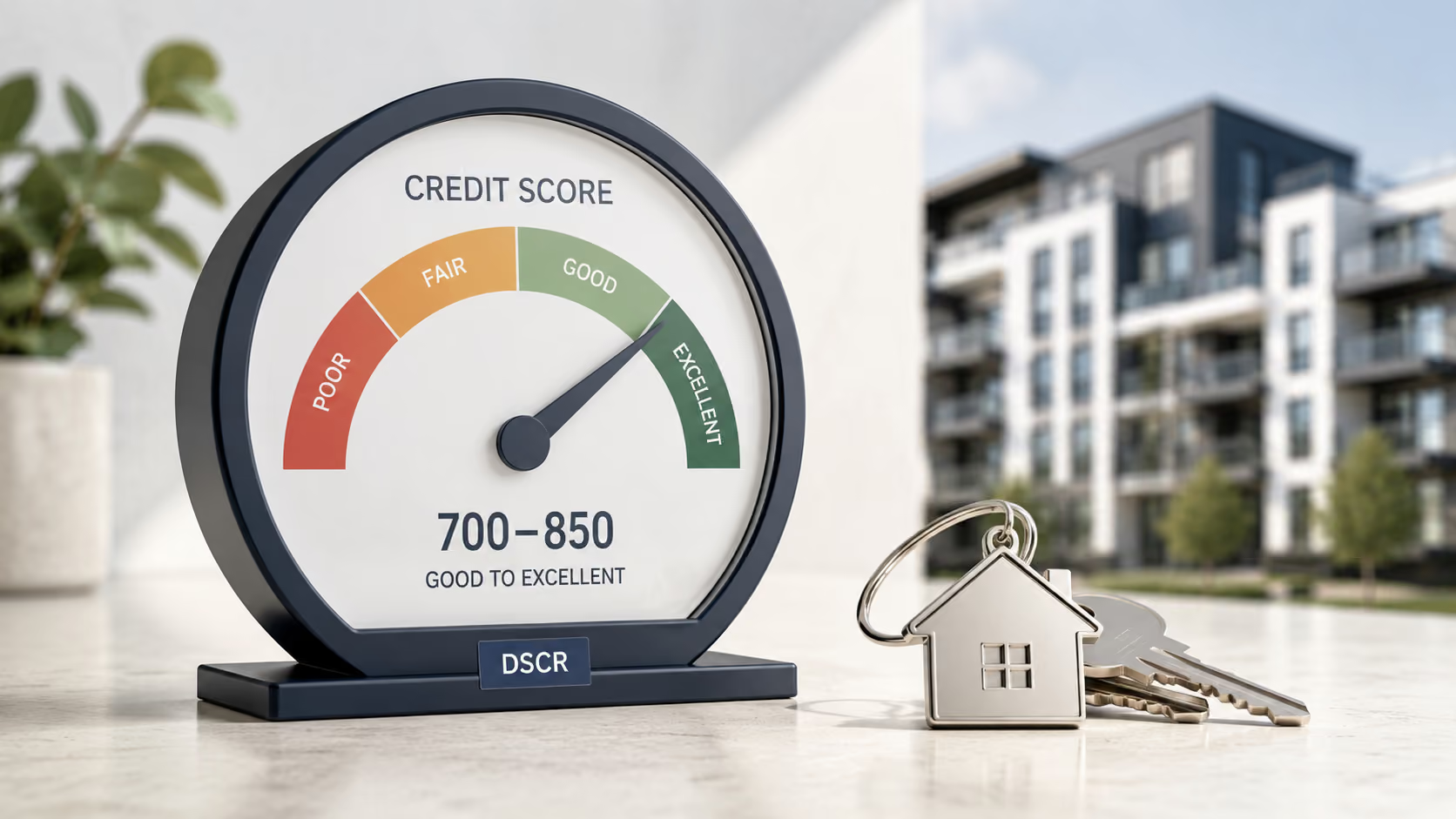
DSCR loans typically require credit scores of 620-680 minimum, with better rates at 720+. The team at Brightbridge Realty Capital evaluates the complete investor profile, focusing on property cash flow alongside creditworthiness for optimal loan terms.
Real estate investors often assume they need perfect credit to secure DSCR (Debt Service Coverage Ratio) loans, but the reality is more nuanced than most borrowers realize. Unlike traditional residential mortgages that heavily emphasize personal income verification, DSCR loans focus primarily on the investment property's ability to generate sufficient cash flow to cover the debt payments. This fundamental shift in underwriting approach means that credit score requirements, while still important, play a different role in the approval process.
The confusion around DSCR loan credit requirements stems from the fact that these products bridge the gap between conventional financing and hard money lending. Many investors come to us after being turned down by banks for income documentation issues, assuming their credit needs to be exceptional to compensate. Others worry that a few dings on their credit report will disqualify them from accessing rental property financing altogether. The truth lies somewhere in the middle, and understanding these requirements upfront can save investors significant time and frustration in their deal-hunting process.
What makes DSCR lending particularly attractive for active real estate investors is how lenders evaluate risk differently than traditional mortgage products. The property's rental income takes center stage, but your credit profile still influences loan terms, interest rates, and down payment requirements. Getting clear on these credit benchmarks helps investors plan their financing strategy and understand exactly where they stand in the marketplace.
Minimum Credit Score Requirements for DSCR Loans
Most DSCR lenders establish minimum credit score thresholds between 620 and 680, depending on their risk appetite and loan program structure. This range puts DSCR loans squarely in the middle ground between conventional mortgages (which often require 740+ for investment properties) and hard money loans (which may accept scores in the 500s with higher rates). The specific minimum varies significantly based on the lender's guidelines, loan-to-value ratio, and overall deal structure.
The team at Brightbridge Realty Capital typically works with investors who have credit scores of 640 or higher, though exceptions can be made for strong deals with excellent cash flow coverage. What's crucial to understand is that meeting the minimum doesn't guarantee the best terms. Investors with scores in the 640-680 range can absolutely get approved, but they'll likely face higher interest rates and may need to bring more money to the table as a down payment.
Credit scores in the 680-720 range open up significantly better pricing and terms across most DSCR loan programs. This sweet spot demonstrates responsible credit management without requiring the exceptional scores needed for conventional investment property loans. Investors in this range typically see interest rate improvements of 0.25% to 0.75% compared to borrowers at the minimum threshold, which can translate to substantial savings over the loan term.
Here are the typical credit score tiers and their impact on DSCR loan terms:
- 640-679 Credit Score: Higher rates, 25% down payment minimum, stricter DSCR requirements (usually 1.25x or higher)
- 680-719 Credit Score: Competitive rates, 20-25% down payment options, standard DSCR requirements around 1.20x
- 720-759 Credit Score: Preferred pricing, 20% down payment available, more flexible on marginal DSCR ratios
- 760+ Credit Score: Best available rates, maximum flexibility on terms, consideration for unique deal structures
The reality that surprises many investors is how much the property itself can influence these credit requirements. A single-family rental in a strong market with a 1.40x DSCR might get approved with a 640 credit score, while a marginal deal with a 1.15x DSCR could require 700+ credit to make sense for the lender. This interplay between personal creditworthiness and deal strength is where experienced DSCR lenders add significant value in structuring loans.
Investors should also understand that DSCR lenders often have more flexibility around credit events than conventional lenders. A bankruptcy that's been discharged for four years might not disqualify you from a DSCR loan, especially if your credit has recovered and the property cash flows strongly. This flexibility makes DSCR loans particularly valuable for investors who've experienced credit challenges but have rebuilt their financial foundation.
How Credit Score Affects DSCR Loan Terms and Pricing
Interest rate pricing on DSCR loans typically follows a tiered structure that rewards higher credit scores with meaningful rate reductions. The spread between minimum credit pricing and top-tier credit can range from 0.50% to 1.50%, depending on market conditions and the specific lender's guidelines. This pricing differential reflects the lender's assessment of default risk, even though the property's cash flow provides the primary repayment source.
Beyond interest rates, credit scores significantly impact the down payment requirements and loan-to-value ratios available to investors. Borrowers with excellent credit (740+) might access 80% financing on strong deals, while investors with credit in the 640s typically max out at 75% loan-to-value. This difference means an investor buying a $300,000 rental property could need an additional $15,000 at closing simply due to credit score positioning.
The loan approval process itself varies based on credit profile, with higher-score borrowers often experiencing faster underwriting and fewer documentation requests. Experts at Brightbridge Realty Capital have observed that investors with credit above 720 typically move through underwriting 5-10 days faster than those at minimum credit thresholds. This speed advantage can be crucial in competitive markets where closing timelines matter for deal success.
Credit score also influences the lender's willingness to work with challenging property types or unique situations:
- High Credit (720+): Flexibility on property condition, consideration of unique rental models, negotiable on marginal DSCR ratios
- Mid-Tier Credit (680-719): Standard property types preferred, stricter adherence to DSCR minimums, conventional rental arrangements
- Lower Credit (640-679): Conservative property selection, higher DSCR requirements, established rental markets only
- Below 640: Case-by-case basis, significant compensating factors required, limited lender options available
The reserve requirements also scale with credit score, as lenders view borrowers with lower scores as needing larger financial cushions. An investor with a 760 credit score might need 2-4 months of mortgage payments in reserves, while someone at 650 could face requirements for 6+ months of reserves. These reserve requirements can tie up substantial capital, especially for investors building larger portfolios.
What many investors don't realize is how credit score affects the lender's appetite for multiple simultaneous transactions. A borrower with excellent credit might get approved for 2-3 DSCR loans concurrently, while someone with marginal credit typically needs to close one deal before starting the next application. This limitation can significantly impact an investor's ability to scale their portfolio quickly during favorable market conditions.
Strategies to Improve Your DSCR Loan Qualification
The most impactful step investors can take is addressing any obvious credit report errors or negative items before applying for DSCR financing. Credit reporting agencies make mistakes regularly, and a simple dispute process can sometimes boost scores by 20-50 points within 30-60 days. Focus particularly on ensuring all account balances are accurate, closed accounts show properly, and any paid-off collections or charge-offs reflect correct status.
Strategic credit utilization management can provide quick score improvements without requiring months of perfect payment history. The general rule of keeping total utilization under 30% is well-known, but sophisticated investors aim for under 10% on individual cards and overall. Paying down balances before statement closing dates (not just payment due dates) ensures lower reported utilization across all bureaus.
Fouladi and his team of loan experts frequently advise investors to avoid opening new credit accounts or making major purchases during their loan shopping and application process. Each new inquiry can temporarily lower scores by 2-5 points, and new accounts reduce average account age. The impact might seem minimal, but it can push a borderline 679 score down to 674, potentially costing thousands in higher rates or additional down payment requirements.
Here are specific credit optimization strategies that deliver results for DSCR loan applicants:
- Rapid Rescoring Services: Work with loan officers who offer rapid rescoring to implement changes and see updated scores within 3-5 business days
- Authorized User Strategy: Get added to a family member's seasoned, low-utilization account to boost average account age and available credit
- Pay-for-Delete Negotiations: Contact collection agencies to negotiate removal of paid collections in exchange for payment or additional payment
- Credit Mix Improvement: Maintain both revolving (credit cards) and installment (auto, personal) accounts to demonstrate diverse credit management
The timing of credit improvement efforts matters significantly in the DSCR loan process. Starting credit optimization 90 days before you plan to shop for loans gives you time to see score improvements and address any complications that arise. Waiting until you're ready to make offers creates unnecessary pressure and may force you to accept less favorable loan terms due to time constraints.
Many investors overlook the importance of monitoring all three credit bureaus throughout this process. DSCR lenders typically pull credit from all three bureaus and may use middle scores or specific bureau scores for qualification. An investor might have a 720 Equifax score but a 680 Experian score due to different reporting patterns. Understanding these variations helps you focus improvement efforts where they'll have the most impact on your loan application.
The relationship between credit improvement and deal flow creates a strategic advantage for prepared investors. Partners in real estate loans at Brightbridge Realty Capital report that investors with optimized credit profiles can move faster on opportunities, negotiate better terms, and often qualify for multiple financing options on the same deal. This flexibility becomes particularly valuable in competitive markets or when dealing with time-sensitive opportunities like foreclosure auctions or off-market deals.
FAQs
What is the minimum credit score required for a DSCR loan?
Most DSCR lenders require a minimum credit score of 620, though some may accept scores as low as 600 for exceptional deals. The team at Brightbridge Realty Capital typically works with borrowers who have credit scores of 620 or higher, as this threshold provides access to better interest rates and more favorable loan terms. However, credit score requirements can vary significantly between lenders and loan programs. Some portfolio lenders may be more flexible with credit requirements if other aspects of the deal are strong, such as substantial down payments or excellent debt service coverage ratios. It's important to note that while 620 may be the minimum, having a higher credit score will generally result in better loan terms and increased approval chances.
How does credit score affect DSCR loan interest rates?
Credit scores have a direct impact on the interest rates offered for DSCR loans, with higher scores typically securing better rates. The team at Brightbridge Realty Capital explains that borrowers with credit scores above 740 often qualify for the most competitive rates, while those between 620-680 may face rate premiums of 0.25% to 0.75% or more. This difference can significantly impact your investment returns over time. For example, on a $500,000 loan, a 0.5% rate difference translates to approximately $2,500 in additional annual interest costs. Lenders view credit scores as indicators of repayment reliability, so demonstrating strong creditworthiness through responsible credit management can save thousands of dollars throughout the loan term while improving your chances of approval.
Can you get a DSCR loan with a 580 credit score?
While challenging, obtaining a DSCR loan with a 580 credit score isn't impossible, though options will be limited. BBRC founder Zak Fouladi notes that borrowers with credit scores below 620 typically need to demonstrate exceptional strength in other areas to compensate for lower credit scores. This might include larger down payments (30-35% or more), higher debt service coverage ratios (1.3x or above), significant cash reserves, or extensive real estate investment experience. Some private or hard money lenders may consider these applications, but expect higher interest rates, additional fees, and stricter terms. The key is presenting a comprehensive application that showcases your ability to service the debt despite past credit challenges. Working on improving your credit score before applying will significantly expand your options and improve loan terms.
What credit score do you need for the best DSCR loan rates?
To secure the most competitive DSCR loan rates, borrowers typically need credit scores of 740 or higher. The team at Brightbridge Realty Capital reports that borrowers in this credit range often qualify for the lowest available interest rates and most favorable loan terms. Some lenders offer their best pricing tiers to borrowers with scores above 760, providing additional rate reductions and fee waivers. These premium borrowers may also qualify for higher loan-to-value ratios and more flexible underwriting guidelines. The difference between good and excellent credit can be substantial over the life of the loan. Borrowers with scores above 740 demonstrate consistent payment history and responsible credit management, making them attractive candidates for lenders' best programs. If your score is close to this threshold, consider waiting and improving it before applying.
Do DSCR lenders look at personal credit for investment properties?
Yes, DSCR lenders absolutely review personal credit scores even for investment property loans, despite the focus on property cash flow. Loan experts at Brightbridge Realty Capital emphasize that personal credit remains a critical underwriting factor because the borrower is personally liable for the debt. Lenders use credit scores to assess the likelihood of default and determine appropriate risk pricing. While DSCR loans place primary emphasis on the property's ability to service the debt, personal creditworthiness provides insight into the borrower's financial management skills and reliability. Poor personal credit may indicate potential challenges in property management or financial decision-making. Most lenders require personal guarantees on DSCR loans, making personal credit evaluation essential. Strong personal credit combined with positive debt service coverage creates the ideal scenario for loan approval and favorable terms.
How can I improve my credit score for a DSCR loan application?
Improving your credit score before applying for a DSCR loan can significantly enhance your approval chances and loan terms. The team at Brightbridge Realty Capital recommends starting with paying down existing credit card balances to reduce utilization ratios below 30%, ideally under 10%. Ensure all bills are paid on time, as payment history comprises 35% of your credit score. Avoid opening new credit accounts or closing old ones before applying, as this can temporarily lower your score. Review your credit reports for errors and dispute any inaccuracies promptly. If you have collections or charge-offs, consider negotiating payment arrangements or settlements. Allow at least 3-6 months for credit improvement strategies to reflect in your score. During this time, maintain consistent payment patterns and avoid major financial changes that could negatively impact your credit profile.
Are credit requirements different for portfolio vs agency DSCR loans?
Credit requirements can vary significantly between portfolio lenders and those following agency guidelines. Partners in real estate loans at Brightbridge Realty Capital explain that portfolio lenders, who keep loans on their books, often have more flexibility with credit score requirements since they're not bound by agency standards. These lenders might accept scores as low as 600 or even consider borrowers with unique circumstances that don't fit traditional guidelines. However, agency-backed programs typically have more standardized credit requirements, usually requiring minimum scores of 620-640. Portfolio lenders may compensate for lower credit scores by requiring larger down payments, higher interest rates, or additional reserves. They can also consider the overall relationship and investment experience. While agency loans might offer better rates for qualified borrowers, portfolio options provide alternatives for those who don't meet conventional standards but demonstrate strong investment acumen.
What other factors matter besides credit score for DSCR loan approval?
While credit scores are important, DSCR loan approval depends on multiple factors beyond creditworthiness. Fouladi and his team of loan experts emphasize that the debt service coverage ratio is paramount, typically requiring ratios of 1.0x to 1.25x or higher depending on the lender. Down payment amount significantly impacts approval, with most lenders requiring 20-25% minimum, though larger down payments can offset other weaknesses. Cash reserves equivalent to 2-6 months of mortgage payments demonstrate financial stability. Property type, location, and condition affect approval, as lenders prefer stable rental markets and well-maintained properties. The borrower's real estate investment experience and overall net worth also influence decisions. Employment stability and debt-to-income ratios, while less critical than traditional loans, still factor into underwriting. Some lenders consider the strength of existing leases and rental history, making seasoned rental properties more attractive than vacant properties requiring tenant placement.