What Is a Debt-to-Income Ratio and Why Does It Matter?

Summary
Debt-to-income ratio measures your monthly debt payments against gross income, critically affecting loan approval for traditional financing. The team at Brightbridge Realty Capital helps investors understand DTI requirements and navigate alternative lending solutions when ratios create qualification challenges.
Your debt-to-income ratio can make or break your real estate financing, yet many investors don't fully understand how lenders calculate it or why it matters so much. This financial metric represents the percentage of your gross monthly income that goes toward debt payments, and it's one of the primary factors traditional lenders use to determine your creditworthiness. Whether you're buying your first investment property or scaling a portfolio, understanding DTI requirements can save you from costly surprises during the application process.
The challenge for real estate investors is that DTI calculations often don't reflect the true cash flow potential of investment properties. Traditional lenders typically use conservative approaches that may not account for rental income properly or recognize the wealth-building strategy behind leveraged real estate investing. This creates a gap between what investors know they can afford and what lenders are willing to approve based on DTI alone.
Smart investors recognize that while DTI matters for conventional financing, it's not the only path to funding deals. Understanding both the limitations of DTI-based lending and the alternatives available can open doors to opportunities that might otherwise seem out of reach. The key is knowing when DTI works in your favor and when it's time to explore other financing strategies.
Understanding Debt-to-Income Calculations
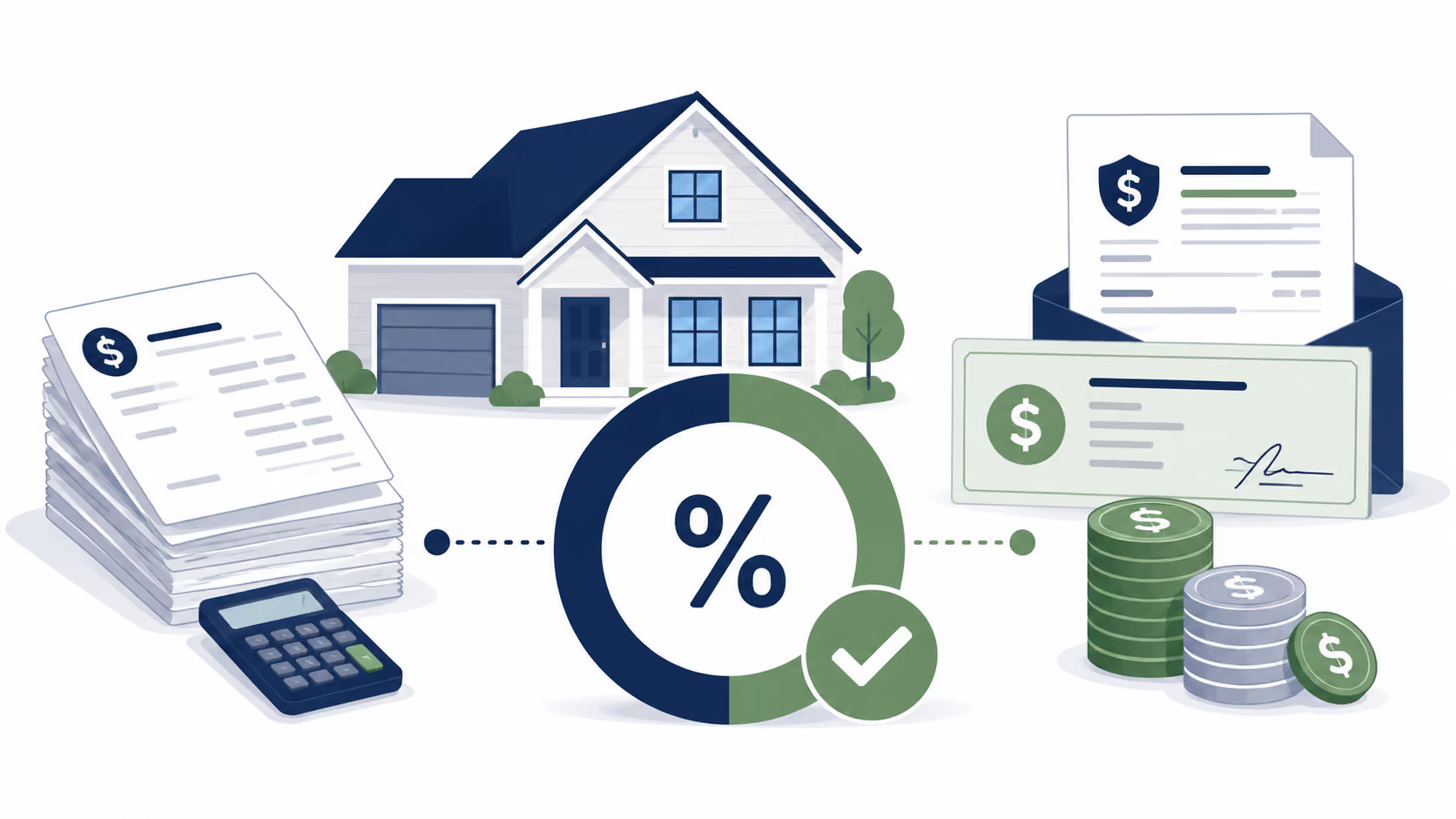
Traditional lenders calculate your DTI by dividing your total monthly debt obligations by your gross monthly income, then converting that figure to a percentage. This includes everything from credit card minimum payments and student loans to existing mortgages and car payments. Most conventional lenders want to see a DTI below 43% for qualified mortgages, though some programs allow higher ratios with compensating factors.
The calculation seems straightforward, but the details matter enormously for real estate investors. Lenders typically count only 75% of projected rental income from investment properties, which can artificially inflate your DTI even when properties generate positive cash flow. This conservative approach protects lenders from vacancy risk but can penalize experienced investors who understand market dynamics and property management.
Your DTI affects more than just approval odds - it influences interest rates, loan terms, and the amount you can borrow. Higher ratios often trigger additional scrutiny, requiring more documentation and potentially leading to loan conditions that complicate closing timelines. Understanding these mechanics helps you prepare stronger applications and set realistic expectations for the approval process.
The components that make up your DTI calculation include several key categories:
- Revolving credit payments: Minimum payments on credit cards, lines of credit, and similar revolving debt accounts
- Installment loan payments: Car loans, student loans, personal loans, and other fixed-payment debt obligations
- Existing mortgage payments: Principal, interest, taxes, insurance, and HOA fees on current properties
- Proposed housing payment: The full PITI payment for the property you're financing, including mortgage insurance if required
Beyond the basic calculation, lenders also consider your front-end ratio, which compares only your housing payment to gross income. This ratio typically needs to stay below 28% for conventional loans, adding another layer of qualification requirements. The interplay between front-end and back-end ratios can create situations where you qualify on one metric but not the other.
Timing plays a crucial role in DTI calculations, as lenders use current debt obligations regardless of when they might be paid off. If you're planning to pay off a car loan or credit card before closing, you'll need to document that payoff to exclude it from DTI calculations. This requirement for documentation means you can't simply promise to pay down debt - you need to show lenders exactly how and when it will happen.
Why DTI Matters for Real Estate Investors
DTI requirements become particularly complex for real estate investors because traditional lending models weren't designed for portfolio building strategies. Most conventional loans treat investment properties as higher-risk ventures, requiring larger down payments and imposing stricter DTI limits than primary residence purchases. This creates a catch-22 where successful investors with multiple properties may struggle to qualify for additional financing despite strong cash flow and equity positions.
The impact on investment property financing is significant because lenders often don't count rental income at full value during DTI calculations. Even with lease agreements and rental history, most lenders apply a 25% vacancy factor, meaning they only count 75% of rental income toward your qualifying income. This conservative approach can make profitable deals appear unaffordable on paper, forcing investors to seek alternative financing solutions.
Portfolio lenders and specialized investment property lenders understand these limitations, which is why many experienced investors eventually move away from conventional financing. The team at Brightbridge Realty Capital recognizes that DTI-based qualification often fails to capture an investor's true ability to service debt, especially when properties generate strong cash flow. This understanding shapes their approach to evaluating borrower capacity beyond traditional metrics.
Several factors make DTI particularly challenging for real estate investors:
- Seasonal income variations: Many investors have income that fluctuates with market cycles, rental seasons, or business performance
- Property management complexity: Rental income calculations become complicated with multiple properties, different lease terms, and varying market conditions
- Depreciation benefits: Tax advantages from real estate don't improve DTI ratios, even though they enhance actual cash flow
- Portfolio scaling challenges: Each additional property potentially worsens DTI ratios, even when the portfolio becomes more profitable overall
The qualification process becomes more complex as your portfolio grows because each property adds both debt service and income to your financial profile. Traditional lenders often struggle to evaluate these complex scenarios quickly, leading to extended approval timelines and increased documentation requirements. This complexity can cause investors to miss time-sensitive opportunities while waiting for loan approval.
Understanding DTI limitations helps investors make strategic decisions about when to use conventional financing versus alternative lending solutions. Properties with strong cash flow potential might warrant bridge financing or DSCR loans that focus on the deal itself rather than personal DTI ratios. This strategic approach to financing can accelerate portfolio growth and improve overall returns.
Alternatives When DTI Becomes Limiting
When traditional DTI requirements prevent you from accessing conventional financing, several alternative lending solutions can help you close profitable deals. DSCR loans focus on the property's debt service coverage ratio rather than your personal income, making them ideal for investors with strong deals but challenging DTI profiles. These loans evaluate whether the rental income covers the mortgage payment with sufficient cushion, typically requiring a DSCR of 1.0 or higher.
Bridge financing offers another path when DTI limitations create timing challenges or when you need to move quickly on opportunities. These short-term loans can fund acquisitions while you improve properties, stabilize rental income, or arrange long-term financing. The approval process typically focuses on the deal's potential and your experience rather than detailed DTI calculations, enabling faster closings on time-sensitive opportunities.
Asset-based lending approaches evaluate your overall financial strength, including property equity, liquid reserves, and investment experience, rather than relying solely on income ratios. Brightbridge Realty Capital's approach to funding considers the complete picture of an investor's capacity, recognizing that successful real estate investors often have complex financial profiles that don't fit traditional lending boxes. This comprehensive evaluation can reveal qualification paths that DTI-focused lenders miss entirely.
Key advantages of alternative lending solutions include:
- Deal-focused underwriting: Loans based on property performance rather than personal income metrics alone
- Faster approval timelines: Streamlined processes that don't require extensive income documentation and DTI calculations
- Portfolio-friendly terms: Loan structures designed for investors building multiple-property portfolios
- Experience-based qualification: Lending decisions that consider your track record and expertise, not just financial ratios
The trade-offs with alternative lending typically involve higher interest rates and shorter terms compared to conventional financing. However, these costs often make sense when traditional financing isn't available or when speed to closing creates significant value. Many investors use bridge financing or DSCR loans strategically, then refinance into conventional loans once properties are stabilized and DTI profiles improve.
Working with experienced alternative lenders requires understanding their specific qualification criteria and loan structures. Unlike conventional lenders who follow standardized guidelines, alternative lenders often have flexibility to structure deals creatively based on unique circumstances. This flexibility can be invaluable when DTI calculations don't tell the complete story of your ability to successfully manage and service investment property debt.
FAQs
What DTI ratio do most lenders require for investment properties?
Most lenders require DTI ratios below 43-45% for investment property loans, though requirements vary by loan program and lender. Conventional investment property loans often have stricter DTI limits than primary residence financing. The experts at Brightbridge Realty Capital explain that many traditional lenders impose additional restrictions for investment properties, including higher down payment requirements and more conservative income calculations. Portfolio lenders and alternative financing sources may offer more flexibility, focusing on deal-specific metrics rather than strict DTI requirements. Understanding these variations helps investors choose the right financing strategy.
How do lenders count rental income in DTI calculations?
Lenders typically count only 75% of projected or actual rental income when calculating DTI, applying a 25% vacancy factor for risk management. This conservative approach often understates an investor's true cash flow capacity. Brightbridge's approach to funding recognizes that experienced investors with strong property management systems may achieve better performance than these conservative assumptions suggest. Some lenders require lease agreements, rental history, or market rent studies to support income projections. The documentation requirements and calculation methods can significantly impact your qualifying income and overall DTI ratio.
Can I exclude debts I'm planning to pay off from DTI calculations?
You can exclude debts from DTI calculations only if you can document they'll be paid off before or at closing using verified funds. Lenders require proof of payoff ability, such as bank statements showing sufficient reserves or sale proceeds from other assets. The team at Brightbridge Realty Capital notes that simply promising to pay down debt isn't sufficient - lenders need concrete evidence of your payoff plan. This documentation requirement means planning debt payoffs strategically and ensuring you have proper paper trails. Some lenders may also require the payoff to happen before final loan approval rather than at closing.
What's the difference between front-end and back-end DTI ratios?
Front-end DTI compares only your proposed housing payment to gross income, while back-end DTI includes all monthly debt obligations. Most conventional loans require front-end ratios below 28% and back-end ratios below 43%. Partners in real estate loans at Brightbridge Realty Capital understand that investors often face challenges with both ratios due to multiple property payments and existing debt obligations. These dual requirements can create qualification challenges even when your overall cash flow is strong. Understanding both ratios helps you structure your finances and choose appropriate loan products for your situation.
How does DTI affect interest rates and loan terms?
Higher DTI ratios often result in higher interest rates, additional loan conditions, or reduced loan amounts, even when you qualify for financing. Lenders view elevated DTI as increased risk, which they price accordingly through rate adjustments or overlays. Fouladi and his team of loan experts recognize that DTI-based pricing doesn't always reflect actual risk, particularly for experienced investors with strong cash flow properties. Some lenders offer rate improvements with compensating factors like larger down payments or higher credit scores. Understanding this pricing relationship helps you evaluate the true cost of different financing options.
Are there loan programs that don't consider personal DTI?
DSCR loans and certain asset-based lending programs focus primarily on property cash flow rather than personal DTI ratios. These programs evaluate the property's ability to service debt through rental income, typically requiring debt service coverage ratios of 1.0 or higher. Loan experts at Brightbridge Realty Capital specialize in these alternative programs that can qualify investors regardless of personal DTI challenges. Business purpose loans and some portfolio lending programs also minimize DTI requirements in favor of experience-based underwriting. These alternatives often provide faster approval and better align with investment property cash flow realities.
How can I improve my DTI for better loan qualification?
You can improve DTI by increasing income, paying down existing debts, or restructuring current obligations to reduce monthly payments. Documenting additional income sources, including rental income from existing properties, can help lower your calculated ratio. The experts at Brightbridge Realty Capital suggest focusing on strategies that provide lasting improvement rather than temporary fixes that might not survive lender verification. Consider refinancing existing properties to lower payments, paying off high-payment debts, or adding qualified co-borrowers. Some investors strategically time applications around bonus payments or seasonal income peaks.
What documentation do lenders need to verify DTI calculations?
Lenders typically require two years of tax returns, recent pay stubs, bank statements, and credit reports to calculate DTI accurately. Investment property owners must also provide lease agreements, rent rolls, and property management statements. Experts at Brightbridge Realty Capital understand the extensive documentation requirements can be challenging for investors with complex income sources or multiple properties. Self-employed borrowers face additional documentation requirements, including profit and loss statements and CPA-prepared financials. Organizing these documents in advance and understanding lender-specific requirements can streamline the approval process and ensure accurate DTI calculations.