What Is a Land Loan and How Is It Underwritten?
Summary
Learn how land loans work and their underwriting process from the experienced team at Brightbridge Realty Capital's lending experts.
Land loans represent one of the most misunderstood segments of real estate financing, yet they're essential tools for investors looking to capitalize on development opportunities or strategic land plays. Unlike traditional property financing where existing cash flow drives approval decisions, land loans require lenders to evaluate potential rather than performance. The underwriting process becomes an exercise in projecting future value based on current market conditions, development feasibility, and borrower capability.
Most investors approach land financing with expectations shaped by their experience with income-producing properties, only to discover that lenders view vacant land as an entirely different risk proposition. Raw land generates no rental income, provides limited comparable sales data, and often faces zoning or development hurdles that can dramatically impact value. These realities force lenders to develop specialized underwriting criteria that account for the unique challenges and opportunities that land presents.
Smart investors recognize that land loans open doors to deals that others can't pursue, creating opportunities for substantial returns when executed properly. The key lies in understanding how lenders evaluate these transactions and positioning your deal to meet their specific requirements. Let's break down exactly what land loans are, how they work, and what lenders look for when underwriting these specialized financing requests.
Understanding Land Loan Fundamentals
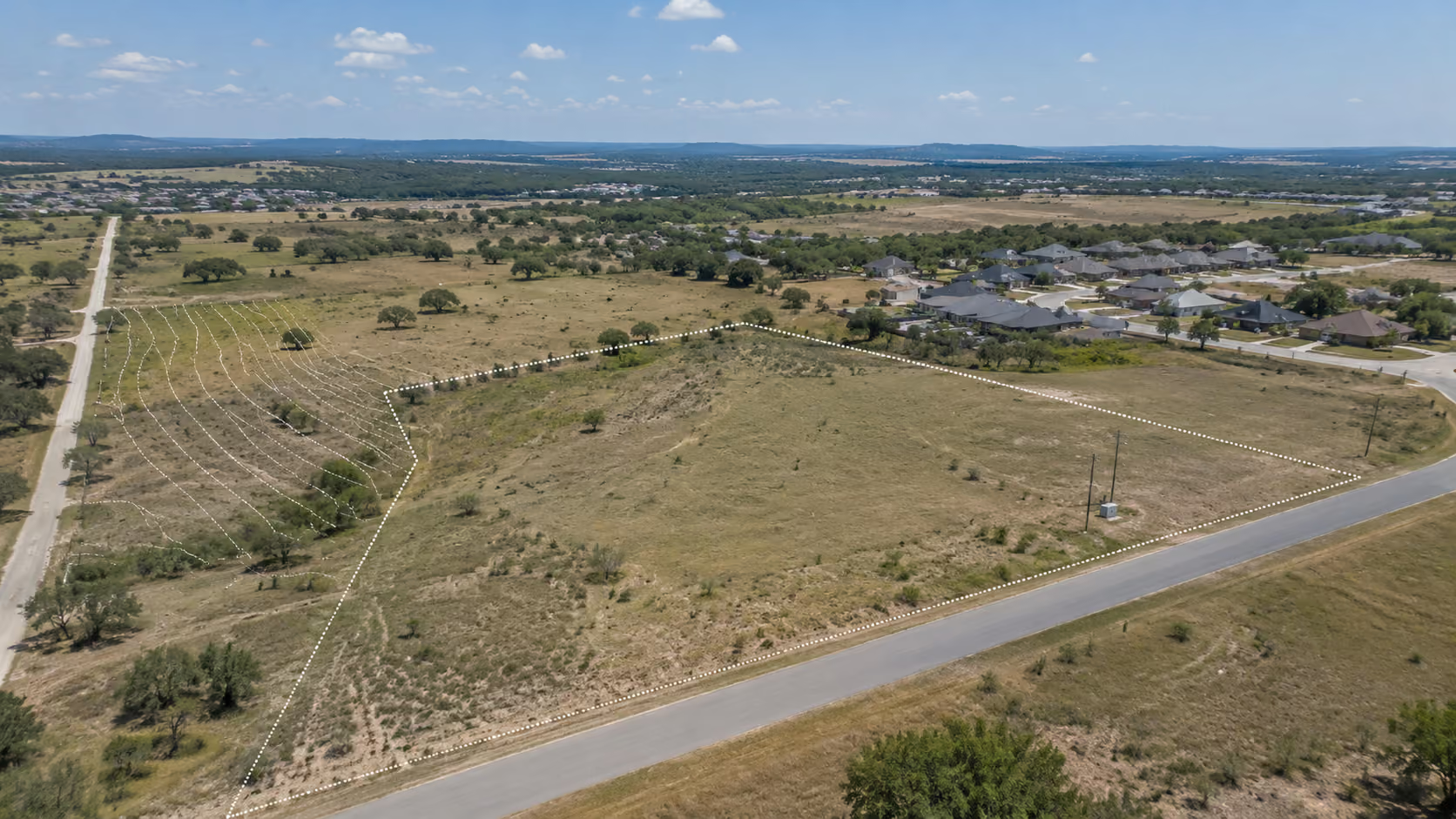
Land loans finance the purchase of vacant or undeveloped property, but the category encompasses several distinct property types that lenders evaluate differently. Raw land refers to completely undeveloped property without utilities, road access, or infrastructure improvements. Improved land includes properties with some development work completed, such as utility connections, grading, or subdivision approval. The level of improvements directly impacts both loan availability and terms, as lenders view improved land as less risky than raw acreage.
The financing structure for land loans differs significantly from traditional real estate lending because there's no existing income stream to support debt service. Lenders must rely entirely on the borrower's other income sources or the projected cash flow from future development to justify the loan. This reality makes land loans inherently more challenging to obtain and typically results in more conservative loan-to-value ratios and shorter terms than conventional property financing.
Interest rates for land loans generally run higher than traditional real estate loans due to the increased risk profile and lack of income-producing collateral. The team at Brightbridge Realty Capital structures these loans as bridge financing, recognizing that most land acquisitions represent transitional opportunities rather than long-term hold strategies. Borrowers typically plan to develop the property, subdivide and sell parcels, or flip the land to another developer within a relatively short timeframe.
The application process requires extensive documentation about both the property and the borrower's development plans. Lenders need detailed information about zoning, environmental conditions, utility availability, and market demand for the intended use. Here are the critical components that every land loan application must address:
- Exit Strategy Documentation: Clear plans for how the borrower will repay the loan, whether through development, resale, or refinancing
- Market Analysis: Comprehensive evaluation of demand for the intended land use and comparable sales in the area
- Development Feasibility: Engineering studies, soil tests, environmental assessments, and utility availability reports
- Financial Capacity: Proof that the borrower can service debt and fund development costs beyond the initial land purchase
Successful land loan applications tell a complete story about the opportunity and demonstrate that the borrower has thoroughly evaluated all aspects of the transaction. Lenders want to see that borrowers understand the risks involved and have realistic timelines for executing their plans. The documentation process often takes longer than traditional real estate loans because of the additional due diligence required on both the property and development strategy.
Timeline expectations should account for the complexity of underwriting land transactions, as lenders typically need 30-45 days to complete their evaluation process. This extended timeline reflects the need for specialized appraisals, environmental assessments, and detailed review of development plans that don't apply to income-producing properties.
The Land Loan Underwriting Process
Underwriters approach land loans by evaluating three primary risk factors: the property's development potential, the borrower's experience and financial capacity, and the overall market conditions for the intended use. Property evaluation begins with a comprehensive analysis of zoning regulations, development restrictions, and infrastructure requirements that will impact the feasibility and cost of the borrower's plans. Unlike income-producing properties where current performance provides clear metrics, land valuation requires projecting future value based on development potential and market absorption rates.
The appraisal process for land loans involves specialized methodologies that differ from traditional real estate appraisals. Appraisers must consider the highest and best use of the property, development costs, regulatory requirements, and market timing to arrive at current value estimates. This analysis becomes particularly complex for raw land where the appraiser must account for substantial development costs and regulatory approval processes that could impact both timeline and profitability.
Environmental due diligence plays a critical role in land loan underwriting because environmental issues can completely derail development plans or create massive unexpected costs. Lenders typically require Phase I environmental assessments at minimum, with Phase II testing required if any red flags emerge. Experts at Brightbridge Realty Capital have seen deals collapse when environmental issues surface late in the process, which is why thorough upfront evaluation protects both lenders and borrowers from costly surprises.
The financial analysis focuses on the borrower's ability to service debt without rental income from the property, requiring careful evaluation of other income sources and overall financial strength. Key underwriting criteria include:
- Debt-to-Income Ratios: Conservative ratios that account for the lack of property income and potential development cost overruns
- Liquidity Requirements: Substantial cash reserves to handle unexpected costs, extended development timelines, or market changes
- Development Experience: Track record of successful land development or similar projects that demonstrate capability to execute plans
- Exit Strategy Viability: Realistic market analysis supporting the borrower's timeline and profit projections for loan repayment
Credit evaluation for land loans often requires higher credit scores than traditional real estate financing because lenders view these transactions as inherently riskier. The underwriting process examines not just current credit metrics but also the borrower's history with development projects, construction loans, and other complex real estate transactions. Lenders want to see evidence that borrowers can navigate the challenges that inevitably arise during development processes.
Market analysis represents another critical component where underwriters evaluate local demand for the intended land use, absorption rates for similar developments, and economic factors that could impact the borrower's exit strategy. This analysis helps lenders assess whether the borrower's timeline and profit projections are realistic given current market conditions. Strong market fundamentals can offset other risk factors, while weak market conditions may require additional borrower equity or enhanced terms to make the deal acceptable.
Structuring and Closing Land Loans
Land loan structures typically feature shorter terms and higher down payment requirements compared to traditional real estate financing, reflecting the higher risk profile and transitional nature of most land acquisitions. Terms commonly range from 12 to 36 months, providing borrowers sufficient time to execute development or resale plans while limiting lender exposure to market changes and development risks. The shorter terms also align with the reality that most land purchases represent stepping stones to other opportunities rather than long-term investment holds.
Loan-to-value ratios for land loans generally max out at 70-75% of appraised value, with many lenders preferring even more conservative ratios for raw land transactions. This conservative approach protects lenders against valuation uncertainties and provides cushion for market fluctuations or development cost overruns that could impact the property's value. Borrowers should expect to invest substantial equity in land acquisitions, which also demonstrates their commitment to the project's success.
Interest rate structures often include rate adjustment mechanisms that account for the evolving risk profile as development progresses or market conditions change. Some lenders offer rate reductions when borrowers achieve specific milestones like zoning approvals or infrastructure improvements that reduce overall project risk. Fouladi and his team of loan experts structure these loans with flexibility that rewards borrowers for de-risking their projects while protecting lender interests throughout the loan term.
The closing process for land loans involves additional complexity due to the specialized due diligence requirements and documentation needed to support the underwriting decision. Essential closing components include:
- Title and Survey Work: Comprehensive title examination and detailed surveys that identify any encumbrances, easements, or boundary issues
- Environmental Clearance: Completion of required environmental assessments and clearance of any identified issues
- Development Documentation: Finalized development plans, regulatory approvals, and contractor agreements where applicable
- Exit Strategy Confirmation: Updated market analysis and confirmed takeout financing or buyer arrangements to support loan repayment
Documentation requirements extend beyond typical real estate closings to include detailed development budgets, construction timelines, and regulatory approval status. Lenders want comprehensive documentation that supports the borrower's execution plans and provides clear benchmarks for monitoring project progress throughout the loan term. This documentation becomes the foundation for ongoing communication between borrower and lender as the project moves forward.
Legal considerations for land loans often involve complex zoning issues, development agreements, and regulatory compliance requirements that don't apply to traditional real estate transactions. Borrowers should work with attorneys experienced in land development to ensure all legal requirements are properly addressed and that loan documentation aligns with their development plans. The legal framework established at closing can significantly impact the borrower's ability to execute their strategy efficiently.
Post-closing requirements typically include regular progress reporting, compliance with development milestones, and maintenance of adequate insurance coverage throughout the loan term. These requirements help lenders monitor project progress and identify potential issues before they become serious problems. Successful land loan relationships involve ongoing communication between borrowers and lenders, with both parties working together to navigate the challenges that inevitably arise during development processes.
FAQs
What types of land qualify for land loans?
Land loans can finance various property types, from raw undeveloped acreage to improved lots with utilities and infrastructure. Raw land without improvements represents the highest risk category, while lots with utilities, road access, and development approvals receive more favorable terms. The loan experts at Brightbridge Realty Capital evaluate each property based on its development potential, zoning status, and infrastructure availability. Agricultural land transitioning to development use, subdivided lots awaiting construction, and strategic assemblage parcels all qualify under the right circumstances. The key factor is demonstrating clear development potential and a viable exit strategy that supports loan repayment.
How much down payment is required for land loans?
Land loans typically require 25-30% down payments, significantly higher than traditional real estate financing due to the increased risk profile of undeveloped property. Raw land often demands the highest equity requirements, while improved lots with utilities and approvals may qualify for slightly lower down payments. Brightbridge Realty Capital's approach to funding considers the overall deal structure, borrower experience, and property characteristics when determining equity requirements. Strong borrowers with proven development track records may secure more favorable terms, while first-time land developers typically face conservative equity requirements. The substantial down payment requirement demonstrates borrower commitment and provides lender protection against market volatility.
What interest rates should I expect for land loans?
Interest rates for land loans typically run 2-4% higher than conventional real estate financing, reflecting the increased risk and lack of income-producing collateral. Rates vary based on factors including property type, borrower qualifications, loan-to-value ratio, and market conditions. The team at Brightbridge Realty Capital structures competitive rates while accounting for the unique risks associated with land financing. Raw land commands higher rates than improved properties, and borrower experience significantly impacts pricing. Short-term bridge financing for land acquisition often includes rate adjustment mechanisms tied to development milestones, potentially offering rate improvements as project risk decreases through successful execution of development plans.
How long does the land loan approval process take?
Land loan approvals typically require 30-45 days due to the complex due diligence process involving environmental assessments, development feasibility analysis, and specialized appraisals. The extended timeline reflects the additional documentation required compared to income-producing properties, including market studies, zoning verification, and infrastructure availability reports. Experts at Brightbridge Realty Capital work efficiently through this process but emphasize the importance of thorough evaluation to protect both lender and borrower interests. Borrowers can expedite approval by providing comprehensive development plans, environmental studies, and market analysis upfront. Well-prepared applications with complete documentation move faster than those requiring additional information requests during underwriting.
What documentation do I need for a land loan application?
Land loan applications require extensive documentation beyond typical real estate financing, including detailed development plans, environmental assessments, market analysis, and financial projections. Borrowers must provide proof of development experience, comprehensive budgets for proposed improvements, and clear exit strategies demonstrating loan repayment capability. Partners in real estate loans at Brightbridge Realty Capital require current surveys, title reports, zoning verification, and utility availability studies. Financial documentation includes tax returns, bank statements, proof of liquidity, and debt service capacity analysis. The application should tell a complete story about the opportunity, development timeline, market demand, and borrower qualifications to execute the proposed strategy successfully.
Can I get a land loan for investment property speculation?
Land loans for pure speculation without development plans face significant challenges, as lenders prefer borrowers with concrete strategies for adding value and generating returns. While some appreciation plays may qualify, lenders want to see market analysis supporting value growth and realistic timelines for exit strategies. BBRC founder Zak Fouladi emphasizes that successful land loans require clear value-add propositions, whether through development, subdivision, or strategic positioning for future sale to developers. Speculative plays without improvement plans typically face higher equity requirements, shorter terms, and more conservative loan-to-value ratios. Borrowers improve their chances by demonstrating market knowledge, development potential, and specific strategies for enhancing property value during the loan term.
What are the main risks lenders consider with land loans?
Lenders evaluate multiple risk factors unique to land financing, including development feasibility, environmental liabilities, zoning restrictions, and market absorption for the intended use. The lack of income production means borrowers must service debt from other sources, creating cash flow risk if personal income or business performance declines. The loan experts at Brightbridge Realty Capital also consider regulatory risks that could delay or prevent development, infrastructure costs that may exceed projections, and market timing issues that could impact exit strategies. Environmental surprises can derail projects entirely, while zoning changes or permit delays extend timelines and increase costs. Successful land loans require borrowers who understand these risks and have contingency plans for managing unexpected challenges.
How do land loans differ from construction loans?
Land loans finance property acquisition, while construction loans fund the building process on already-owned land, though some lenders offer combined land-construction financing packages. Land loans typically feature shorter terms focused on acquisition and initial development phases, whereas construction loans provide longer-term financing through the building process. The team at Brightbridge Realty Capital structures land loans as bridge financing for strategic acquisitions, with borrowers often transitioning to construction loans or permanent financing as projects progress. Underwriting differs significantly, with land loans emphasizing acquisition strategy and development potential, while construction loans focus on building plans, contractor qualifications, and permanent financing availability. Interest-only payments are common for land loans, while construction loans often feature progressive funding tied to completion milestones.