What Is Ground-Up Construction Financing and How Does It Work?

Summary
Ground-up construction financing provides capital to build new properties from scratch, typically through staged funding tied to construction milestones. The team at Brightbridge Realty Capital specializes in these complex loans for real estate investors developing residential and commercial projects.
Ground-up construction financing represents one of the most complex yet rewarding areas of real estate investment. Unlike purchasing existing properties where you can walk through, inspect, and immediately understand what you're buying, construction loans require you to envision and fund something that doesn't yet exist. This fundamental difference creates both tremendous opportunity and significant complexity that separates seasoned developers from casual investors.
Most real estate investors eventually hit a wall with existing inventory. You've renovated every distressed property in your market, competition for turnkey rentals has driven cap rates to unsustainable lows, and you're ready to create exactly what you want rather than settling for what's available. Ground-up construction financing opens the door to building custom properties that meet your exact investment criteria, whether that's maximizing rental income, targeting specific tenant demographics, or developing in emerging markets where existing inventory simply doesn't exist.
However, construction loans operate fundamentally differently from traditional acquisition financing. The team at Brightbridge Realty Capital regularly works with investors who assume construction loans function like standard mortgages, only to discover a completely different world of draw schedules, inspection requirements, and risk management protocols. Understanding these mechanics before you break ground can mean the difference between a profitable development and a financial disaster that drains your capital reserves.
Understanding the Construction Loan Structure
Ground-up construction financing typically operates on a draw-based system rather than providing a lump sum upfront. Lenders release funds in predetermined stages as construction progresses, protecting both the borrower and lender from various risks associated with incomplete projects. This staged funding approach ensures money flows only when work is completed and verified, preventing scenarios where borrowers exhaust loan proceeds before reaching substantial completion.
The initial loan amount is typically calculated based on the total project cost, including land acquisition, construction expenses, permits, and a contingency reserve. Most construction lenders require borrowers to have already secured the building lot, though some programs allow land acquisition within the overall loan structure. The loan-to-cost ratio usually ranges from 70% to 80%, meaning you'll need significant cash or equity to cover the remaining project costs plus any cost overruns that inevitably occur.
Interest payments during construction typically accrue against the outstanding loan balance rather than requiring monthly payments from your pocket. This interest reserve gets built into the total loan amount, allowing you to focus available cash flow on managing construction rather than servicing debt payments. However, experts at Brightbridge Realty Capital emphasize that this accumulated interest significantly impacts your total project cost and should factor heavily into profitability calculations before committing to any development project.
The draw schedule typically follows these major construction phases:
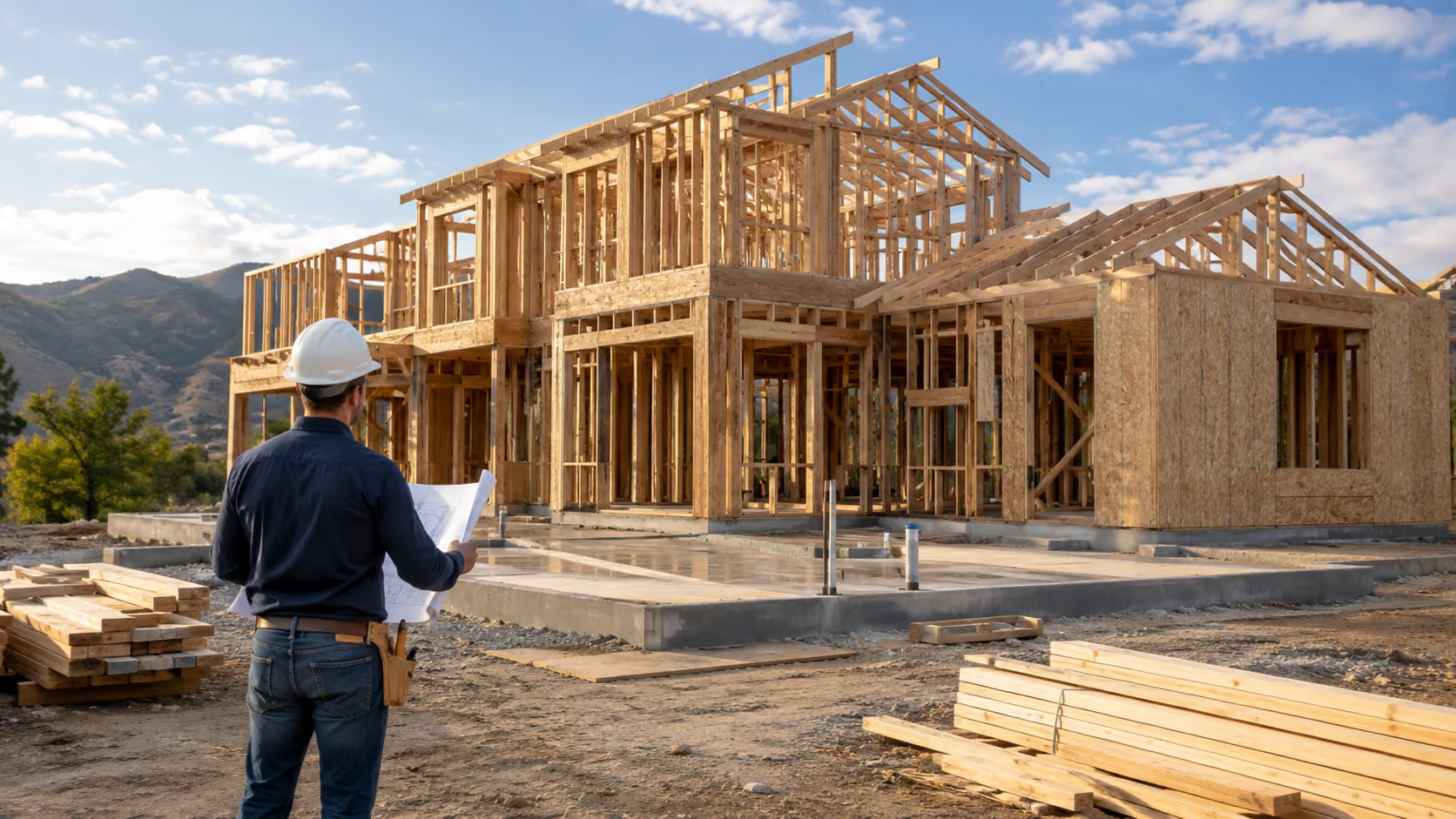
- Foundation and Framing: Usually 25-30% of total loan proceeds released after foundation pour and structural framing completion
- Mechanical and Electrical: Another 20-25% released after HVAC, plumbing, and electrical rough-in passes inspection
- Interior Completion: 30-35% released after flooring, fixtures, appliances, and interior finishes are substantially complete
- Final Draw: Remaining 15-20% released after final inspections, certificate of occupancy, and lender's final approval
Construction lenders require detailed budgets and contractor agreements before approving any loan. You can't simply estimate costs and hope everything works out during construction. Lenders want to see fixed-price contracts, detailed material specifications, and realistic timelines that account for weather delays, permit processing, and inspection schedules that often extend beyond optimistic contractor projections.
The approval process involves much more scrutiny than standard acquisition loans. Lenders evaluate not just your financial capacity but also your contractor's experience, the local market's absorption rates for your property type, and realistic exit strategies once construction completes. This comprehensive underwriting process can take 45 to 60 days, significantly longer than bridge loans or standard rental property financing that experienced investors expect.
Managing the Construction Process and Risk Factors
Construction projects involve numerous variables outside your direct control, making risk management essential for successful completion. Weather delays, material shortages, permit complications, and contractor issues can derail even well-planned projects. Professional developers build substantial contingency reserves and timeline buffers into every project, while inexperienced investors often underestimate these variables and find themselves scrambling for additional capital when problems arise.
The relationship between borrower, contractor, and lender becomes crucial during the construction phase. Your lender isn't just providing money; they're monitoring progress, reviewing draw requests, and ensuring work quality meets acceptable standards. This creates a three-way partnership where communication and transparency prevent misunderstandings that can halt funding and delay project completion. Contractors unfamiliar with construction loan requirements sometimes create unnecessary complications that experienced developers avoid by choosing lenders and contractors who work well together.
Material cost fluctuations present significant risks in today's volatile market environment. Lumber, steel, concrete, and other building materials can experience dramatic price swings that destroy project profitability if not properly managed. BBRC founder Zak Fouladi regularly advises clients to negotiate material escalation clauses with contractors and maintain larger contingency reserves to absorb unexpected cost increases that have become common in recent years.
Key risk factors that can impact construction loan success include:
- Weather and Seasonal Delays: Extended rain, snow, or extreme temperatures can push completion dates beyond original projections
- Permit and Inspection Delays: Municipal approval processes often take longer than anticipated, especially in markets with limited staffing
- Contractor Performance Issues: Subcontractor delays, quality problems, or financial difficulties can halt progress and require expensive corrections
- Material and Labor Shortages: Supply chain disruptions and skilled labor shortages continue impacting construction timelines across most markets
Most construction lenders include extension options within loan agreements, recognizing that delays often occur despite careful planning. However, these extensions typically come with additional fees and higher interest rates that impact overall project profitability. The key is building realistic timelines from the beginning rather than hoping everything goes perfectly and expecting to complete construction in minimum possible time frames.
Successful construction projects require active management and regular communication with all parties involved. You can't simply fund a project and wait for completion calls. Regular site visits, progress meetings with contractors, and proactive communication with your lender help identify potential issues before they become expensive problems. This hands-on approach separates successful developers from investors who struggle with construction projects and often avoid them after expensive learning experiences.
Exit Strategies and Conversion Options
Planning your exit strategy before starting construction is crucial for project success and future financing options. Most construction loans are designed as short-term facilities, typically ranging from 12 to 18 months, with the expectation that borrowers will either sell the completed property or convert to permanent financing. The team at Brightbridge Realty Capital works with clients to structure construction loans that align with their intended exit strategies, whether that involves immediate sale, long-term rental income, or portfolio expansion plans.
Construction-to-permanent loans offer the advantage of seamless conversion from construction financing to traditional mortgage financing without requiring a separate application process. These products are particularly valuable in rising interest rate environments where locking long-term rates during the construction phase protects against market fluctuations. However, construction-to-permanent loans typically require more stringent qualification requirements and may limit flexibility if your investment strategy changes during the construction process.
For investors planning to hold completed properties as rentals, DSCR-based permanent financing offers more flexibility than traditional mortgage products. These loans focus on the property's income-generating potential rather than personal income documentation, making them ideal for investors with multiple properties or complex tax situations. The key is ensuring your construction budget and design specifications will generate sufficient rental income to support desired debt service coverage ratios that permanent lenders require.
Common exit strategies for construction projects include:
- Immediate Sale: Completing construction and selling to end users or other investors for maximum profit realization
- Rental Property Conversion: Converting to permanent financing and holding for long-term cash flow and appreciation
- Portfolio Refinancing: Including completed construction in larger portfolio refinancing to optimize overall leverage and cash flow
- 1031 Exchange: Using completed construction as replacement property in tax-deferred exchanges for portfolio diversification
Market conditions significantly impact optimal exit strategies and should influence construction loan structuring decisions. Strong retail markets may favor immediate sale strategies, while robust rental markets might support permanent financing conversion. The experts at Brightbridge Realty Capital help clients evaluate local market conditions and structure construction loans that preserve multiple exit options until market conditions and project performance become clearer.
Construction projects also create opportunities for forced appreciation that exceeds what's possible through renovation projects. Building in emerging markets or creating unique property types that meet underserved demand can generate substantial equity creation that justifies the additional complexity and risk associated with ground-up development. However, this potential requires careful market analysis and realistic assessment of your capacity to manage complex projects that demand significantly more time and attention than standard real estate investments.
FAQs
What exactly is ground-up construction financing?
Ground-up construction financing is a specialized loan product designed to fund the complete construction of a new building from an empty lot or after demolishing an existing structure. Unlike traditional mortgages, these loans provide capital in stages as construction progresses, typically starting with land acquisition and moving through foundation, framing, and completion phases. The team at Brightbridge Realty Capital explains that these loans are short-term, usually 12-24 months, and convert to permanent financing upon project completion. Interest rates are typically variable and higher than conventional mortgages due to the increased risk. Borrowers receive funds through scheduled draws tied to construction milestones, ensuring proper project progression and lender protection throughout the building process.
How does the draw schedule work in construction financing?
The draw schedule is a critical component where funds are released in predetermined stages based on construction milestones rather than as a lump sum. Typically, draws occur at foundation completion, framing, roofing, electrical/plumbing rough-in, drywall, and final completion. Each draw requires an inspection to verify work quality and progress before fund release. Experts at Brightbridge Realty Capital note that borrowers usually pay interest only on funds already drawn, not the entire loan amount. This system protects lenders by ensuring money isn't advanced beyond actual construction progress while helping borrowers manage cash flow efficiently. Draw schedules are customized based on project scope, timeline, and lender requirements, making careful coordination between borrowers, contractors, and lenders essential for smooth project execution.
What are the key requirements to qualify for ground-up construction financing?
Qualification requirements are typically more stringent than traditional mortgages due to higher risk factors. Lenders generally require 20-30% down payment, strong credit scores (usually 680+), detailed construction plans, contractor credentials, realistic timeline, and comprehensive budget breakdown. Loan experts at Brightbridge Realty Capital emphasize that borrowers must demonstrate sufficient income to cover construction loan payments plus current housing costs during the building period. Lenders also evaluate the borrower's construction experience, contractor relationships, and project feasibility. Additional requirements often include builder's risk insurance, performance bonds, and contingency funds for cost overruns. The approval process involves reviewing architectural plans, construction contracts, permits, and conducting property appraisals based on projected completed value rather than current land value.
What types of properties can be financed through ground-up construction loans?
Ground-up construction financing covers various property types including single-family homes, multi-family developments, commercial buildings, mixed-use projects, and specialty structures like warehouses or retail centers. The team at Brightbridge Realty Capital works with clients on residential spec homes, custom primary residences, investment properties, and commercial developments. Each property type has specific lending criteria, with residential projects typically having more standardized requirements while commercial properties require more detailed feasibility analysis. Lenders consider factors like location, market demand, construction complexity, and end-use purpose when evaluating applications. Some specialized lenders focus on specific property types, while others offer broader construction financing options. The key is matching the right lender with the appropriate project type and borrower profile for optimal terms and approval likelihood.
How do interest rates work during the construction phase?
Construction loan interest rates are typically variable and higher than permanent mortgage rates, reflecting the increased risk associated with incomplete projects. During construction, borrowers usually pay interest only on funds already drawn from the total loan amount, not the entire approved loan. BBRC founder Zak Fouladi explains that as each draw occurs, the interest payment increases based on the cumulative amount borrowed. Rates are often tied to prime rate plus a margin, causing payments to fluctuate with market conditions. Upon construction completion, loans typically convert to permanent financing at prevailing market rates, or borrowers can refinance with a separate permanent loan. This structure helps manage cash flow during construction while providing flexibility for long-term financing options once the project is complete.
What happens if construction costs exceed the original budget?
Cost overruns are common in construction projects, making contingency planning crucial from the outset. Most lenders require a contingency fund of 10-20% of the construction budget to address unexpected expenses. If costs exceed the original budget plus contingencies, borrowers have several options: contribute additional personal funds, secure supplemental financing, reduce project scope, or negotiate with contractors for cost reductions. Fouladi and his team of loan experts recommend thorough upfront planning and working with experienced contractors to minimize overrun risks. Communication with lenders is essential when budget issues arise, as some may approve loan modifications or additional funding based on increased property value. However, borrowers remain responsible for any costs exceeding the approved loan amount, emphasizing the importance of realistic initial budgeting and maintaining adequate reserves.
How long does the construction loan approval process typically take?
The approval process for ground-up construction financing is generally longer and more complex than traditional mortgage approvals, typically taking 45-90 days depending on project complexity and lender requirements. Initial pre-approval can occur within 2-3 weeks, but final approval requires detailed review of construction plans, contractor credentials, permits, budgets, and property appraisals. Partners in real estate loans at Brightbridge Realty Capital emphasize that preparation significantly impacts timeline - having complete documentation, finalized construction plans, and contractor agreements ready expedites the process. Complex commercial projects or unique residential designs may require additional time for specialized underwriting. Borrowers can help accelerate approval by working with experienced contractors, providing comprehensive documentation upfront, and maintaining open communication with lenders throughout the review process.
What are the main risks and benefits of ground-up construction financing?
Ground-up construction financing offers significant benefits including the ability to build exactly what you want, potentially lower total costs compared to buying existing properties, and the opportunity to incorporate modern materials and energy-efficient features. However, risks include cost overruns, construction delays, weather-related setbacks, contractor issues, and market changes affecting final property value. Brightbridge Realty Capital helps clients understand that successful projects require careful planning, experienced contractors, realistic timelines, and adequate financial reserves. Benefits often outweigh risks for well-planned projects with qualified teams. Key risk mitigation strategies include thorough contractor vetting, detailed contracts with penalty clauses, comprehensive insurance coverage, and maintaining open communication with all project stakeholders. Working with experienced construction lenders who understand these challenges is crucial for project success.