What Is Judicial Foreclosure vs. Non-Judicial Foreclosure?
Summary
Judicial foreclosure requires court approval while non-judicial foreclosure allows lenders to foreclose through a trustee without court involvement. Understanding these processes helps investors evaluate lending risks. Brightbridge Realty Capital's loan experts guide investors through foreclosure implications when structuring deals.
Understanding foreclosure processes isn't just academic knowledge for real estate investors - it's critical intelligence that affects every deal you structure. When you're evaluating properties, negotiating loan terms, or planning exit strategies, knowing whether you're operating in a judicial or non-judicial foreclosure state changes the entire risk profile of your investment. The foreclosure process directly impacts timeline expectations, legal costs, and recovery scenarios when deals go sideways.
Most investors focus heavily on acquisition metrics and cash flow projections, but they often overlook how foreclosure laws in their target markets affect both their lending relationships and potential acquisition opportunities. The difference between judicial and non-judicial foreclosure isn't just a legal technicality - it fundamentally alters the power dynamic between borrowers and lenders, affects distressed property availability, and influences how aggressive lenders can be with loan terms. Smart investors factor these realities into their market selection and deal structuring from day one.
The loan experts at Brightbridge Realty Capital regularly see investors who understand cap rates and debt service coverage ratios perfectly but haven't considered how their state's foreclosure laws impact their financing options and risk exposure. Whether you're securing bridge loans, DSCR financing, or traditional commercial mortgages, the foreclosure framework in your market affects everything from interest rates to loan-to-value ratios that lenders are willing to offer.
Understanding Judicial Foreclosure: Court-Supervised Process
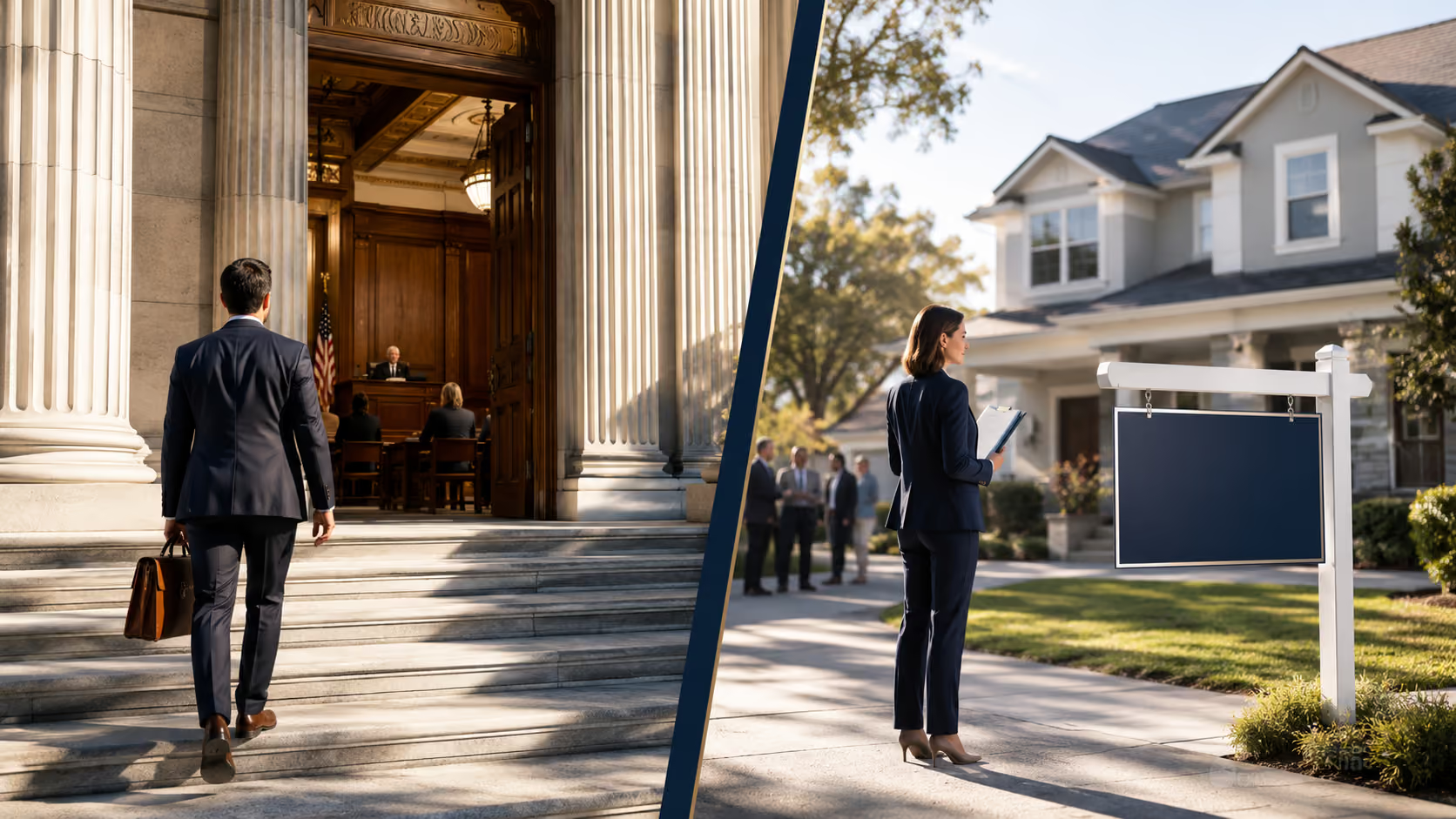
Judicial foreclosure operates exactly as the name suggests - through the court system with judicial oversight at every critical stage. When a borrower defaults on their mortgage payments, the lender must file a lawsuit in state court to obtain legal permission to foreclose on the property. This process requires the lender to prove the borrower is in default, demonstrate the debt amount owed, and show they have legal standing to foreclose on the specific property serving as collateral.
The court reviews all documentation, examines the lender's claims, and provides the borrower opportunities to respond, contest the foreclosure, or present defenses. This judicial oversight creates multiple checkpoints where borrowers can challenge improper documentation, negotiate workout solutions, or raise legal defenses that could delay or prevent the foreclosure entirely. The court maintains control over the timeline and must approve key decisions throughout the process.
Most judicial foreclosure states require lenders to provide extensive notice periods, allow for redemption rights, and follow strict procedural requirements that protect borrower interests. The entire process typically takes six months to several years depending on court backlogs, borrower responses, and complexity of the case. This extended timeline provides borrowers significant opportunities to cure defaults, refinance, or negotiate alternative solutions with their lenders.
Key characteristics of judicial foreclosure include:
- Court Approval Required: Lenders must obtain judicial permission before proceeding with foreclosure actions and property sales
- Extended Timeline: Process typically ranges from 6 months to 3+ years depending on court schedules and borrower defenses
- Borrower Protections: Multiple opportunities for borrowers to contest, delay, or cure defaults throughout the supervised process
- Higher Costs: Legal fees, court costs, and extended carrying costs increase total foreclosure expenses for lenders
The extended timeline in judicial foreclosure states creates interesting dynamics for both borrowers and investors. Borrowers facing financial difficulties have more time to explore refinancing options, negotiate loan modifications, or develop strategies to cure their defaults. However, this same timeline can frustrate investors who are waiting to acquire distressed properties or lenders who need to recover their capital quickly to redeploy in new deals.
Experts at Brightbridge Realty Capital observe that judicial foreclosure states often have fewer distressed property opportunities available at any given time because the lengthy process keeps properties tied up in legal proceedings. This reduced supply can actually support property values in some markets, but it also means investors relying on distressed acquisitions need longer deal pipelines and more patient capital sources.
Non-Judicial Foreclosure: Streamlined Trustee Process
Non-judicial foreclosure operates through a trustee system that bypasses court involvement entirely, creating a much faster and more predictable process for lenders. When borrowers sign mortgage documents in non-judicial states, they typically execute both a promissory note and a deed of trust that names a neutral third-party trustee with the power to sell the property if the borrower defaults. This trustee arrangement gives lenders a direct path to foreclosure without requiring judicial approval or supervision.
The process begins when lenders notify the trustee of borrower default and request initiation of foreclosure proceedings. The trustee then follows state-mandated notice requirements, which typically include recording a notice of default, publishing legal notices in local newspapers, and providing direct notice to the borrower and other interested parties. These notice periods vary by state but generally range from 90 to 120 days before the trustee can schedule a foreclosure sale.
Once notice requirements are satisfied, the trustee conducts a public auction where the property is sold to the highest bidder, often with the lender bidding the outstanding loan amount to protect their position. The entire process is governed by state statutes rather than individual court decisions, creating more predictable timelines and standardized procedures. Borrowers have limited opportunities to delay the process unless they can demonstrate specific statutory violations or fraud.
Essential features of non-judicial foreclosure include:
- No Court Involvement: Trustees handle the entire process according to state statutes without judicial oversight
- Faster Timeline: Most non-judicial foreclosures complete within 3-6 months from initial default notice
- Limited Borrower Defenses: Fewer opportunities to delay or contest foreclosure compared to judicial states
- Lower Costs: Reduced legal fees and faster resolution minimize lender expenses and carrying costs
The efficiency of non-judicial foreclosure creates a more lender-friendly environment that often translates into better loan terms for qualified borrowers. Lenders in non-judicial states typically offer lower interest rates, higher loan-to-value ratios, and more flexible underwriting because they can recover their capital more quickly if deals go bad. This creates a competitive advantage for investors operating in non-judicial foreclosure markets.
The team at Brightbridge Realty Capital notes that non-judicial states often have more active distressed property markets because the faster foreclosure timeline creates steady inventory of bank-owned properties and short sale opportunities. Investors who specialize in distressed acquisitions often prefer these markets because they can build more predictable deal pipelines and rely on consistent property flow from the foreclosure process.
Strategic Implications for Real Estate Investors
The choice between investing in judicial versus non-judicial foreclosure states affects every aspect of your real estate investment strategy, from financing options to exit planning. Lenders consistently offer better terms in non-judicial states because they can recover their investments more quickly and with greater certainty if borrowers default. This translates into lower interest rates, reduced origination fees, and more aggressive loan-to-value ratios for investors who can demonstrate strong deal fundamentals and experience.
Investors in judicial foreclosure states often face more conservative underwriting standards because lenders must factor extended foreclosure timelines and higher recovery costs into their risk models. However, these same protections can work in your favor if you encounter financial difficulties, providing more time to restructure deals, find new financing, or negotiate workout arrangements with existing lenders. The extended timeline also means fewer competitors in distressed property markets, potentially creating better acquisition opportunities for patient investors.
Your investment strategy should account for how foreclosure laws affect local market dynamics, property values, and deal flow in your target areas. Non-judicial states typically have more liquid distressed property markets with regular inventory from completed foreclosures, while judicial states may have less inventory but potentially better pricing due to reduced competition. Both scenarios create opportunities, but they require different approaches to deal sourcing and market timing.
Key strategic considerations for investors include:
- Financing Terms: Non-judicial states typically offer better interest rates, LTV ratios, and loan terms due to reduced lender risk
- Market Dynamics: Judicial states often have less distressed inventory but potentially better pricing for patient investors
- Risk Management: Judicial foreclosure provides more borrower protections but non-judicial offers more predictable lender recovery
- Deal Flow: Non-judicial markets typically provide steadier streams of distressed opportunities for acquisition-focused investors
Smart investors factor foreclosure laws into their market selection criteria alongside traditional metrics like job growth, population trends, and rental demand. If you're building a portfolio strategy around distressed acquisitions, non-judicial states often provide better deal flow and more predictable inventory. Conversely, if you're focused on cash-flowing rentals with conservative leverage, judicial states might offer better long-term stability and borrower protections.
Fouladi and his team of loan experts emphasize that understanding your state's foreclosure process helps you negotiate better loan terms and structure deals that align with local legal realities. Whether you're securing bridge financing for fix-and-flip projects or DSCR loans for rental properties, demonstrating knowledge of local foreclosure laws shows lenders you understand the complete risk picture and can make informed decisions about leverage and exit strategies.
FAQs
How long does judicial foreclosure typically take compared to non-judicial?
Judicial foreclosure generally takes 6 months to 3+ years depending on court backlogs and borrower defenses, while non-judicial foreclosure typically completes in 3-6 months. The extended timeline in judicial states results from required court approval, multiple hearing opportunities, and borrower protection periods. Brightbridge Realty Capital's loan experts factor these timelines into underwriting decisions, as longer foreclosure processes increase lender risk and carrying costs. Investors should understand these differences affect both financing terms and distressed property availability in their target markets.
Which states use judicial vs non-judicial foreclosure?
Approximately 22 states primarily use judicial foreclosure, including Florida, New York, Illinois, and Pennsylvania, while about 28 states use non-judicial processes, including California, Texas, Arizona, and Nevada. Some states allow both methods depending on loan type and lender preference. The team at Brightbridge Realty Capital helps investors understand how their target markets' foreclosure laws impact financing options and deal structures. These geographic differences significantly affect lending terms, with non-judicial states typically offering more favorable loan conditions due to reduced lender recovery risks and faster resolution timelines.
Can borrowers stop foreclosure in non-judicial states?
Borrowers in non-judicial states have limited but important options to stop foreclosure, including curing the default by paying all past-due amounts plus fees, filing bankruptcy to trigger automatic stay protections, or challenging improper procedures in court. However, these defenses are more restricted compared to judicial states. Partners in real estate loans at Brightbridge Realty Capital explain that non-judicial processes offer fewer delay tactics, making timeline predictions more reliable for both lenders and investors. Understanding these limitations helps investors evaluate market dynamics and potential acquisition opportunities from distressed properties.
Do lenders prefer judicial or non-judicial foreclosure?
Lenders overwhelmingly prefer non-judicial foreclosure due to faster timelines, lower legal costs, and more predictable outcomes. The streamlined trustee process reduces carrying costs and allows quicker capital recovery for redeployment. This preference translates into better loan terms for borrowers in non-judicial states, including lower interest rates and higher loan-to-value ratios. Experts at Brightbridge Realty Capital note that lender preference for non-judicial markets creates competitive advantages for investors operating in these states, as reduced lender risk typically results in more aggressive financing terms and better deal structures.
What are the cost differences between judicial and non-judicial foreclosure?
Judicial foreclosure costs significantly more due to attorney fees, court costs, extended carrying costs, and property maintenance over longer timelines. Non-judicial foreclosure minimizes these expenses through standardized trustee processes and faster resolution. Total costs in judicial states often exceed $15,000-$30,000 compared to $5,000-$15,000 in non-judicial states. The loan experts at Brightbridge Realty Capital factor these cost differences into risk assessments and pricing models. Higher foreclosure costs in judicial states often result in more conservative lending terms, while lower costs in non-judicial states enable more competitive loan offerings.
How do foreclosure laws affect property values?
Foreclosure laws indirectly impact property values through market dynamics and inventory levels. Judicial states often maintain higher property values due to slower foreclosure processes that limit distressed inventory, while non-judicial states may see more price pressure from regular foreclosure sales but also more market liquidity. The extended timelines in judicial states can artificially support pricing by restricting supply. Brightbridge's approach to funding considers these market dynamics when evaluating collateral values and loan-to-value ratios, recognizing that foreclosure processes affect both individual property risks and overall market conditions in different ways.
What rights do borrowers have during foreclosure?
Borrower rights vary significantly between judicial and non-judicial states. Judicial foreclosure provides extensive due process rights including court hearings, response opportunities, and multiple chances to cure defaults. Non-judicial foreclosure limits borrower rights to statutory notice requirements and specific challenge procedures. Most states provide some form of redemption rights, allowing borrowers to reclaim properties after foreclosure sales. BBRC founder Zak Fouladi emphasizes that understanding borrower rights helps investors evaluate both their own protection levels when using leverage and potential delays when acquiring distressed properties through foreclosure processes.
Can investors buy properties during foreclosure?
Investors can acquire properties at various foreclosure stages, including pre-foreclosure negotiations with distressed owners, courthouse auction sales, and post-foreclosure bank-owned properties. Each stage offers different opportunities and risks. Non-judicial states typically provide more predictable auction processes and timelines, while judicial states may offer more pre-foreclosure opportunities due to extended processes. The team at Brightbridge Realty Capital often works with investors who specialize in distressed acquisitions, providing bridge financing for quick closings and renovation capital for foreclosure purchases that need immediate improvements before stabilization or resale.