Cut Out the Middleman: Your Guide to Direct Real Estate Lenders

Summary
Discover how to find direct lender for real estate investing. Cut out middlemen for fast, flexible funding and secure your next investment.
Open up Your Real Estate Deals with Direct Lenders

If you're looking for how to find direct lender for real estate investing, you've come to the right place. Real estate investing is exciting, but getting the right financing can be a big challenge. Traditional banks are often slow and have strict rules. This can make you miss out on great deals, especially for projects like fix-and-flips or expanding your rental portfolio. Direct lenders offer a different path – one with speed, flexibility, and solutions custom to investors.
Here's how to quickly find a direct lender for your real estate investments:
- Search Online: Use specific terms like "direct real estate lenders" or "hard money lenders" to find online platforms and companies.
- Ask for Referrals: Get recommendations from real estate agents, brokers, lawyers, and other investors you trust.
- Network: Attend real estate investment events, meetups, and online forums to connect with lenders and get insights.
- Check Directories: Use specialized lender directories and platforms designed to connect investors with direct lenders.
I'm Daniel Lopez, and I've spent years helping real estate investors steer complex financing structures. My mission is to bridge the gap between institutions and individuals, especially when clients are figuring out how to find direct lender for real estate investing. This guide will help you understand and connect with direct lenders, ensuring your investment goals are within reach.
How to find direct lender for real estate investing helpful reading:
Understanding Direct Lenders for Real Estate Investing
When we talk about direct lenders in real estate investing, we're referring to financial institutions or private entities that lend their own capital directly to borrowers, without the need for an intermediary like a mortgage broker to facilitate the loan. This means they handle everything in-house, from underwriting to funding, and often servicing the loan themselves.
The core of a direct lender's operation is that they are the source of the funds. They assess risk, underwrite loans, and fund them using their own capital or investor-backed funds. This direct approach offers several compelling advantages over traditional banks or even working through a broker.
Advantages of Using a Direct Lender Over Traditional Banks or Brokers:
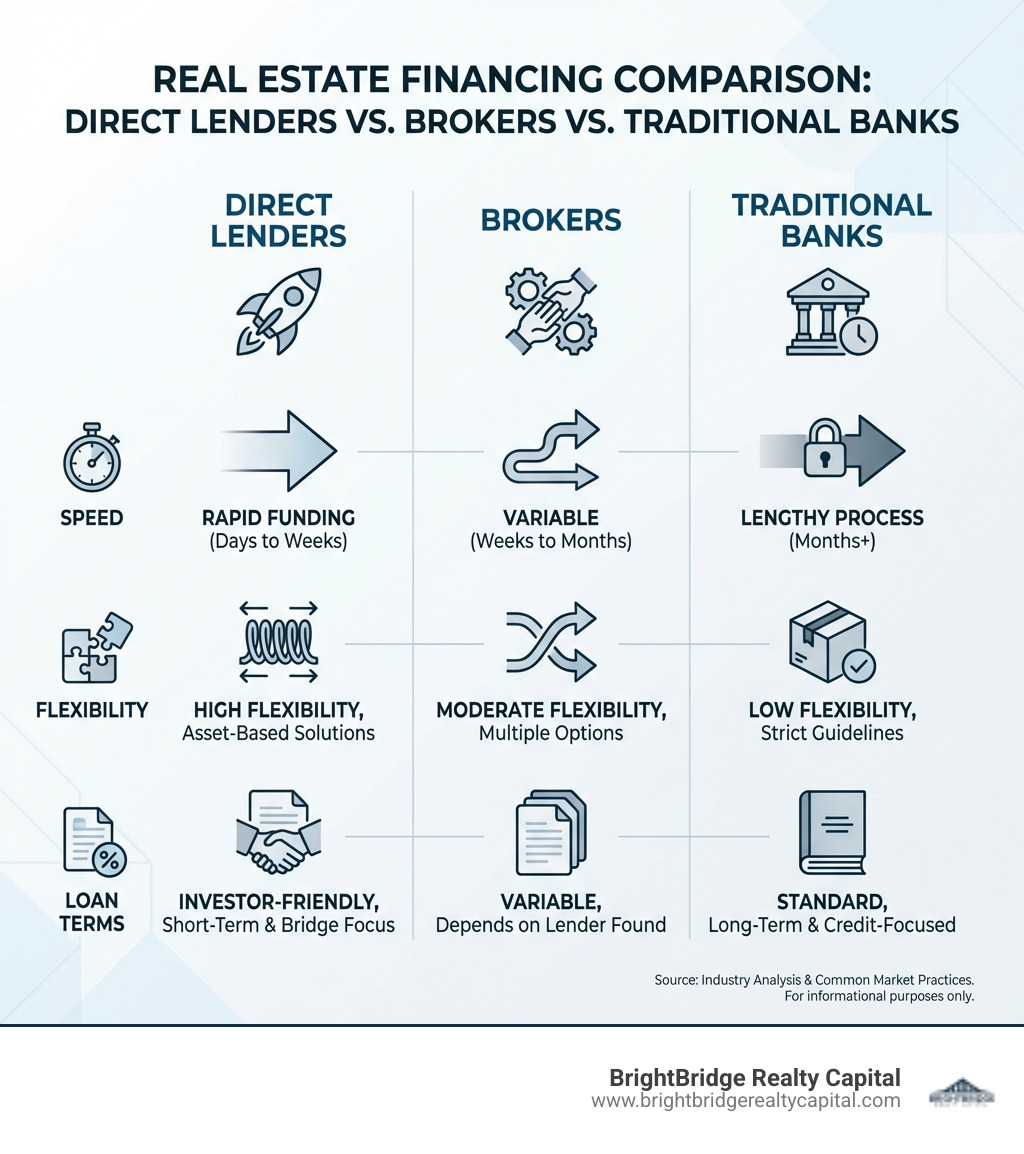
- Speed of Closing: Traditional banks are notorious for their lengthy approval processes, which can take weeks or even months. Direct lenders, particularly those specializing in investment properties, can approve and fund loans much faster, sometimes within a matter of days. For time-sensitive real estate deals, this speed can be the difference between seizing a lucrative opportunity and missing out. We understand the need for rapid closings, often within a week, to help you capitalize on market opportunities in dynamic markets like New York.
- Flexible Terms: Unlike the rigid criteria of traditional banks, direct lenders often offer more flexible loan structures and terms. They are typically asset-based, meaning they focus on the value and potential of the property itself rather than solely on the borrower's credit score or traditional income streams. This flexibility allows for custom loan amounts, interest rates, and repayment schedules that can adapt to specific project needs, especially for unique or unconventional properties that banks might shy away from.
- Fewer Intermediaries: By cutting out the middleman, the lending process becomes more streamlined. This can lead to clearer communication, faster decision-making, and potentially fewer fees. You're dealing directly with the source of capital, which fosters a more direct and often more transparent relationship.
Typical Loan Terms, Interest Rates, and Fees Associated with Direct Real Estate Loans:
Direct real estate loans, especially those from private or hard money lenders, come with terms that reflect their speed and flexibility.
- Interest Rates: These are generally higher than traditional bank loans due to the quicker funding, reduced underwriting requirements, and higher perceived risk. We've seen rates typically range from 6% to 12% or more, depending on the lender, the project's risk profile, the borrower's experience, and market conditions.
- Loan Periods: Direct loans are often short-term, designed for projects with a rapid turnaround. Common loan terms are between 6 to 36 months, making them ideal for fix-and-flips or as bridge loans while permanent financing is secured.
- Origination Fees: It's common for these loans to include origination fees, which are upfront charges for processing the loan. These typically range from 1% to 5% of the loan amount.
- Loan-to-Value (LTV): Direct lenders often have specific LTV requirements, which is the loan amount as a percentage of the property's value. For instance, some may offer up to 75% LTV for purchases or up to 70% for refinances on bridge loans. For DSCR rental loans, LTVs can go up to 80% for purchase or rate/term refi, and up to 75% for cash-out.
These terms are part of the trade-off for speed and flexibility, allowing investors to move quickly on deals that might not fit traditional financing models.
Types of Direct Lenders and Their Specialties
The landscape of direct lenders for real estate investing is diverse, each with their own focus and ideal use cases. Understanding these categories is crucial for knowing how to find direct lender for real estate investing that matches your specific project.

Hard Money Lenders
Hard money lenders are perhaps the most well-known type of direct lender in the real estate investment world. They specialize in short-term, asset-based loans, meaning their lending decision is primarily based on the value of the property securing the loan, rather than the borrower's credit history or income. Their underwriting process is heavily weighted on the property's After-Repair Value (ARV), which they will verify with their own appraisal. A strong, clear exit strategy—whether selling the property or refinancing into a long-term loan—is critical to securing a hard money loan, as these lenders want to be confident in your ability to repay the short-term debt. This makes them ideal for:
- Fix-and-Flips: Projects where speed and the after-repair value (ARV) are paramount. Hard money loans can fund up to 92.5% of the loan-to-cost (LTC) and often 100% of rehab costs.
- Bridge Loans: Used to "bridge the gap" between the purchase of a new property and the sale of an existing one, or while waiting for long-term financing to come through. These are short-term solutions, often with terms of 6-12 months.
- Distressed Properties: Acquiring properties that might not qualify for traditional financing due to their condition.
Hard money loans typically come with higher interest rates (as noted, 6% to 12% or more) and shorter terms (6 to 36 months), reflecting the higher risk and faster funding.
Private Money Lenders
The term "private money lenders" is often used interchangeably with "hard money lenders," but it can also encompass a broader range of individuals or small groups who lend their own capital. These can include:
- Individuals: High-net-worth individuals seeking higher returns on their capital.
- Small Investment Firms: Groups that pool capital from investors to fund real estate projects.
Private money lenders often offer even greater flexibility than institutional hard money lenders, as they may have fewer internal regulations and can make more customized decisions. They are excellent for projects that require a unique financing structure or a more personal relationship with the lender.
Fintech Platforms
Financial technology (fintech) platforms have emerged as a significant player in direct lending. These platforms leverage technology to streamline the loan application, underwriting, and funding processes, often connecting borrowers with a network of private investors or institutional capital. The user experience is often entirely digital, from uploading documents to tracking loan progress. By using algorithms and vast data sets, they can often provide instant pre-approvals and faster underwriting than even traditional private lenders. This data-driven approach can sometimes be more rigid than a relationship-based private lender, but it offers unparalleled speed and convenience for standard deal structures. They are known for:
- Efficiency: Automated underwriting and faster processing times.
- Accessibility: Often provide access to capital for a wider range of investors, including those with less experience or unconventional financial profiles.
- Specific Loan Products: Many specialize in particular niches, such as DSCR (Debt Service Coverage Ratio) loans for rental properties. For example, some platforms allow individual investors to fund real estate loans, offering consistent fixed-income opportunities, often with returns of 8%-12% APR, with minimum investments sometimes as low as $5,000.
Investment Specialties and Best Direct Lender Type for Each:
- Fix-and-Flips: Hard money lenders or private money lenders are typically the best fit due to their speed, asset-based lending, and willingness to fund rehab costs.
- Commercial Properties: While traditional banks do offer commercial loans, direct commercial lenders (often private money or specialized institutional lenders) can provide more flexible terms and faster closings for acquisition, refinancing, or construction of multi-family, office, retail, or industrial properties.
- Rental Portfolios: Fintech platforms and some private money lenders are increasingly offering DSCR loans that qualify borrowers based on the property's rental income rather than personal income. This is excellent for investors looking to scale their long-term rental portfolios.
- New Construction Loans: Specialized direct lenders, often private money or institutional funds, provide financing for ground-up construction projects, offering terms that cover land acquisition and construction costs.
- Bridge Loans: Hard money and private money lenders are the go-to for short-term bridge financing, crucial for securing time-sensitive deals or managing property transitions.
How to Find a Direct Lender for Real Estate Investing
Finding the right direct lender is a critical step in securing your real estate investments. It requires a combination of networking, online savvy, and diligent vetting. Here’s how to find direct lender for real estate investing effectively, especially in a market like New York City.

Finding Lenders Through Your Network
One of the most powerful ways to find reputable direct lenders is through personal connections and referrals. Trust and track record are paramount in private lending.
- Real Estate Investment Associations (REIAs): Local REIAs in New York are excellent places to meet fellow investors, brokers, and even lenders who attend these events. These groups foster a community where recommendations are freely exchanged. When attending, don't just collect business cards. Engage in meaningful conversations about recent deals, ask experienced members who they trust for financing, and listen for lenders who are actively participating and sharing knowledge. This is your chance to build relationships before you even have a deal in hand.
- Real Estate Attorneys and Title Companies: These professionals are involved in countless real estate transactions and often have extensive networks of direct lenders they've worked with successfully. They can provide referrals to lenders known for reliability and efficiency.
- Real Estate Agents and Brokers: Experienced agents, especially those working with investors, often have a list of direct lenders they recommend for quick closings or specific property types.
- Fellow Investors: Speak to other real estate investors in your area. Their experiences and referrals can be invaluable. They can share insights on lenders they've had positive experiences with, and also warn you about those to avoid.
How to Find Direct Lenders for Real Estate Investing Online
Beyond your immediate network, the internet offers a vast array of resources for finding direct lenders.
- Targeted Google Searches: Simple, yet effective. Use search terms like "direct real estate lender New York," "hard money lender NYC," "private money lender Brooklyn," or "DSCR loans New York."
- Lender Directories: Platforms designed to connect investors with direct lenders are fantastic resources. A good example is PrivateLenderLink, which allows you to search for lenders specifically in New York. New York Private Money Loans | Compare Lenders is a great starting point for local options. These directories often provide profiles of lenders, their specialties, and contact information. Other platforms may also exist that allow you to browse profiles of direct private lending companies and even submit a single loan request to multiple lenders simultaneously, streamlining your search.
- LinkedIn and Real Estate Forums: Professional networking sites and online real estate investor forums are places where lenders advertise their services and investors discuss their experiences. You can find recommendations and directly connect with lenders.
- Verifying a Lender's License: Always, always verify a lender's credentials. While specific state-level links from other regions are not applicable to us in New York, the principle remains: check with your state's relevant financial or real estate regulatory body. In New York, this would typically involve checking with the New York State Department of Financial Services (DFS) for licensed mortgage bankers or brokers, or other relevant state agencies that oversee lending practices. This due diligence helps ensure you are working with a legitimate and regulated entity.
Key Questions to Ask a Potential Lender
Once you've identified potential direct lenders, engaging them with the right questions is crucial for making an informed decision.
- Experience with Similar Projects: Ask about their track record with projects similar to yours (e.g., fix-and-flips in Brooklyn, multi-family acquisitions in Queens). Do they understand the nuances of the New York market?
- Typical Closing Timeline: How quickly can they realistically close a loan? We pride ourselves on rapid closings, often in as little as 7 days, but it's important to confirm this with any lender.
- Fee Structure: Get a clear breakdown of all fees, including origination fees, administrative fees, appraisal fees, and any potential prepayment penalties. Are there any hidden fees?
- Communication Process: How will they communicate throughout the loan process? What is their preferred method of contact?
- References: A reputable lender should be able to provide references from previous borrowers. This is a vital step in your due diligence.
- Draw Process: What is your draw process for construction or rehab funds? How many draws are allowed, and what is the typical turnaround time for an inspection and fund release?
- Prepayment Penalties: Are there any prepayment penalties if I sell or refinance the property before the loan term is up? If so, how are they calculated?
- Personal Guarantee: Do you require a personal guarantee on the loan, even if it's made to my LLC?
- Borrower Requirements: What are your minimum requirements for borrower experience or liquidity (cash reserves)?
Evaluating Lenders and Preparing Your Loan Application
After identifying potential direct lenders, the next crucial phase involves thoroughly evaluating them and carefully preparing your loan application. This step ensures you secure the most favorable terms and present yourself as a credible, reliable borrower.
Criteria for Comparing Direct Lenders
When comparing direct lenders, it's not just about the interest rate. A holistic view will lead to the best partnership.
- Reputation: A strong reputation is a cornerstone of reliability. Look for lenders with a positive track record, verifiable testimonials, and positive online reviews. A lender's history of successful deals speaks volumes.
- Communication: How responsive and clear is the lender in their communication? Prompt and transparent communication is key to a smooth process, especially when time is of the essence.
- Specialization: Does the lender specialize in your specific property type or investment strategy? A lender focused on fix-flips might not be the best for a long-term rental portfolio, and vice-versa.
- Geographic Focus: For us in New York, we'd seek a lender with experience and knowledge of the local market, including specific neighborhoods and their unique challenges or opportunities. A local lender understands market values, rents, and regulations.
- Draw Process and Rehab Funding: For fix-and-flip or construction projects, the process for releasing rehab funds is critical. A slow or cumbersome draw process can halt your project. Compare how lenders handle draws, inspections, and the speed of funding.
How to Prepare Your Documentation for a Direct Lender
The more organized and thorough you are with your application, the faster and smoother the process will be. Direct lenders value preparedness.
- Deal Summary: A concise overview of the investment opportunity, including property address, purchase price, estimated rehab costs, and projected ARV (After Repair Value).
- Purchase Agreement: The signed contract for the property you intend to purchase.
- Rehab Budget and Scope of Work: A detailed breakdown of all planned renovations, including costs for materials and labor. This needs to be realistic and thorough. Experienced lenders will want to see a line-item budget, often with a 10-15% contingency fund built in to cover unexpected costs. A well-prepared scope of work shows the lender you've done your homework and reduces their perceived risk.
- After Repair Value (ARV) Analysis: Your estimate of the property's value after renovations, supported by comparable sales in the area. This is critical for asset-based lenders.
- Personal Financial Statement: An overview of your assets, liabilities, income, and expenses.
- Real Estate Experience Portfolio: If you have prior real estate investment experience, compile a list of past projects, including purchase price, rehab costs, sale price/rental income, and timelines. This builds credibility.
- Entity Documents (LLC/Corp): If you're investing through a business entity, have all relevant formation documents ready. Many direct lenders prefer to lend to entities rather than individuals.
Presenting a clear and comprehensive package upfront demonstrates your professionalism and understanding of the deal, significantly improving your chances of securing favorable terms.
Building Relationships and Overcoming Challenges
Securing your first loan with a direct lender is a significant achievement, but the real magic happens when you build a lasting, successful relationship. This foundation can open up future opportunities and help you steer the inevitable challenges of real estate investing.
Nurturing a Lasting Partnership
A direct lender can become an invaluable partner in your real estate journey. We believe in fostering long-term relationships through:
- Reliability: Consistently meeting your loan obligations and communicating proactively.
- Clear Communication: Being transparent about project progress, any potential delays, or changes in your plans. Lenders appreciate being kept in the loop.
- Timely Payments: Making payments on time, every time, is fundamental to building trust and demonstrating your financial responsibility.
- Bringing Quality Deals: As your relationship strengthens, your lender will gain confidence in your ability to identify and execute profitable deals. This can lead to easier approvals and potentially better terms on future projects.
- Mutual Respect: Treat your lender as a partner. Understand their business needs and they will, in turn, be more invested in your success.
Many direct lenders thrive on repeat business and referrals. A strong relationship can mean faster funding, more flexible terms, and even advice on future investment strategies.
Navigating Common Problems
While direct lenders offer many advantages, it's also important to be aware of potential challenges and how to find direct lender for real estate investing while mitigating risks.
- High Interest Rates: As mentioned, direct loans typically come with higher interest rates than traditional bank loans. This is the cost of speed and flexibility. Overcome this by ensuring your project's projected returns comfortably accommodate these rates. Factor them into your financial models from the outset.
- Short Repayment Terms: The shorter 6-36 month terms require a clear and executable exit strategy. Whether it's a quick sale, refinancing into a long-term loan, or securing a tenant, you need a robust plan to repay the loan on time.
- Predatory Lending Red Flags: While most direct lenders are legitimate, it's crucial to be vigilant. Red flags include:
- Lack of transparency regarding fees or terms.
- Pressure to sign without thoroughly reviewing documents.
- Unrealistic promises or guarantees.
- Refusal to provide references.
- Lack of a physical address or verifiable online presence.Always seek legal counsel before signing any loan agreement.
- Overcoming Challenges with Strong Exit Strategies: A well-defined exit strategy is your best defense against potential issues. For a fix-and-flip, this means a realistic ARV and a plan for a swift sale. For a rental, it means strong rental income projections and a clear path to refinancing. Direct lenders want to see that you've thought through how you'll repay the loan, not just how you'll get it.
- Thorough Due Diligence: This isn't just for the property; it's for the lender too. Research their reputation, check online reviews, and speak to their past clients. This extra step provides peace of mind and protects your investment.
By understanding these potential problems and proactively addressing them, you can leverage the power of direct lending to fuel your real estate investment growth.
Conclusion: Your Next Step to Direct Funding
Navigating real estate financing can feel complex, but understanding and utilizing direct lenders can be a game-changer for your investment strategy. We've explored what direct lenders are, their distinct advantages over traditional banking routes, and the various types available, from hard money specialists to innovative fintech platforms.
The journey of how to find direct lender for real estate investing involves strategic networking, thorough online research, and meticulous vetting. We've highlighted the importance of asking the right questions, preparing comprehensive documentation, and consistently nurturing your lender relationships. The speed and flexibility offered by direct lenders are unparalleled, providing crucial access to capital that can seize time-sensitive opportunities and facilitate ambitious projects in markets like New York.
For investors seeking a direct lender with fast, customized solutions, exploring options with a trusted firm like BrightBridge Realty Capital is a strategic move. We are committed to providing the financing you need to achieve your real estate investment goals, offering a seamless process and competitive terms.
Ready to cut out the middleman and accelerate your real estate investments?Contact us today to discuss your next project!Learn more about our direct lending solutions.