Bridge Loan Rates Today—Are They Worth the Risk?


Summary
Explore current bridge loan rates. Learn how to secure fast funding for real estate projects, weigh risks, and compare options now.
Why Bridge Loan Rates Matter for Real Estate Investors

Bridge loan rates are typically higher than traditional mortgages, ranging from 9.5% to 12% annually (or 0.44% to 2.00% monthly), but they offer speed and flexibility that conventional financing cannot match. Here's what you need to know:
- Current Rate Range: 9.5% - 12% APR for most bridge loans
- Residential Rates: Starting from 0.44% per month
- Commercial Rates: Starting from 0.75% per month
- Typical Terms: 6 to 24 months (some up to 36 months)
- Fees: Origination fees of 1-3%, plus closing costs of 1.5-3% of loan amount
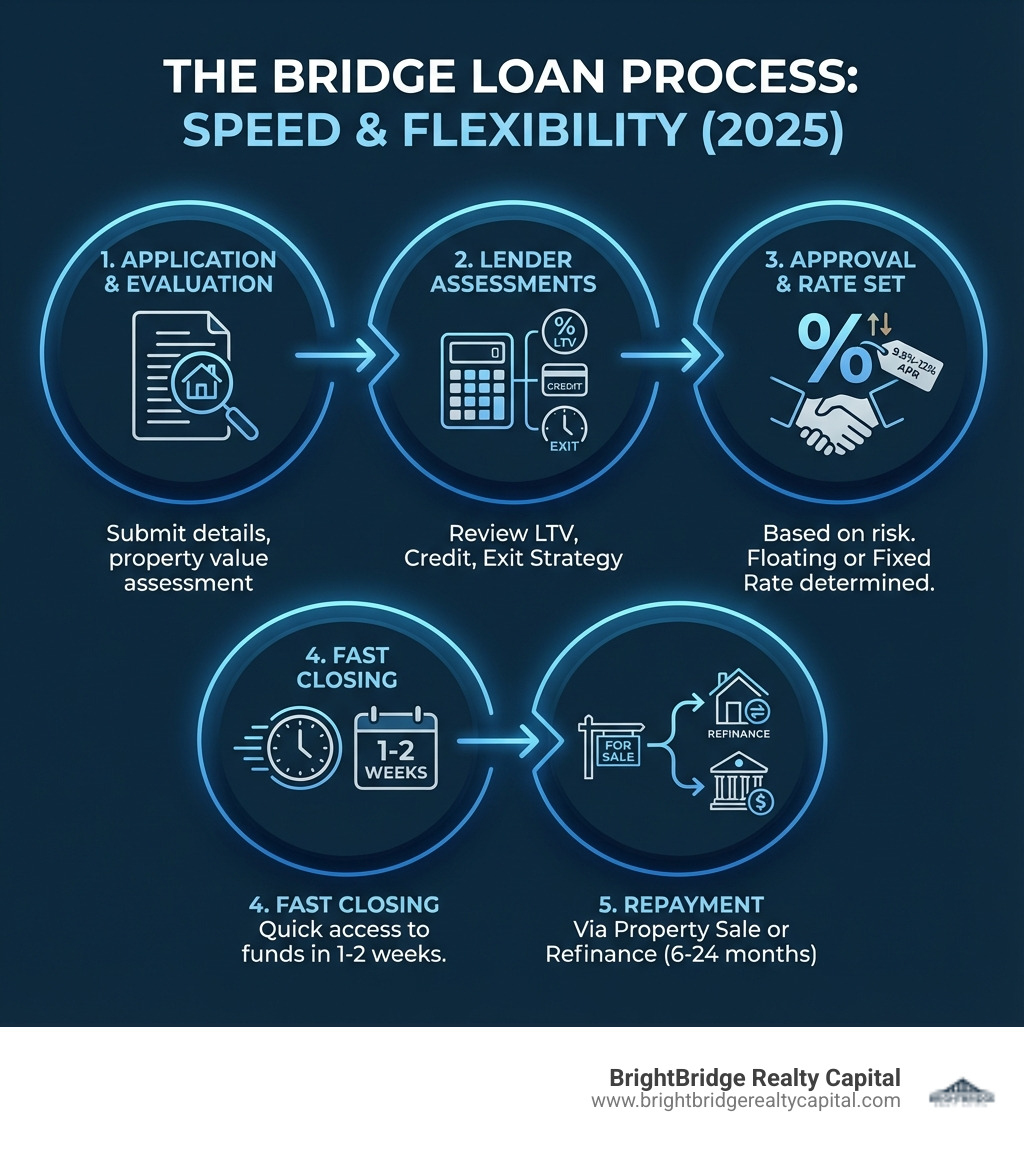
- Closing Speed: As fast as 72 hours to 2 weeks vs. 43 days for conventional mortgages
Bridge loans are short-term financing tools designed to "bridge" the gap between buying a new property and selling your current one—or between acquiring a property and securing long-term financing. They're popular with real estate investors who need to move fast on deals, whether for fix-and-flip projects, rental acquisitions, or commercial property purchases.
The trade-off is straightforward: you pay more in interest and fees, but you gain the ability to close quickly and compete in tight markets. Many investors find this worthwhile when the profit potential outweighs the higher borrowing costs.
The rates you'll actually pay depend on several factors: your credit score, the property's loan-to-value ratio, your exit strategy, and the lender's assessment of risk. Understanding how these elements work together helps you evaluate whether a bridge loan makes financial sense for your specific situation.
I'm Daniel Lopez, a loan officer at BrightBridge Realty Capital, and I've helped dozens of investors structure bridge loan rates and terms that align with their renovation timelines and investment goals. In this guide, I'll break down exactly how bridge loan rates work, what drives them up or down, and how to determine if they're worth the cost for your next real estate deal.
Basic bridge loan rates glossary:
What Is a Bridge Loan and How Are Rates Determined?
Imagine you’ve found the perfect investment property, but you need to sell an existing asset or secure long-term financing before you can finalize the deal. Time is of the essence, and traditional lenders can take weeks or even months to process a loan. This is where bridge loans come in, acting as interim financing or "swing loans" to provide the capital you need, exactly when you need it.
These short-term loans are designed to cover a temporary funding gap. They're secured by real estate, meaning the property itself acts as collateral. Because of their short duration and the specific situations they address, bridge loan rates tend to be higher than those of traditional mortgages. This higher cost is often seen as a "convenience premium" for the speed and flexibility they offer. Lenders take on more risk with shorter-term, asset-backed loans, and this is reflected in the interest rates.
For investors, the speed of funding is a primary advantage. While traditional mortgages might take 43 days or more to close, bridge loans can be approved and funded in as little as 72 hours, with money available in under two weeks. This rapid turnaround allows us to capitalize on time-sensitive opportunities that might otherwise slip away.
How Bridge Loans Compare to Traditional Mortgage Rates
The difference in bridge loan rates versus traditional mortgage rates is significant. Traditional 30-year mortgages, offered by banks and credit unions, are designed for long-term homeownership and come with lower interest rates (for example, conventional mortgage rates were around 6.81% in November 2024). Bridge loans, on the other hand, are short-term solutions, typically lasting 6 to 24 months.
Here’s a snapshot of how they stack up:
| Feature | Bridge Loans | Traditional Mortgages |
|---|---|---|
| Loan Term | Short-term (6-24 months, some up to 5 years) | Long-term (10-30 years) |
| Interest Rates | Higher (9.5-12% APR, 0.44-2.00% monthly) | Lower (e.g., ~6.81% APR for conventional in Nov 2024) |
| Closing Time | Fast (72 hours to 2 weeks) | Slower (43 days or more) |
| LTV Ratio | Up to 85% for purchase/construction, 65-80% of ARV | Typically up to 80% LTV, sometimes higher with PMI |
| Primary Focus | Property value, exit strategy, speed | Borrower creditworthiness, steady income, long-term repayment |
| Regulation | Less regulated (not covered by RESPA) | Highly regulated (covered by RESPA) |
Many bridge loan rates are priced at a margin above the Prime Rate, such as Prime + 2-3%. This means they fluctuate with the broader economic environment, but always carry an additional premium due to their specialized nature. Private lenders, who often originate bridge loans, can offer this speed and flexibility because they operate with different underwriting criteria and are less constrained by the extensive regulations that govern traditional banks. This allows us to focus on the asset's value and your viable exit strategy, rather than solely on your credit score.
Fixed vs. Variable Interest Rates for Bridge Loans
When considering bridge loan rates, you'll typically encounter two main types: fixed and variable.
- Fixed Interest Rates: These rates remain constant throughout the entire loan term. This provides stability and predictability, as your monthly interest payments won't change, making budgeting easier. For investors who prefer certainty, especially in volatile markets, a fixed rate can offer peace of mind.
- Variable Interest Rates: These rates can fluctuate over the loan term, moving up or down based on a specified benchmark index. Many modern variable-rate bridge loans are now Floating (SOFR-based). The Secured Overnight Financing Rate (SOFR) replaced the LIBOR index as a key benchmark for many financial products. If the benchmark rate rises, your interest payments will increase; if it falls, your payments will decrease. While variable rates can sometimes offer a lower initial rate, they come with the risk of increased costs if market rates climb.
The choice between fixed and variable depends on your risk tolerance and your outlook on future interest rate movements. Given that bridge loans are short-term, the impact of variable rate fluctuations might be less pronounced than on a long-term mortgage, but it's still a critical factor to consider in your financial planning.
Key Factors and Fees That Influence Bridge Loan Rates
While the general range for bridge loan rates is higher than traditional financing, the specific rate you receive is far from arbitrary. Several key factors, unique to bridge lending, play a significant role in determining your rate. Understanding these elements is crucial for securing the best possible terms for your project.

At BrightBridge Realty Capital, we carefully evaluate each of these aspects to provide customized solutions. These factors include the property's Loan-to-Value (LTV), your credit score, the condition of the property, your clear exit strategy, your experience as a borrower, and even our own funding capabilities at the time of application.
What Factors Drive Your Rate?
Let's dive deeper into what influences your specific bridge loan rates:
- Loan-to-Value (LTV) Ratio: This is arguably the most critical factor. It represents the loan amount as a percentage of the property's value. A lower LTV (meaning you have more equity or are putting down a larger down payment) reduces the lender's risk, typically resulting in lower rates. For instance, while some bridge loans go up to 85% LTV for purchase or construction, many lenders prefer around 65-80% LTV based on the After-Repair-Value (ARV) for investment properties.
- After-Repair-Value (ARV): Especially for fix-and-flip or renovation projects, bridge lenders often base their underwriting on the property's ARV—its estimated value once renovations are complete. This focus on future value, rather than just current value, is a hallmark of bridge lending for investors.
- Credit Score and Debt-to-Income (DTI) Ratio: While bridge lenders are generally less stringent than traditional banks, your credit score still matters. A higher score (e.g., in the 620-740 range) demonstrates financial responsibility and can lead to more favorable bridge loan rates. For traditional lenders, a DTI ratio around 50% is often a guideline, and while bridge lenders are more flexible, a manageable DTI reflects your capacity to handle payments. That said, alternative lenders might work with scores as low as 550-600, but expect higher rates and fees in return.
- Borrower Liquidity and Experience: If you can bring more of your own capital to the table (higher liquidity), it reduces the loan amount needed and the lender's risk, which can lead to better rates. Similarly, experienced borrowers with a proven track record of successful projects are perceived as lower risk and often qualify for more competitive bridge loan rates.
- Property Location and Condition: The type and condition of the property affect risk. Undeveloped land, for instance, is generally riskier than a well-located residential property, and this risk differential will influence the rate.
- Exit Strategy: A clear, viable, and well-documented exit strategy (how you plan to repay the bridge loan, typically through selling the property or refinancing into a long-term loan) is paramount. A strong exit strategy signals lower risk to the lender and can help secure better terms.
- Lender Capabilities and Market Conditions: Each lender has its own funding capabilities and risk appetite. The overall economic climate, including The federal funds rate, directly impacts the cost of capital for lenders, which then influences the bridge loan rates they offer to borrowers. When the Fed raises rates, so do other loan products.
What Are the Typical Fees Associated with Bridge Loans?
Beyond the interest rate, several fees contribute to the overall cost of a bridge loan. It's essential to understand these to get a complete picture of your borrowing expenses:
- Origination Fees: These are charged by the lender for processing and underwriting the loan, typically ranging from 1% to 3% of the loan amount.
- Points: Often, bridge loans are quoted with "points," where 1 point equals 1% of the loan amount. These are essentially prepaid interest and are common in the range of 1.5% to 2.5%.
- Underwriting, Processing, and Document Fees: These cover the administrative costs associated with preparing and finalizing your loan.
- Third-Party Costs: These include standard real estate closing costs such as escrow fees, title insurance, recording fees, and notary fees.
- Legal Fees: For more complex commercial bridge loans, legal fees can range from $10,000 to $15,000.
- Exit Fees: Some lenders may charge an exit fee, often 0.25% or more, when the loan is repaid. However, some lenders may waive these if you refinance into one of their other loan products.
- Extension Fees: If you need to extend the loan term beyond the initial agreement, you might incur extension fees, typically 0.25% or more.
- Administration Fees: These can range from $200-$500 and cover general administrative overhead.
These fees, combined with the interest rate, form the true cost of your bridge loan. Always ensure you receive a detailed breakdown of all charges before committing.
How Loan Terms Affect the Overall Cost
The short-term nature of bridge loans significantly impacts their overall cost. Most bridge loans have average terms ranging from 6 to 24 months, though some commercial options can extend up to 36 months or even five years.
A common payment structure for bridge loans is interest-only payments during the initial term. This means your monthly payments cover only the interest accrued, leaving the principal balance untouched. At the end of the loan term, a balloon payment is due, where the entire principal balance must be repaid in a single lump sum. This repayment typically comes from the sale of your property or a refinance into a long-term mortgage.
Because of the higher bridge loan rates and the concentration of fees, the total cost of borrowing, even for a short period, can be substantial. It's crucial to calculate these costs carefully and ensure your projected profit margins or financial buffer can comfortably absorb them. Our goal is to help you understand these numbers clearly, so there are no surprises down the line.
A Look at Today's Market: Current Rates and Loan Types
The current real estate market, characterized by a higher interest rate environment, a dislocated investment sales market, credit tightening, and equity headwinds, makes understanding bridge loan rates more important than ever. However, even with these challenges, bridge loans remain a vital tool for investors. The outlook for 2024/2025 suggests that private lending interest rates might remain stable or even see a slight decrease, influenced by potential Federal Reserve rate adjustments.

What Are the Current Bridge Loan Rates?
In today's market, bridge loan rates typically fall within a range of 9.5% to 12% APR. Some sources also quote rates on a monthly basis, with ranges from 0.44% to 2.00% per month. To put that into perspective, a 0.44% monthly rate translates to an annual rate of approximately 5.28%, while a 2.00% monthly rate would be 24% annually. This wide monthly range highlights the variability based on lender, borrower profile, and property type.
These rates are influenced by the general market conditions and the underlying benchmark rates like SOFR. While higher than traditional financing, these rates reflect the rapid funding, flexibility, and often less stringent underwriting criteria that bridge loans offer.
What Are Typical Residential vs. Commercial Bridge Loan Rates?
The type of property—residential or commercial—can also influence the bridge loan rates you encounter.
- Residential Bridge Loan Rates: These are often used by homebuyers bridging the gap between selling their old home and buying a new one, or by investors for fix-and-flip projects on single-family homes. Rates often start from around 0.44% per month (approximately 5.28% annually), though for more direct investor loans, they can overlap with the general 9.5-12% APR range. Residential bridge loans are commonly written for terms around 11 months.
- Commercial Bridge Loan Rates: These loans are for properties like industrial facilities, self-storage, retail, office buildings, or multifamily complexes. Commercial bridge loan rates typically start from 0.75% per month (approximately 9% annually) and can range from 9.5% to 12% APR or higher, depending on the property type, perceived risk, and loan size. Commercial bridge loans are commonly offered for 12-24 months, with some programs extending up to five years. Commercial properties are often considered riskier than residential, particularly undeveloped land, which can lead to higher rates.
The specific loan purpose and size also play a role. For example, a large-scale multifamily project might have different rate considerations than a small retail space.
How to Secure the Best Possible Bridge Loan Rates
While bridge loan rates are inherently higher, there are several strategies you can employ to secure the most competitive terms for your project:
- Present a Strong Exit Strategy: This is paramount. Lenders want to see a clear, realistic, and well-documented plan for how you will repay the bridge loan. Whether it's a confirmed sale or a solid refinance plan, a confident exit strategy reduces perceived risk.
- Aim for a Lower LTV: The more equity you have in the property, or the larger your down payment, the lower the Loan-to-Value ratio. This translates to less risk for the lender and often results in more favorable rates.
- Maintain Good Credit: While bridge lenders are more flexible, a strong credit score (e.g., 680+) can still positively influence your rate, indicating financial reliability.
- Provide a Detailed Business Plan: Especially for commercial or fix-and-flip projects, a comprehensive business plan outlining your project timeline, budget, and projected returns demonstrates professionalism and reduces lender uncertainty.
- Build Lender Relationships: Developing a long-term relationship with a private lender can lead to trust, lower perceived risk, and potentially discounted bridge loan rates on future projects. At BrightBridge Realty Capital, we value these long-term partnerships.
- Shop Multiple Lenders: Don't settle for the first offer. Compare rates, fees, and terms from various lenders to ensure you're getting the best deal.
- Gather Necessary Documentation: Being prepared with all required documents, from property appraisals to financial statements, can streamline the approval process and sometimes lead to better terms.
By proactively addressing these factors, you can position yourself as an attractive borrower and increase your chances of securing the best possible bridge loan rates for your investment.
Weighing the Risks and Exploring Considerations
Bridge loans are powerful tools, but like any financial instrument, they come with inherent risks. Understanding these risks and carefully considering your situation is crucial before committing. As we always say, being prepared is half the battle.
The primary concern for many borrowers is the higher cost, but there are other factors to consider, such as the pressure of short repayment timelines, the potential for market downturns, and the critical importance of your exit strategy.
The Risks of Higher Bridge Loan Rates
The liftd bridge loan rates come with several potential downsides:
- Increased Monthly Payments: Higher interest rates mean larger monthly payments, which can strain your cash flow, especially if your project experiences delays.
- Reduced Profit Margins: For investors, higher borrowing costs directly eat into potential profits. This makes careful financial modeling essential to ensure the deal remains lucrative even with the increased expense.
- Pressure to Sell Quickly: The short terms of bridge loans create significant pressure to execute your exit strategy (sell the property or secure long-term financing) within a tight timeframe. Delays can lead to costly extensions or even default.
- Default and Foreclosure Risk: If your exit strategy fails, or if you cannot make the balloon payment at the end of the term, you face the severe risk of defaulting on the loan, which could lead to foreclosure on the collateral property.
- No RESPA Protection: Unlike traditional mortgages, bridge loans are generally not covered by the Real Estate Settlement Procedures Act (RESPA). This means they lack some of the consumer protections against predatory lending practices that RESPA provides.
Important Considerations Before Choosing a Bridge Loan
Before diving into a bridge loan, we encourage you to thoroughly evaluate these points:
- Assessing Your Exit Strategy: Can your property realistically sell or be refinanced within the bridge loan's term? What are your contingency plans if there are delays or if the market shifts? This is the single most important factor.
- Understanding Your Financial Position: Can you comfortably afford the higher monthly interest payments? Do you have sufficient reserves to cover unexpected costs or delays? What happens if you end up carrying two mortgages (your bridge loan and a new mortgage) for a period?
- Evaluating Property Market Trends: Is the current market favorable for your property type? Are property values stable or appreciating in your target area? A downturn could jeopardize your exit strategy.
- Consulting with Experienced Professionals: Speak with financial planners, mortgage brokers, and real estate attorneys. Their insights can provide valuable perspective on your unique situation and help you steer the complexities of bridge financing.
- Prepayment Penalties: Be aware that some commercial bridge loans may include prepayment penalties if you pay off the loan earlier than anticipated. Always clarify this with your lender.
A bridge loan can be an invaluable tool for real estate investors and homeowners in New York, NY, but it demands careful planning and a clear understanding of its costs and risks.
Frequently Asked Questions about Bridge Loans
Here are some common questions we receive about bridge loan rates and bridge financing in general:
How quickly can you get a bridge loan?
One of the most significant advantages of bridge loans is their speed. We can often provide funding in as little as 72 hours, with the entire closing process typically completed within one to two weeks. This is significantly faster than the 30-60 days generally required for traditional mortgages, allowing you to seize time-sensitive opportunities without delay.
Are bridge loans a good idea for first-time investors?
While bridge loans are accessible to various borrowers, they can be particularly risky for inexperienced investors. Their high rates, short terms, and the pressure to execute a successful exit strategy demand a solid understanding of real estate markets and financial management. Many lenders prefer borrowers with a proven track record, though some will work with new investors, albeit potentially at higher rates. We recommend first-time investors proceed with extreme caution, thoroughly educate themselves, and ideally partner with experienced mentors or professionals.
Can I get a bridge loan with bad credit?
Yes, it's often possible to get a bridge loan even with less-than-perfect credit. Unlike traditional lenders who heavily weigh credit scores, bridge lenders place a greater emphasis on the value of the collateral property (LTV and ARV) and the strength of your exit strategy. However, a lower credit score will almost certainly result in higher bridge loan rates and fees. Some alternative lenders may even accept credit scores in the 550-600 range, acknowledging that the property's potential and your repayment plan are key.
Conclusion
Navigating bridge loan rates means weighing the pros and cons carefully. On one hand, bridge loans offer unparalleled speed and flexibility, acting as a crucial strategic financial tool for real estate investors who need to move quickly in competitive markets or bridge temporary funding gaps. This immediate access to capital can open up lucrative opportunities that traditional financing simply can't capture.
On the other hand, this convenience comes at a higher cost. The liftd interest rates, various fees, and the pressure of a short repayment timeline demand meticulous planning and a robust exit strategy. Without these, the risks of increased costs, reduced profit margins, or even default can quickly outweigh the benefits.
At BrightBridge Realty Capital, we understand these dynamics intimately. We are committed to providing customized real estate financing solutions nationwide, specializing in quick, flexible funding for investors. Our direct lending model and streamlined process ensure fast closings, often within a week, offering competitive rates for your unique needs. We believe in empowering our clients with the knowledge and tools to make informed decisions.
Whether a bridge loan is "worth the risk" depends entirely on your specific project, your financial readiness, and the strength of your plan. If you have a clear vision, a solid exit strategy, and the ability to manage the associated costs, a bridge loan can be an incredibly effective way to achieve your real estate investment goals.
Get a customized quote for your real estate project and let us help you bridge your next deal with confidence.