Mortgage Mastery for Investors: Financing Your Next Big Deal

Summary
Master real estate investor mortgages. Compare loan types, get financing tips, and scale your portfolio. Find your next deal!
Understanding Investment Property Loans vs. Traditional Mortgages

Real estate investor mortgages are specialized financial instruments designed for properties purchased with the intent to generate income through rent or to appreciate in value for a future sale, rather than for use as a personal residence. While a traditional mortgage facilitates homeownership, an investor mortgage is a business tool. Securing the right financing is a fundamentally different process from buying a primary home and is a cornerstone of building sustainable wealth through real estate.
This guide will help you navigate the complexities of Real estate investor mortgages and demonstrate how to leverage them effectively to achieve your financial objectives. I’m Daniel Lopez, a dedicated loan officer at BrightBridge Realty Capital, and my expertise lies in helping clients steer through complex financing landscapes to realize their investment goals.
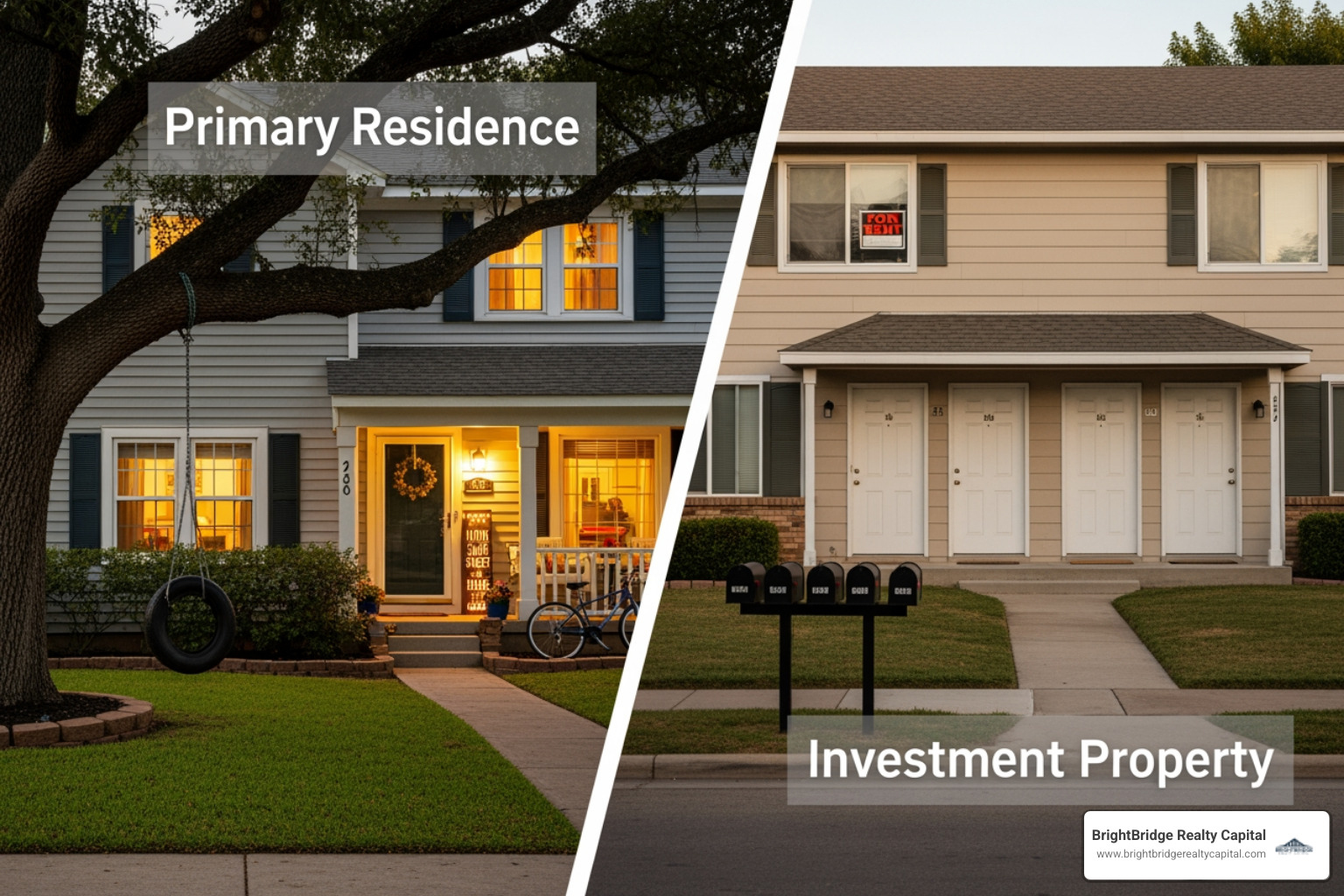
An investment property loan, often called a non-owner-occupied loan, is specifically for properties such as single-family rental houses, duplexes, triplexes, quad-plexes, or larger apartment buildings. The core distinction from a traditional mortgage lies in its fundamental purpose: it is a commercial venture intended to generate income, not to provide a primary residence.
Lenders perceive investment properties as carrying a significantly higher level of risk. In times of financial distress, a homeowner is statistically far more likely to prioritize their primary mortgage payment to keep their home. An investment, on the other hand, is a business venture subject to the unpredictable forces of market fluctuations, tenant vacancies, rising operational costs, and unexpected capital expenditures. This elevated risk profile for the lender directly translates into stricter terms and more rigorous qualification criteria to mitigate potential losses.
Key Differences in Requirements and Terms
Real estate investor mortgages diverge from traditional home loans in several critical and tangible ways:
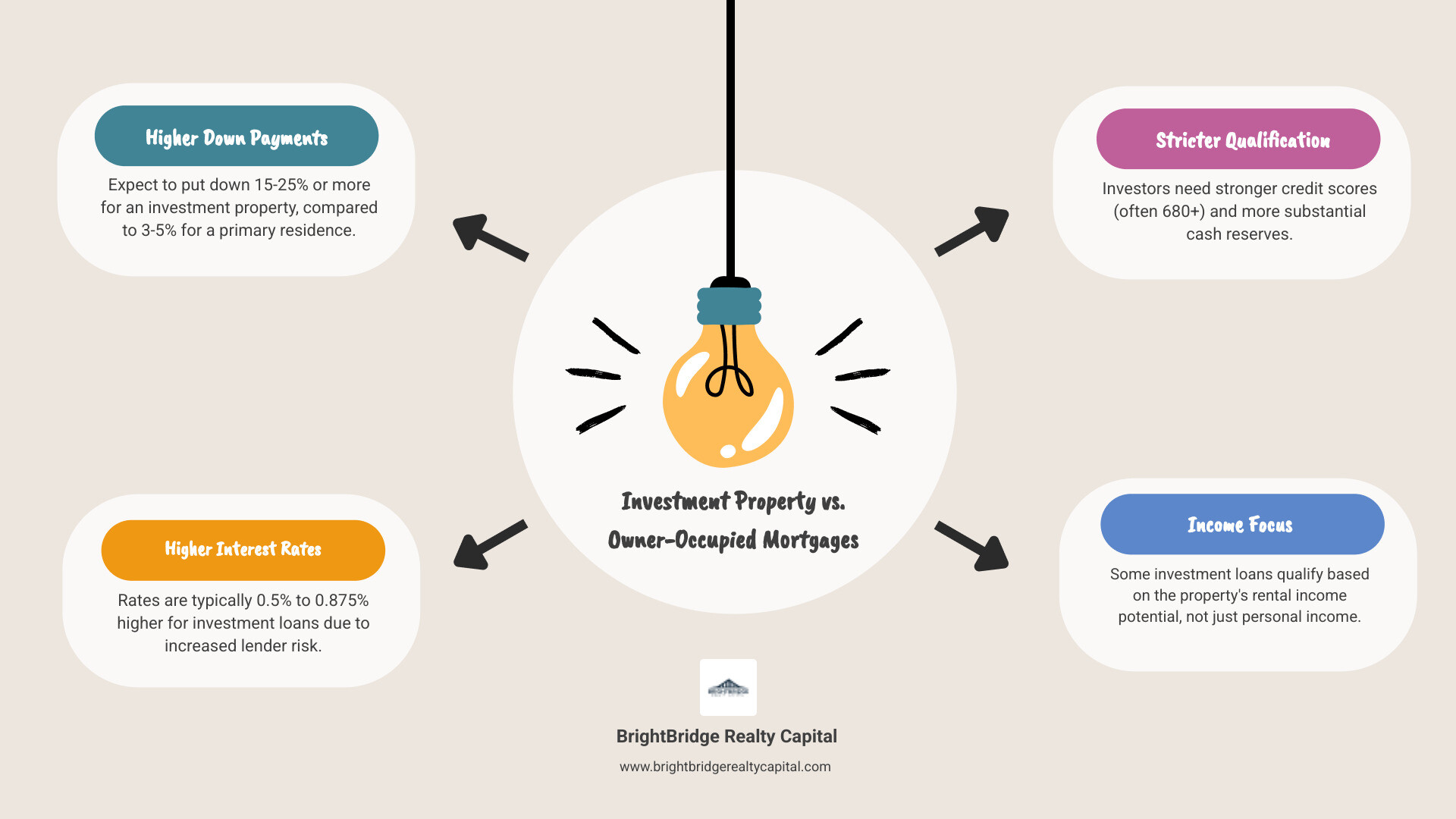
- Down Payment: Be prepared for a substantial capital outlay. Lenders typically require a down payment of 15-25% or more, a stark contrast to the 3-5% that can be possible for a primary home. For most conventional investment loans, a 20-25% down payment is the standard expectation, as it provides the lender with a significant equity cushion from day one.
- Interest Rates: Due to the higher perceived risk, interest rates on investment properties are typically 0.50% to 0.875% higher than those for comparable owner-occupied properties. While this may seem like a small margin, it can add up to tens of thousands of dollars in additional interest payments over the life of the loan.
- Credit Score: Lenders demand a stronger credit history to demonstrate financial responsibility. A FICO score of 680 is often the minimum, with more favorable terms and rates reserved for borrowers with scores of 740 or higher.
- Debt-to-Income (DTI) Ratio: Your DTI ratio (total monthly debt payments divided by gross monthly income) is scrutinized more heavily. While conventional primary home loans might allow a DTI up to 50%, lenders for investment properties often cap it below 45% to ensure you have ample cash flow to cover all your obligations, including your primary residence and the new investment property mortgage.
- Cash Reserves: Lenders will require you to have significant liquid assets on hand after closing. This is not just the down payment and closing costs. You'll typically need to show six months of mortgage payments (including principal, interest, taxes, and insurance, or PITI) in reserves for each investment property you own. This ensures you can cover payments during potential vacancies or handle unexpected major repairs, like an HVAC failure or roof replacement.
- Underwriting Process: The underwriting for an investor loan is far more rigorous. It involves a deep dive into your personal and business finances, including tax returns, bank statements, and a detailed schedule of real estate owned. The property itself is also heavily scrutinized. The underwriter will require a formal appraisal that includes a comparable rent schedule (Form 1007) to verify its income-generating potential. If the property is already tenanted, existing lease agreements will be required.
Associated Risks for Borrowers and Lenders
Both parties in an investment property loan transaction face a unique set of risks.
For borrowers, the primary risks include:
- Market Volatility: Real estate values and rental income are not static. A downturn in the local economy can lead to lower-than-projected rental income or a decline in property value, making it difficult to sell or refinance profitably.
- Vacancy Risk: An empty property is a liability. It generates no income, but the mortgage, taxes, insurance, and utility payments continue unabated. Your cash reserves are the critical buffer that protects you from foreclosure during these periods.
- Landlord Responsibilities: Being a landlord is an active role. It involves marketing the property, screening tenants, handling maintenance requests, dealing with difficult tenants, and navigating the complex web of local and state landlord-tenant laws, which can be time-consuming and costly.
For lenders, the amplified risks are what justify the stricter lending terms:
- Higher Default Risk: As mentioned, borrowers in financial hardship are more likely to default on an investment property loan before their primary mortgage. This makes the asset class inherently riskier for the lender's portfolio.
- Economic Sensitivity: Investment properties are highly sensitive to broader economic downturns. Job losses in an area can reduce rental demand and suppress rent growth, while rising interest rates can decrease property values, increasing the lender's exposure and the loan-to-value ratio.
- Complex Valuation: Assessing an investment property's true income potential is more subjective and prone to market shifts than valuing a primary residence. An appraiser's rent schedule is an estimate, and actual performance can vary, adding a layer of uncertainty for the lender.
Lenders view these mortgages as riskier because their repayment is directly tied to the performance of the market and the borrower's skill as an operator. For more insights, you can explore resources like More on investment property risks.
A Guide to the Main Types of Real Estate Investor Mortgages
The world of Real estate investor mortgages is not a one-size-fits-all landscape. It offers a diverse array of financing solutions tailored to different investment strategies, financial profiles, and property types. Understanding the full spectrum of your options is the critical first step toward building a successful and scalable real estate portfolio.

Conventional & Flexible Investor Loan Options
These loans adhere to the underwriting guidelines established by government-sponsored enterprises (GSEs) Fannie Mae and Freddie Mac. They are a common and often cost-effective starting point for many investors.
- Conventional Loans: A popular choice for investors with strong personal financials. They typically require a 20-25% down payment and a credit score of 680 or higher. In return, they offer some of the most competitive interest rates available. However, they come with strict DTI requirements and, most notably, a limit on the number of financed properties a single borrower can have, which is typically capped at 10.
- Multi-Family Property Loans: Conventional loans can be used for residential properties with 2-4 units. This is a popular strategy for new investors, who can sometimes even live in one unit and rent out the others (owner-occupied). However, once a property has five or more units, it is classified as commercial real estate, and financing shifts to commercial loans, which have different terms, such as shorter amortization periods and balloon payments. Government-backed loans (FHA, VA) can be used for owner-occupied multi-family properties (up to 4 units), but they are not available for purely non-owner-occupied investments.
- Conforming Loan Limits: These are the maximum loan amounts that Fannie Mae and Freddie Mac will purchase. Set annually by the Federal Housing Finance Agency (FHFA), these limits vary by county based on local housing costs. In a high-cost area like New York, NY, the 2024 baseline is $766,550 for a single-family home, with higher limits for 2-4 unit properties. Loans that exceed these limits are classified as jumbo loans and are subject to different underwriting criteria.
Specialized Investor-Focused Loans
As investors scale, they often turn to these loans, which are specifically designed for those with non-traditional income streams or ambitious growth plans.
- Debt Service Coverage Ratio (DSCR) Loans: A true game-changer for professional investors. These loans qualify the borrower based almost entirely on the investment property's ability to generate cash flow, not on personal income. Lenders calculate the DSCR by dividing the property's Net Operating Income (NOI) by its total debt service (mortgage payment). A ratio of 1.25 or higher is typically required, meaning the property generates 25% more income than is needed to cover the mortgage. This is ideal for self-employed investors or those rapidly expanding their portfolios beyond the 10-property conventional limit.
- Bank Statement Loans: Perfect for entrepreneurs, freelancers, and self-employed individuals whose tax returns don't fully capture their true cash flow due to business write-offs and deductions. Instead of W-2s and tax returns, lenders evaluate income by analyzing 12-24 months of personal or business bank statements to verify a consistent and stable flow of deposits. This provides crucial flexibility for those with non-traditional income.
- Non-QM (Non-Qualified Mortgage) Loans: This is a broad umbrella term for loans that fall outside the strict federal "Qualified Mortgage" guidelines. DSCR and bank statement loans are two popular types of Non-QM loans. They offer more flexible underwriting standards, including alternative income verification methods, higher loan limits (often up to $5 million or more), and the ability to finance a wider range of property types. They are a vital tool for sophisticated investors, foreign nationals, or those with recent credit events.
- Asset-Based Loans: These loans prioritize the value and income potential of the property (the "asset") over the borrower's personal financial picture. Hard money loans are a common short-term example, used frequently for fix-and-flip projects where speed is essential.
Short-Term & Creative Financing Solutions
These options provide quick access to capital or allow investors to leverage existing equity to seize new opportunities.
- Hard Money and Bridge Loans: These are short-term loans (typically 6-24 months) funded by private lenders. Bridge loans "bridge" the gap between buying a new property and selling an existing one. Hard money loans are used for properties that need significant renovation (fix-and-flips). They offer unparalleled speed but come with higher interest rates and fees.
- Private Money: These are loans from private individuals or small groups, offering maximum flexibility. Terms are entirely negotiable, making them suitable for unique projects that don't fit any institutional lending criteria.
- Seller Financing: In this arrangement, the property seller acts as the lender, holding the mortgage for the buyer. This can be a powerful tool for buyers who cannot secure traditional financing. The down payment, interest rate, and loan term are all negotiated directly between the buyer and seller.
- HELOC (Home Equity Line of Credit): A flexible revolving line of credit secured against the equity in an existing property (either a primary home or another investment). You can draw funds as needed and only pay interest on the amount you use, making it an excellent tool for renovations, down payments, or as a liquidity reserve.
- Cash-Out Refinance: This involves refinancing an existing mortgage for a larger amount than what is currently owed and taking the difference in cash. This is a common strategy for seasoned investors to pull equity out of a stabilized property to fund the down payment for their next acquisition. Lenders typically allow a Loan-to-Value (LTV) of 70-75% on a cash-out refinance for an investment property.
Deep Dive: Comparing Popular Investor Loan Programs
Choosing the right Real estate investor mortgages becomes significantly simpler when you conduct a side-by-side comparison of the most popular options. Let's perform a deep dive into Conventional, DSCR, and Bank Statement loans to help you identify which program best aligns with your specific investor profile and goals.
Conventional Loans: The Traditional Route
Backed by Fannie Mae and Freddie Mac, conventional loans are the bedrock of mortgage financing in the U.S. and often provide the most affordable terms for investors who can meet their stringent requirements.
- Pros: They consistently offer the most competitive interest rates and the lowest origination fees. Their standardized process makes them a reliable and predictable option for investors with a straightforward financial profile (e.g., W-2 income, high credit score).
- Cons: The qualification criteria are rigid. They require traditional income verification through W-2s and at least two years of tax returns. They enforce stringent Debt-to-Income (DTI) limits, often capping your total monthly debt payments at 43-45% of your gross monthly income. The most significant drawback for ambitious investors is the cap on the number of financed properties, which Fannie Mae and Freddie Mac generally limit to 10.
- Best for: W-2 wage earners with stable employment, excellent credit (740+ for the best terms), and sufficient cash reserves. They are ideal for those just beginning their investment journey or those content with building a small portfolio of up to 10 properties.
DSCR Loans: Qualifying with Property Cash Flow
DSCR (Debt Service Coverage Ratio) loans are a powerful, specialized tool that fundamentally shifts the underwriting focus from your personal income to the property's income-generating potential.
- Pros: The primary advantage is that no personal income verification or tax returns are required. This is a massive benefit for self-employed individuals and professional investors. They allow for financing an unlimited number of properties, enabling rapid portfolio scaling. They can be used for properties held in an LLC, providing liability protection. Closings are often faster than conventional loans, giving investors a competitive edge in fast-moving markets. Loan amounts can range from $100,000 to over $5 million.
- Cons: This flexibility comes at a cost. Interest rates are higher than conventional loans (often in the 6.125% to 9.5% range, depending on the market and borrower qualifications). Down payments are also larger, typically requiring 20-40%. The property itself must demonstrate strong cash flow, with a DSCR of 1.25 or higher being a common benchmark. Prepayment penalties are also standard; these are clauses that charge a fee if you pay off the loan within the first few years (e.g., 3-5 years), as the lender needs to guarantee a certain return on their investment.
- Best for: Experienced real estate investors, portfolio builders looking to exceed the 10-property limit, and self-employed individuals who want to qualify based on property cash flow rather than personal tax returns. They are also the go-to option for investors who prefer to hold properties in a business entity like an LLC or trust.
Bank Statement Loans: Flexibility for Non-Traditional Income
This Non-QM (Non-Qualified Mortgage) option is specifically engineered for self-employed borrowers and business owners whose tax returns may not accurately reflect their true ability to repay a loan.
- Pros: Instead of tax returns, which are often minimized through legal deductions, these loans use 12 to 24 months of personal or business bank statements to verify income. The lender calculates a qualifying income based on the average monthly deposits. This is invaluable for business owners, consultants, and freelancers. For example, a contractor who grosses $250,000 in deposits but shows a net income of only $70,000 after expenses on their tax return can qualify based on the larger deposit figure.
- Cons: In exchange for this flexibility, borrowers can expect higher interest rates than conventional loans. Lenders will also require a consistent and verifiable deposit history, meaning they will scrutinize statements for irregular patterns or large, unexplained one-time deposits that could skew the income calculation. Down payments typically range from 10% to 20%, though a larger down payment can strengthen the application.
- Best for: Self-employed individuals, small business owners, gig economy workers, and independent contractors, particularly in high-income areas like New York, NY, who have steady cash flow but complex tax filings that make conventional qualification difficult.
Strategically Choosing and Leveraging Your Loan
Long-term success in real estate investing is not just about finding good deals; it's about securing the right financing to bring those deals to fruition. Your choice of Real estate investor mortgages is a strategic decision that must align perfectly with your financial goals, your chosen investment strategy (e.g., buy-and-hold, fix-and-flip, BRRRR), and your personal risk tolerance. At BrightBridge Realty Capital, our mission is to empower investors with quick, flexible, and reliable funding, so you can focus your energy on what you do best: building your portfolio.
Factors to Consider When Choosing Your Real Estate Investor Mortgages
Selecting the optimal loan requires a holistic analysis of several critical factors:
- Loan Costs: Look beyond the headline interest rate. Analyze the Annual Percentage Rate (APR), which includes origination fees, discount points, and other closing costs. These upfront expenses directly impact your cash-on-cash return and overall profitability.
- Interest Rate: Compare rates across different loan types and lenders. A seemingly small difference of 0.25% can save you thousands of dollars over the loan's term. Consider whether a fixed rate or an adjustable rate (ARM) better suits your strategy and timeline.
- Down Payment: How much capital can you comfortably deploy for a single acquisition? A lower down payment allows you to conserve cash for other opportunities, but a higher down payment (often 25% or more) can secure a better interest rate and lower monthly payments.
- Reserve Requirements: Lenders require post-closing liquidity to ensure you can weather unforeseen events. This is typically 3-6 months of PITI payments per property. Ensure you can meet these requirements without depleting your essential emergency funds.
- Prepayment Penalties: Be acutely aware of these clauses, which are common on Non-QM loans like DSCR products. If your strategy involves selling or refinancing within a few years (e.g., the BRRRR method), a loan with a 5-year prepayment penalty could be a costly mistake.
- Lender Experience: Partner with a lender who specializes in investor financing. An experienced investor-focused lender like BrightBridge Realty Capital understands the unique challenges and opportunities in the market, offers a wider range of suitable products, and can provide valuable strategic advice.
- Closing Speed: In a competitive real estate market like New York, NY, the ability to close quickly is a powerful negotiating tool. An all-cash offer is attractive because of its speed and certainty. As a direct lender, BrightBridge Realty Capital can often close within a week, giving your offer a significant advantage over those reliant on slower, traditional financing.
How to Use Real Estate Investor Mortgages to Scale Your Portfolio
Strategically leveraging Real estate investor mortgages is the primary mechanism for exponential portfolio growth.
- Leverage: Mortgages allow you to use other people's money (OPM) to control a large, appreciating asset with a relatively small amount of your own capital. This amplifies your potential returns. For example, if a $500,000 property appreciates by 5% ($25,000), an investor who paid all cash sees a 5% return. An investor who used a $100,000 down payment sees a 25% return on their invested capital ($25,000 / $100,000).
- Acquiring Multiple Properties: Use loan programs like DSCR, which have no limits on the number of financed properties, to break through the conventional 10-property ceiling. By qualifying based on property income rather than personal income, you can systematically add new cash-flowing assets to your portfolio.
- Refinancing Strategies (The BRRRR Method): The BRRRR (Buy, Rehab, Rent, Refinance, Repeat) strategy is a powerful scaling engine. You use a short-term loan (like hard money) to buy and renovate a distressed property, place a tenant to establish cash flow, and then refinance into a long-term mortgage (like a DSCR loan). A cash-out refinance allows you to pull out your initial investment capital (and sometimes more), which you can then "repeat" the process on a new property.
- Building Equity: Every month, your tenant's rent payment goes toward paying down your mortgage principal, systematically building your equity in the asset. This is a form of forced savings that grows your net worth over time.
- Tax Advantages: Investment properties offer substantial tax benefits. Consult with a qualified tax advisor to learn about deducting mortgage interest, property taxes, insurance, maintenance, property management fees, and depreciation. Depreciation is a particularly powerful non-cash deduction that can significantly reduce your taxable income. The IRS provides Tips on rental real estate income and deductions from the IRS.
Frequently Asked Questions about Real Estate Investor Mortgages
Here are detailed answers to some of the most common questions we hear from both new and experienced real estate investors.
What is the typical down payment for an investment property?
The required down payment, or the investor's initial equity contribution, varies significantly by loan type and lender requirements. It's often expressed as a Loan-to-Value (LTV) ratio.
- Conventional Loans: To offset the higher risk of non-owner-occupied properties, Fannie Mae and Freddie Mac typically require a down payment of 15% to 25%. A 15% down payment (85% LTV) is possible but often comes with a higher interest rate and mortgage insurance. Most investors opt for a 25% down payment (75% LTV) to secure the best possible terms.
- DSCR Loans: These loans almost always require a minimum of 20% down (80% LTV). However, a larger down payment of 25-30% can result in a better interest rate and a lower DSCR requirement, making it easier to qualify. For first-time investors using a DSCR loan, some lenders may require up to 30% down.
- Bank Statement Loans: Down payments for self-employed investors using this program usually start between 10% and 20%. A 10% down payment option (90% LTV) is available but will require a very strong credit profile and significant cash reserves.
In general, a prudent investor should plan for a down payment of at least 20-25%, plus an additional 3-5% of the purchase price for closing costs and the required cash reserves.
Can I use potential rental income to qualify for a loan?
Yes, using a property's actual or projected rental income is a fundamental and critical feature of qualifying for Real estate investor mortgages.
- Conventional Loans: Lenders will use the lesser of the actual rent from an executed lease agreement or the market rent as determined by an appraiser's comparable rent schedule. They then typically apply the "75% rule," counting only 75% of the gross rental income toward your qualifying income. This 25% reduction is a conservative measure to account for potential vacancies and ongoing maintenance costs, ensuring the property's income isn't overstated.
- DSCR Loans: These loans are specifically designed around this concept. The property's potential rental income is the primary, and often only, qualifying factor. The lender's entire decision is based on whether the property's Net Operating Income can sufficiently "cover" the proposed mortgage payment. Your personal income and DTI ratio are not considered, making this a pure play on the asset's performance.
Are there limits on how many investment properties I can finance?
Yes, but the limits are highly dependent on the specific loan program you are using, which is a crucial factor for investors planning to scale.
- Conventional Loan Limits: Fannie Mae and Freddie Mac impose a strict limit, typically allowing a single borrower to have a maximum of 10 financed residential properties. Once an investor reaches this cap, they can no longer use conventional financing to expand their portfolio, creating a significant roadblock to growth.
- DSCR and Other Non-QM Loans: A major advantage of specialized investor loans like DSCR is that they generally have no limit on the number of properties you can finance. As long as each new property meets the lender's DSCR and LTV requirements, and the investor has the required down payment, they can continue to acquire properties. This provides a clear and scalable path for portfolio growth.
- Portfolio Lending: Some banks and private lenders offer portfolio loans. These lenders keep the loans on their own books (they don't sell them to Fannie/Freddie) and therefore have more flexibility. They may offer a "blanket loan," which is a single mortgage that covers multiple properties. This can simplify payments and management for an investor with a large portfolio. These relationships are built over time and are reserved for experienced clients with a strong track record.
Conclusion
Navigating the world of Real estate investor mortgages is a critical skill for building generational wealth through property. The journey from a traditional homebuyer to a sophisticated real estate investor involves mastering a new set of financial tools. By understanding the nuanced differences between loan types—from the stability of conventional loans to the flexibility of specialized DSCR and bank statement loans—you can make informed borrowing decisions that propel your portfolio forward.
The key to sustainable growth is to align your financing strategy with your long-term investment goals. Whether you are a first-time investor purchasing a duplex or an experienced portfolio builder scaling past ten properties, a mortgage solution exists that is tailored to your specific needs. A deep understanding of down payments, interest rates, reserve requirements, and eligibility criteria, combined with the strategic use of leverage and refinancing techniques like the BRRRR method, will accelerate your portfolio's growth and magnify your returns.
For investors operating in the fast-paced and competitive New York, NY market, speed and certainty are paramount. In a landscape where deals are won or lost in days, partnering with a direct lender like BrightBridge Realty Capital provides a distinct competitive advantage. We specialize in providing quick, flexible funding and fast closings, often within a week, ensuring you can seize opportunities as they arise. We offer competitive rates and personalized solutions to help you finance your next deal and every deal after that. Don't let financing be the bottleneck in your investment journey; let it be your catalyst for success.