Bridge Loan: Your Guide to Real-World Scenarios


Summary
Explore real-world scenarios with a detailed bridging loan example. Understand costs, compare options, and secure fast property finance.
Why Real-World Bridging Loan Examples Matter

A bridging loan example helps you understand how short-term financing works when you need to act fast on a property deal. These loans bridge the gap between buying a new property and selling your existing one, or between acquiring a distressed asset and securing permanent financing. In the fast-paced world of real estate, liquidity is often the difference between a successful acquisition and a missed opportunity. Bridging finance provides that liquidity, acting as a temporary financial structure that supports the transition from one phase of property ownership to the next.
Quick Answer: Common Bridging Loan Scenarios
Property Chain Bridge - Borrow £200,000 at 0.75% monthly for 6 months to buy your next home while selling your current one. Total cost: approximately £11,000 including fees. This is particularly useful in competitive markets where sellers prefer buyers who are not dependent on a long chain of sales.
Auction Purchase - Secure £300,000 at 50% LTV within days to close on a £600,000 investment property. Most auctions require completion within 28 days, a timeline that traditional mortgage lenders simply cannot meet. Refinance after renovation to repay the bridge.
Fix-and-Flip - Get 90% of purchase price plus 100% of rehab costs, then cash-out refinance once the property generates rental income. This allows investors to maximize their leverage and take on multiple projects simultaneously.
Business Capital - Access £1.5 million in two weeks against commercial property to fund expansion, purchase inventory at a discount, or resolve temporary cash flow gaps. Business bridging is often used to seize time-sensitive commercial opportunities.
The difference between these scenarios comes down to loan structure, timing, and exit strategy—but the core mechanics remain the same. Understanding real examples helps you calculate costs, compare options, and avoid expensive mistakes. Bridging loans are not a one-size-fits-all product; they are bespoke financial tools tailored to the specific needs of the borrower and the unique characteristics of the security property.
According to recent industry data, 23% of all bridging transactions in Q2 2024 were used to prevent property chain collapse—making "buy before you sell" the most common use case. Interest rates typically range from 0.44% to 1.5% per month, with arrangement fees around 1-2% of the loan amount. Most lenders cap borrowing at 75% loan-to-value (LTV), though some specialized lenders offer up to 90% for specific scenarios, particularly when additional security is provided. It is also important to note that bridging finance is available for both regulated (residential) and unregulated (investment/commercial) purposes, each with its own set of compliance and underwriting standards.
I'm Daniel Lopez, a loan officer at BrightBridge Realty Capital, and I've helped investors structure dozens of bridging loan examples across residential, commercial, and mixed-use properties—from competitive auction purchases to complex renovation projects. My goal is to show you exactly how these loans work in practice, so you can make confident decisions when timing matters most. Whether you are a first-time developer or a seasoned portfolio landlord, understanding the nuances of bridging can significantly enhance your investment strategy.
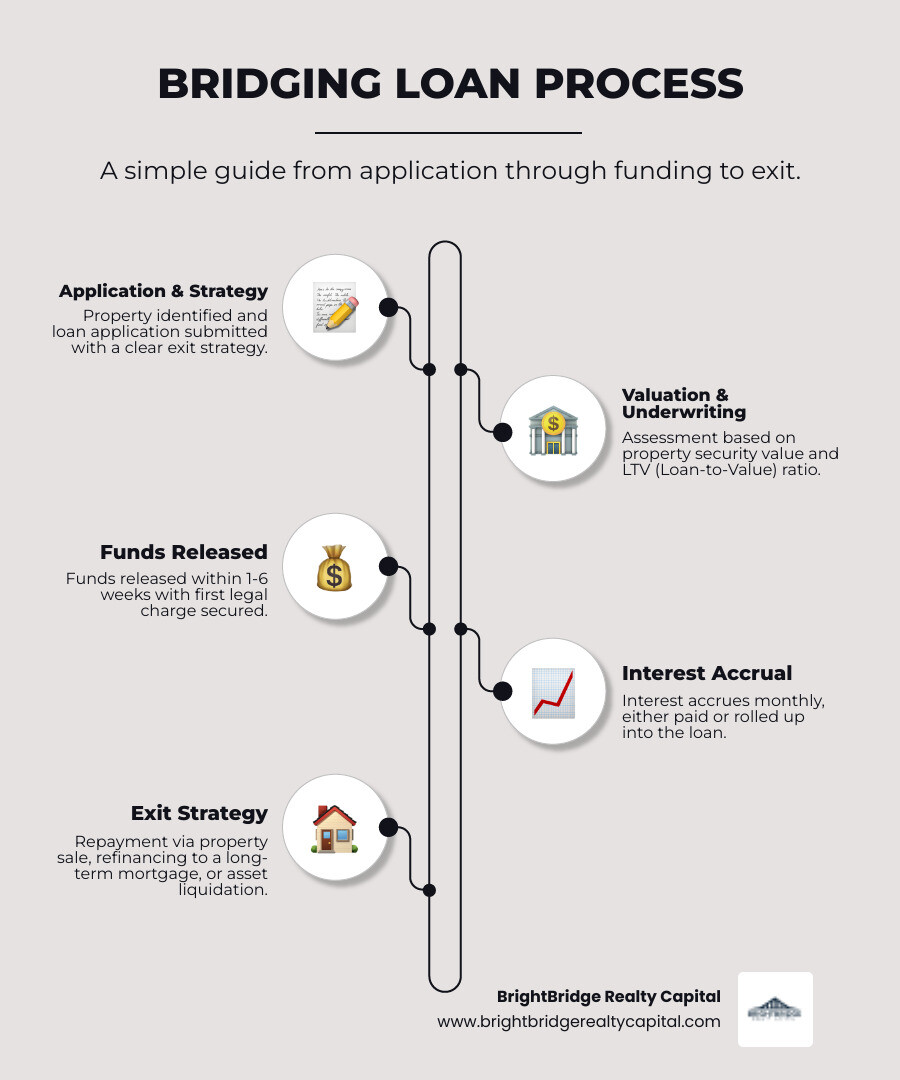
Simple guide to bridging loan example terms:
How to Calculate Costs: A Detailed Bridging Loan Example
When we talk about a bridging loan example, the most important thing to grasp is that these aren't your typical monthly-payment mortgages. They are designed for speed and flexibility, which means the cost structure is a bit different. Unlike a standard mortgage where you pay principal and interest every month, bridging loans often allow you to defer payments until the end of the term, which preserves your cash flow during the project or transition period.
Let's look at a concrete bridging loan example for an investment property purchase:
- Purchase Price: £600,000
- Loan Amount (50% LTV): £300,000
- Monthly Interest Rate: 0.44%
- Arrangement Fee (1%): £3,000
- Loan Term: 6 Months
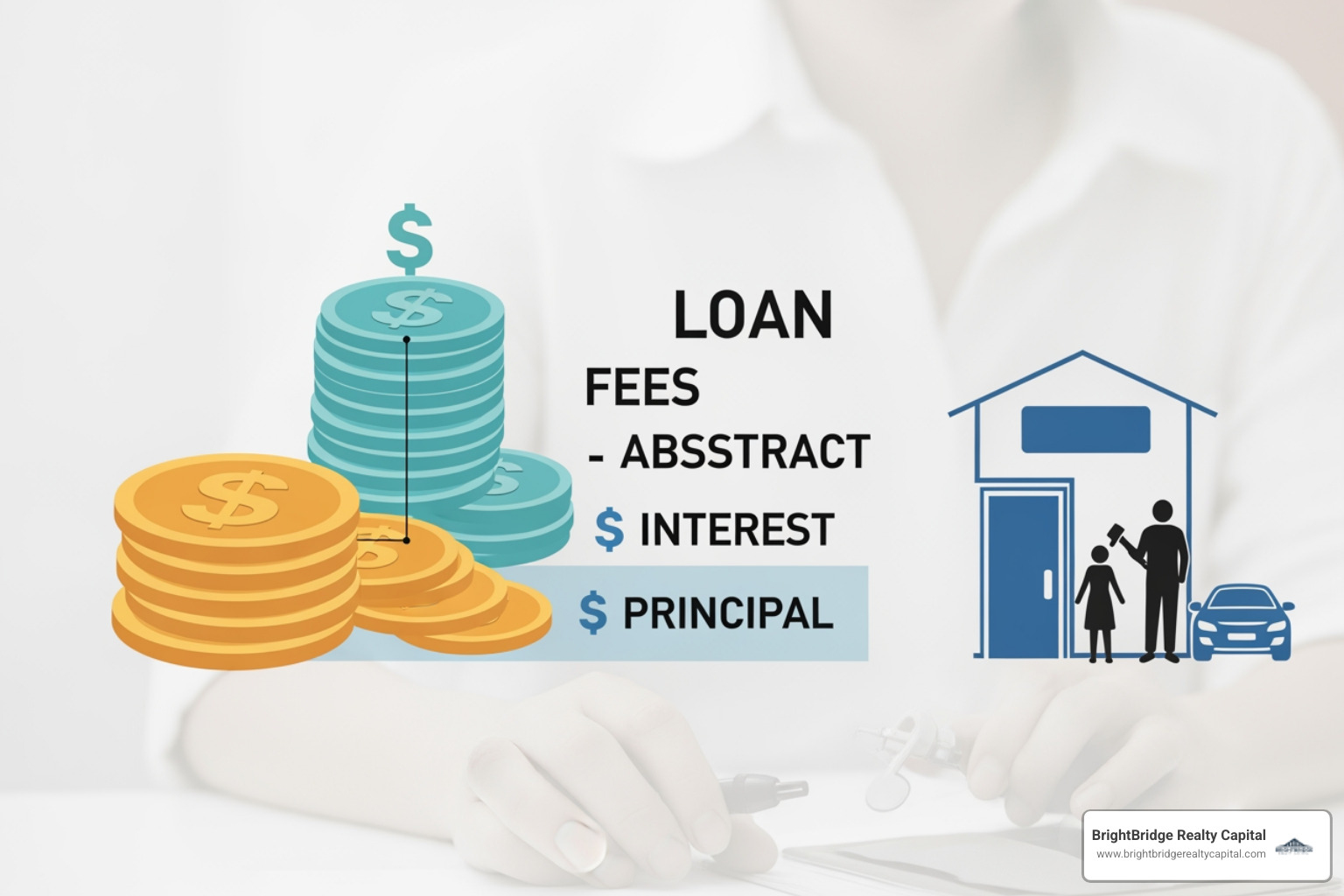
In this scenario, the interest isn't paid monthly. Instead, it’s often "rolled up" or "retained," meaning you pay it all at the end. Over six months, the interest totals £7,920 (£300,000 x 0.44% x 6). When you add the £3,000 arrangement fee, the total cost of borrowing (excluding valuation and legal fees) is £10,920. At the end of the term, your total repayment would be £310,920. This "rolled up" method is highly beneficial for developers who need to put every penny of their available cash into the renovation itself rather than servicing monthly debt.
For more variations on these numbers, you can explore our BrightBridge Bridging Examples. It is also worth noting the difference between "Gross" and "Net" loan amounts. A Net Loan is the amount you actually receive in your bank account, while a Gross Loan includes the interest and fees that have been added to the balance. If you need exactly £300,000 to complete a purchase, you must ensure your lender calculates the LTV based on the Gross loan to avoid a shortfall on completion day.
How LTV Affects Your Terms
The Loan-to-Value (LTV) ratio is the lender's primary tool for assessing risk. In bridging, most lenders cap their lending at 75% LTV. If you are buying a property for £400,000, a 75% LTV means we provide £300,000, and you contribute a £100,000 deposit. However, LTV isn't just about the purchase price; it's about the security. If you have another property with significant equity, we can "cross-collateralize" the loan, potentially allowing you to borrow 100% of the purchase price of the new property.
Lower LTVs (like 50%) often open up much better interest rates. Why? Because the lender has more "equity cushion." If the market dips, the lender is still likely to recover their funds. Conversely, some high-leverage products allow for 80% or even 90% LTV if you provide additional security, such as a second property or a personal guarantee. The higher the LTV, the more scrutiny the lender will apply to your exit strategy, as there is less room for error if the property value fluctuates.
Calculating Total Repayment
Beyond interest and arrangement fees, we must account for the "hidden" costs that complete the bridging loan example:
- Valuation Fees: Typically paid upfront, ranging from £450 to over £2,500 depending on property value and complexity. A commercial valuation for a warehouse will cost significantly more than a standard residential valuation.
- Legal Fees: You usually pay for both your solicitor and the lender’s solicitor. Expect £1,500 to £5,000. Bridging legal work is more intensive because it must be completed quickly, often requiring solicitors to work outside standard hours.
- Exit Fees: Some lenders charge a fee (often 1%) when the loan is repaid. Not all lenders charge this, so it's a key point of comparison when shopping for quotes.
- Admin and Drawdown Charges: Small fees for electronic transfers, document processing, or "redemption administration," usually totaling around £500 to £1,000.
- Broker Fees: If you use a broker, they may charge a flat fee or a percentage (usually 1%) for their services in sourcing and managing the deal.
How to Use Bridge Loans for Real Estate Scenarios
Bridge loans are the Swiss Army knife of real estate finance. Because we focus on the asset's value and the exit strategy rather than just your personal income, we can fund deals that traditional banks wouldn't touch. This flexibility allows investors to capitalize on "broken" properties or complex legal situations that would otherwise be impossible to finance.
Buying Before Selling
This is the classic "bridge." Imagine you’ve found your dream home in New York, but your current apartment hasn't sold yet. You don't want to lose the new property to another buyer who is "chain-free."
- The Scenario: You need a £350,000 bridge to secure the new home.
- The Solution: We secure the loan against both your current home and the new purchase. This gives you the liquidity to buy now and 12 months to sell your old place.
- The Benefit: You avoid a property chain collapse, move on your own timeline, and potentially negotiate a better price on the purchase because you are acting as a cash buyer.
For a deeper dive into how these mechanics work, check out BrightBridge on Bridge Loan Mechanics. This scenario is also common for people relocating for work who need to secure housing in a new city before their previous home has even hit the market.
Funding Renovations and Refurbishments
Investors frequently use the BRRRR method (Buy, Rehab, Rent, Refinance, Repeat). Many properties are in such poor condition that they are "unmortgageable" by high-street standards—they might lack a working kitchen, have damp issues, or possess structural flaws that make them a risk for long-term lenders.
- The Scenario: An investor buys a distressed property for £100,000 with a £40,000 rehab budget.
- The Bridge: We provide up to 90% of the purchase price and 100% of the renovation costs, often released in stages as work is completed.
- The Exit: Once the property is renovated and its "After-Repair Value" (ARV) hits £190,000, the investor refinances into a long-term rental loan (Buy-to-Let), using the new equity to pay off the bridge and even pull out some cash for the next deal.
Auction Purchases and Fast Completions
When you buy a property at auction, the hammer fall constitutes a legal contract. You typically have 28 days to provide the remaining 90% of the purchase price. If you fail, you lose your 10% deposit and may be sued for damages. Traditional mortgages often take 45-60 days to process, making them unsuitable for auctions. A bridging loan can be approved in 24 hours and funded in 10-14 days, ensuring you meet the strict auction deadlines. This speed allows investors to pick up properties at a discount, as the "speed premium" is often priced into the auction value.
Probate and Inheritance Situations
When a family member passes away, the heirs may need to pay inheritance tax before the estate's assets can be released. Alternatively, one sibling may want to buy out the others' shares in a family home. A bridging loan can provide the immediate funds to settle tax liabilities or buy out heirs, with the loan being repaid once the property is eventually sold or refinanced into a standard mortgage. This prevents the forced, hurried sale of a family asset at a sub-optimal price.
How Bridging Loans Differ from Traditional Mortgages
The primary difference is speed. While a traditional mortgage can take 3 months to close due to extensive background checks and bureaucratic hurdles, a bridge loan can be arranged in 1 to 6 weeks—and in some urgent cases, within just a few days. This speed is possible because bridging lenders are "asset-backed," meaning the primary security is the property itself, not the borrower's monthly salary.
| Feature | Bridging Loan | Traditional Mortgage |
|---|---|---|
| Speed | 1–4 weeks | 8–12 weeks |
| Duration | 1–24 months | 15–30 years |
| Monthly Payments | Often none (rolled up) | Mandatory (Principal + Interest) |
| Underwriting Focus | Asset value & Exit strategy | Personal income & Credit score |
| Interest Rates | Higher (0.44% – 1.5% per month) | Lower (3% – 7% per year) |
| Early Repayment | Usually no penalties after 1-3 months | Often heavy penalties for years |
| Property Condition | Can be derelict/unmortgageable | Must be in good, habitable condition |
The Role of a Finance Broker
While we are direct lenders at BrightBridge, many clients use brokers to steer the market. A broker helps manage the complex documentation and ensures your exit strategy is airtight. They can be particularly helpful if you have a non-standard situation, like bad credit or a unique property type (e.g., land without planning permission). A good broker will also help you compare the "Total Cost of Credit," looking past the headline interest rate to see the impact of fees and exit charges. However, working directly with a lender like BrightBridge can often result in faster communication and a more personalized underwriting process.
Speed and Accessibility
Because we are asset-based lenders, we can be more flexible. If you have significant equity in a property but a low credit score or a complex income structure (such as being self-employed with only one year of accounts), a traditional bank will likely say no. We, however, look at the property's potential and how you plan to pay us back. This makes bridging finance accessible to entrepreneurs, property flippers, and investors who may not have a traditional W2 income or a perfect credit history. We are looking for a "common sense" approach to lending: Does the deal make sense? Is the property worth the value? Is there a clear way out?
Regulated vs. Unregulated Bridging
It is vital to understand the distinction between regulated and unregulated loans. A Regulated Bridging Loan is overseen by financial authorities (like the FCA in the UK) and applies when the loan is secured against a property that is, or will be, occupied by the borrower or their immediate family. These have stricter rules to protect consumers. An Unregulated Bridging Loan is used for business purposes, such as buy-to-let investments, commercial property, or land development. Because these are business-to-business transactions, they offer more flexibility in terms of LTV and structure, but they do not carry the same consumer protections as residential loans.
Learn more in our BrightBridge Guide to Bridging Loans.
How to Secure Your Exit Strategy and Manage Risks
The "exit strategy" is the most critical part of any bridging loan example. It is your documented plan for how you will repay the loan. Without a viable exit, a bridge loan is simply too risky for both you and the lender. In fact, most bridging lenders will not even issue a term sheet unless they can see a clear, realistic path to repayment within the loan term.
Common Exit Strategies
- Sale of the Property: This is the most common exit. You use the bridge to buy or renovate, then sell the asset on the open market to repay the debt. Lenders will look at local market liquidity to ensure the property can realistically sell within 6-12 months.
- Refinancing: Often called a "Development Exit," this involves moving from the high-interest bridge loan to a lower-interest, long-term mortgage once the property is habitable or tenanted.
- Cash Settlement: Repaying the loan using other funds, such as an inheritance, a business bonus, or the sale of stocks and shares.
Open vs. Closed Bridging Loans
- Closed Bridge: You have a firm, fixed date for repayment. This usually happens when you have already exchanged contracts on the sale of your property and have a confirmed completion date. These are lower risk for the lender and often come with the most competitive interest rates.
- Open Bridge: There is no fixed repayment date (though there is a maximum term, usually 12 months). This is common when you’ve listed your home but haven't found a buyer yet. It offers more flexibility but carries more risk; if the market slows down and you haven't sold by month 12, you may face expensive extension fees or default rates.
Understanding the Risks
- Interest Accrual: Because rates are higher than standard mortgages, the debt grows quickly. If your property doesn't sell within the term, you could end up with a much larger balance than anticipated, eating into your profit margins.
- Market Fluctuations: If the property market dips by 10% during your renovation, you might not be able to refinance for the full amount needed to cover the bridge loan. This is why maintaining a "buffer" of equity is essential.
- Dual Payments: If you don't roll up the interest, you might find yourself making payments on both a bridge loan and an existing mortgage simultaneously. This can put a significant strain on your monthly cash flow.
- Repossession: Like a mortgage, the loan is secured against your property. If you cannot meet the exit strategy and cannot negotiate an extension, the lender may eventually have to sell the asset to recover the funds. This is a last resort, but it is a real legal possibility.
- Execution Risk: This is the risk that your planned exit (like a renovation) takes longer than expected. If a contractor walks off the job or planning permission is delayed, your 12-month bridge might expire before the property is ready to sell or refinance.
Frequently Asked Questions about Bridging Loan Examples
What is the maximum term for a bridging loan example?
For regulated loans (usually where you or a family member live in the property), the maximum term is typically 12 months. For unregulated business or investment loans, terms are often 12 to 24 months, though some specialist lenders offer up to 36 months for complex developments. At BrightBridge, we customize the term to fit your specific project timeline, ensuring you aren't paying for time you don't need, while still having a safety net.
Can I repay a bridging loan example early?
Yes! Most bridging loans allow for early repayment. In fact, because interest is often calculated daily or monthly, repaying early can save you thousands of pounds in interest charges. Always check if there is a "minimum term" (e.g., 1 or 3 months). If you repay in month 2 of a 3-month minimum term loan, you will still have to pay the interest for the third month.
What are the eligibility criteria for a bridge loan?
We focus on:
- Equity: You typically need at least 25-30% equity or a cash deposit. The more "skin in the game" you have, the better the rate.
- Property Type: We lend on residential, commercial, mixed-use, and even derelict buildings or land with/without planning permission.
- Exit Strategy: You must show a clear, documented path to repayment (sale or refinance). We will ask for evidence, such as a solicitor's letter or a mortgage DIP (Decision in Principle).
- Location: We specialize in New York and nationwide solutions, focusing on areas with liquid real estate markets.
Can I get a bridging loan with bad credit?
Yes, it is possible. Because bridging is asset-based, your credit score is less important than the value of the property and the viability of the exit strategy. However, a very poor credit history might limit the number of lenders willing to work with you and could result in higher interest rates or a lower LTV cap.
How much can I borrow?
Bridging loans typically range from £50,000 to £25 million or more. The upper limit is generally determined by the value of the asset you are providing as security. For very large loans, lenders will perform more significant due diligence on the borrower's experience and the local market conditions.
What is a "Second Charge" bridge loan?
A second charge bridge is a loan secured against a property that already has an existing mortgage (the first charge). The bridging lender sits behind the primary lender in the queue to be paid if the property is sold. These are riskier for lenders and therefore usually carry higher interest rates and lower LTV limits (often capped at 65-70% total debt).
Conclusion
A bridging loan example illustrates that while this type of finance is more expensive than a traditional mortgage, its value lies in its speed, flexibility, and ability to "bridge" impossible gaps. Whether you are a homeowner trying to secure a new house before your old one sells, an investor flipping a distressed property in New York, or a business owner needing to settle a sudden tax bill, bridging finance provides the interim capital necessary to move forward when traditional banks move too slowly.
At BrightBridge Realty Capital, we specialize in these customized real estate financing solutions. We understand that in the world of property, time is money. We pride ourselves on fast closings—often within a week—and a seamless direct lending process without the problems of intermediaries. Our team of experts looks beyond the credit score to the heart of the deal, providing the leverage you need to grow your portfolio or secure your dream home.
However, bridging is a powerful tool that must be used with a clear plan. Always ensure your exit strategy is realistic and that you have accounted for all costs, including interest, fees, and legal charges. By doing so, you can use bridging finance to unlock opportunities that would otherwise remain out of reach.
Ready to see how a bridge loan can work for your specific deal? More info about best bridging loan services. Reach out to our team today to discuss your scenario, walk through a personalized bridging loan example, and get a customized quote that fits your timeline and financial goals.


