What You Need to Know About Financing Distressed Properties
Summary
Explore distressed property financing options to capitalize on high-reward investments. Understand risks & get flexible funding now.
Why Distressed Property Financing Offers Major Opportunities Right Now
Distressed property financing is a specialized funding solution designed for real estate investors looking to acquire and renovate properties that are under significant financial or physical duress. These properties—often facing foreclosure, already bank-owned (REO), or in need of substantial repairs—are sold at considerable discounts. Unlike conventional mortgages that heavily scrutinize a borrower's personal income and credit history, this type of financing pivots its focus to the asset itself. Lenders in this space are primarily concerned with the property's potential, specifically its after-repair value (ARV), making it the ideal tool for value-add investors.
Quick Answer: What is Distressed Property Financing?
- What it is: A category of short-term, asset-based loans used to purchase and/or renovate properties in foreclosure, short sale, REO (bank-owned) status, or a state of significant physical disrepair.
- How it works: Lenders underwrite the loan based on the property's value-add potential. They analyze the purchase price, renovation budget, and the projected after-repair value (ARV) to determine the deal's viability.
- Key benefits: Enables investors to capitalize on lower purchase prices, close deals in a fraction of the time of traditional loans, and access flexible terms tailored to the project's lifecycle.
- Common types: The most prevalent forms include hard money loans, bridge loans, and private money loans, all of which prioritize speed and asset value.
- Typical terms: Loan terms generally range from 6 to 24 months, often featuring interest-only payments to preserve cash flow during renovations, with leverage up to 85% of the total project cost (LTC).
- Who it's for: This financing is essential for fix-and-flip investors, landlords using the BRRRR (Buy, Rehab, Rent, Refinance, Repeat) strategy, and commercial developers looking to reposition undervalued assets.
The current economic climate is creating a tidal wave of opportunity. With upwards of $1.5 trillion in commercial real estate debt scheduled to mature by the end of 2025, many property owners are facing a refinancing crisis. Compounded by office vacancy rates hitting a historic high of 19.8%, a significant inventory of distressed assets is flowing into the market. These properties represent a chance to acquire real estate far below its intrinsic market value, but they are not without their challenges, including the risk of unforeseen repair costs and complex, often lengthy, closing processes.
This is where the limitations of traditional banking become an investor's barrier. Conventional lenders, constrained by strict regulations and a risk-averse culture, are ill-equipped to handle these deals. Their underwriting models can't properly value a neglected property, and their bureaucratic processes cannot deliver the speed required to compete for auction or REO properties. Specialized distressed property financing exists to fill this crucial gap, providing the agile and creative capital solutions that investors need to succeed.
I'm Daniel Lopez, a loan officer at BrightBridge Realty Capital. My expertise lies in navigating the intricate world of distressed property financing. From guiding a first-time fix-and-flipper through their initial project to structuring complex, multi-million dollar loans for seasoned investors scaling their rental portfolios, I've seen it all. In this market, understanding your financing options isn't just an advantage—it's the critical factor that separates a highly profitable investment from a costly and frustrating failure.
Understanding Distressed Properties and the Market
A distressed property is far more than a simple fixer-upper; it is a piece of real estate encumbered by severe financial, legal, or physical challenges. These situations, while problematic for the current owner, create a unique window of opportunity for savvy investors. It is precisely in these scenarios, where traditional bank financing is unavailable, that distressed property financing becomes not just an option, but a necessity.
The current market, particularly in the commercial real estate sector, is exhibiting significant signs of stress. The national office vacancy rate soared to 19.8% by the end of 2024, a direct consequence of shifting work habits. This is not an isolated issue. In the Tri-State area alone, a staggering $9 billion worth of commercial real estate loans are maturing within the next 24 months. This includes $8 billion in commercial mortgage-backed securities (CMBS) loans tied to multifamily properties. When these loans come due in a market where property values have fallen and interest rates have risen, owners are trapped. They cannot refinance, and they cannot sell for enough to cover the debt. This is the genesis of distress and the starting point for investor opportunity.

What Makes a Property "Distressed"?
A property earns the "distressed" label when its owner is confronted with financial or legal obstacles that threaten their ownership. The causes are varied but follow common patterns:
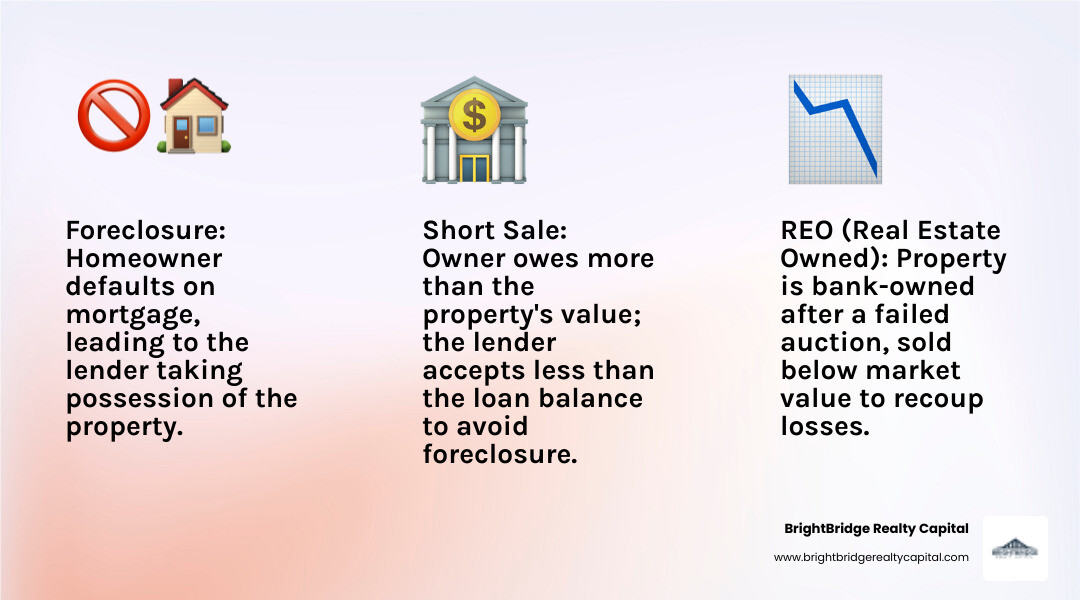
- Owner default and Foreclosure: This is the most common path to distress. The owner fails to make mortgage payments, and the lender initiates the foreclosure process. This process typically moves through stages: pre-foreclosure (where the owner can still sell or catch up), the public auction, and finally, REO (Real Estate Owned), where the bank takes possession after a failed auction.
- Tax Liens: When a property owner fails to pay property taxes, the local municipality can place a super-priority lien on the property. If the taxes remain unpaid, the government can foreclose on the property and sell it at a tax auction to recoup the owed amount. Investors can sometimes acquire properties for just the value of the back taxes.
- Bankruptcy: During personal or corporate bankruptcy proceedings, real estate is often considered an asset that must be liquidated to satisfy creditors. These sales are overseen by a court-appointed trustee who is motivated to sell quickly, often resulting in prices well below market value.
- Physical Neglect and Deferred Maintenance: A property can become distressed due to its condition alone. Severe neglect—such as a failing roof, foundation issues, or extensive mold—can render a property uninhabitable and unfinanceable by conventional means, even if the owner is financially stable.
- Legal and Title Encumbrances: Properties can be entangled in legal issues that make them toxic to traditional buyers and lenders. This includes messy divorces, probate disputes over inheritance, mechanic's liens from unpaid contractors, or significant environmental liabilities that require costly remediation.
- Underwater Mortgages (Short Sales): This occurs when the outstanding loan balance is greater than the property's current market value. To avoid the costly and time-consuming foreclosure process, a lender may agree to a short sale, accepting a payoff that is less than the total amount owed. This is a complex transaction requiring the lender's approval.
Why Are So Many Properties Distressed Now?
We are currently witnessing a perfect storm of economic factors creating widespread distress, particularly in the commercial real estate sector.
- High-Interest Rate Environment: The aggressive rate hikes by the Federal Reserve have a dual negative effect. Firstly, it makes servicing floating-rate debt significantly more expensive, eroding cash flow. Secondly, it makes refinancing maturing loans prohibitively costly or impossible. With $1.5 trillion in CRE debt coming due by the end of 2025, many owners who secured loans in a low-rate environment are now facing a wall of capital they cannot climb.
- Post-Pandemic Structural Changes: The widespread adoption of remote and hybrid work models has decimated the office sector, leading to record-high vacancies and plummeting property values. This has a ripple effect, impacting urban retail that relied on office workers and even multifamily properties in central business districts. In cities like New York, this has spurred a push for office-to-residential conversions, a complex undertaking that itself requires specialized financing.
- Declining Property Values and Appraisal Gaps: As vacancies rise and net operating income (NOI) falls, property values decline. When a building appraises for less than the outstanding loan amount, traditional refinancing becomes impossible. This "appraisal gap" forces owners to either inject significant new equity—which they often lack—or face default.
- Skyrocketing Operating Costs: The inflationary environment has driven up every line item on a property's P&L. Insurance premiums, particularly in areas prone to climate events, have soared. Property taxes continue to climb, and the cost of materials and labor for maintenance has increased, squeezing already thin profit margins and pushing once-stable properties into the red.
- The Maturity Wall: The sheer volume of loans maturing in a short period creates immense pressure. Owners who secured 5, 7, or 10-year loans at sub-4% rates are now facing a market where new loans are priced at 7-9%. For many, the property's income can no longer support the new, higher debt service, creating a mathematical certainty of distress.
The Investor's Calculus: Weighing High Rewards and Significant Risks
Investing in distressed properties is the ultimate high-stakes game in real estate. It's a calculated balance of pursuing massive opportunities while mitigating notable risks. For the well-prepared investor, the financial rewards can be transformative, but it is absolutely critical to understand both sides of the equation before committing capital.

Top Advantages of Investing in Distressed Properties
Savvy investors are drawn to distressed assets not just for the challenge, but for several powerful financial advantages that are difficult to find in traditional real estate.
Significantly Lower Purchase Price: This is the primary allure. Distressed properties are sold by highly motivated sellers—banks needing to clear non-performing assets off their books, heirs wanting to quickly liquidate an inherited problem, or owners desperate to avoid foreclosure. This motivation translates into deep discounts, often 20-50% below the current market value of comparable, non-distressed properties. This lower entry point creates a substantial margin of safety and a head start on profitability.
Instant Equity Creation: When you purchase a property for significantly less than its market value, you create equity on day one. For example, if you buy a property valued at $400,000 for just $280,000, you have instantly gained $120,000 in equity. This immediate boost to your net worth strengthens your balance sheet, providing a powerful foundation for securing future financing and growing your portfolio.
Forced Appreciation Through Renovation: Unlike traditional investments that rely on passive market appreciation over time, distressed properties allow you to force appreciation. Through strategic renovations and repositioning, you can dramatically increase the property's value in a short period. This is the core principle of value-add strategies like fix-and-flip and BRRRR. You are not waiting for the market to make you money; you are actively creating value and controlling your own destiny.
Reduced Competition: The complexities and perceived risks of distressed properties scare off the majority of conventional homebuyers and inexperienced investors. The need for specialized distressed property financing, large amounts of cash for renovations, and the expertise to manage a complex project creates a high barrier to entry. This thinned-out field of competitors means you face less bidding pressure and have far more negotiating power to secure a favorable deal.
The Biggest Risks to Consider
While the upside is high, the potential pitfalls are equally significant. Approaching these deals with a clear-eyed, diligent perspective is non-negotiable.
Uncertain Property Condition and Hidden Costs: Distressed properties are almost universally sold "as-is, where-is," with no warranties. What you see is what you get, and what you don't see can be financially devastating. Beyond cosmetic issues, you may uncover major hidden problems like a cracked foundation, systemic mold requiring extensive remediation, outdated and dangerous electrical systems, or underground environmental contamination. These hidden costs can obliterate your renovation budget and turn a promising deal into a money pit. A robust contingency fund (typically 15-20% of the rehab budget) is essential.
Legal, Title, and Permitting Complications: The property's financial distress is often mirrored by a messy legal history. A comprehensive title search is absolutely critical to uncover any clouds on the title, such as mechanic's liens from unpaid contractors, outstanding judgments against the previous owner, or unresolved IRS tax liens. Any of these can halt a sale or, worse, become your responsibility after closing. Furthermore, the foreclosure process itself can be lengthy and unpredictable, with some states having judicial foreclosures that can drag on for 1-2 years, tying up your capital and introducing market risk.
Market Volatility and Extended Timelines: The distressed market is highly sensitive to broader economic shifts. A deal that pencils out perfectly today might become unprofitable if the real estate market declines during the extended closing and renovation period. These deals can take 6 to 12 months to close and rehab, far longer than a typical 30-60 day transaction. This long timeline exposes you to interest rate risk (if your take-out financing becomes more expensive) and market risk (if the final ARV is lower than projected), compressing your profit margin or even causing a loss.
| Feature | Distressed Real Estate Investment | Traditional Real Estate Investment |
|---|---|---|
| Purchase Price | Often significantly discounted (20-50% below market) | Market value, with limited room for negotiation |
| Value-Add | High potential through renovation, repositioning, and stabilization | Often limited to market appreciation and minor cosmetic updates |
| Competition | Lower; limited to specialized investors with cash and expertise | High, especially in strong markets; includes retail homebuyers |
| Closing Time | Longer (can be 6-12+ months for complex deals) | Shorter (typically 30-60 days) |
| Property Condition | Often poor, sold "as-is," with significant hidden issues | Generally good, inspected, with fewer major surprises |
| Legal/Financial Risk | Higher (liens, title defects, foreclosure process, bankruptcy) | Lower, with standardized legal processes and title insurance |
| Financing Needs | Specialized, asset-based, fast, flexible (hard money, bridge) | Traditional mortgages, credit-dependent, slower approval |
| Potential ROI | Higher, but directly correlated with increased risk and effort | Moderate, more stable, and generally lower risk |
A Guide to Distressed Property Financing Options
Financing a distressed property is a fundamentally different discipline than securing a traditional mortgage for a primary residence. At BrightBridge Realty Capital, we are experts in asset-based lending, a philosophy that prioritizes the property's intrinsic and potential value over the borrower's personal financial statements. This approach enables the incredible speed of funding that is often the deciding factor in winning a competitive distressed deal. Our lender requirements are specifically tailored to the realities of value-add investing, maintaining a sharp collateral focus on the real estate asset itself.
The critical need for this type of flexible financing is becoming so apparent that even federal regulators are acknowledging it, as seen in publications like the Policy Statement on Prudent Commercial Real Estate Loan Accommodations and Workouts, which encourages lenders to find creative solutions for troubled assets.
How Does Distressed Property Financing Differ from Traditional Loans?
The primary distinctions are underwriting focus, speed, and deal structure. Traditional lenders are risk-averse institutions that use a rigid, historical-looking checklist. They are slow, cautious, and fixated on your personal credit score and the property's current, low "as-is" appraised value.
Distressed property financing is purpose-built for the dynamic, forward-looking nature of real estate investment:
- Focus on After-Repair Value (ARV): This is the most critical difference. We underwrite the loan based on what the property will be worth after you execute your business plan. This allows us to finance the purchase and renovation of properties that conventional banks, which only lend on the depressed current value, would immediately reject.
- Shorter Terms and Specific Purpose: These are not 30-year mortgages. Loans typically range from 6 to 24 months, designed to serve as a "bridge" that covers the acquisition and rehabilitation phase, leading to a clear exit strategy—either a sale or a long-term refinance.
- Pricing for Risk and Speed: Faster, more flexible capital for higher-risk projects naturally comes with higher interest rates and upfront origination points. While a conventional mortgage might be 6-7%, a bridge loan could be 9-12% plus 2-4 points. However, savvy investors understand this cost is a small price to pay for the ability to acquire a property at a 30% discount.
- Unparalleled Closing Speed: While a traditional bank loan takes 45-90 days to close, specialized private lenders can close in as few as 5-10 business days. This speed is a strategic weapon, allowing investors to make aggressive, near-cash offers that are highly attractive to motivated sellers, especially in auction or REO scenarios.
- Deal-Centric Underwriting: We focus on the quality of the deal. Is the purchase price low enough? Is the rehab budget realistic? Is the ARV achievable? Is the investor experienced? While we still verify borrower qualifications, the property and its potential are the primary collateral and focus of our decision-making, not just a W-2 or credit score.
Common Types of Loans for Distressed Assets
When traditional lenders say no, these specialized financing tools provide a clear path forward for investors.
Hard Money & Private Money Loans: These are the workhorses of the fix-and-flip world. They are short-term (typically 12 months), asset-based loans funded by private investment funds (hard money) or wealthy individuals (private money). The key feature is speed. Because lenders focus almost exclusively on the property's ARV and the investor's plan, they can often provide a proof of funds letter within hours and close the loan in a week. This is ideal for acquiring properties at auction or from wholesalers where a quick, certain close is required.
Bridge Loans: These loans are designed to "bridge" a gap in financing. For distressed assets, they are essential for acquiring and renovating a property to a point of stabilization. Once the property is repaired and, if it's a rental, leased up, it becomes eligible for a conventional long-term loan. We offer distressed business-purpose bridge loans from $1 million to $25 million with terms of 6-24 months. We also provide "bridge-to-bridge" financing, which allows an investor to refinance a maturing bridge loan with a new one, often to allow more time for stabilization or to wait for a more favorable permanent financing market, with minimal cash out of pocket.
Direct Private Lending: This is the core of our business at BrightBridge Realty Capital. As a direct private lender, we use our own capital to fund loans. This provides several distinct advantages for the borrower. It eliminates broker fees and the delays associated with middlemen, resulting in a faster, more streamlined process and more competitive rates. We have the flexibility to create customized loan structures that fit the unique needs of a specific project, rather than forcing it into a pre-set box. This direct relationship allows us to act as a strategic partner, not just a source of funds.
REO & Foreclosure Property Loans: This isn't a separate loan type, but rather a specialized application of the loans above. Financing bank-owned (REO) or pre-foreclosure properties requires a lender who understands the unique dynamics. Banks selling REO assets demand a quick, no-contingency close. Auctions require proof of funds and the ability to close within a very short timeframe. Our financing is structured to meet these exact requirements, giving our clients the power to compete with all-cash buyers.
Key Terms in Distressed Property Financing
- Loan-to-Value (LTV): The loan amount expressed as a percentage of the property's current appraised value. For a distressed purchase, this is based on the "as-is" value and is often a less relevant metric than LTC.
- Loan-to-Cost (LTC): The most important metric for value-add projects. It's the loan amount as a percentage of the total project cost (purchase price + renovation budget). Lenders might offer up to 85% LTC, meaning the investor needs to bring the remaining 15% plus closing costs.
- After-Repair Value (ARV): The estimated market value of the property after all planned renovations are completed and it is in stabilized condition. This is the north star for distressed financing, as it determines the project's profitability and the lender's ultimate security.
- Interest-Only Payments: A loan structure where the borrower's monthly payment covers only the interest accrued, not any principal. This keeps carrying costs low during the renovation phase when the property is not generating income, preserving capital for the project itself.
- Origination Points: An upfront fee charged by the lender to originate the loan, calculated as a percentage of the total loan amount. For distressed bridge loans, this typically ranges from 2-4%. This fee compensates the lender for the increased risk and underwriting complexity of the deal.
- Exit Strategy: A critical component of any loan application. This is your detailed plan to repay the short-term loan. The two primary exits are selling the property (the "flip") or refinancing into a long-term, permanent loan and holding it as a rental (the "hold" part of the BRRRR method). Lenders need to see a clear and viable path to being repaid.
Strategy and Due Diligence: Executing a Successful Deal
Success in distressed property investing is not born from luck; it is forged through meticulous planning, exhaustive due diligence, and flawless execution. It's a discipline that requires you to not only identify a potentially profitable opportunity but also to have a rock-solid, step-by-step plan to navigate the project from acquisition to exit.
Essential Due Diligence Before You Buy
"You make your money when you buy" is a timeless real estate adage, and nowhere is it truer than with distressed assets. Your due diligence period is your only defense against a catastrophic investment. Rushing this process is the number one mistake new investors make.
Comprehensive Property Inspection: This goes far beyond a standard home inspection. You must hire licensed and experienced contractors (plumbers, electricians, structural engineers, roofers) to walk the property with you. Your goal is to create a highly detailed Scope of Work (SOW) that itemizes every necessary repair. This SOW becomes the foundation of your renovation budget. Always add a contingency of 15-20% to this budget to cover the inevitable surprises that arise when you open up walls in an old, neglected building.
Forensic Title Search and Legal Review: A clean title is paramount. Engage a reputable title company or real estate attorney to conduct a comprehensive title search. This will uncover any liens (mortgage, tax, mechanic's, judgment), encumbrances, or ownership disputes (lis pendens) that could cloud the title and jeopardize your ownership. You must ensure you are receiving a clear, insurable title at closing. Do not close on a property without a title insurance policy.
Permit and Zoning Verification: Contact the local municipal planning and building department. You need to pull the property's permit history to check for any unpermitted work done by previous owners. Illegal additions or modifications can be a legal and financial nightmare, often requiring you to tear out the work and rebuild it to code at your own expense. Simultaneously, verify that the property's current zoning allows for your intended use. You cannot convert a single-family home into a duplex if the zoning is strictly for single-family residences.
Accurate Contractor Bidding and Vetting: Your renovation budget is only as good as the bids you receive. Get detailed, written bids from at least three vetted, licensed, and insured general contractors. Do not accept vague, one-page estimates. A proper bid should align with your SOW and break down costs for labor and materials. Check their references, look at their past work, and ensure they are financially stable. Structure your construction contract with a clear payment schedule based on completed milestones, not arbitrary timelines.
In-Depth Market Analysis (CMA): A realistic After-Repair Value (ARV) is the cornerstone of your entire financial projection. Work with an experienced real estate agent to run a comparative market analysis (CMA). This involves finding recent sales (last 3-6 months) of properties that are truly comparable to your project after it's renovated—similar square footage, bed/bath count, and level of finishes, in the same neighborhood. Be conservative and honest in your analysis. An inflated ARV can lead you to overpay for a property and erase your potential profit.
The BRRRR Method: A Wealth-Building Powerhouse with Distressed Properties
The BRRRR (Buy, Rehab, Rent, Refinance, Repeat) method is a powerful and systematic strategy for using distressed properties to build a long-term rental portfolio and generate wealth. It's a cyclical process that allows you to recycle your investment capital.
Buy: Use short-term, specialized financing, like a bridge loan from a lender like BrightBridge Realty Capital, to acquire a discounted distressed property. Your ability to close quickly with this capital gives you a massive advantage in negotiations. The goal is to purchase the property at a price low enough that after renovations, the new appraised value will be significantly higher than your total investment.
Rehab: Execute the renovation plan defined during your due diligence. This is the "forced appreciation" phase. Manage your contractors, timeline, and budget vigilantly. The goal is to complete the rehab efficiently, transforming the property from distressed to desirable, thereby maximizing its value and preparing it to meet the standards of a future tenant and a conventional appraiser.
Rent: Once the renovation is complete, your next step is to stabilize the asset by placing a qualified tenant. Market the property at a competitive rental rate, and conduct thorough tenant screening (credit check, background check, income verification, rental history). A signed lease with a paying tenant turns the non-performing asset into a cash-flowing investment.
Refinance: This is the crucial step where you recoup your capital. With a renovated, cash-flowing property, you can now approach a traditional bank or lender for a long-term, permanent mortgage. The lender will appraise the property at its new, higher ARV. Ideally, the new loan is large enough to pay off the original bridge loan and reimburse you for your down payment and renovation costs. This is the "cash-out" refinance. Many lenders require a "seasoning period" (typically 6-12 months from purchase) before they will refinance.
Repeat: With your initial investment capital now returned to your bank account, you are free to repeat the process. You can take that same pool of money and use it to acquire your next distressed property, scaling your portfolio and compounding your wealth without having to save up a new down payment for every deal.
Frequently Asked Questions about Distressed Property Financing
Navigating the world of distressed assets and their financing can be complex. Here are answers to some of the most common questions we encounter from investors.
How do I find distressed properties?
Finding good distressed deals requires a proactive, multi-channel approach. You can't simply wait for them to appear on Zillow. Here are the most effective methods:
- Local MLS (with an Investor-Friendly Agent): A good real estate agent can set up automated searches on the Multiple Listing Service (MLS) for keywords like "foreclosure," "short sale," "REO," "handyman special," or "as-is." They can also spot properties that have been on the market for an unusually long time, which often signals a motivated or difficult seller.
- Foreclosure Auctions: County courthouse steps or online auction sites (like Auction.com) can offer deep discounts. However, this is a high-risk, high-reward strategy. You often must bid without inspecting the property, and you'll need to provide a cashier's check for a deposit immediately and close the deal with cash or specialized financing very quickly.
- Networking with Wholesalers: Wholesalers are experts at marketing directly to distressed sellers. They put properties under contract and then assign that contract to an end-buyer (like you) for a fee. Building relationships with reputable local wholesalers can provide a steady stream of off-market deals.
- Driving for Dollars: This classic, boots-on-the-ground method involves driving through your target neighborhoods and looking for physical signs of neglect: overgrown lawns, boarded-up windows, overflowing mailboxes, or code violation notices on the door. Use apps or public records to identify the owner and initiate contact.
- Directly Targeting Public Records: Monitor county records for notices of default (Lis Pendens), scheduled foreclosure auctions, and tax lien filings. This allows you to contact property owners in the pre-foreclosure stage, before the property hits the open market or goes to auction.
- Contacting Bank REO Departments: Most banks have a department that manages their inventory of Real Estate Owned (REO) properties. You can contact these departments directly to get on their list of potential buyers. They are highly motivated to sell these non-performing assets off their balance sheets.
- Building a Professional Network: Connect with bankruptcy and probate attorneys. They are often in a position to know about properties that need to be liquidated quickly to settle an estate or pay off creditors.
Can I use a conventional loan to buy a distressed property?
It is extremely difficult and, in most cases, impossible. Conventional loans, which are underwritten to the strict guidelines of Fannie Mae and Freddie Mac, are designed for move-in ready homes, not major renovation projects. They fail for several key reasons:
- Strict Property Condition Standards: Conventional loans have Minimum Property Requirements (MPRs). A property with a leaking roof, no functioning kitchen, peeling paint (if built before 1978, due to lead paint risk), or significant structural issues will be deemed uninhabitable and automatically rejected.
- Appraisal Issues: A conventional appraiser values the property in its current "as-is" condition. A heavily distressed property will appraise for a very low value, which will likely be insufficient to meet the lender's minimum loan-to-value (LTV) requirements. The loan amount would be too small to be useful.
- Inflexible and Slow Process: Distressed deals are all about speed. Sellers of these properties need to close in days or a few weeks. A conventional loan process is notoriously slow and rigid, often taking 45-60 days or more. You will lose the deal to a cash or hard money buyer every time.
This is precisely why specialized distressed property financing is so essential. Lenders like BrightBridge Realty Capital are built for this exact scenario, providing the rapid, flexible, and asset-focused capital needed to bypass these roadblocks.
What is "rescue capital"?
Rescue capital, also known as special situation financing, is an emergency injection of funds for a property owner or developer facing acute financial hardship. Its purpose is to "rescue" an asset from a catastrophic event like a foreclosure, bankruptcy, or a complete project stall. It's a lifeline when traditional lenders have cut off funding and are unwilling to extend more credit.
For example, imagine a developer is 80% complete on a new apartment building, but they've run out of money due to cost overruns, and their construction loan is maturing. The bank is threatening to foreclose. Rescue capital can come in, pay off the aggressive bank, provide the remaining funds to finish construction, and give the developer the breathing room (typically 12-24 months) to complete the project, lease it up, and stabilize it. Once stabilized, the property can be refinanced with a cheaper, long-term conventional loan, which pays off the rescue capital lender. This financing can be structured as high-yield debt (like a bridge loan) or as an equity investment where the capital provider takes a partnership stake in the project. In today's market, with billions in commercial real estate debt maturing, the demand for rescue capital is surging.
What kind of team do I need to succeed in distressed property investing?
Distressed property investing is a team sport. Trying to do everything yourself is a recipe for burnout and costly mistakes. A successful investor acts as the quarterback, assembling and managing a team of specialists:
- An Investor-Savvy Real Estate Agent: Someone who understands the local market, knows how to find and analyze distressed deals, and can write aggressive, compelling offers.
- A Reliable General Contractor: A licensed, insured, and trustworthy contractor is the cornerstone of your rehab operations. Their ability to deliver on time and on budget is critical to your success.
- A Real Estate Attorney: Essential for reviewing purchase contracts, advising on entity structure (LLCs), and navigating any legal complexities that arise, especially with title issues or evictions.
- A Specialized Lender/Broker: A direct lender or broker (like us at BrightBridge Realty Capital) who specializes in distressed property financing. They provide the essential capital and can act as a strategic advisor on deal structure.
- A Certified Public Accountant (CPA): An accountant with real estate expertise can advise on tax strategy, bookkeeping, and how to maximize your financial returns and minimize your tax liabilities.
Conclusion: Seize the Opportunity with the Right Partner
The current real estate market, shaped by economic pressures and structural shifts, is creating a generational opportunity for savvy investors. The growing inventory of distressed properties allows for the acquisition of valuable assets at significant discounts, paving the way for substantial wealth creation. However, this path is not without its challenges. Risks such as hidden renovation costs, complex legal entanglements, and market volatility are very real. Success hinges on mitigating these risks through meticulous due diligence and, most importantly, securing the right financing partner.
This is where the stark difference between financing types becomes clear. Traditional lenders are simply not structured for the speed, flexibility, and risk profile that distressed deals demand. They are anchored to a property's past, constrained by rigid checklists and slow-moving bureaucracy. Specialized private lenders, in contrast, are focused on the future—the After-Repair Value (ARV) and the potential you plan to unlock. When you need to close a deal in ten days, not ten weeks, you need a lender who operates at the speed of opportunity.
At BrightBridge Realty Capital, we are that partner. As a direct, asset-based lender, we have stripped away the middlemen and institutional red tape that kill deals. We provide customized, creative financing solutions with the ability to close in as little as a week. This gives our clients the decisive competitive advantage needed to win the best deals in the distressed property market.
Opportunities without the right capital are merely conversations. If you are a serious investor ready to move from analysis to action and capitalize on the growing wave of distressed deals, then your most critical next step is to align with a capital partner who understands your vision. Let's discuss your strategy and explore how our financing can turn your next distressed property opportunity into a profitable reality.
Explore your financing options with us and let's build your portfolio together.