The A to Z of Equity Bridge Loans in Project Finance


Summary
Unlock project funding with an Equity bridge loan. Learn its definition, pros, cons, and how it bridges capital gaps in project finance.
What You Need to Know About Equity Bridge Loans
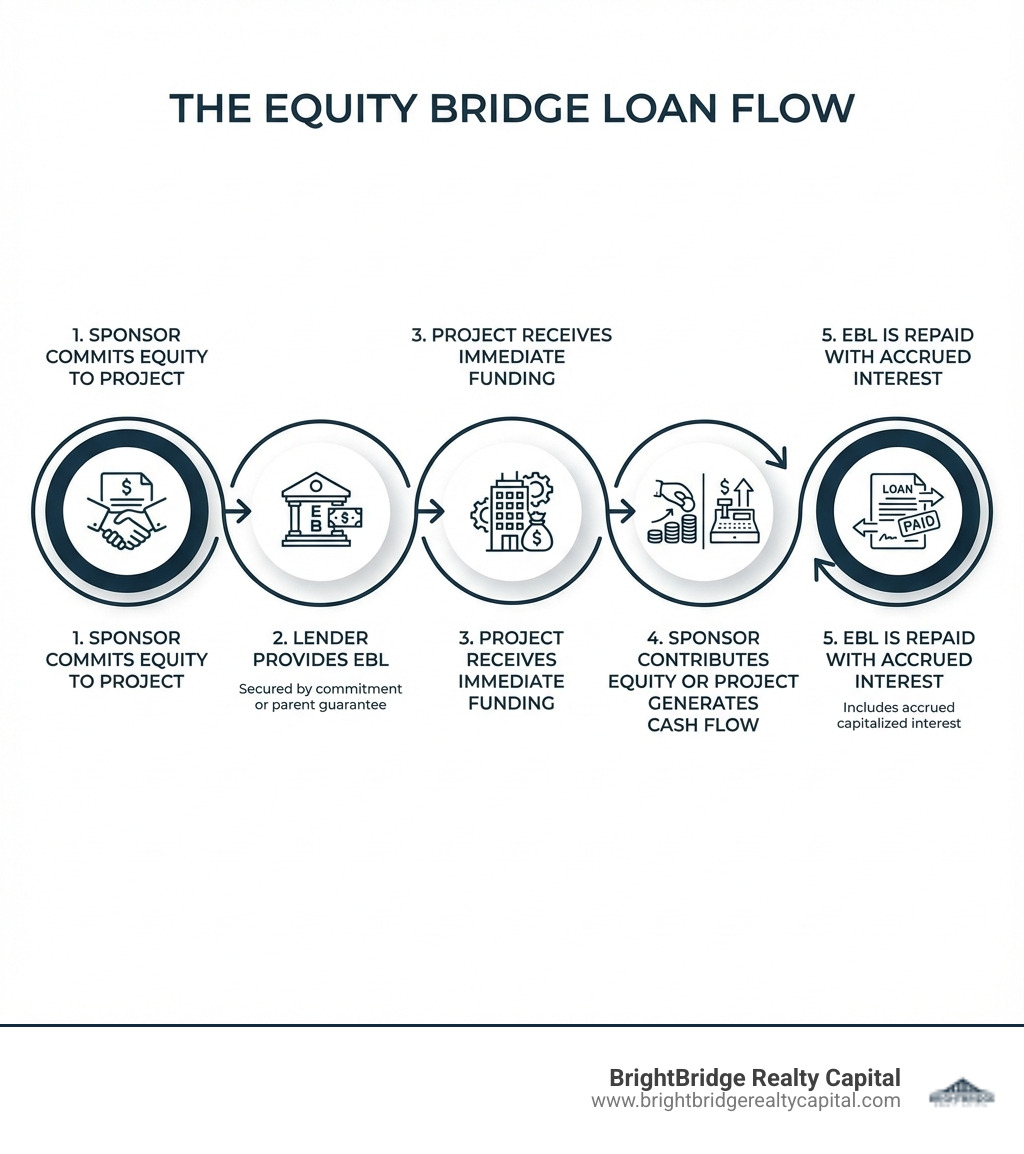
An Equity bridge loan (EBL) is a sophisticated, short-term financing tool that enables project sponsors to borrow against the equity they have committed to a project. It functions as a crucial funding bridge, providing immediate liquidity until the sponsor's formal capital contributions can be made or until permanent, long-term financing is secured. These specialized loans typically have terms ranging from 12 to 24 months, though they can be longer, and are repaid in a single bullet payment once the sponsor's equity is called or the project achieves a stable state of commercial operation.
Quick Facts About Equity Bridge Loans:
- Purpose: To bridge the temporal gap between committed equity and the actual cash contribution required for a project's immediate needs.
- Typical Term: 12-24 months, but can extend up to 5 years with negotiated extensions, especially for complex, multi-phase projects.
- Loan Amount: Highly variable, but often in the range of $5 million to $75 million, with larger facilities for major infrastructure or real estate developments exceeding $100 million.
- Interest: Almost always a floating rate benchmarked to a standard like SOFR (Secured Overnight Financing Rate), with interest payments typically being capitalized (added to the principal) rather than paid in cash monthly.
- Repayment: A single, lump-sum "bullet" payment at maturity, sourced from the sponsor's equity contribution, project cash flows, or a take-out financing facility.
- Security: Primarily secured by the sponsor's contractual right to call capital from its limited partners (LPs) or, more commonly in project finance, a parent company guarantee.
- Recourse: Often structured as non-recourse to the project entity itself, but with significant recourse to the sponsor or parent company through guarantees and specific carve-outs for bad acts.
Unlike traditional bridge loans that are secured by a mortgage on a physical real estate asset, equity bridge loans are secured by an intangible asset: the sponsor's legally binding commitment to fund equity. This is a critical distinction. The lender's primary recourse is not the ability to foreclose on a property but the ability to enforce the sponsor's promise to pay. Consequently, the repayment source isn't the proceeds from a property sale but the sponsor's eventual equity contribution or, in some cases, the project's initial cash flows after stabilization.
For real estate developers, private equity funds, and infrastructure sponsors, equity bridge loans solve a pervasive timing problem. Imagine a developer has secured a prime off-market site for a new condominium project in a competitive market. They have commitments from investors to fund the project, but the capital call process takes 30-60 days. The seller, however, requires a non-refundable deposit and a quick closing within three weeks. The developer's own capital is tied up in another project nearing completion. An Equity bridge loan provides the immediate liquidity to close the acquisition, securing the opportunity without forcing the developer to prematurely liquidate other assets at a discount or lose the deal entirely.
According to project finance experts, these facilities have surged in popularity, evolving from a niche product to a mainstream tool in the capital stack for high-growth companies and capital-intensive projects. They offer a "lifeline to bridge funding gaps and seize growth opportunities." While the statistic that 44% of startups failed in 2022 due to a lack of cash is often cited, its relevance in project finance is more nuanced. It's not just about running out of money; it's about the high cost of delays. For a billion-dollar infrastructure project, a three-month delay waiting for an equity infusion can result in millions in cost overruns, contractual penalties, and lost revenue, making the cost of an EBL a sound investment in maintaining project momentum.
The mechanics are straightforward in concept but complex in execution. When you take an Equity bridge loan, you are monetizing a future cash flow—your own committed equity contribution. The lender is underwriting your creditworthiness and your unwavering commitment to the project. In return, you gain immediate access to capital. This deferral of the actual cash outflow can significantly enhance the project's Internal Rate of Return (IRR) by making the initial equity check smaller. However, this financial engineering comes at a price, including higher interest rates, origination fees, and legal costs, which must be carefully weighed against the strategic benefits.
I'm Daniel Lopez, a loan officer at BrightBridge Realty Capital, where I've helped numerous real estate investors and project sponsors structure equity bridge loans that align with their capital deployment strategies and project timelines. Through my work with developers navigating complex financing structures, I've seen how a well-structured Equity bridge loan can be the difference between seizing an opportunity and watching it slip away.
Equity bridge loan vocab explained:
Understanding the Fundamentals of an Equity Bridge Loan
At BrightBridge Realty Capital, we understand that navigating project finance requires precision and flexibility. An Equity bridge loan (EBL) is a prime example of a financial tool designed to provide just that, acting as a strategic enabler for time-sensitive and capital-intensive ventures.
What is an Equity Bridge Loan?
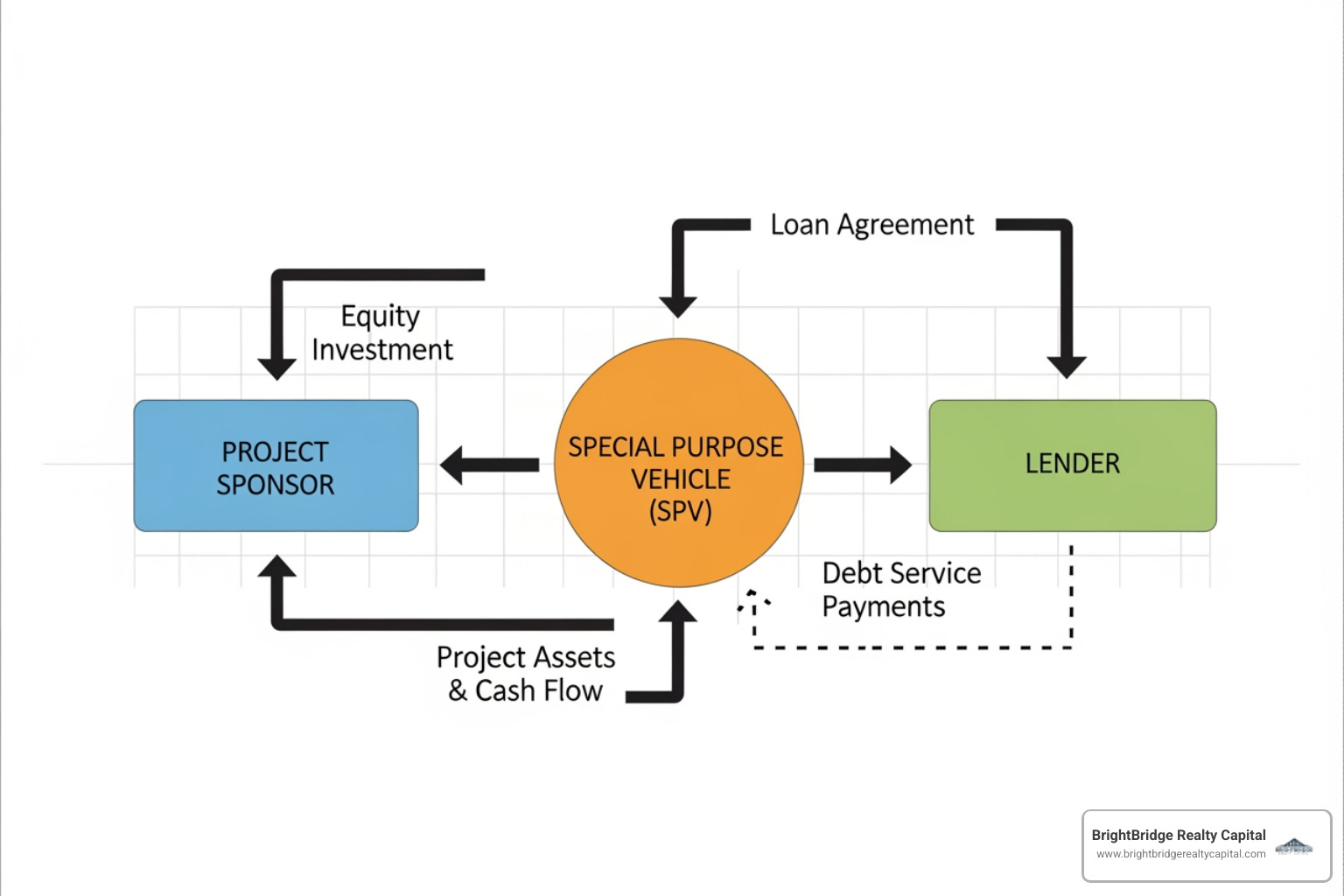
An Equity bridge loan is a specialized form of short-term financing that allows a project sponsor or a fund to borrow against the equity they have already committed to a project. It is not a direct equity investment from the lender; rather, it is a loan that uses the sponsor's firm, legally enforceable commitment of capital as its primary security. Think of it as a temporary advance on funds that are guaranteed to arrive but are not immediately available in liquid form.
The core purpose is to "bridge" a funding gap. For instance, a project sponsor might have a definitive commitment from limited partners (LPs) to contribute $100 million to a project, but the partnership agreement stipulates that this capital will be called in four tranches over two years. If the project requires a significant upfront investment for land acquisition or equipment deposits before the first scheduled call, an EBL can provide the necessary liquidity. This type of loan is often called a "capital call facility" or "subscription line financing" when provided to private equity or real estate funds, highlighting its function of anticipating and covering capital calls from investors. The terminology often depends on the context: "equity bridge loan" is more common for a single, specific project, while "capital call facility" is used for a fund-level line of credit secured by the commitments of all its investors.
Unlike a traditional project loan that might fund ongoing operations or specific assets, an EBL is specifically tied to the equity portion of the project's funding. It ensures that the project can proceed without delay, allowing the sponsor to meet critical milestones, pay contractors, and maintain momentum even if their own cash contributions or those from their LPs are not yet physically in the project's bank account. It's a strategic tool for managing cash flow and avoiding costly pauses in development.
How It Differs from Other Bridge Financing
To truly appreciate the unique nature of an Equity bridge loan, it's helpful to compare it with other forms of bridge and alternative financing. While all bridge loans are short-term solutions, their collateral, repayment sources, and strategic applications vary significantly.
Here's a breakdown of how an EBL stands apart from traditional debt bridge loans and mezzanine financing:
| Feature | Equity Bridge Loan (EBL) | Traditional Debt Bridge Loan (Real Estate) | Mezzanine Debt |
|---|---|---|---|
| Collateral | Sponsor's committed equity, parent company guarantee, LP commitments | A first-lien mortgage on an existing real estate asset | A pledge of the equity ownership in the property-owning entity; subordinate to senior debt |
| Repayment Source | Sponsor capital contribution, project cash flow post-stabilization, permanent financing | Sale of the underlying real estate asset, refinance with long-term debt | Refinancing of the entire capital stack, sale of the asset, or project cash flow |
| Interest Type | Typically floating (SOFR-based), often capitalized | Floating or fixed, often paid monthly (though sometimes capitalized) | Higher fixed rate, often with an equity "kicker" (warrants or profit participation) |
| Typical Use Case | Bridging equity funding gaps in large projects, pre-development costs, covering delayed capital calls | Buying a new property before selling an old one, quick acquisition of undervalued assets | Filling a gap between senior debt and sponsor equity in the capital stack, increasing leverage |
Traditional debt bridge loans, common in markets like New York, are primarily secured by the value of physical property. A developer might use a bridge loan to acquire a building quickly, with the loan secured by a first mortgage on that building. The repayment plan is straightforward: the developer will either sell the property or refinance with a permanent loan once the property is stabilized. The lender's risk is tied to the real estate market and the asset's value.
Mezzanine debt sits in a different part of the capital structure. It is subordinate to the senior debt but senior to the sponsor's equity. Its collateral is not the physical property but a pledge of the ownership interests in the company that owns the property. It's used to increase leverage and reduce the amount of cash equity a sponsor needs to contribute. It is riskier than senior debt and thus carries a higher interest rate and often includes an equity component for the lender.
An EBL, in contrast, is secured by the promise of a future equity contribution. This shifts the lender's focus from an asset's market value to the financial strength, creditworthiness, and commitment of the project sponsor and their investors. This distinction is crucial for lenders like us at BrightBridge Realty Capital, as our underwriting is less about property appraisal and more about corporate and fund-level financial analysis.
Primary Use Cases and Scenarios in Project Finance
Equity bridge loans are incredibly versatile and find application across various capital-intensive sectors. They are particularly valuable when the timing of capital availability doesn't perfectly align with the project's funding needs.
Here are some common scenarios where we see EBLs used:
- Real Estate Development: In the hyper-competitive New York real estate market, a developer might identify a site for a $200 million mixed-use project. The total equity required is $60 million. An EBL for $20 million can be used to acquire the land and fund initial pre-development costs (architectural design, zoning applications, environmental studies) while the sponsor finalizes the full equity syndicate over the next 6-9 months. This allows the developer to control the site and advance the project immediately.
- Infrastructure Projects: A consortium wins a bid to build a new toll road. The project has a multi-year development timeline with staged equity contributions from its members. An EBL can provide continuous funding for early-stage civil engineering work and equipment procurement, ensuring the project stays on its tight construction schedule and avoids penalties, even if one of the consortium members has a slight delay in providing its share of capital.
- Renewable Energy Projects: A solar developer needs to make a large, non-refundable deposit to a panel manufacturer to lock in pricing and secure a production slot. The full construction financing, including the tax equity component, won't close for another four months. An EBL can bridge this specific gap, allowing the developer to meet the supplier's terms and de-risk the project's supply chain.
- Bridging Capital Calls for Funds: A private equity fund has a portfolio company that needs an emergency capital injection to fund a strategic, bolt-on acquisition. The fund's next scheduled capital call is three months away. Instead of making an inefficient "out-of-cycle" capital call, the fund manager can use its subscription line (a type of EBL) to provide the capital immediately, then repay the loan with the proceeds from the next regular call. This improves administrative efficiency and maintains good relationships with LPs.
- Funding Equity Shortfalls: A project under construction faces unexpected cost overruns due to supply chain issues. The contingency budget is exhausted, and the sponsor needs to inject another $5 million in equity to keep the project on track and avoid a default on its construction loan. An EBL, backed by a parent company guarantee, can provide this crucial lifeline while the sponsor arranges for a more permanent solution.
- Strategic Mergers & Acquisitions (M&A): A corporation is acquiring a competitor, and a portion of the acquisition price is being funded from its balance sheet. However, repatriating cash from overseas subsidiaries will take several weeks. An EBL can provide the necessary funds to meet the closing date, ensuring the strategic acquisition is completed without a hitch.
We often see companies facing the challenge of "bridging the gap" between when they will run out of funds and when they expect a cash infusion. Bridge financing rounds, whether in the form of equity or debt, have become a key fundraising mechanism for high-growth companies and capital-intensive projects. For a deeper dive into the broader landscape of such financing, you can explore An overview of bridge financing.
Key Terms, Structures, and Financial Implications

Understanding an Equity bridge loan goes beyond its basic definition. It requires a deep familiarity with the specific terms, complex repayment structures, and the significant financial implications it carries for both the project and the sponsoring parent company.
Typical Terms and Repayment Structures
When considering an Equity bridge loan, you'll encounter several standard terms and conditions that define its structure and cost. These are highly negotiated and depend on the sponsor's strength and the project's risk profile.
- Loan Term: While general bridge loans can be as short as 90 days, EBLs in project finance typically have longer terms, often ranging from 12 to 24 months. For large, complex commercial real estate projects, such as a multi-phase development or a significant value-add repositioning, we've structured terms extending up to five years, including built-in extension options. These extensions are not automatic; they are typically subject to conditions like the absence of default, payment of an extension fee, and sometimes evidence of progress toward the final repayment event.
- Interest Rates: EBLs are short-term and carry a higher risk profile than traditional long-term financing, which is reflected in their interest rates. These are typically floating rates, priced at a premium (or "spread") over a benchmark like SOFR (Secured Overnight Financing Rate). For a strong sponsor, the rate might be SOFR + 2.50%; for a riskier project, it could be SOFR + 4.50% or higher. The spread is determined by the lender's assessment of credit risk. While fixed rates are rare, they can sometimes be negotiated, often through an interest rate swap or cap agreement, which adds complexity and cost. You can learn more about how these benchmark rates function at the New York Fed's SOFR reference rates.
- Fees: Beyond interest, EBLs come with a schedule of fees that must be factored into the total cost of capital. Common charges include:
- Origination Fee: A one-time fee paid upfront at closing, typically ranging from 0.75% to 1.50% of the total loan amount.
- Exit Fee: A fee paid upon repayment of the loan, often 0.25% to 1.00% of the loan amount. This incentivizes the lender for a successful exit.
- Extension Fee: If the borrower exercises an option to extend the loan term, an additional fee, often 0.25% to 0.50% of the outstanding balance, is usually required for each extension period.
- Unused Commitment Fee: For EBLs structured as a line of credit, lenders may charge a small fee (e.g., 0.15% to 0.25% per annum) on the undrawn portion of the loan commitment.
- Legal and Administrative Fees: These cover the lender's legal counsel for drafting and negotiating the complex loan documents, as well as due diligence costs. For a multi-million dollar EBL, these costs can realistically range from $25,000 to over $100,000, depending on the complexity of the deal.
- Repayment Structure: EBLs are almost universally structured as "bullet" loans. This means the entire principal amount, along with all accrued and capitalized interest, is repaid in one lump sum at the end of the term. There are no scheduled principal payments during the loan period. The repayment is triggered by a specific "repayment event," which could be:
- The receipt of funds from a capital call on the sponsor's limited partners.
- The project achieving commercial operation and generating sufficient cash flow to repay the loan.
- The closing of permanent, long-term financing (known as "take-out financing"), which replaces the short-term EBL.
The Role of Capitalized Interest and Parent Guarantees
Two critical elements define the financial mechanics and security of an Equity bridge loan: capitalized interest and parent guarantees.
- Capitalized Interest: In most EBLs, interest is "capitalized." Instead of the borrower making monthly cash interest payments, the interest due each month accrues and is added to the principal balance of the loan. For example, on a $10 million loan with 8% annual interest, the first month's interest of ~$66,667 is added to the principal, making the new balance $10,066,667. The next month's interest is calculated on this higher balance. This structure is highly beneficial for project sponsors as it defers all cash outflows, preserving liquidity during the cash-intensive development phase. However, it also means the total amount repaid will be significantly higher due to the effect of compound interest.
- Parent Guarantees: Given that EBLs are often secured by committed equity rather than a hard asset, lenders place immense reliance on the creditworthiness of the project sponsor. This frequently takes the form of a parent company guarantee. The parent company, which is the main sponsor entity with a strong balance sheet, pledges its full financial strength to back the Equity bridge loan. This guarantee can take several forms:
- Repayment Guarantee: An absolute promise to repay the loan if the project or its intended repayment source fails.
- Completion Guarantee: A promise to fund any cost overruns and ensure the project is completed on time and on budget, which indirectly protects the EBL's repayment.
- "Bad Boy" Carve-Outs: Even in non-recourse loans, these guarantees make the loan fully recourse to the parent company in the event of certain bad acts like fraud, theft, or voluntary bankruptcy. This is a cornerstone of the lender's risk assessment.
Impact on Project IRR and Parent Company Debt Capacity
The use of an Equity bridge loan has profound implications for a project's financial metrics and the parent company's overall financial health.
- Project IRR: An EBL can significantly boost a project's equity Internal Rate of Return (IRR). By deferring the actual cash outflow of the sponsor's equity contribution, the project effectively uses lower-cost debt (the EBL) in its early stages. This financial leverage means a smaller initial equity investment from the sponsor is at risk, and for a shorter period. The project appears to generate higher returns relative to the actual equity invested at the very beginning. However, there is a theoretical debate: if the EBL is only possible due to a parent guarantee, should the enhanced IRR be attributed solely to the project? Or does it reflect the parent company lending its credit support, the cost of which should be allocated back to the project, thereby reducing the perceived IRR boost?
- Parent Company Debt Capacity: This is a critical strategic consideration. While an EBL might be specific to a single project housed in a Special Purpose Vehicle (SPV), if it's backed by a parent company guarantee, it will appear on the parent company's consolidated balance sheet as a contingent liability or even direct debt. This directly impacts the parent company's leverage ratios (e.g., Debt-to-EBITDA). Lenders assessing the parent company for other corporate loans will factor in these guarantees, which can reduce its overall debt capacity and potentially increase the cost of future credit. The sponsor must weigh the benefits of using an EBL for one project against the potential constraints it places on the parent company's ability to finance other ventures.
Weighing the Pros and Cons for Project Sponsors
Like any sophisticated financial instrument, an Equity bridge loan is a double-edged sword. While it offers powerful strategic advantages, project sponsors must conduct a rigorous analysis of the potential risks and disadvantages to determine if it's the right fit for their specific project and overall capital strategy.
Potential Advantages of Using an Equity Bridge Loan
For project sponsors, especially those involved in complex real estate development, infrastructure, or private equity, an EBL offers several compelling benefits that can create significant value.
- Improved Equity IRR: This is often the most cited financial benefit. By using an EBL to delay a large equity contribution, the sponsor minimizes the amount of cash tied up in the project during its riskiest early phases. For example, instead of writing a $20 million check on day one, a sponsor might use a $15 million EBL and contribute only $5 million in cash. The project's returns are then calculated against this smaller initial investment, magnifying the IRR. This can make a project with solid but not spectacular returns appear much more attractive to investors.
- Faster Capital Deployment and Strategic Agility: The application, underwriting, and funding process for an EBL is typically much faster than for traditional, long-term loans—often closing in weeks rather than months. This speed is a powerful competitive advantage. It allows a sponsor to act decisively on time-sensitive opportunities, such as acquiring a property from a distressed seller in New York who requires a 10-day closing, or securing a critical supply contract before prices increase.
- Flexibility in Timing Equity Contributions: An EBL decouples the project's funding timeline from the sponsor's capital management timeline. A sponsor might be expecting a large capital distribution from another investment in six months. Instead of being forced to sell that asset prematurely or pass on a new opportunity, they can use an EBL to bridge the gap, allowing them to deploy their capital when it is most efficient and advantageous for their entire portfolio.
- Preserving Sponsor Liquidity and 'Dry Powder': By borrowing against committed equity, sponsors and funds can keep their own cash reserves—their 'dry powder'—more liquid. This enhances their ability to pounce on other unforeseen investment opportunities that may arise or to maintain a stronger, more resilient balance sheet to weather unexpected market downturns or project-specific issues.
- Certainty of Execution and Project Momentum: Securing an EBL provides immense certainty that the equity portion of the project's funding is in place. This allows the project to move forward with confidence, hitting key milestones, hiring contractors, and proceeding with development without the risk of costly pauses. This momentum can be critical in maintaining relationships with partners, government authorities, and lenders.
Potential Risks and Disadvantages
Despite the clear advantages, Equity bridge loans come with their own set of significant risks that must be proactively managed.
- Higher Interest Costs: This is the most obvious drawback. Due to their short-term nature and higher perceived risk, EBLs carry higher interest rates than conventional long-term financing. A rate of SOFR + 4.0% on a $20 million loan can result in substantial interest costs. While the interest is often capitalized, meaning no immediate cash drain, the total cost of borrowing can significantly erode project profits if the loan is outstanding for a long period.
- Substantial Arrangement & Legal Fees: The total cost goes far beyond the interest rate. Sponsors must budget for origination fees (e.g., 1% of the loan, or $200,000 on a $20 million loan), exit fees, and extensive legal fees for both their own and the lender's counsel. These transaction costs can be substantial and reduce the net funds available to the project.
- Repayment Event Risk: This is the single greatest risk for the borrower. The loan is predicated on a specific repayment event occurring within the loan term. If that event is delayed—for example, if construction takes longer than expected, preventing a refinance; if capital calls from LPs are slow to come in; or if the permanent financing market deteriorates—the sponsor faces a major problem. They could be forced into a high-cost extension, or worse, a default, which could trigger the parent guarantee and have catastrophic consequences.
- Mitigation Strategy: Sponsors should negotiate flexible extension options upfront and have multiple backup repayment plans (Plan B and Plan C) thoroughly vetted before even taking on the EBL.
- Cost and Exposure of Parent Guarantee: While a parent guarantee is what makes the EBL possible, it is not a 'free' source of credit enhancement. It exposes the entire parent company to the risks of a single project. This contingent liability can impact the parent company's credit rating, breach covenants on its other loans, and limit its ability to secure future financing for other business activities. The cost is the opportunity cost of tying up the parent's balance sheet capacity.
- Potential for Negative Investor Perception: While sophisticated project finance players understand the strategic use of EBLs, in other contexts, such as for earlier-stage growth companies, taking on bridge financing can sometimes send a negative signal to future investors. It can be perceived as a sign of financial distress or an inability to secure traditional funding. Sponsors must be prepared to proactively manage this perception and clearly articulate the strategic rationale for using the EBL to all stakeholders.
The Lender's Perspective and Legal Framework
From our vantage point at BrightBridge Realty Capital, providing an Equity bridge loan is a highly specialized activity that involves meticulous underwriting and the construction of a robust, multi-layered legal framework. We are not just lending money; we are underwriting the sponsor's ability to honor a future financial commitment, which requires a different analytical lens than traditional asset-based lending.
Key Underwriting and Due Diligence Considerations
When we assess an Equity bridge loan application, our due diligence process is intensely focused on mitigating risk and ensuring there is a clear, reliable, and legally enforceable path to repayment. Here are some of our core considerations:
- Sponsor Track Record and Financial Strength: We conduct a forensic analysis of the project sponsor's history. A proven track record of successfully developing and exiting similar projects, particularly in challenging markets like New York, provides significant comfort. We review their entire portfolio, their liquidity position, their litigation history, and the credit reports of the key principals. We need to be confident that they are experienced, financially stable, and reputable.
- Strength and Nature of the Guarantee: This is often the bedrock of the loan. We conduct thorough due diligence on the entity providing the guarantee, assessing its balance sheet, cash flows, leverage ratios, and overall capacity to meet its obligations. We analyze the specific type of guarantee being offered—is it an unconditional repayment guarantee, a completion guarantee, or something more limited? The strength of this guarantee is a primary determinant of the loan's pricing and structure.
- Viability and Certainty of the Repayment Source: We need a clear, credible, and primary repayment strategy. If the loan is to be repaid by a capital call, we perform extensive due diligence on the limited partners (LPs) themselves. This includes reviewing subscription agreements, side letters, and the Limited Partnership Agreement (LPA) to understand the terms, conditions, and any potential "excuse" provisions that might allow LPs to avoid contributing capital. We may analyze the creditworthiness and diversification of the LPs. If repayment is from a take-out financing, we need to see a signed commitment letter from the permanent lender and assess any conditions that could prevent that loan from closing.
- Exhaustive Review of Project and Legal Documentation: We carefully review all project-related documents, including detailed financial models, third-party feasibility studies, construction contracts, entitlement and permit status, and any other agreements relevant to the project's success. Our goal is to stress-test the project's assumptions and model the Equity bridge loan effectively within the project's cash flows, including "modeling capitalized interest and using switches (flags) to manage repayment" within our financial projections.
Security, Covenants, and Legal Considerations for an Equity Bridge Loan
The legal structure of an Equity bridge loan is designed to give the lender maximum protection and control over the repayment source. This involves a comprehensive security package and a tightly written set of covenants.
- Security Package: Unlike traditional real estate loans secured by a mortgage, the security for an EBL is focused on the sponsor's rights related to its equity commitments. This typically includes:
- Pledge of Uncalled Capital: For fund-level facilities, this involves the fund granting the lender a security interest (perfected via a UCC filing) over the rights to call and receive capital contributions from its LPs.
- Assignment of Drawdown Rights: The lender takes a legal assignment of the general partner's rights to issue capital calls and collect funds from LPs. This is often executed through a formal Deed of Assignment and a Power of Attorney, which allows the lender to step in and issue capital calls directly to the LPs if the sponsor defaults.
- Security over Bank Accounts: We require a perfected security interest over the specific bank account into which the capital contributions must be paid. This gives the lender control over the cash once it is funded, ensuring it is used to repay the EBL first.
- Commitment Thresholds and LP-Related Triggers: Loan agreements for EBLs contain specific "LP commitment thresholds." These are critical triggers related to the health of the LP base. For example, a default may be triggered if LPs representing more than 15% of total commitments default on a capital call, become insolvent, or transfer their interest to an unapproved party. We pay close attention to any provisions in the LPA that might allow LPs to be "excused" from funding (e.g., due to regulatory or legal restrictions), as this can erode the lender's collateral base.
- Covenants: EBL agreements include a detailed set of positive and negative covenants.
- Positive Covenants: Promises to do something, such as provide quarterly financial statements, maintain corporate existence, comply with all laws, and provide notice of any material adverse events.
- Negative Covenants: Promises to not do something without lender consent, such as incurring additional debt, creating other liens on the collateral, making distributions to equity holders until the EBL is repaid, or amending the LPA in any way that could harm the lender's interests.
- Events of Default: Beyond typical loan defaults (like non-payment), EBLs have specific events of default tied to the unique equity structure. These can include the failure to make a required capital call, a breach of the LP commitment thresholds, a material breach of the parent guarantee, or a "cross-default" clause, where a default on any of the sponsor's other major loans automatically triggers a default on the EBL.
- Regulatory Framework: The entire structure must be legally sound and enforceable. This involves compliance with the Uniform Commercial Code (UCC) for perfecting security interests in intangible assets like capital commitments. For loans involving international LPs or projects, complex cross-border legal issues must be addressed to ensure the security package is enforceable in all relevant jurisdictions. In New York, for example, specific commercial lending and usury laws also govern the structuring and execution of these loans.
Conclusion: Is an Equity Bridge Loan Right for Your Project?
An Equity bridge loan is a sophisticated and powerful tool in the arsenal of modern project finance and real estate development. It is not a one-size-fits-all solution but a precision instrument designed to solve a very specific and common problem: the timing mismatch between a project's immediate need for equity and the sponsor's ability to deliver it. By providing rapid, flexible capital against committed equity, EBLs can unlock time-sensitive opportunities, accelerate project timelines, prevent costly delays, and ultimately enhance financial returns.
However, as we've explored, these strategic benefits come with significant costs and risks. The decision to use an EBL is a critical trade-off between speed and cost, between strategic agility and financial exposure. The higher interest rates, substantial fees, and the profound implications of a parent company guarantee must be carefully weighed against the value of the opportunity being pursued. An EBL is the right choice only when the cost of not having the capital immediately—in terms of a lost deal, project delays, or cost overruns—is demonstrably greater than the high cost of the bridge financing itself.
Before pursuing an EBL, a project sponsor should ask a series of critical questions:
- Is this opportunity truly time-sensitive? Does the value created by moving quickly justify the premium cost of an EBL?
- How certain is our repayment source? Have we rigorously vetted our take-out financing commitment or the reliability of our limited partners' capital calls?
- What is our Plan B and Plan C? What happens if the primary repayment plan is delayed by 6, 9, or 12 months? Do we have negotiated extension options and a clear path to an alternative repayment?
- Have we fully modeled the total cost? Does our project pro-forma account for all interest, fees, and legal expenses associated with the EBL?
- What is the true impact on our parent company? How does this contingent liability affect our corporate balance sheet, our other lending relationships, and our capacity for future growth?
At BrightBridge Realty Capital, we pride ourselves on providing customized private real estate financing solutions to investors in the New York market and nationwide. We specialize in understanding the nuances of these complex structures and offering direct lending without intermediaries. The future of project finance will likely see continued use of EBLs and similar subscription line facilities, as speed and flexibility become even more critical competitive advantages. The terms may evolve, but the fundamental need to bridge timing gaps will remain.
Navigating the complex terms, modeling the financial impact, and structuring the appropriate security package requires deep expertise. We encourage you to consult with experienced financial and legal advisors to ensure that an Equity bridge loan serves as a true, sturdy bridge to your project's success, not a precarious path to financial distress.
To learn more about how we can support your real estate ventures and provide quick, flexible funding solutions, explore More info about stabilized bridge loans on our website.