The Direct Route to Hard Money: What You Need to Know

Summary
Get fast, flexible funding for your real estate investments. Discover the advantages of a hard money lender direct.
Why Direct Access to Hard Money Lenders Changes the Game for Real Estate Investors
In the fast-paced world of real estate investing, speed and certainty are the currencies of success. When you're searching for a hard money lender direct, you're not just looking for financing; you're seeking a strategic partner. A direct lender, also known as a portfolio lender, is a private lending institution that funds loans with its own capital. There are no brokers, no syndicates, and no middlemen—just a direct line to the decision-maker who controls the funds. This fundamental difference is what changes the game for savvy investors.
Here’s a deeper look at what that direct access means for you:
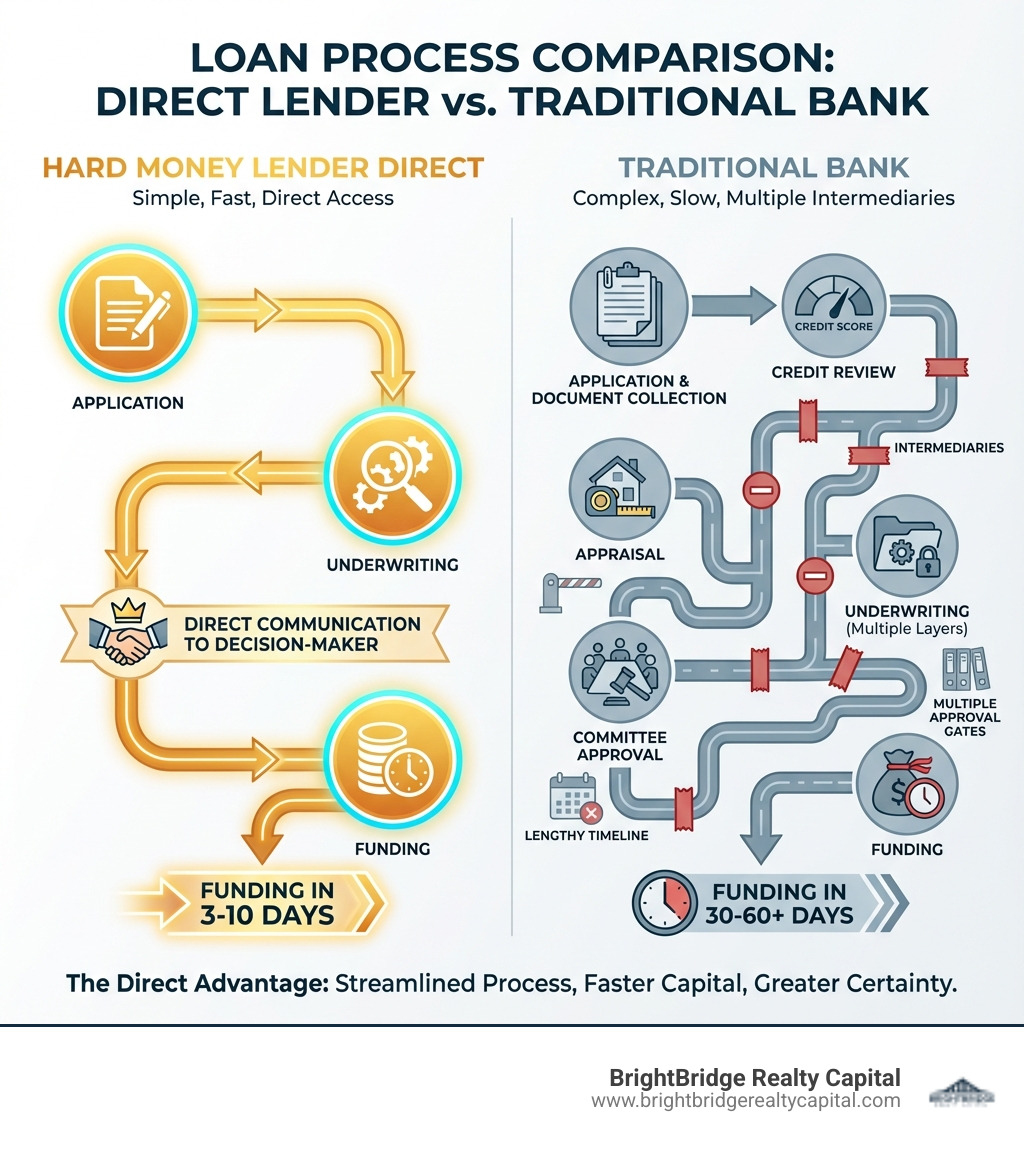
- Unparalleled Speed in Closings: While traditional banks are mired in bureaucracy, most direct lenders can close a loan in 3-10 business days. For straightforward deals with experienced borrowers, funding can even be secured in as little as 48-72 hours. This speed allows you to compete with all-cash offers and seize opportunities that would otherwise be lost.
- Significant Cost Reductions: Every intermediary in a transaction adds a layer of fees. Brokers, for example, charge origination points or a percentage of the loan for their matchmaking service. By working with a hard money lender direct, you eliminate these broker markups and intermediary fees, which directly protects your profit margin.
- Transparent and Direct Communication: Imagine having a question about your loan and being able to call the person who is actually underwriting and approving it. That's the reality with a direct lender. There's no game of telephone, no misinterpretation of information—just clear, concise answers from the source.
- Unmatched Flexibility and Customization: Direct lenders aren't bound by the rigid, one-size-fits-all guidelines of conventional banks. Because they use their own capital, they can assess each deal on its own merits and customize loan terms to fit the unique circumstances of your project. This is often referred to as “common-sense” lending.
- Asset-Based Approval Philosophy: The primary focus of a direct hard money lender is the value of the real estate asset securing the loan. They are more concerned with your property's current value, its potential, and your plan to realize that potential (the exit strategy) than they are with your personal credit score or tax returns.
The Broker vs. Direct Lender Distinction is Critical: A direct hard money lender is the bank. They use their own funds and make their own lending decisions in-house. A mortgage broker, on the other hand, is a matchmaker. They take your loan application and shop it around to various lenders to find a fit. While this can sometimes be helpful for borrowers who don't know where to start, it invariably adds time, cost, and complexity to the transaction. You lose the ability to speak directly with the funding source, and you pay extra for the service.
In major real estate markets across the country, hard money lenders fund billions of dollars in loans each year, with interest rates often averaging in the 10-13% range. These figures underscore the vital role this financing tool plays for investors who need to act decisively.
Contrast this with the traditional bank loan process, which can easily take 30-60 days to close, if it closes at all. Banks require extensive documentation—tax returns, pay stubs, profit and loss statements—and often reject perfectly viable investment deals based on a borrower's credit score or debt-to-income ratio rather than the property's inherent potential. That delay and uncertainty can mean losing a great investment opportunity to a cash buyer or another investor who has secured faster financing.
Hard money loans are short-term, asset-backed loans where the lender's primary concern is the property's value—both its current value and its After-Repair Value (ARV). This makes them the ideal financial instrument for fix-and-flip projects, bridge financing for commercial acquisitions, new construction, and other time-sensitive real estate investments.
However, it's crucial to understand that not all lenders who call themselves “hard money lenders” are created equal. Many operate as brokers or correspondents, adding layers and costs without your knowledge. True direct lenders with in-house capital and autonomous decision-making authority are the gold standard.
I'm Daniel Lopez, a loan officer at BrightBridge Realty Capital, and I've spent my career helping investors navigate this landscape. I've structured financing for everything from quick-turn single-family flips to complex multi-million dollar commercial acquisitions, always emphasizing the speed, transparency, and reliability that comes from working with a hard money lender direct. My goal is to empower you with a comprehensive understanding of how direct lending works, so you can make confident, profitable decisions on your next investment.
Hard money lender direct definitions:
What is a Hard Money Loan and How Does a Direct Lender Differ?
At its core, a hard money loan is a short-term, non-conforming loan secured by real property. The term originated decades ago to describe funding that came not from institutions but from private individuals or groups—the money was “hard” to find and the asset securing it was a “hard” asset. Unlike traditional banks that heavily scrutinize a borrower's credit score, income history, and debt-to-income ratio, hard money lenders base their decisions primarily on the value of the collateral. Their main underwriting focus is the property's Loan-to-Value (LTV) ratio and, for renovation projects, its After-Repair Value (ARV). This asset-centric approach makes them an indispensable resource for real estate investors who need quick access to capital or may not fit the rigid criteria of conventional lenders.
The Role of a Hard Money Lender Direct
Working with a hard money lender direct means you are engaging with the primary source of capital. We, as a direct lender, utilize our own discretionary funds and make all lending decisions in-house. This vertically integrated model eliminates the need for intermediaries like brokers, leading to a much more streamlined, transparent, and efficient process from application to closing.
Here's a detailed breakdown of how this direct approach benefits you:
- Direct and Unfiltered Communication: You communicate directly with the decision-makers—the underwriters and loan officers who control the capital. There are no bureaucratic layers or external middlemen to slow down the process or misinterpret crucial details about your deal. We can discuss your project's nuances, understand your vision, and make decisions swiftly.
- Elimination of Intermediary Fees: When you work with a mortgage broker, they typically charge a fee, often 1-2 points (1-2% of the loan amount), for connecting you with a lender. By going direct, you cut out this significant additional cost, potentially saving you thousands or even tens of thousands of dollars on your loan.
- Unmatched Speed in Decisions and Closings: Because we control the entire process—from initial application review to underwriting and funding—we can move with incredible speed. We can often offer pre-approvals within 24 hours and close loans in as few as 10 days, sometimes even faster. This speed is a critical competitive advantage in hot real estate markets like New York, where lucrative opportunities can disappear in a matter of hours. For example, a well-prepared borrower with a clean title can see a loan close in 5-7 days from the initial request.
- Greater Flexibility in Underwriting: Our underwriting process is entrepreneurial and focused on the viability and profitability of your real estate project. We can offer creative and custom lending solutions that conventional banks, with their rigid regulatory constraints, often can't. This includes financing for unique property types, accommodating complex entity structures, or creating flexible draw schedules for construction.
The Broker Model: A Stark Contrast
A broker acts as an intermediary, not a lender. Their job is to take your loan file and present it to their network of lenders, hoping to find a match. While this sounds helpful, it introduces several inefficiencies and potential conflicts:
- Added Time: The broker needs time to package your file and then shop it around. Each lender they approach has its own review process, adding days or weeks to the timeline.
- Increased Costs: As mentioned, brokers are paid for their service, a cost that is passed on to you, the borrower. This reduces your net proceeds and eats into your profit.
- Lack of Control: The broker does not control the lender's decision-making process or timeline. They can only relay information back and forth, which can lead to frustration and delays.
- Misaligned Incentives: A broker's primary incentive is to close the loan to earn their commission, not necessarily to find you the absolute best terms or the most reliable lending partner.
Who is the Ideal Borrower for a Hard Money Loan?
Hard money loans are specifically designed for real estate investors and business-purpose projects that require speed, flexibility, and an emphasis on asset value over personal income verification. We often see ideal borrowers fitting into these categories:
- Professional Real Estate Investors: Whether you're a seasoned professional managing a portfolio or a burgeoning investor completing your first few deals, hard money is the lifeblood of your business. It provides the leverage to scale your operations.
- Fix-and-Flip Investors: This is the classic use case. These short-term ventures thrive on acquiring distressed properties quickly and renovating them efficiently. Hard money loans are ideal for funding both the purchase and 100% of the rehabilitation costs, allowing you to capitalize on a property's hidden After-Repair Value (ARV).
- BRRRR Strategy Investors: For investors using the Buy, Rehab, Rent, Refinance, Repeat method, hard money is crucial for the first two steps. It provides the quick acquisition and rehab financing needed to get the property stabilized and tenanted. Once the value has been created, the investor refinances the short-term hard money loan into a long-term, lower-rate conventional or DSCR loan.
- New Construction Developers: For small to mid-sized developers, hard money can provide the necessary capital for land acquisition and vertical construction. Direct lenders can offer flexible draw schedules that align with construction milestones, releasing funds as work is completed.
- Investors Seizing Time-Sensitive Opportunities: When a great deal emerges—like an auction property, a portfolio acquisition, or a seller needing a fast close—traditional bank financing is simply too slow. Hard money allows you to act like a cash buyer, securing the property before your competition.
- Borrowers with Credit or Income Blemishes: While a good credit history is always beneficial, it's not the primary determinant for a hard money loan. If your credit has taken a hit due to a past business issue, or if your income is difficult to document (e.g., you're self-employed), but you have a solid investment property with strong equity, we can often provide financing where banks cannot.
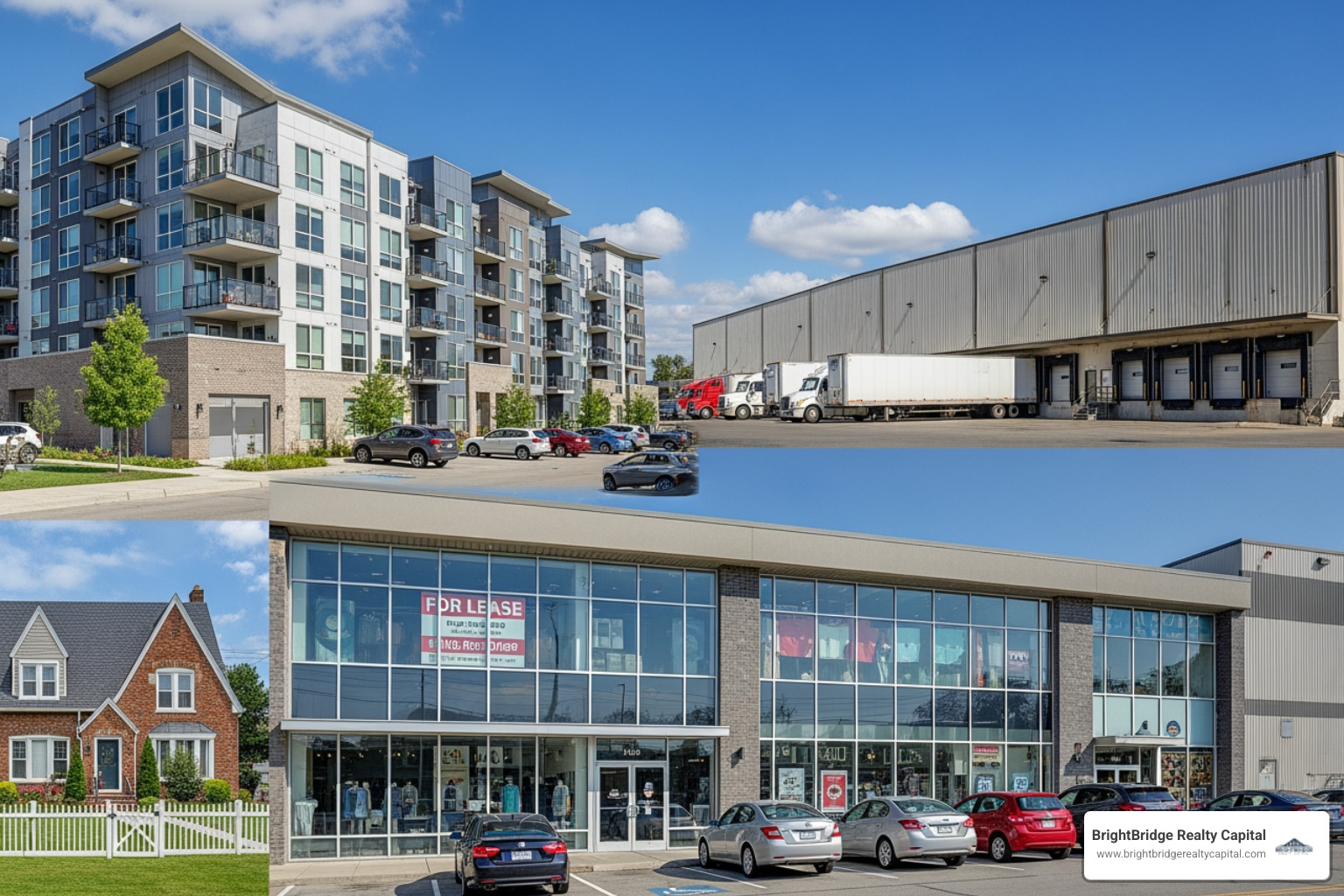
- Commercial Property Acquirers: Hard money is frequently used for acquiring or refinancing commercial real estate, including multi-family buildings, mixed-use properties, office spaces, retail centers, and industrial warehouses. The speed and asset-based nature of the lending are highly advantageous in these larger transactions.
| Criteria | Hard Money Loans (Direct Lender) | Traditional Bank Loans |
|---|---|---|
| Speed | Pre-approval in hours, close in 3-10 days | Slow approval (weeks), close in 30-60+ days |
| Approval Basis | Primarily property's value (LTV/ARV), deal viability | Borrower's credit score, income, DTI, financial history |
| Cost | Higher interest rates (8-15%), origination points | Lower interest rates, various fees, often fixed |
| Ideal Borrower | Real estate investors, flippers, developers, businesses | Primary homeowners, long-term investors with stable W2 income |
| Collateral Focus | The property itself is the primary focus | Borrower's global financial health is primary |
| Documentation | Minimal paperwork, asset-focused (contract, budget) | Extensive financial statements, tax returns, job verification |
The Best Benefits of Working Directly with a Hard Money Lender
Choosing a hard money lender direct offers distinct, tangible advantages that can significantly impact your real estate investment success, especially in dynamic and competitive markets like New York. As direct lenders, we pride ourselves on providing powerful solutions that traditional lenders and brokers simply cannot match. Let's explore these benefits in greater detail.

Unrivaled Speed of Funding
The single most compelling benefit of working with a direct hard money lender is speed. In real estate, time is not just money—it's the difference between securing a profitable deal and watching it go to a competitor.
- Rapid Closings as a Standard: We are structured for speed. Our internal processes allow us to get you pre-approved within 24 hours and close loans in as few as 10 business days. For repeat clients or exceptionally clean deals, we can fund in as little as 5 days. This rapid turnaround is a stark contrast to the 45-60 day (or longer) timeline required by traditional banks.
- A Decisive Competitive Advantage: In a hot market, sellers are inundated with offers. An offer backed by a direct hard money lender is viewed almost as favorably as cash because of the high certainty and speed of closing. This gives you a significant competitive edge, allowing you to negotiate better terms and secure properties that other investors, bogged down by slow, uncertain bank processes, will inevitably miss.
- A Radically Simplified Process: Our focus is on the property and the deal's profitability. This means our application and documentation process involves a fraction of the paperwork required by traditional lenders. We need the essentials—the purchase contract, your entity documents, a clear budget—not years of tax returns and personal financial statements. This efficiency is a key contributor to our speed.
A Tale of Two Timelines: Direct Lender vs. Bank
- Day 1: You submit an application to both a direct hard money lender and a traditional bank.
- Day 2: The direct lender issues a term sheet and requests core documents. The bank sends a 10-page application and a long list of required financial documents.
- Day 5: The direct lender has completed underwriting and ordered a third-party appraisal. The bank is still waiting for you to gather and submit all your paperwork.
- Day 10: The direct lender receives the appraisal, issues a final loan commitment, and sends loan documents for signing. You close and get your keys. The property is yours.
- Day 30: The bank has finally finished its initial review and submitted the file to an underwriter, who has just come back with more questions and conditions.
- Day 45-60: If all goes well, the bank loan might finally close, but the seller has long since sold the property to you.
Substantial Cost Savings and Radical Transparency
While hard money loans have higher interest rates than conventional loans, working with a direct lender leads to overall cost savings and far greater transparency.
- No Middleman Fees or Markups: Brokers charge fees for their services, typically 1-2% of the loan amount. By going direct, you eliminate these costs entirely. On a $500,000 loan, that's a direct saving of $5,000 to $10,000 that stays in your pocket for your investment.
- Clear, Upfront Fee Structures: We believe in radical transparency. All our fees are disclosed clearly on a term sheet upfront, so you can budget accurately without the fear of unexpected “junk fees” appearing on your settlement statement. Our direct model incentivizes clarity, as our reputation depends on it.
- The Power of Direct Negotiation: As the decision-makers, we have the authority to negotiate. You can discuss terms directly with us, which can lead to more favorable rates, points, or a structure that is customized to your specific project's needs. Some direct lenders, like us, may even offer unique programs, such as a "Zero-Point Program," which eliminates origination points in exchange for a slightly higher interest rate, significantly reducing your cash-to-close requirement.
Common-Sense Underwriting and Ultimate Flexibility
Our direct lending model allows for an approach to underwriting that is both practical and flexible, making us an invaluable partner for creative and ambitious real estate investors.
- Focus on Deal Viability, Not Personal History: We prioritize the profitability and soundness of your investment deal above all else. Our underwriting centers on the property's After-Repair Value (ARV) and its potential for a profitable exit. This "common-sense underwriting" means great deals get funded, even if your personal credit isn't perfect or your income is unconventional. We look at the story of the deal, not just the numbers on a form.
- Truly Custom Loan Structures: Every real estate investment has its own unique characteristics and challenges. We specialize in creating customized lending options that conventional banks simply cannot provide. For example, we can finance a property with unpermitted additions if the rehab plan includes legalization. We can structure a loan for a partnership buyout. We can create complex draw schedules for ground-up construction. Our flexibility is our strength.
- Equity and Asset Focus Over Credit Score: For us, the equity in the property is paramount. This asset-based lending approach means we can fund a wider range of projects and borrowers. If you have a significant down payment or there is substantial existing equity in a refinance, we can provide financing even for borrowers who might struggle with traditional credit score requirements. We are lending against the asset, first and foremost.
Navigating Loan Types, Terms, and Eligibility
Understanding the different types of loans, their associated terms, and the qualification criteria is crucial when you decide to work with a hard money lender direct. We offer a diverse suite of products designed to meet the specific needs of real estate investors in New York and nationwide. A true direct lender acts as a financial toolkit, providing the right instrument for each specific job.
Common Loan Products Offered by Direct Lenders
Direct hard money lenders specialize in several key loan types, each tailored for specific investment strategies:
Fix and Flip Loans: This is the quintessential hard money product. These loans provide the capital for both purchasing distressed properties and funding their rehabilitation.
- Key Features: Typically structured to cover a high percentage of the purchase price (up to 90%) and often 100% of the rehab costs. The loan amount is underwritten based on the property's projected After-Repair Value (ARV). Rehab funds are held in an escrow account and released in draws as work is completed and inspected.
- Best For: Investors looking to add value to a property over a short period (6-18 months) and then sell it for a profit.
Bridge Loans: As the name suggests, bridge loans "bridge" a gap in financing. They are versatile short-term loans used to solve immediate capital needs while a more permanent solution is arranged.
- Key Features: Extremely fast funding. Can be used to acquire a property quickly without a financing contingency, refinance a maturing loan, or extract equity from an existing property to use as a down payment on another. These flexible solutions are a staple for lenders serving the Eastern United States and other fast-moving markets.
- Best For: Investors who need to close quickly, unlock trapped equity, or stabilize a property before it qualifies for long-term financing.
New Construction Loans: For ground-up development projects, these loans cover land acquisition and the subsequent construction costs.
- Key Features: Funding is provided based on a detailed construction budget. Funds are disbursed in draws based on construction milestones, verified by inspections. Lenders typically require the borrower to be an experienced developer or have a highly qualified general contractor on their team.
- Best For: Experienced builders and developers undertaking projects from single-family homes to multi-unit residential or commercial buildings.
Rental Property Loans (DSCR Loans): While hard money is typically short-term, many direct lenders have expanded to offer longer-term products for stabilized rental properties. The most popular is the Debt Service Coverage Ratio (DSCR) loan.
- Key Features: Qualification is based on the property's rental income, not the borrower's personal income. The lender verifies that the property's Net Operating Income (NOI) can cover the mortgage payment (the "debt service"). A DSCR ratio of 1.25x is a common benchmark. These loans often have 30-year terms.
- Best For: Investors purchasing or refinancing turnkey rental properties who want to qualify based on the asset's performance.
Cash-Out Refinance Loans: If you have significant equity tied up in an existing investment property, a cash-out refinance allows you to convert that equity into liquid capital.
- Key Features: The lender provides a new loan for a higher amount than the existing debt, and you receive the difference in cash. This is a powerful tool for scaling a portfolio.
- Best For: Investors who want to fund their next project, pay off other higher-interest debts, or free up capital for any other business purpose.
Understanding the Costs: Rates, Points, and Fees
It's essential to have a clear-eyed understanding of the costs associated with hard money loans. While generally higher than traditional loans, these costs are the price of speed, flexibility, and the ability to seize profitable opportunities that would otherwise be inaccessible.
- Interest Rates: Hard money loan interest rates typically range from 8% to 15%. The specific rate depends on factors like the loan-to-value (LTV), the location and type of property, your experience as an investor, and the overall risk profile of the deal. Stronger deals with lower LTVs and experienced borrowers receive the best rates.
- Origination Points: These are upfront fees charged by the lender for creating the loan, typically ranging from 1 to 4 points, where one "point" equals 1% of the loan amount. A direct lender's points are for their own services, not to be shared with a broker. Some direct lenders may offer "Zero-Point Programs" to reduce upfront closing costs in exchange for a slightly higher interest rate.
- Other Fees: Be sure to ask for a full breakdown of all potential fees, which may include underwriting fees, processing fees, appraisal/valuation fees, and legal document preparation fees. A transparent lender will provide this list upfront.
- Prepayment Penalties: Some loans may include penalties if you pay off the loan before a certain period (e.g., within the first 3-6 months). This compensates the lender for the administrative cost of a very short-term loan. We recommend discussing this upfront, as many direct lenders offer programs with no prepayment penalties, giving you maximum flexibility.
Qualifying for a Hard Money Loan: The Direct Lender's Checklist
Our qualification process is streamlined and distinct from traditional banks, prioritizing the investment opportunity itself.
- The Property as Primary Collateral: The deal starts and ends with the property. We conduct a thorough analysis of the property's current value, its After-Repair Value (ARV), and its marketability. The stronger the collateral and the lower the LTV, the more favorable the loan terms.
- A Clear and Profitable Exit Strategy: We need to see a well-defined plan for how you intend to repay the loan. For a fix-and-flip, this is the sale of the property. For a BRRRR or bridge loan, it's typically a refinance into a long-term loan. We want to see that your numbers work and your plan is realistic.
- Borrower Experience and Capacity: While some programs are open to first-time investors (especially with a strong deal), having prior real estate investment experience is a significant plus. It demonstrates your ability to execute the plan. We also look for evidence that you have some capital reserves ("skin in the game") for a down payment and contingencies.
- Down Payment and Equity: While some lenders may advertise 100% financing, this is rare and usually means the total loan is still within a conservative percentage (e.g., 70-75%) of the ARV. You should generally expect to contribute some of your own capital, typically 10-20% of the purchase price, as a down payment.
- Business Entity (LLC or Corporation): For liability and regulatory reasons, most hard money lenders, including us, require borrowers to take the loan in the name of a business entity, such as an LLC or corporation, rather than as an individual. These are business-purpose loans, not consumer loans.
The Risks and How to Choose the Right Hard Money Lender Direct
While hard money loans offer incredible advantages in speed and flexibility, they are sophisticated financial tools that come with inherent risks. A prudent investor understands these risks and, most importantly, knows how to select a trustworthy hard money lender direct to mitigate them. Choosing the right partner is just as important as choosing the right property.
Understanding and Mitigating the Primary Risks
Risk 1: Higher Interest Rates and Carrying Costs
- The Risk: Rates of 8-15% are significantly higher than a conventional 30-year mortgage. These higher carrying costs can eat into your profits, especially if your project experiences delays.
- Mitigation Strategy: Build a detailed financial model for your project before you apply. Your budget must account for all costs, including interest payments, points, insurance, taxes, and a contingency fund (typically 10-15% of the rehab budget) for unexpected expenses. Your projected profit margin must be substantial enough to comfortably absorb these costs. A good rule of thumb for flips is the 70% Rule, which states you should pay no more than 70% of the ARV minus repair costs.
Risk 2: Shorter Repayment Periods
- The Risk: Hard money loans are short-term, typically 6 to 24 months. This creates a hard deadline. If you cannot sell or refinance the property before the loan matures, you could face default.
- Mitigation Strategy: Develop multiple exit strategies. Plan A might be to sell the property after renovations. Plan B should be to refinance into a long-term rental loan (like a DSCR loan) if the market softens. Plan C could even be a pre-negotiated extension with your lender or identifying other lenders who could refinance you out. Discuss potential extension options with your lender before you close the loan.
Risk 3: The Danger of Foreclosure
- The Risk: This is the most severe risk. If you fail to make payments or repay the loan at maturity, the lender has the legal right to foreclose on the property to recover their capital. You could lose the property and any capital you've invested.
- Mitigation Strategy: Due diligence and communication are key. Thoroughly vet your deal to ensure it's profitable. Maintain adequate cash reserves to handle unforeseen issues. Most importantly, if you run into trouble, communicate with your direct lender immediately and proactively. A good lender is a partner; they would rather work with you to find a solution (like a short extension or a workout plan) than foreclose, which is a costly and time-consuming process for them as well.
Vetting a Hard Money Lender Direct: The Essential Due Diligence
Choosing the right lending partner is paramount. When you're looking for a hard money lender direct, especially in a competitive market like New York, you need to be a detective. Ask these critical questions:
"Are you a direct lender funding with your own capital, or are you a broker?"
- What to Listen For: The answer should be a clear, unequivocal "Yes, we are a direct lender." Any hesitation, or phrases like "we work with a network of capital partners," is a major red flag that they are likely a broker. Ask them to confirm they make the final credit decision in-house.
"Can you provide a full breakdown of your typical rates, points, and all associated fees?"
- What to Listen For: A reputable lender will be transparent and provide a clear term sheet early in the process. They should be able to explain every line item. Be wary of vague answers or promises of "no fees" that seem too good to be true.
"What are your standard loan terms (duration, LTV/LTC, prepayment penalties)?"
- What to Listen For: Their answers should align with your project's needs. If you plan a quick 4-month flip, a loan with a 6-month prepayment penalty is a bad fit. Ensure their LTV/LTC (Loan-to-Cost) parameters work for your available capital.
"What is your realistic, average closing time from application to funding?"
- What to Listen For: Be skeptical of promises of 24-hour funding. A realistic and impressive timeframe is 5-10 business days. Ask them what potential roadblocks could slow this down.
"Can I see testimonials or be connected with a recent client?"
- What to Listen For: A confident lender with a good reputation will have a portfolio of positive reviews on their website, Google, or industry forums. They should be happy to share success stories. An inability or unwillingness to do so is a warning sign.
"What is your process if a project runs into delays or goes over budget?"
- What to Listen For: You want a partner, not a predator. A good lender will talk about communication, potential for extensions, and working together to find a solution. A lender who is evasive or overly punitive in their response may not be the partner you want when challenges arise.
"Are you licensed and compliant with all relevant regulations in the states where you lend?"
- What to Listen For: They should be able to confirm their licensing status (if required in that state for business-purpose loans) and demonstrate a clear understanding of the regulatory environment.
Red Flags to Watch Out For
Be vigilant and walk away from any lender exhibiting these behaviors:
- Guaranteed Approval Without Review: No reputable lender can guarantee approval without thoroughly reviewing your specific deal.
- Vague or Evasive Answers About Terms and Fees: Transparency is non-negotiable.
- High-Pressure Sales Tactics: A good lender is a consultant who educates you, not a salesperson who pressures you into a decision.
- No Verifiable Online Presence or Physical Address: A legitimate business will have a professional website, online reviews, and a physical office.
- Requesting Large, Non-Refundable Upfront Fees: While a small application or appraisal fee can be legitimate, be extremely cautious of demands for significant upfront payments before a loan commitment is issued. We, for example, typically do not charge upfront fees to begin an application review.
Frequently Asked Questions about Direct Hard Money Lending
Navigating the world of private real estate financing can bring up many questions. As a leading hard money lender direct, we believe in educating our clients. Here are detailed answers to some of the most common questions we receive.
How quickly can I really get funds from a direct hard money lender?
This is often the most critical question, and the speed is a primary advantage. With a true direct lender like us, you can realistically expect to receive funds in 3 to 10 business days from the moment your application package is complete. For experienced repeat borrowers with a straightforward deal (e.g., a simple purchase with a clean title), this timeline can be compressed to as little as 48 to 72 hours. This rapid turnaround is possible because we eliminate all external dependencies: our underwriters are in-house, our capital is our own, and our decision-making is autonomous. We focus on the asset's value and the deal's logic, not on the weeks-long personal financial archeology that banks undertake.
Is a hard money loan a good idea for a first-time real estate investor?
Yes, a hard money loan can be an excellent tool for a first-time investor, but it requires careful planning. Many direct lenders, including us, are open to working with new investors, provided they meet certain criteria. A strong deal is paramount: the property must be in a good location and have a clear path to profitability with a healthy margin. The first-time investor should also have a well-researched and detailed plan, including a conservative budget and a solid exit strategy. Finally, having some of your own capital for a down payment and reserves (often called "skin in the game") demonstrates commitment and reduces the lender's risk. The asset-based nature of these loans means that even without a long track record, a promising property can secure financing. We see it as our role to guide new investors through the process and help them evaluate if hard money is the right fit for their first project.
What happens if I can't repay the hard money loan on time?
This is a serious situation that underscores the importance of planning. Since the loan is secured by the property, if you cannot repay it at maturity, the lender has the legal right to initiate foreclosure proceedings to recover their capital. However, foreclosure is a worst-case scenario for both the borrower and the lender. A reputable direct lender would much rather find a solution. If you anticipate a delay, the most important step is to communicate early and openly with your lender. Explain the situation—perhaps a contractor delay or a slower-than-expected market. Often, a lender will be willing to negotiate a short-term extension, which may come with a fee and a slightly higher interest rate. The key is having a sound original plan and being a proactive communicator if that plan encounters obstacles.
Can I get a hard money loan for my primary residence?
Generally, the answer is no. Hard money loans are designated as business-purpose or commercial loans. They are intended for investment properties that will be flipped, rented, or used for other commercial activities. Lending on an owner-occupied primary residence is governed by a host of consumer protection regulations (like the Dodd-Frank Act and RESPA) that these loans are not designed to comply with. Attempting to use a hard money loan for a personal residence can create legal issues for both the borrower and the lender. Therefore, you must be purchasing the property through a business entity (like an LLC) and for a clear business purpose.
What is the difference between LTV, LTC, and ARV?
These three acronyms are the foundation of hard money underwriting:
- LTV (Loan-to-Value): This is the loan amount as a percentage of the property's current value or purchase price. For a purchase, a lender might offer 80% LTV, meaning you need a 20% down payment.
- LTC (Loan-to-Cost): This is the loan amount as a percentage of the total project cost (purchase price + renovation costs). A lender might offer 90% LTC, meaning you need to cover 10% of the total costs.
- ARV (After-Repair Value): This is the projected market value of the property after all renovations are complete. This is the most important metric for fix-and-flip loans. A lender will often cap their total loan amount at a certain percentage of the ARV, typically 70-75%. For example, even if a lender offers 90% LTC, the total loan cannot exceed 75% of the ARV.
How do direct hard money lenders determine the After-Repair Value (ARV)?
Determining an accurate ARV is crucial. Direct lenders use a combination of methods to establish a reliable value. This typically starts with a third-party valuation, which could be a full appraisal from a licensed appraiser or a Broker Price Opinion (BPO) from an experienced real estate agent. The appraiser will analyze recent sales of comparable, renovated properties (known as "comps") in the immediate vicinity. In addition to the third-party report, the lender's in-house underwriters will conduct their own analysis, cross-referencing the comps and using their market expertise to ensure the projected value is realistic and achievable given the planned scope of work.
Conclusion: Your Strategic Partner in Real Estate Success
Navigating the modern real estate investment landscape requires agility, strategic thinking, and, most importantly, the right financial partners. The ability to act quickly and with certainty is no longer a luxury—it is a necessity. Working with a hard money lender direct provides an unparalleled strategic advantage, offering the speed, flexibility, and transparency needed to seize time-sensitive opportunities that traditional financing simply cannot accommodate. By establishing a relationship directly with the source of capital, you cut out costly intermediaries, eliminate frustrating communication delays, and benefit from a common-sense underwriting approach that values the merit of your deal above all else.
The journey of a real estate investor is filled with challenges and opportunities. The financing you choose can be the difference between capitalizing on a career-defining project and being stuck on the sidelines. It's about more than just money; it's about partnership, reliability, and shared goals.
At BrightBridge Realty Capital, we are deeply committed to being that reliable, transparent, and decisive funding partner for real estate investors across the nation, with a special focus on the dynamic New York market. We understand the unique demands and incredible potential of your projects, and we offer the customized, direct lending solutions designed to help you achieve your investment goals quickly and efficiently. Don't let slow, bureaucratic financing stand between you and your next profitable venture. Empower your investments with a partner who moves at the speed of your ambition.