Unlocking Rental Riches: A Guide to Hard Money Financing
Summary
Unlock rental riches! Get fast funding with a hard money rental loan. Learn pros, cons & application for investors.
Why Hard Money Loans Are Essential for Today's Rental Investors
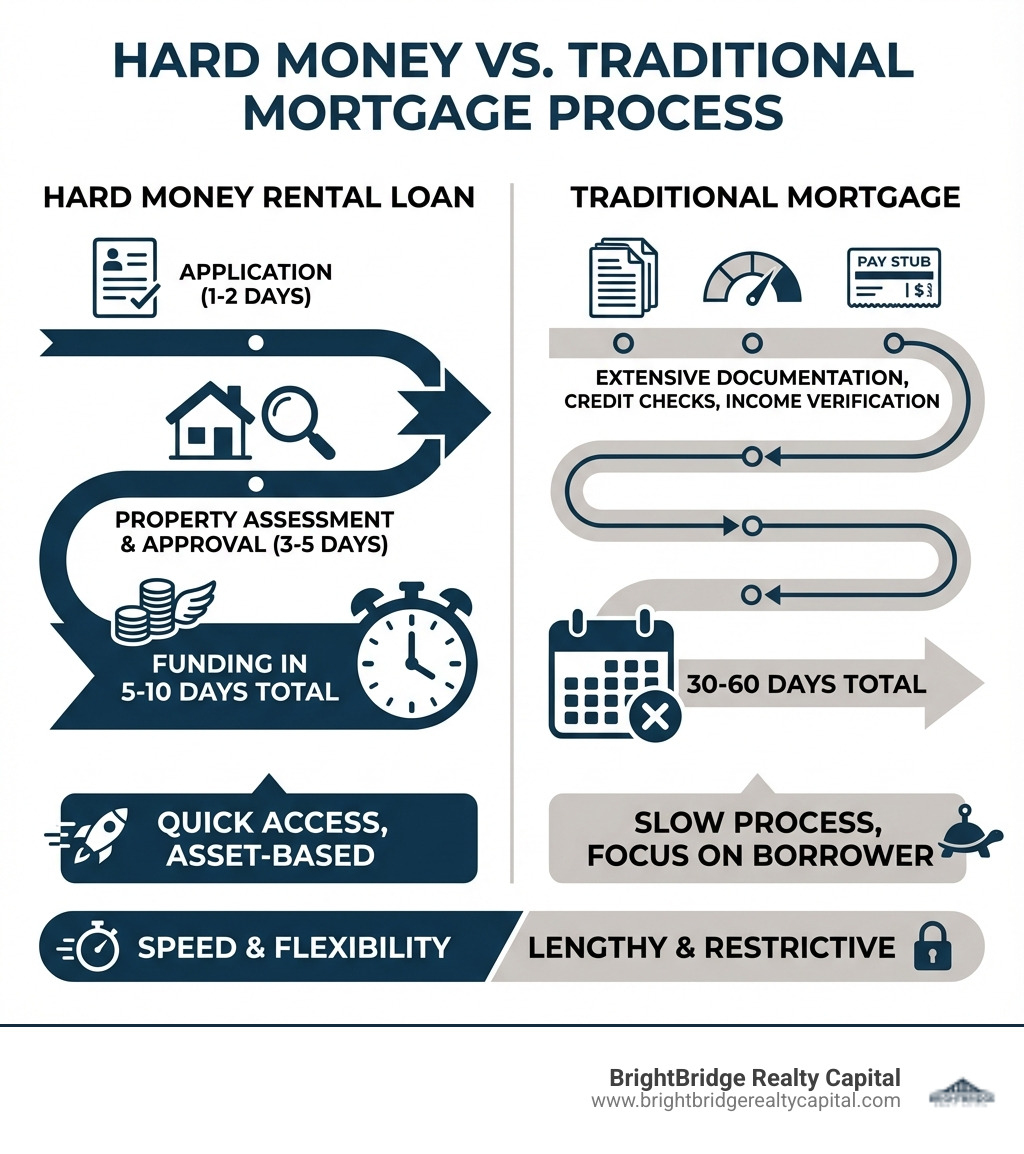
In today's fiercely competitive real estate landscape, speed and flexibility are no longer just advantages; they are necessities for survival and growth. This is where hard money rental financing emerges as an indispensable tool for savvy investors. A hard money loan is a short-term, asset-based loan option that empowers real estate investors to acquire and renovate rental properties with unparalleled velocity—often closing in as little as 5-10 business days. In a market where prime opportunities are snapped up in hours, the 30-60 day waiting period of a traditional mortgage can mean the difference between securing a profitable asset and watching it go to a faster-moving competitor. Unlike conventional lenders who are laser-focused on your personal credit score, tax returns, and income documentation, hard money lenders pivot the evaluation toward the property's intrinsic value and its future investment potential.
Quick Answer: What You Need to Know About Hard Money Rental Loans
- Unmatched Speed: The ability to close in 5-10 days, compared to the 30-60 day marathon of conventional loans, allows you to make aggressive, near-cash offers that sellers love.
- Asset-Centric Approval: The property's value, particularly its After-Repair Value (ARV), is the primary collateral and basis for approval. This is a lifeline for investors with complex income situations or less-than-perfect credit.
- Higher Cost of Convenience: Interest rates are higher, typically ranging from 8-15%, versus the 4-7% common with traditional mortgages. This premium pays for the speed, reduced paperwork, and acceptance of higher-risk properties.
- Short-Term Bridge Financing: These are not long-term holds. With terms of 6-24 months, they are designed as a bridge to get you from purchase and renovation to a stable, income-producing state, culminating in a balloon payment.
- Significant Down Payment: Expect to contribute 20-30% of the property's value (or purchase price), resulting in a Loan-to-Value (LTV) of 70-80%. This demonstrates your commitment and provides a safety cushion for the lender.
- Ideal Use Cases: They are perfectly suited for fix-and-flip projects, acquiring distressed properties that won't qualify for conventional financing, winning bidding wars in competitive markets, or for investors whose credit or income profile doesn't fit the rigid box of traditional banking.
If you're serious about scaling your rental property portfolio, hard money loans can be a strategic game-changer. They provide the speed and agility that traditional bank financing simply cannot replicate, especially when you uncover a diamond-in-the-rough that requires immediate action and significant rehabilitation. The trade-off is clear: you'll pay higher interest rates and fees (typically 2-5 origination points) for this powerful convenience. These loans are structured as bridge financing, demanding a clear and viable exit strategy. Your plan must involve either refinancing into a long-term, lower-rate conventional or DSCR loan once the property is stabilized, or selling the property for a profit after improvements are complete.
So, when does a hard money loan make strategic sense? It's the weapon of choice when speed is paramount, when a property's condition disqualifies it from traditional financing, or when you're building a portfolio faster than conventional lenders can process your applications. When is it not the right choice? When you have the luxury of time for a 45-day underwriting process and you already qualify for lower-rate conventional loans on a move-in-ready property.
I'm Daniel Lopez, a loan officer at BrightBridge Realty Capital. My expertise lies in demystifying this complex financial world. I've guided dozens of investors in structuring hard money rental deals that are tailored to accommodate aggressive renovation timelines, hyper-competitive markets, and unique property challenges. My mission is to make sophisticated financing accessible, ensuring every investor I work with understands the mechanics, risks, and rewards before they commit.
Basic Hard money rental vocab:
What is a Hard Money Loan and How Does it Differ from Traditional Mortgages?
At its core, a hard money rental loan is a short-term, asset-based financing solution funded by private capital. Unlike the familiar, highly regulated process of securing a mortgage from a bank or credit union, these loans originate from private lenders, groups of investors, or specialized lending companies. The "hard" in hard money refers directly to the "hard asset"—the tangible real estate itself—that secures the loan. It functions as a bridge loan, a financial instrument designed to span a gap in financing, providing rapid capital to real estate investors for a specific, often time-sensitive, project like an acquisition or major renovation.
The fundamental difference between hard money and traditional mortgages lies in the lender's underwriting philosophy. Traditional mortgages are fundamentally "borrower-based." Lenders meticulously scrutinize your personal financial DNA: your FICO score, employment history, W-2s, tax returns, income stability, and especially your debt-to-income (DTI) ratio. Their primary objective is to assess your personal ability to repay the loan over a long period, based on your documented financial standing. This risk-averse approach necessitates extensive paperwork, multiple layers of approval, and a lengthy underwriting timeline that can stretch for 30, 60, or even 90 days.
In stark contrast, hard money rental loans are "asset-based." Our primary focus is the economic viability of the real estate deal itself. We analyze the value of the property you intend to purchase or renovate, its potential to generate rental income, and its projected value after improvements. While we don't ignore the borrower entirely (we still look for experience and a sound plan), we are far less concerned with your personal credit history or tax returns. This asset-centric model means that investors with fluctuating self-employment income, a recent credit hiccup, or those who are already heavily leveraged with other properties can often secure financing, provided the investment property itself is a sound and profitable venture.
A pivotal concept that unlocks the power of hard money rental loans is the After-Repair Value (ARV). Traditional lenders are almost exclusively concerned with a property's current "as-is" value. If a property is distressed, has missing appliances, or needs a new roof, a conventional lender will likely deem it uninhabitable and un-financeable. Hard money lenders, however, are experts at looking into the future. We underwrite the loan based on the ARV—what the property will be worth after all planned renovations are professionally completed. This forward-looking valuation allows us to lend on properties that are distressed, outdated, or require substantial work, which traditional banks would categorically reject. It’s a transformative approach for investors who specialize in the BRRRR (Buy, Rehab, Rent, Refinance, Repeat) method, as it provides the capital needed to turn undervalued assets into high-performing, income-generating rentals.

| Feature | Hard Money Loans | Conventional Loans |
|---|---|---|
| Approval Time | Days (5-10 business days) | Weeks to Months (30-60+ days) |
| Credit Req. | Less stringent; property value is primary focus | Strict; high credit score and income stability required |
| Interest Rates | Higher (typically 8-15%) | Lower (typically 4-7%) |
| Loan Term | Short (typically 6-24 months) | Long (15-30 years) |
| Down Payment | Often 20-30% of property value | Varies, can be as low as 3.5% (FHA) or 15-25% (conventional) |
| Property Condition | Flexible; suitable for distressed or rehab properties | Requires move-in ready or minimal repairs |
The Strategic Advantages and Risks of a Hard Money Rental Loan
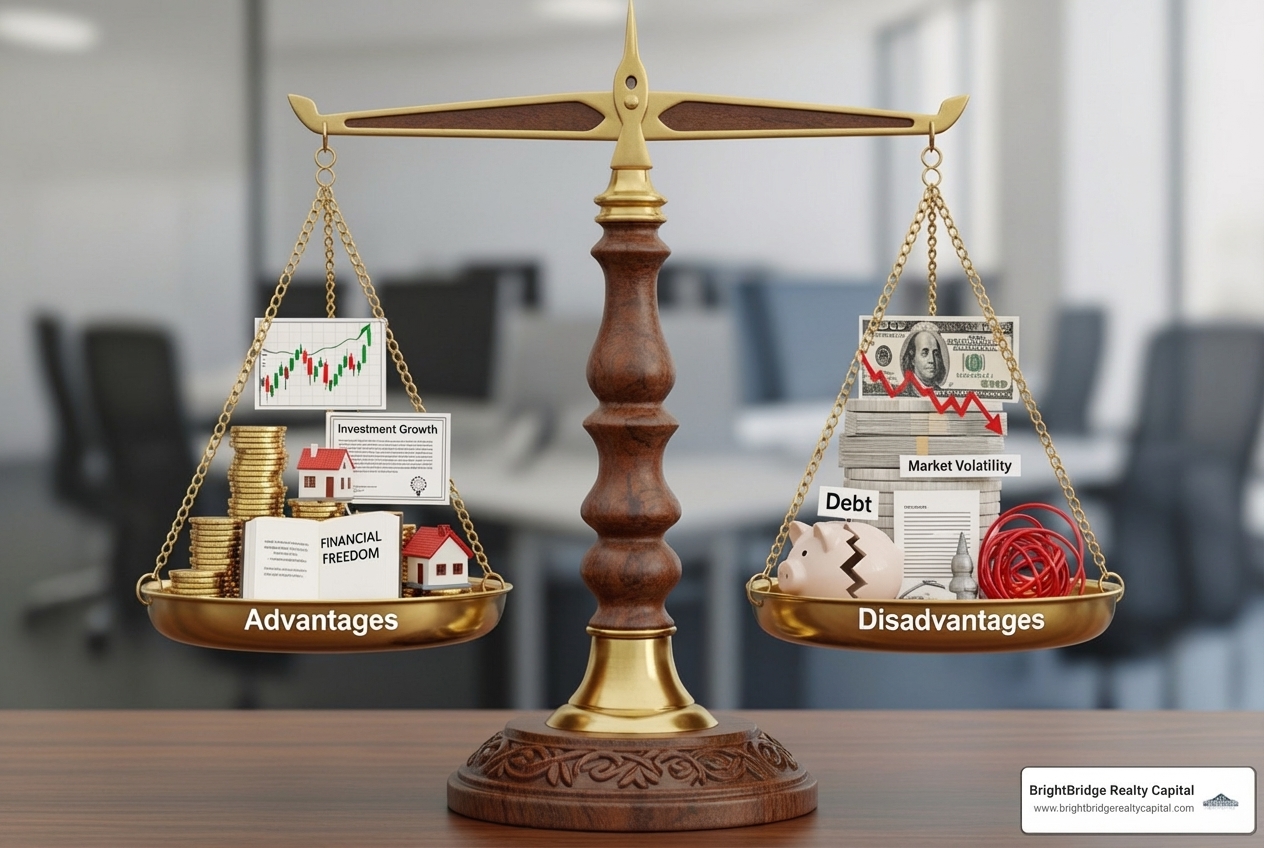
Like any powerful financial tool, a hard money rental loan is a double-edged sword. It offers unparalleled advantages that can catapult an investor's portfolio forward, but it also carries significant risks that demand respect and careful management. Understanding this delicate balance is the hallmark of a sophisticated investor who knows when to deploy this strategy. Let's place the pros and cons on the scales.
Primary Advantages for Rental Investors
For the astute real estate investor, especially those operating in fast-paced, competitive markets like New York, the benefits of hard money are not just convenient—they are often essential for success.
- Speed of Closing & Quick Acquisition: This is the undisputed heavyweight champion of hard money benefits. While a traditional mortgage plods through weeks or months of underwriting, a hard money loan can be approved and funded in as little as 5-10 business days. In some cases, with a prepared borrower and a straightforward deal, we've seen closings in under 72 hours. This velocity allows you to make offers that compete with all-cash buyers, seizing time-sensitive opportunities like auction properties, pre-foreclosures, or a deeply discounted property from a motivated seller.
- Competitive Market Advantage: In a bidding war, an offer contingent on a 45-day financing period is often dead on arrival. A hard money rental loan transforms your offer. It signals to the seller that you are a serious, well-capitalized buyer who can close quickly and with minimal fuss. This gives you a decisive edge over buyers reliant on slower, conventional financing, often allowing you to win the deal even if your offer isn't the absolute highest.
- Flexibility for Distressed Properties: Traditional lenders have strict habitability standards. A property with a leaky roof, missing kitchen, or significant structural issues is an automatic rejection. Hard money lenders, conversely, see opportunity where others see problems. We are built to finance these "ugly ducklings" because our underwriting is based on the property's potential after improvements (its After-Repair Value or ARV). This opens up a massive inventory of undervalued investment properties that are invisible to the conventionally-financed buyer.
- Streamlined Documentation & Minimal Paperwork: The asset-based nature of the loan means the lender's focus is on the property, not your personal life. Forget digging up two years of tax returns, every pay stub, and explaining every large deposit. While we still require key documents related to the property and your plan, the personal financial scrutiny is drastically reduced. This is a huge benefit for self-employed investors, entrepreneurs, or those with complex financial histories that don't fit neatly into a traditional lender's box.
- Focus on the Deal's Merit, Not Just the Borrower's History: Our underwriting process is an exercise in deal analysis. We want to see a sound investment with a clear path to profitability. This means that even if you have a lower credit score, are new to investing, or are already carrying significant debt from other properties, a compelling deal with a strong ARV and a clear exit strategy can still secure funding. We are funding the project's potential for success.
Significant Disadvantages and Risks of a Hard Money Rental
While the advantages are compelling, it's crucial to approach hard money with eyes wide open to the risks.
- Higher Interest Rates: This is the most prominent trade-off. Hard money loan interest rates typically range from 8% to 15%, sometimes higher, which is significantly more than a conventional loan's 4-7%. This higher cost is the price for speed, flexibility, and the lender's assumption of greater risk. For example, a $300,000 loan at 12% interest over a one-year term will accrue $36,000 in interest payments alone. These costs must be meticulously factored into your profitability analysis.
- Origination Fees and Points: Beyond the interest rate, you will pay upfront origination fees, commonly called "points." One point equals one percent of the loan amount. Lenders typically charge 2-5 points. On that same $300,000 loan, 3 points would amount to a $9,000 fee due at closing. These fees, along with appraisal, legal, and other closing costs, add to the total capital required for the project.
- Short Loan Terms & Repayment Pressure: Hard money rental loans are sprints, not marathons. Repayment periods typically range from 6 to 24 months. This compressed timeline creates immense pressure to execute your plan—renovate the property, place a tenant, and secure refinancing—on a strict schedule. Any delay, whether from contractor issues, permit hold-ups, or a slow rental market, can jeopardize your timeline and increase your costs.
- The Looming Balloon Payment: Most hard money loans are structured as interest-only. This keeps monthly payments manageable, but it means the entire principal amount (the "balloon") is due in one lump sum at the end of the loan term. If you borrowed $300,000, you will owe $300,000 on the maturity date. Your exit strategy isn't just a plan; it's a hard deadline to either sell the property or have a new loan in place to pay off the balloon.
- Elevated Foreclosure Risk: The combination of short terms, high costs, and a large balloon payment inherently increases the risk of default. If your project faces significant delays, your renovation budget is exhausted, or you fail to secure a timely exit, you could face foreclosure. Because hard money lenders are private entities, the foreclosure process can sometimes be faster and more aggressive than with a traditional bank. It is absolutely critical to have contingency plans and a cash reserve to navigate unforeseen challenges and protect your investment.
How to Get a Hard Money Loan: The Process from Application to Funding
Securing a hard money rental loan is designed to be a significantly faster and more straightforward process than traditional financing, but this speed requires you to be prepared and diligent. Understanding the steps involved will help you navigate the process efficiently and partner with the right lender for your project's success.
Step 1: Finding and Vetting the Right Lender
Choosing your hard money lender is arguably as important as choosing the property itself. A great lender acts as a strategic partner, offering expertise and reliable funding, while a poor one can introduce delays, hidden fees, and unnecessary stress.
- Lender Reputation and Track Record: Begin by researching lenders' reputations. Look for recent online reviews on platforms like Trustpilot or Google, read testimonials from other investors, and check for a professional online presence. A reputable lender will have a clear history of successful closings.
- Direct Lenders vs. Brokers: Understand the difference. Direct lenders, like us at BrightBridge Realty Capital, use their own capital to fund the loan. This typically results in a more streamlined process, faster decisions, and greater certainty of closing. Brokers act as intermediaries, shopping your loan application to a network of lenders. While they can offer variety, this can sometimes add time and complexity to the process.
- Specialization in Rental Properties: Ensure the lender has deep experience with hard money rental loans, not just fix-and-flips. They should understand the nuances of buy-and-hold strategies, the BRRRR method, and the eventual goal of refinancing into a long-term rental loan. This expertise is invaluable, especially in competitive markets like New York.
Key Questions to Ask a Potential Lender:
- What are your interest rates, points, and all associated fees? Ask for a term sheet with everything clearly itemized.
- What is your typical timeline from application to funding?
- What are your LTV (Loan-to-Value) and AR-LTV (After-Repair Loan-to-Value) limits?
- Do you fund the rehab costs, and if so, how does your draw process work?
- Are there any prepayment penalties if I refinance or sell early?
- What are the minimum liquidity and experience requirements for borrowers?
- Can you provide references from recent clients with similar projects?
Step 2: The Application and Underwriting Process for a Hard Money Rental
Once you've selected a lender, the application and underwriting phase moves quickly. Your preparedness is key to maximizing this speed.
- Initial Submission: The process typically begins with a quick online application or a direct conversation with a loan officer. You'll provide high-level details about yourself, your investment experience, and the subject property.
- Submission of Key Documentation: While less burdensome than a conventional loan, you will need to provide a concise package of documents. The goal is to paint a clear picture of the deal's viability.
- Property Details: A fully executed purchase and sale agreement is essential. Include the property address, photos, and any inspection reports or preliminary title reports you have.
- Scope of Work & Rehab Budget: This is a critical document. Provide a detailed, itemized list of all proposed renovations along with their projected costs. A well-thought-out budget demonstrates your professionalism and helps the lender accurately assess the ARV.
- Exit Strategy Analysis: A one-page summary explaining your plan. If refinancing, include comparable rental rates in the area and a target valuation. If selling, include comparable sales (comps) to support your projected sale price.
- Borrower Information: While the property is the focus, the lender needs to know who they're partnering with. Be prepared to provide an entity structure (LLC documents), a schedule of real estate owned (a list of your current properties), and evidence of liquidity (bank or brokerage statements) to cover the down payment, closing costs, and reserves.
- Property Valuation and Deal Assessment: The lender's underwriting team will immediately begin their due diligence. This involves ordering a third-party valuation, often a Broker's Price Opinion (BPO) or a desktop appraisal, to determine the property's current "as-is" value and its potential After-Repair Value (ARV). They will scrutinize your rehab budget for reasonableness and analyze your exit strategy's feasibility.
- Determining Loan-to-Value (LTV) & Loan Amount: Based on their assessment, the lender will structure the loan. We typically lend up to 70-80% of the property’s purchase price or a percentage of its ARV. For strong projects, some lenders might offer up to 90% of the purchase price and 100% of the rehab budget, as long as the total loan amount does not exceed a cap, such as 70-75% of the ARV. These ratios are the core determinants of your final loan amount and your cash-to-close requirement.
- Approval and Funding: A major advantage is the speed of this stage. A conditional approval or term sheet can often be issued within 24-48 hours of receiving a complete package. Once you accept the terms, the final loan documents are drawn up, and funding can occur swiftly, often in less than a week, allowing you to meet tight closing deadlines.
Step 3: Understanding Loan Terms, Rates, and Fees
Absolute transparency is non-negotiable when dealing with hard money rental loans. Before signing, you must have a granular understanding of every financial component.
- Interest Rates: Expect fixed rates in the 8-15% range for the loan's term.
- Origination Fees (Points): These upfront fees (2-5 points) are the lender's compensation for structuring a fast, high-risk loan. They are paid at closing and should be factored into your total project cost.
- Rehab Draws and Fees: If your loan includes a rehab budget, the funds are not given to you in a lump sum. They are disbursed in "draws" as you complete phases of the work. You'll submit a draw request with proof of work completed (photos, receipts), an inspector will verify the progress, and then the funds are released. Each draw may incur a small processing or inspection fee ($150-$250).
- Prepayment Penalties: Some lenders charge a penalty if you repay the loan too early (e.g., within the first 3-6 months). This protects their expected return. It's vital to clarify this, as a quick refinance is often the goal. We offer flexible prepayment options to align with our clients' strategies.
- Loan Term: Expect short terms, typically 6, 12, 18, or 24 months. This is not a 30-year mortgage.
- Payment Structure: Most hard money rental loans are structured with interest-only monthly payments. This keeps your holding costs lower during the renovation phase when the property is not generating income.
- The Balloon Payment: This is the final, lump-sum repayment of the entire principal balance due on the loan's maturity date. Your exit strategy must be perfectly timed to provide the capital to make this payment.
Advanced Strategies and Real-World Application
Hard money rental loans are far more than a simple cash advance; they are a sophisticated strategic tool. When wielded with expertise and foresight, they can dramatically accelerate your real estate investment trajectory, allowing you to build a substantial portfolio in a fraction of the time it would take with traditional methods.
Effective Risk Management Strategies
Given the high-stakes nature of hard money—higher costs and shorter terms—impeccable risk management is not just advisable, it's mandatory.
- The Primacy of the Exit Strategy: This is the cardinal rule of hard money. Before you even submit a loan application, you must have a primary exit strategy (Plan A) and at least one backup (Plan B). Plan A might be to refinance into a long-term DSCR loan. What if rates rise or your credit score drops? Plan B might be to sell the property. What if the market softens? Having detailed, data-backed plans for multiple scenarios is crucial.
- Fortifying with Cash Reserves: Never operate without a safety net. A contingency fund of 10-15% of your total project cost is a professional standard. This buffer covers unexpected repairs (e.g., discovering foundation issues), cost overruns from your contractor, tenant placement delays, or other unforeseen expenses that can quickly derail a tight budget and timeline. Cash reserves prevent a minor hiccup from becoming a catastrophic default.
- Building Your Power Team: You cannot succeed alone. A reliable team is a critical risk mitigation tool. This includes a trustworthy contractor who stays on budget and on schedule, a real estate agent who understands the investor market, a responsive insurance agent, and a knowledgeable real estate attorney. This team helps you execute your plan efficiently and professionally.
- Conservative Underwriting: Be your own toughest critic. When calculating your potential profit, use conservative numbers. Assume a slightly longer renovation period, a higher rehab budget, and a lower final ARV or rental income than your most optimistic projections. If the deal still works with these conservative numbers, you have a much higher probability of success.
- Leveraging Cross-Collateralization: For experienced investors with an existing portfolio of properties with significant equity, some lenders offer cross-collateralization. This advanced strategy allows you to pledge the equity in one or more of your existing properties as additional collateral for a new loan. This can help you secure a higher loan amount, potentially covering 100% of the purchase and rehab of a new property, thus minimizing your cash-out-of-pocket and maximizing your leverage for portfolio growth.
Who Benefits Most from Hard Money Loans?
Hard money rental loans are a specialized product, perfectly suited for specific investor profiles and situations:
- BRRRR Method Investors: For investors employing the Buy, Rehab, Rent, Refinance, Repeat strategy, hard money is the fuel for the engine. It provides the fast capital for the "Buy" and "Rehab" phases, especially for distressed properties that conventional loans won't touch.
- Investors Needing Speed and Certainty: When you find an off-market deal, a property at auction, or a listing in a hot neighborhood like Brooklyn or Queens, you need to act decisively. Hard money provides the speed to make a near-cash offer and the certainty of closing that sellers crave.
- Investors with Credit or Income Hurdles: Self-employed individuals, entrepreneurs with fluctuating income, or investors with a past credit blemish are often rejected by traditional banks' rigid algorithms. Since hard money rental loans are asset-focused, they provide a critical financing pathway for these otherwise qualified investors.
- Portfolio Builders Scaling Rapidly: Traditional lenders like Fannie Mae and Freddie Mac impose limits on the number of financed properties an individual can own (typically 10). Hard money lenders have no such restrictions, providing the flexibility to acquire multiple properties in a short period and scale a portfolio aggressively.
Case Study Example: The Brooklyn Brownstone Transformation
An investor, Sarah, identifies a three-unit brownstone in a rapidly appreciating part of Brooklyn. The property is listed at $900,000, significantly below the market value of comparable renovated properties ($1.6M), due to severe neglect and outdated systems. The seller is motivated and wants an all-cash offer with a 10-day close. Traditional banks won't finance it due to its condition.
Sarah brings the deal to us. Her detailed plan includes a $300,000 rehab budget to create three luxury rental units. We approve a hard money rental loan based on a projected ARV of $1.6M. The loan structure is: 85% of the purchase price ($765,000) and 100% of the rehab budget ($300,000), for a total loan of $1,065,000. Sarah's cash-to-close is the remaining 15% of the purchase price ($135,000) plus closing costs.
Over the next seven months, Sarah executes the renovation. The hard money loan costs her approximately $10,650 per month in interest-only payments. Once renovations are complete and all three units are leased to high-quality tenants, the property is stabilized and generating strong monthly income. Sarah then applies for a long-term DSCR (Debt Service Coverage Ratio) loan. The new appraisal confirms the $1.6M value. She secures a new loan for 75% of the ARV, which is $1.2M. This new loan completely pays off the $1,065,000 hard money loan principal, reimburses her for her initial cash investment of $135,000, and covers all closing costs. Sarah now owns a cash-flowing Brooklyn brownstone with significant equity and has successfully executed a BRRRR with zero money left in the deal, ready for her next project.
The Critical Importance of Your Exit Strategy
Your exit strategy is the backbone of any successful hard money rental investment. The short loan term (6-24 months) is a ticking clock.
- Refinancing into a Long-Term Rental Loan: This is the most common exit for buy-and-hold investors. Once the property is renovated, tenanted, and generating stable income for a few months (a period known as "seasoning"), it becomes an attractive asset for a conventional or DSCR lender. A DSCR loan is particularly powerful as it qualifies the property based on its own income, not your personal DTI, making it ideal for portfolio investors.
- Selling the Property (Flipping): If your primary goal was capital generation rather than long-term cash flow, selling the renovated property is your exit. The profits from the sale are used to repay the hard money loan, with the remainder being your return on investment.
- Profitability Calculations & ROI: Before you commit, you must run your numbers meticulously. Your analysis must include every potential cost: purchase price, rehab budget, hard money interest payments, origination fees, holding costs (taxes, insurance, utilities during the project), and the costs of your exit (refinancing fees or real estate commissions on a sale). Only if the projected ROI remains compelling after accounting for all these expenses is the project worth pursuing.
Key Investor Takeaways
Navigating hard money rental loans requires a sharp mind and a clear strategy. To recap the essentials, here are our key takeaways for any investor considering this powerful financing tool:
- Speed is the Main Benefit: Hard money loans excel when time is of the essence. They enable quick acquisition and renovation, giving you a competitive edge in fast-moving markets.
- The Asset is the Focus: Unlike traditional lenders, hard money lenders prioritize the property's value (especially its After-Repair Value) and the viability of your investment strategy over your personal credit history.
- Costs are Higher: Expect higher interest rates (8-15%) and upfront origination fees (2-5 points) compared to conventional financing. These costs are the trade-off for speed and flexibility.
- Exit Strategy is Critical: You must have a clear, well-researched plan to repay the loan within its short term (typically 6-24 months). Whether it's a refinance into a long-term loan or a sale, your exit strategy dictates your success.
- Due Diligence is Key: Thoroughly vet both the property and your chosen lender. Understand all terms, costs, and potential risks before committing.
- Cash Reserves are Your Friend: Budget for contingencies. Unexpected delays or expenses can quickly derail a project, so having a financial buffer is essential.
Frequently Asked Questions about Hard Money for Rentals
Why are hard money loans easier to qualify for than traditional mortgages?
Hard money rental loans are significantly easier to qualify for because their underwriting philosophy is fundamentally different. They are asset-based, meaning the lender's primary focus is on the value and profit potential of the property being financed, not the borrower's personal financial history. Traditional mortgages are borrower-based, requiring a deep dive into your credit score, tax returns, employment stability, and debt-to-income ratio. Hard money lenders, by contrast, are more concerned with the deal's soundness, its After-Repair Value (ARV), and your plan to make it profitable. This makes financing accessible even if you have a complex income situation (like being self-employed), a blemish on your credit report, or are already carrying multiple mortgages. The approval process is also built for speed, often taking days instead of the weeks or months required by conventional banks.
What is the primary factor in hard money loan underwriting?
The single most important factor in hard money rental loan underwriting is the value of the property serving as collateral, with a specific emphasis on its After-Repair Value (ARV). The lender is essentially investing in the project alongside you. Their core questions are: Is the purchase price right? Is the renovation budget realistic? And most importantly, will the property be worth enough after the renovation to provide a safe cushion for the loan and a solid profit for the investor? While factors like borrower experience and liquidity (cash on hand) are also considered to ensure you can execute the project, the strength of the deal and the asset itself are paramount.
Can I get 100% financing with a hard money loan?
While true 100% financing where you bring zero cash to closing is extremely rare and typically reserved for very experienced investors with a long track record with a specific lender, it is possible to get financing that covers 100% of the project costs. Some hard money rental lenders, for strong projects, may offer a loan that covers up to 90% of the purchase price and 100% of the rehab budget. The key constraint is that the total loan amount must remain below a certain percentage of the After-Repair Value (ARV), usually 70-75%. In this scenario, you would still need to bring the 10% down payment plus closing costs to the table. The goal of this high-leverage financing is to minimize your cash out of pocket, allowing you to scale your capital across more projects.
What happens if my renovation goes over budget or takes too long?
This is a critical risk to plan for. If your renovation goes over budget, you will typically need to cover the shortfall with your own cash reserves. This is why maintaining a contingency fund of 10-15% of the rehab budget is essential. If the project is delayed and you are approaching your loan's maturity date, you must communicate with your lender immediately. Some lenders may be willing to grant a loan extension, which usually comes with an extension fee and continued interest payments. Ignoring the problem is the worst possible action, as it can lead to default. Proactive communication is key.
How does a hard money lender determine the After-Repair Value (ARV)?
The ARV is a professional opinion of the property's market value after all your proposed renovations are completed. Lenders determine this value using one or more methods. They will analyze the comparable sales ("comps") of recently sold, fully renovated properties of similar size, style, and location. They will also scrutinize your submitted Scope of Work to ensure the planned finishes and upgrades are in line with market expectations. To get a final number, they will typically order a third-party valuation from a licensed appraiser or an experienced real estate broker who will provide a Broker's Price Opinion (BPO) that explicitly states a projected ARV.
Conclusion: Is Hard Money Right for Your Next Rental?
Hard money rental loans are not a one-size-fits-all solution; they are a specialized, powerful tool designed for the modern, ambitious real estate investor. They provide a strategic advantage through unparalleled speed and flexibility, enabling you to acquire properties and execute value-add strategies in a way that traditional financing simply cannot support. This financial instrument allows you to seize opportunities in competitive markets, purchase distressed assets that others cannot, and ultimately scale a profitable rental portfolio at an accelerated pace.
While the higher costs and shorter terms demand meticulous planning, conservative underwriting, and a bulletproof exit strategy, the rewards can be immense. When used correctly as a short-term bridge, a hard money loan is the catalyst for the BRRRR method, transforming an undervalued property into a stabilized, cash-flowing asset. The key is to view the higher cost not as a burden, but as a calculated investment in speed and opportunity—the cost of entry to deals that would otherwise be inaccessible.
The ideal candidate for a hard money loan is an investor who has done their homework, has a clear vision for their project, and understands that time is money. Whether you are a seasoned pro looking to scale faster than bank limits allow, or a newer investor with a fantastic deal that needs creative financing, hard money can be the key that unlocks the door.
At BrightBridge Realty Capital, we live and breathe real estate investment financing. We operate as a direct lender, which means we provide the capital, make the decisions, and partner with you to ensure a seamless and rapid closing. We specialize in crafting customized, fast, and flexible financing solutions for investors navigating dynamic environments like New York. If you're ready to move beyond the slow, rigid world of traditional banking and partner with a lender who understands your goals, we are here to help.
Explore our rental loan programs today, or contact us for a direct consultation on your next project. Let us help you turn your rental property ambitions into a tangible, profitable reality.