The Rate Race: Finding Your Perfect Home Equity Loan


Summary
Discover your ideal rate for home equity loan. Understand market trends, factors, and uses to secure your financial future.
Why Understanding Home Equity Loan Rates Matters for Real Estate Investors
For a real estate investor, leverage is a powerful tool, and the rate for home equity loan financing is the fulcrum on which that leverage pivots. A competitive rate can accelerate portfolio growth, while a high one can stall it. Understanding the nuances of these rates isn't just about saving moneyit's about making your investment strategy viable.
Home equity loans let you tap into the ownership stake you've built in a property, turning that paper wealth into liquid cash for your next move. You borrow a lump sum against your equity at a fixed interest rate and repay it over a set term, typically 5 to 30 years, with predictable monthly payments. This stability is a cornerstone for investors managing multiple properties and cash flows.
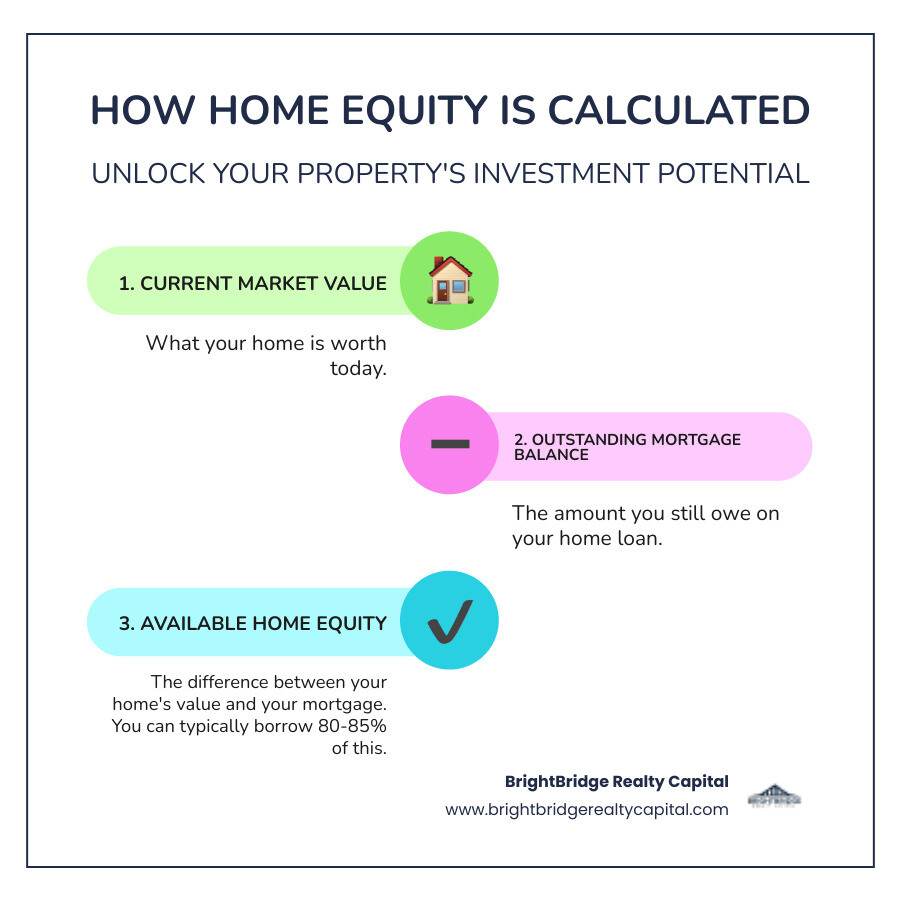
If you are just starting to explore this type of financing, it helps to think of a home equity loan as a second mortgage that sits behind your primary loan. The amount you can access is based on the difference between your home's current market value and what you still owe on your first mortgage. Lenders then apply their maximum combined loan-to-value (CLTV) limitoften 80-85%to determine how much of that equity is actually borrowable.
Current Home Equity Loan Rates (2025): A Snapshot
- 5-year home equity loan: 8.22% average (at a two-year low)
- 10-year home equity loan: 8.37% average
- 15-year home equity loan: 8.24% average
- Rates have declined substantially from their 2024 highs.
- Home equity loans offer fixed rates, providing a predictable payment schedule, unlike variable-rate Home Equity Lines of Credit (HELOCs).
To put these averages in perspective, many investors in higher-cost markets such as New York, NY had become accustomed to double-digit offers on short-term financing during 2023-2024. An 8% range fixed rate can feel far more manageable when you model it out across several properties or multiple deals over a few years.
Key Factors That Determine Your RateYour final rate is a blend of market forces and your personal financial profile. Lenders are assessing risk, and the lower your perceived risk, the better your rate.
- Credit Score: This is a primary driver. Lenders typically reserve the best rates for borrowers with scores of 680 or higher. While you might qualify with a score as low as 600, you'll face a significantly higher interest rate. A strong credit history demonstrates reliability and reduces the lender's risk.
- Loan-to-Value (LTV): This ratio compares the loan amount to the appraised value of your property. Most lenders allow you to borrow up to a combined LTV of 80-85%. A lower LTV (meaning you're borrowing less against your home's value) often results in a better rate because the lender has more of a protective equity cushion if property values decline.
- Federal Reserve Policy: The Fed's adjustments to the federal funds rate create ripples across the entire lending industry. The recent rate cuts have directly contributed to home equity loan rates reaching multi-year lows, making it a more attractive time for investors to borrow.
- Your Home as Collateral: Because the loan is secured by your property, the risk to the lender is much lower than with unsecured debt. This is why home equity loan rates are substantially lower than those for credit cards (often 20%+) or personal loans (which can easily exceed 12%).
For real estate investors, these rates directly impact your deal math. A single percentage point difference can translate to tens of thousands of dollars in interest over the life of a loan. For example, on a $150,000 loan with a 15-year term, the difference between an 8% rate and a 9% rate is over $16,000 in extra interest payments. This is capital that could otherwise be used for renovations, another down payment, or operational reserves.
When you are stacking several projects or scaling a portfolio, the rate for home equity loan financing also affects your ability to withstand vacancies, unexpected repairs, or market softening. Locking in a fixed rate now provides a level of certainty that can make stress-testing your deals much easier.
The good news? Rates have dropped significantly from their 2024 peaks. According to recent industry data, the average rate on a 5-year $30,000 home equity loan hit 8.22%its lowest point in two years. That's a meaningful shift for investors who've been waiting for better borrowing conditions.
Borrowers who used higher-rate bridge loans or hard money to acquire or rehab properties may now find that a home equity loan offers a more affordable way to recapitalize their projects, cash out some equity, and reduce their monthly payment burden.
I'm Daniel Lopez, a loan officer at BrightBridge Realty Capital, and I've helped dozens of real estate investors steer the rate for home equity loan options to structure deals that work with their timelines and budgets. Whether you're funding a renovation, consolidating debt, or acquiring your next rental property, understanding how rates are determined puts you in control of your financing strategy.
Working with a direct lender like BrightBridge can also streamline the rate shopping process. Instead of navigating multiple layers of brokers, you speak directly with decision-makers who understand investment property underwriting and can move from term sheet to closing quicklyoften within a week when the documentation is ready.
Quick rate for home equity loan terms:
- how does a home equity line of credit work
- what is a home equity line of credit
- best heloc lenders for investment property
Understanding the Current Market for Home Equity Loan Rates
The landscape of home equity financing is constantly shifting, influenced by everything from global economic policies to local market demand. For investors in New York, NY, staying abreast of these changes is crucial to securing the most favorable rate for home equity loan products. A savvy investor doesn't just find a loan; they time their financing to capitalize on market conditions.

Let's look at the current trends. We've seen some encouraging news recently, with home equity rates declining substantially from their 2024 highs. The average rate on a benchmark 5-year $30,000 home equity loan, for instance, dropped three basis points to 7.99%, marking a two-year low. This trend indicates a more borrower-friendly environment, creating a window of opportunity for investors who have been waiting on the sidelines for the cost of capital to decrease.
For real estate investors, this shift can mean the difference between a marginal deal and a strong one. A lower rate for home equity loan financing can:
- Improve cash-on-cash returns on a buy-and-hold property.
- Make larger rehab budgets more feasible without overleveraging.
- Allow you to refinance out of short-term, higher-cost loans while still meeting your target returns.
The Federal Reserve's policy decisions play a significant role in shaping these rates. The Fed's mandate is to manage inflation and promote stable employment, and its primary tool is the federal funds ratethe rate at which banks lend to each other overnight. When the Fed cuts this benchmark rate, borrowing becomes cheaper for banks, and those savings are often passed on to consumers in the form of lower interest rates on products like home equity loans and HELOCs. The declines we've observed in 2024 and into 2025 are a direct reflection of these policy shifts. However, it's crucial for investors to maintain perspective. While rates are favorable, a return to the "rock-bottom" rates of around 4 percent seen during the pandemic era is unlikely due to persistent inflationary pressures and a more normalized economic environment.
In practical terms, this means investors should focus less on trying to time the absolute bottom of the market and more on capturing a good rate that supports their strategy while liquidity is still accessible. In competitive markets like New York, NY, being pre-positioned with an approved home equity loan can help you move quickly when the right property comes to market.
Home Equity Loan: Rate and Repayment Overview
A home equity loan is a powerful tool for real estate investors, offering a predictable financing structure. Unlike a credit card or a line of credit, it provides a lump sum of cash upfront. This is incredibly useful for funding large, time-sensitive projects, such as a significant renovation on an investment property, a down payment on a new acquisition, or even having the cash on hand to win a competitive bid on a new property. For investors using strategies like BRRRR (Buy, Rehab, Rent, Refinance, Repeat), a home equity loan can provide the initial capital needed for the purchase and rehab phases.
The defining characteristic of a home equity loan is its fixed interest rate. This means your monthly payments remain consistent throughout the loan's term, providing stability and making budgeting much simpler. You'll know exactly how much you need to pay each month, which is a huge advantage for managing cash flow across an investment portfolio. The repayment period typically ranges from 5 to 30 years, allowing flexibility to choose a term that aligns with your financial strategy. Furthermore, the interest paid on a home equity loan may be tax-deductible if the funds are used to buy, build, or substantially improve the home that secures the loan. It's crucial to understand the specific regulations, as detailed by the IRS rules on interest deduction, and consult with a tax professional.
For more detailed information on how these loans work, you can explore our resources on home-equity-loan.
Here's a quick summary of the key features of a home equity loan:
| Feature | Description |
|---|---|
| Rate Type | Fixed interest rate for the life of the loan, ensuring predictable monthly payments. |
| Fund Disbursement | A one-time lump sum of cash paid out at closing, ideal for large, planned expenses. |
| Repayment Structure | Fixed monthly payments of principal and interest over a set term (e.g., 5-30 years). |
While the rate and payment structure are central, investors should also consider how a home equity loan fits into their broader capital stack. For example, some clients at BrightBridge Realty Capital use a home equity loan on their primary residence to fund the down payment and rehab on an investment property, then refinance the investment property later to repay the home equity loan. Others tap equity in a seasoned rental to acquire an additional unit in the same neighborhood, spreading risk across multiple doors.
Because BrightBridge Realty Capital is a direct lender focused on real estate investors, we understand how to underwrite these strategies and move quickly from approval to funding. If your property is ready and documentation is in order, closings can often occur within a week, allowing you to lock in your rate for home equity loan financing before market conditions shift again.