Multi-Family Funding: Your Guide to Hard Money Solutions

Summary
Get fast multi family hard money solutions for your investments. Learn how these asset-based loans work, their pros, cons & ideal use.
Why Multi-Family Hard Money Matters for Real Estate Investors
In today's fiercely competitive real estate landscape, the ability to act decisively and quickly is what separates successful investors from those left on the sidelines. This is especially true in the multi-family sector, where lucrative opportunities are often fleeting. Multi family hard money loans have emerged as an indispensable financial instrument for investors who need to bypass the slow, bureaucratic processes of traditional banks. These are short-term, asset-based financing solutions designed specifically for the acquisition, refinancing, or significant renovation of multi-unit residential properties. While conventional lenders get bogged down in analyzing a borrower's credit history, income verification, and debt-to-income ratios, hard money lenders cut straight to the chase. They prioritize the intrinsic value of the property itself—the “hard asset”—which allows for astonishingly fast closing times, often in as little as 5 to 10 business days.
Quick Answer: Key Features of Multi-Family Hard Money Loans
- Loan Amounts: $300K to $30 million+. These loans can scale from small apartment buildings to large complexes, depending on the lender's capacity and the deal's strength.
- Interest Rates: 9% to 15%. The rate reflects the higher risk, short-term nature, and speed of the loan. It's the price of opportunity.
- Loan Terms: 12 to 36 months. This is a bridge, not a destination. The term is designed to give you enough time to execute a value-add plan and exit.
- Closing Speed: 7 to 21 days. This is a key competitive advantage, allowing you to compete with all-cash offers.
- Loan-to-Value (LTV): Up to 70% of the property's "as-is" or current market value. This is based on a professional appraisal.
- Loan-to-Cost (LTC): Up to 85% of the total project cost, which includes the purchase price and the renovation budget. This is crucial for value-add projects.
- Origination Fees: 2 to 5 points. A "point" is 1% of the loan amount, paid at closing to cover the lender's underwriting and processing costs.
- Credit Requirements: Highly flexible. While not irrelevant, a low credit score can often be overcome by a strong property, a solid business plan, and relevant experience.
Multi-family properties remain a cornerstone of savvy investment portfolios due to their potential for scalable cash flow and appreciation. However, securing financing through conventional channels is often a significant bottleneck. A time-sensitive deal, a property in need of substantial repairs, or a blemish on your credit report can all lead to a swift rejection from a bank. This is where hard money loans become a strategic necessity. Hard money lenders operate on a different philosophy, underwriting loans based on the property's After-Repair Value (ARV). This forward-looking valuation allows them to fund projects that traditional institutions would deem too risky, empowering investors to acquire and transform properties that others cannot.
While the costs—higher interest rates (9%-15%) and origination fees (2-5 points)—and shorter terms (12-36 months) are notable, they must be weighed against the immense value of speed and flexibility. For fix-and-flip projects, value-add repositioning, or bridge financing to span a gap, the strategic advantages are often invaluable. I'm Daniel Lopez, a loan officer at BrightBridge Realty Capital. My expertise lies in structuring bespoke multi family hard money loans that are meticulously tailored to an investor's specific renovation timeline and exit strategy. I help clients navigate the world of asset-based lending to secure the critical funding needed to capitalize on promising opportunities.
What is a Multi-Family Hard Money Loan and How Does it Work?
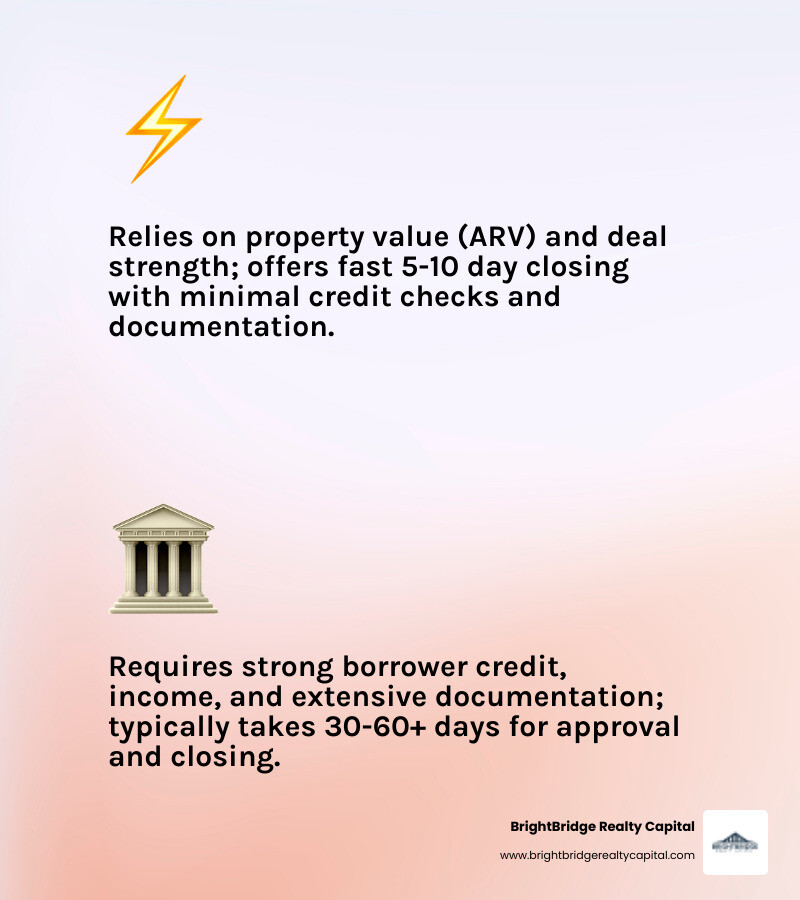
A multi-family hard money loan is a specialized, short-term financing vehicle used by real estate investors when conventional funding is either too slow or entirely unavailable. Unlike traditional banks, which are primarily concerned with a borrower's creditworthiness and historical income, hard money lenders focus almost exclusively on the value of the real estate asset securing the loan—the "hard asset." This fundamental difference in underwriting philosophy allows private lenders and direct lending firms like BrightBridge Realty Capital to operate with greater speed and flexibility, making them ideal partners for time-sensitive and value-add projects.
At their core, these loans function as bridge loans. They provide the critical capital needed to bridge the gap between the acquisition of a property and its eventual stabilization or sale. Consider this scenario: an investor finds a 20-unit apartment building in a great location, but it's been mismanaged for years. The property has a 50% vacancy rate and requires $500,000 in renovations to modernize the units and common areas. A traditional bank would likely reject a loan application due to the low occupancy and poor physical condition. However, an investor can use a multi family hard money loan to purchase the property and fund the renovations. The lender's streamlined underwriting process will focus on the property's current value, the feasibility of the renovation budget, the projected After-Repair Value (ARV), and the investor's plan to lease up the vacant units. This asset-centric approach enables closings in as little as 5 to 21 days, securing the deal before a competitor can.
How Hard Money Lenders Differ from Traditional Lenders
The divergence between hard money and traditional lending is philosophical. Traditional banks are depository institutions, meaning they lend out their customers' savings. This creates a fiduciary duty to be extremely risk-averse. They prioritize stable borrowers with high credit scores, low debt-to-income ratios, and properties that are already generating consistent cash flow. Their process is slow, document-intensive, and rigid. In contrast, hard money lenders are deal-focused entrepreneurs. They use private capital and are skilled at evaluating the potential of a real estate project. They assess the property's value, the upside from renovations, and the clarity of the investor's exit plan. This asset-based model means a borrower's credit history is secondary to the strength of the deal. This flexibility is precisely what allows for the financing of properties that need significant work, have title complexities, or face other challenges that banks are structured to avoid.
The table below provides a comprehensive comparison for financing a multi-family property:
| Feature | Multi-Family Hard Money Loans | Traditional Loans (for Multi-Family) |
|---|---|---|
| Speed of Closing | 5-21 days (can be faster) | 45-90+ days |
| Primary Focus | The property's value (As-Is and ARV) and exit strategy | The borrower's credit, income, and financial history |
| LTV/LTC | Up to 70% LTV (as-is), Up to 85% LTC (purchase + rehab) | Up to 80% LTV (on stabilized, cash-flowing properties only) |
| Interest Rate | 9%-15% (interest-only) | 4%-8% (amortizing) |
| Term Length | 6-36 months (short-term bridge) | 5-30 years (long-term mortgage) |
| Borrower Requirements | Asset-based, flexible on credit, experience is a plus | Credit-based, strict income/credit standards, low DTI required |
| Documentation | Streamlined: application, purchase contract, rehab budget, bank statements | Highly extensive: tax returns, pay stubs, profit & loss, etc. |
| Property Condition | Distressed, vacant, or value-add properties are ideal | Stabilized properties with high occupancy and positive cash flow |
| Prepayment Penalties | Often flexible or non-existent | Common, especially in the first few years of the loan |
Typical Terms for Multi Family Hard Money Loans
Understanding the specific terms is crucial for budgeting and ensuring profitability. While the costs are higher, they are the price for speed, flexibility, and opportunity.
- Interest rates: Ranging from 9% to 15%, these rates are calculated based on the perceived risk of the loan, the location of the property, and the borrower's experience. The payments are almost always interest-only, which keeps monthly carrying costs low during the renovation and lease-up phase.
- Origination fees: Expect to pay 2 to 5 points (1 point = 1% of the loan amount). These fees are paid at closing and compensate the lender for the work involved in underwriting, processing, and funding the loan quickly.
- Loan terms: These are bridge loans, not permanent mortgages. Terms typically run for 12 to 36 months. Many lenders offer extension options (for a fee) if the project requires more time, providing a safety net for unforeseen delays.
- Loan-to-Value (LTV): Lenders will typically finance up to 70% of the "as-is" value of the property, as determined by an independent appraisal.
- Loan-to-Cost (LTC): For renovation projects, this is a more critical metric. You can often borrow up to 85% of the total project cost, which includes both the purchase price and the budgeted renovation expenses. This allows you to leverage the lender's capital for the improvements.
- Loan amounts: For multi-family assets, loans generally start around $350,000 and can exceed $25 million for larger institutional-grade projects.
- Payments: As mentioned, payments are typically interest-only. The full principal balance is due as a single balloon payment when the loan term expires. This structure is designed to maximize your cash flow during the project's execution.
- Recourse: The vast majority of these loans are full-recourse. This means the borrower provides a personal guarantee, making their personal assets liable in the event of a default. This underscores the absolute necessity of a well-vetted project plan and a solid exit strategy.
The Key Advantages and Disadvantages
Every financing tool in an investor's arsenal comes with a distinct set of trade-offs. With multi family hard money loans, you are essentially trading higher costs and shorter timelines for unparalleled speed, flexibility, and access to capital. Understanding this balance is fundamental to deploying this tool effectively and profitably within your investment strategy. A hard money loan is not a one-size-fits-all solution, but for the right scenario, it is an unbeatable one.

Advantages: Speed, Flexibility, and Accessibility
The most celebrated advantage of a hard money loan is speed. Imagine a motivated seller needs to close on a 12-unit apartment building in two weeks. A traditional bank would laugh at that timeline; their underwriting process alone takes 45-60 days. A hard money lender, however, can underwrite, approve, and fund the loan in 5 to 10 business days. This speed allows you to negotiate better purchase prices, beat out competing offers from slower-moving buyers, and capitalize on time-sensitive opportunities like auctions or short sales.
Flexible underwriting is a close second. Hard money lenders are asset-based, meaning they focus on the property's potential, not your personal financial history. This is a game-changer for many investors. Have you been self-employed for only a year? Do you have a past bankruptcy or a credit score below 700? While these would be deal-killers for a bank, a hard money lender will look past them if you have a strong deal with a clear path to profitability. This flexibility extends to the property itself. Hard money is the go-to source for financing distressed properties with significant deferred maintenance, high vacancy rates, or other issues. Where a bank sees risk, a hard money lender sees the value-add opportunity and the potential After-Repair Value (ARV).
The streamlined application process is another significant benefit. Instead of demanding years of tax returns, detailed personal financial statements, and endless paperwork, the focus is on the essentials: the purchase agreement, the renovation budget, and the appraisal. This efficiency saves you invaluable time and administrative headaches, allowing you to focus on the deal itself. This powerful combination of speed, underwriting flexibility, and streamlined processing makes multi family hard money loans the perfect tool for off-market deals, rescuing a deal when conventional financing falls through, or simply gaining a competitive edge.
Disadvantages: Cost and Risk
The primary disadvantage is undeniably the cost. With interest rates typically falling between 9% and 15% and upfront origination fees of 2 to 5 points, the cost of capital is significantly higher than a conventional loan. For a $1 million loan, this could mean paying $20,000 to $50,000 in points at closing, plus interest payments of $7,500 to $12,500 per month. These costs are substantial and must be meticulously factored into your financial projections to ensure the project remains profitable after all expenses.
The short repayment period of 12 to 36 months introduces significant pressure. Your project must adhere to a strict timeline. Any number of common issues—such as permitting delays with the city, unexpected structural problems, contractor disputes, or a slower-than-expected lease-up period—can jeopardize your ability to execute your exit strategy before the loan's balloon payment is due. This tight window requires a well-capitalized investor with sufficient cash reserves to handle unexpected carrying costs and delays.
Finally, the element of personal risk cannot be overstated. Most multi family hard money loans are full recourse, which means you are required to sign a personal guarantee. If the project fails and you default on the loan, the lender has the right to foreclose on the property and then pursue your other personal assets—such as your primary residence, other investment properties, or bank accounts—to satisfy the debt. The risk of foreclosure is inherently higher with short-term, high-cost debt, making it absolutely critical to have a conservative budget, contingency funds, and multiple viable exit strategies. At BrightBridge Realty Capital, we take a consultative approach, working with you to stress-test your timelines and budgets to help mitigate these risks from the outset.
Ideal Scenarios for Using Multi Family Hard Money
Multi family hard money loans are not a replacement for traditional financing but rather a specialized tool for specific, strategic situations where conventional options are inadequate. For countless investors I've partnered with, from seasoned operators in New York to first-time multi-family buyers nationwide, hard money has been the pivotal element that unlocked a deal's potential and made an otherwise impossible acquisition a reality.
When Traditional Lending Isn't an Option
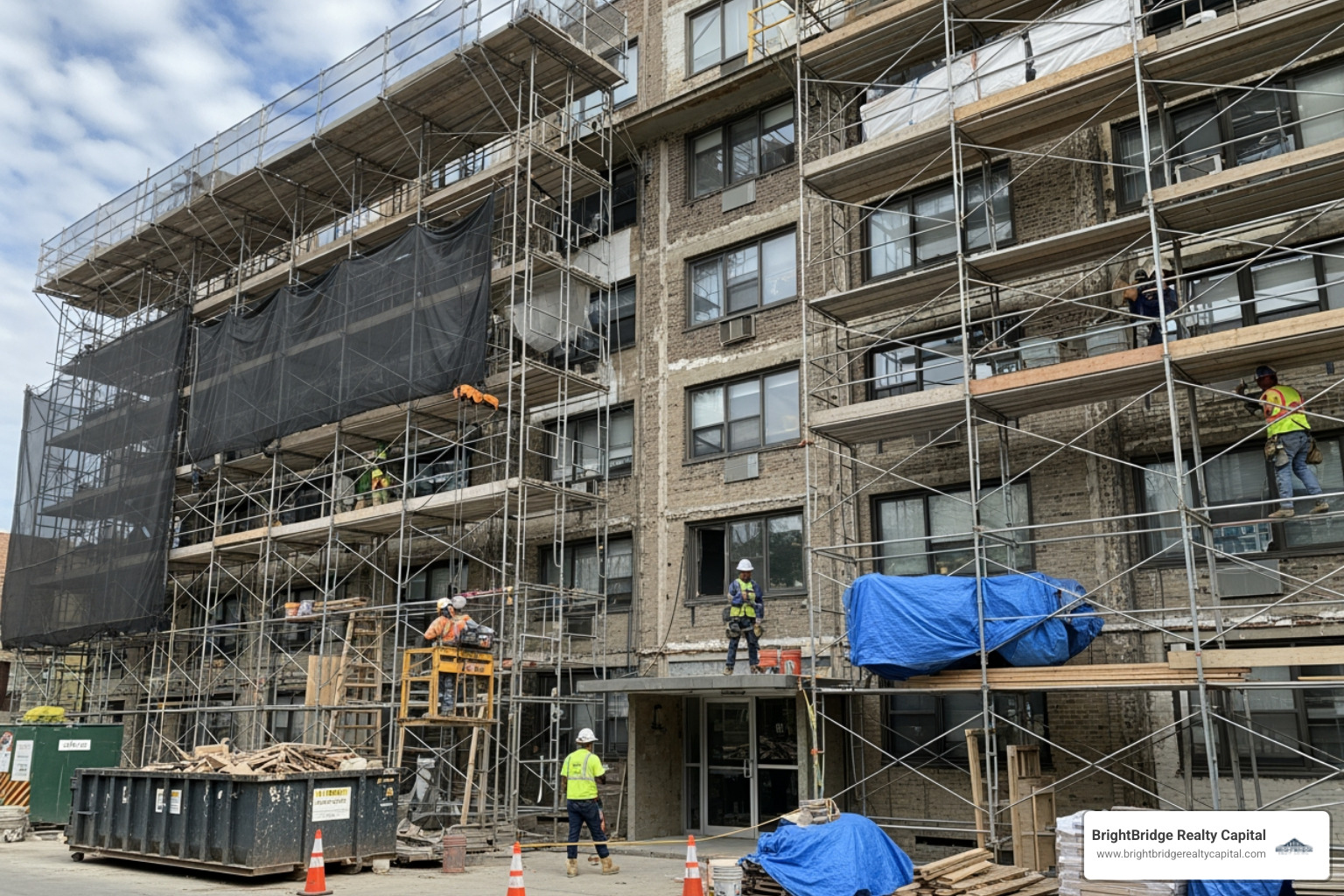
Conventional lenders operate within a very narrow, risk-averse framework. If a property or borrower profile deviates from their strict criteria, the application is often declined without consideration for the deal's underlying merit. This is precisely where multi family hard money shines:
- Properties needing renovation (Value-Add): Banks require properties to be stabilized and cash-flowing before they lend. They are generally unwilling to fund significant future capital expenditures. Hard money lenders, by contrast, embrace value-add projects. They underwrite based on the After-Repair Value (ARV), providing the capital needed for both acquisition and renovation, allowing you to force appreciation.
- High vacancy rates or low cash flow: Traditional underwriters live and die by the Debt Service Coverage Ratio (DSCR), which measures a property's current cash flow against its proposed debt payments. A property with high vacancy will fail this test. Hard money lenders look at the pro-forma or projected income after renovations and stabilization, funding the potential rather than the current underperformance.
- Borrower credit or income issues: A recent job change, a low credit score, or a complex income structure can be insurmountable hurdles for a conventional loan. Hard money lenders are asset-based. If the property is a good deal and the business plan is sound, they are far more willing to be flexible on the borrower's personal financial profile, especially if the borrower has relevant real estate experience.
- Quick closing requirements: In a competitive bidding situation, a seller will almost always favor an offer that can close quickly. A hard money loan, with its ability to fund in 7-21 days, allows you to make offers that are nearly as strong as all-cash, giving you a powerful negotiating advantage.
- Last-minute financing challenges: It's a common nightmare scenario: your bank loan is denied a week before closing due to a last-minute underwriting issue. A hard money loan can act as a rapid-deployment bridge loan to save the deal, giving you the time to secure permanent financing later without losing your deposit and the opportunity.
Types of Properties You Can Finance
The versatility of multi family hard money means it can be applied to a broad spectrum of property types, provided the investment thesis is logical and the value is there. The common denominator is the potential for improvement and value creation. At BrightBridge Realty Capital, we have experience financing a diverse range of assets:
- Apartment buildings (5+ units): This is the classic use case. We fund everything from small 5-unit buildings needing a cosmetic facelift to large 100+ unit complexes requiring a complete repositioning in the market, including rebranding, extensive renovations, and professional management implementation.
- Student housing: These properties near universities often require seasonal updates to remain competitive. A hard money loan can fund renovations during the summer break to add modern amenities like high-speed internet, updated common areas, and improved security to attract students and justify higher rents.
- Senior living facilities: This includes assisted living, independent living, and memory care properties. Hard money can provide the capital for necessary improvements to meet evolving healthcare standards, enhance resident amenities, or execute a turnaround plan for an underperforming facility.
- Mixed-use properties: Common in urban markets like New York, these buildings with ground-floor retail and residential units above have unique financing needs. Hard money can be used to renovate the apartments while providing capital for tenant improvement (TI) allowances to attract a high-quality commercial tenant, stabilizing both income streams.
- Distressed assets: This category includes properties acquired through foreclosure auctions, REOs (bank-owned), or short sales. These situations almost always demand a quick, all-cash-equivalent closing and often involve properties in poor condition, making them perfect candidates for hard money financing.
The Loan Process: From Application to Exit Strategy
Navigating the multi family hard money loan process is significantly more streamlined and faster than its traditional counterpart, but success hinges on thorough preparation and a crystal-clear strategic plan. At BrightBridge Realty Capital, we've refined our process to be as efficient as possible, but our primary focus remains on the viability and strength of your plan, especially your exit strategy—the roadmap for how you'll repay the short-term loan and realize your profit.

A Step-by-Step Guide to Qualifying and Closing
While hard money lenders are flexible, they are not careless. The due diligence process is rigorous and focused. Here’s a typical breakdown of the journey from initial contact to funding:
- Initial Inquiry & Pre-Qualification: The process begins with a conversation. You'll present the basic details of your deal to a loan officer. This includes the property address, purchase price, estimated renovation budget, and your proposed business plan. The lender will provide initial feedback and determine if the project is a potential fit.
- Submission of Key Documents: If the deal looks promising, you'll submit a core package of documents. This is far less burdensome than a bank's requirements:
- Loan Application: Basic information about the borrowing entity (usually an LLC) and the guarantors.
- Property Documents: The fully executed purchase and sale agreement, current rent roll (if any), and historical operating statements (if available).
- Renovation Plan: A detailed scope of work and line-item budget for all planned improvements. This is critical for justifying the After-Repair Value (ARV).
- Valuation: The lender will order a third-party appraisal to determine the property's "as-is" value and the projected ARV based on your renovation plan.
- Borrower Documents: Bank statements to verify you have the funds for the down payment, closing costs, and reserves. You'll also provide entity documents (LLC operating agreement, etc.) and a summary of your real estate experience.
- Term Sheet & Due Diligence: Once the initial documents are reviewed, the lender will issue a Letter of Intent (LOI) or Term Sheet outlining the proposed loan amount, interest rate, term, and fees. Upon acceptance, the lender begins formal due diligence, which includes the appraisal, a title search, and background checks on the guarantors.
- Underwriting and Approval: The underwriter compiles all the information—the appraisal, your budget, your experience, the title report—into a final loan package. This package is reviewed, and a final decision is made. Because the process is asset-focused, this can happen in a matter of days.
- Closing and Funding: Once approved, loan documents are drawn up by attorneys. You review and sign, and the funds are wired to the title company to close the purchase.
Can you qualify with bad credit? Yes, this is a key differentiator. Because the loan is primarily secured by the real estate asset, a low credit score or past financial hiccup is not an automatic disqualifier. Lenders will weigh your experience, the quality of the deal, and your cash reserves more heavily than your FICO score.
Planning Your Exit: How to Repay the Loan
Your exit strategy is the most critical component of your loan application. A hard money lender is providing a bridge, and they need to see a clear and realistic path to the other side. A poorly conceived exit plan is the fastest way to get denied.
The two most common exit strategies are:
- Refinance into a Long-Term Loan: This is the most common strategy for buy-and-hold investors. After you've completed renovations, increased rents, and stabilized the property (typically meaning 90%+ occupancy for 90+ days), the property's value and cash flow will be much higher. You can then approach a traditional bank, agency lender (Fannie Mae/Freddie Mac), or CMBS lender to secure a long-term, amortizing loan at a much lower interest rate. The proceeds of this new loan pay off the hard money loan in full.
- Sell the Stabilized Property: For investors pursuing a fix-and-flip or merchant-build strategy, the goal is to sell the property for a profit once the value-add plan is complete. After renovations and lease-up, you list the property on the market as a turnkey, cash-flowing asset, which is highly attractive to passive investors. The proceeds from the sale pay off the hard money loan, closing costs, and your initial equity, with the remainder being your profit.
A sophisticated investor will always have a backup plan. What if the refinance market tightens? What if the sales market cools? We analyze your proposed exit during underwriting, stress-testing it against potential market shifts to ensure its viability. A well-planned exit strategy is the hallmark of a professional operator and is essential for protecting both you and the lender.
Frequently Asked Questions about Multi-Family Hard Money Loans
As a specialized financial product, multi family hard money loans naturally generate a lot of questions from both new and experienced investors. Clearing up these points is crucial for making an informed decision. Here are detailed answers to the most common inquiries I receive.
How quickly can a multi-family hard money loan really close?
Remarkably quickly. While the advertised timelines of 7 to 21 days are typical and realistic, the actual speed is often dictated by the borrower's preparedness and the deal's complexity. For a straightforward purchase with a well-prepared borrower who provides all documentation upfront, closing in 5-7 business days is achievable. In some extreme cases, for repeat borrowers with an existing relationship with a lender, deals have been funded in as little as 48 hours. This speed is a strategic weapon in competitive markets like New York, NY, where the ability to close fast can be more important to a seller than the highest price.
Can I get a hard money loan if the property is vacant or needs major repairs?
Absolutely. In fact, these are the quintessential scenarios where multi family hard money loans are most valuable. Traditional banks are in the business of lending on stabilized, income-producing assets. A vacant building generates no income and a property needing major repairs represents unacceptable risk to them. Hard money lenders, however, operate on a value-add philosophy. We look at what the property will be worth after your improvements and lease-up efforts—the After-Repair Value (ARV). As long as you present a credible, detailed renovation plan and budget, we are eager to fund distressed, vacant, and cosmetically "ugly" properties that conventional lenders will not touch.
What is the difference between Loan-to-Value (LTV) and Loan-to-Cost (LTC)?
Understanding these two core metrics is essential as they determine the amount of leverage you can achieve. They are often used in conjunction to structure a loan.
- Loan-to-Value (LTV): This is the loan amount expressed as a percentage of the property's appraised value. For hard money, this is typically calculated on the "as-is" value at the time of purchase. Lenders usually cap this at 65-75%. For example, if a property appraises for $1,000,000 in its current condition, a 70% LTV loan would provide $700,000.
- Loan-to-Cost (LTC): This is the loan amount as a percentage of the total project cost, which is the sum of the purchase price and the renovation budget. For value-add projects, lenders often go up to 85% LTC. For example, if you buy a property for $800,000 and have a verified renovation budget of $300,000 (total cost of $1,100,000), an 85% LTC loan would provide up to $935,000. This amount would be used to cover a portion of the purchase and fund the renovations (often disbursed in draws).
A lender will typically lend the lesser of the LTV or LTC calculation to ensure you have sufficient "skin in the game."
How are renovation funds disbursed? Do I get all the money at once?
No, renovation funds are rarely disbursed as a lump sum at closing. To protect both the borrower and the lender, rehab funds are placed in an escrow account and disbursed in draws. The process typically works as follows: you complete a portion of the work outlined in your budget, pay your contractors out of pocket, and then submit a draw request to the lender. The lender sends an inspector to verify the work has been completed to standard. Once verified, the lender reimburses you for that portion of the work. This ensures the loan proceeds are used as intended and the project progresses on schedule.
Are there prepayment penalties?
It varies by lender, but many multi family hard money loans have minimal or no prepayment penalties. Since these are short-term bridge loans, lenders expect you to exit the loan early, either by refinancing or selling. However, some lenders may institute a penalty for the first few months (e.g., a 3-6 month interest guarantee) to ensure they get a minimum return on their capital. This is a key point to clarify when reviewing a term sheet.
Secure Your Next Multi-Family Investment
The ultimate takeaway is that multi family hard money loans are a powerful, strategic tool for sophisticated investors looking to seize opportunities that traditional financing would force them to miss. When you discover a prime multi-family asset in New York, NY, or any other competitive market nationwide that requires a fast closing, has significant vacancy, or needs substantial renovation, you simply cannot afford the 60-day waiting period and rigid criteria of a conventional bank. The opportunity will be gone.
The defining advantages of hard money financing—unmatched speed (closing in 5-10 business days), asset-focused flexibility (valuing the deal over perfect credit), and accessibility for value-add projects—provide a decisive competitive edge. While the costs are higher, they should not be viewed as a burden, but rather as a calculated investment in opportunity and speed-to-market. The success of this strategy hinges on meticulous planning, conservative underwriting on your part, and a crystal-clear exit strategy, whether that involves refinancing into a permanent loan or selling the stabilized asset for a profit.
At BrightBridge Realty Capital, we operate as direct lenders who live and breathe the complexities of multi-family investing. We understand the urgency and the numbers. Our process is designed to cut through the typical banking bureaucracy to provide customized, reliable financing solutions that are perfectly aligned with your project timeline and investment objectives. We don't just fund loans; we forge long-term partnerships with serious investors who value expertise and execution. We act as a strategic advisor, helping you structure your deal for success from the very beginning.
Don't let slow, inflexible financing be the reason you miss out on your next great deal. The market waits for no one.