Building on Spec Without Losing Your Mind

Summary
Master spec home construction: costs, designs, financing, risks & profits. Build smart, sell fast without losing your mind!
What Is Spec Home Construction (And Why It's Booming Right Now)

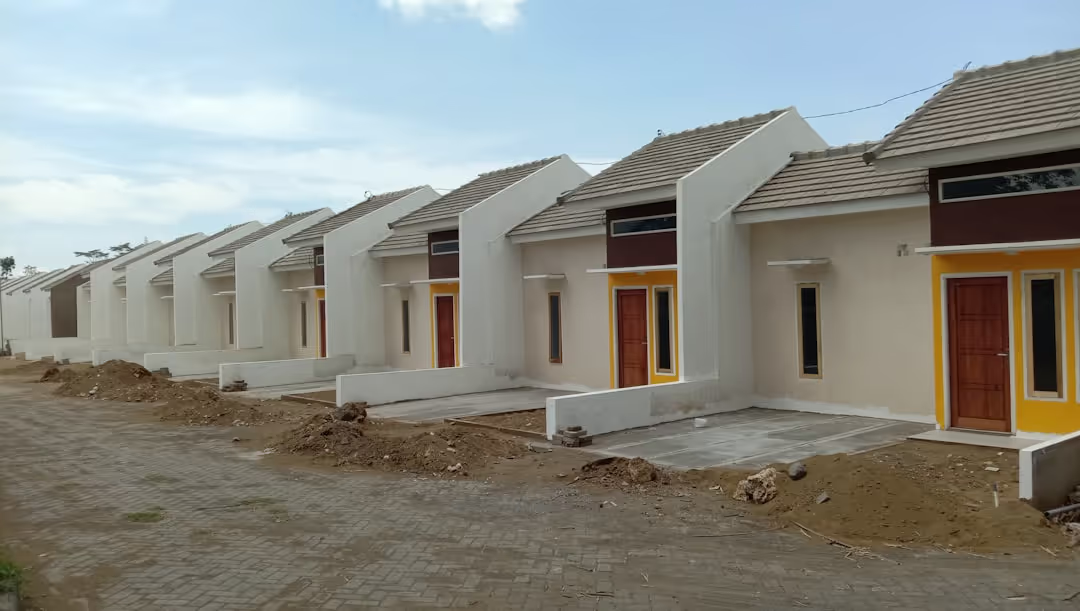
Spec home construction is the practice of building a residential property without a specific buyer lined up — on the speculation that it will sell for a profit once complete. This model differs fundamentally from custom home building, where a client is involved from the initial design phase. In the spec world, the builder acts as both the developer and the visionary, anticipating what the market wants before the market even knows it's looking for it.
In the current economic landscape, the "spec" model has evolved from a niche strategy for local contractors into a dominant force in the national housing market. With existing home inventory remaining historically low due to the "lock-in effect" of low mortgage rates from previous years, buyers are increasingly turning to new construction to find their next home. Spec homes, in particular, offer the immediate gratification that modern buyers crave.
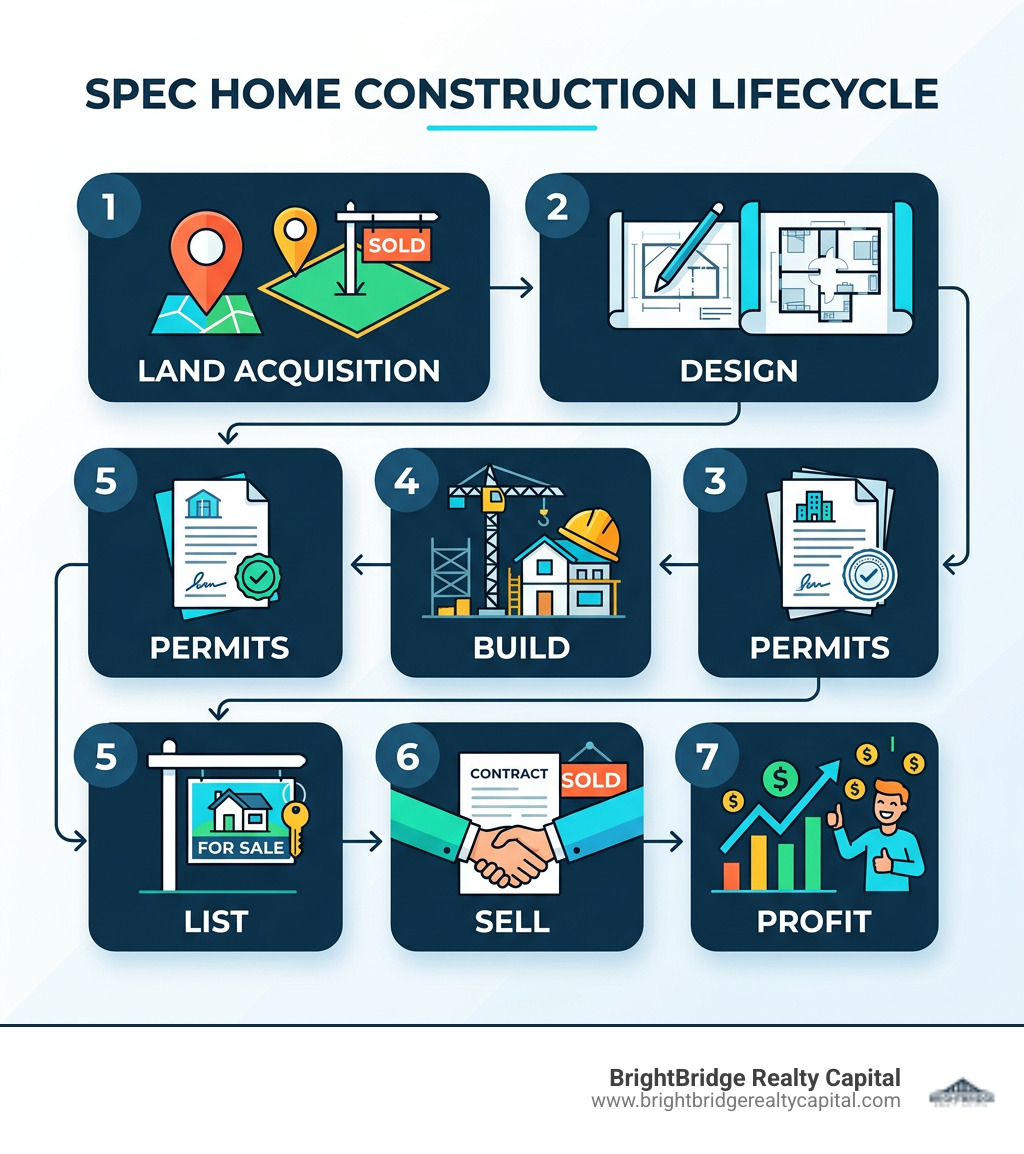
Here's a quick breakdown of how the lifecycle of a spec project works:
| Step | What Happens |
|---|---|
| 1. Land acquisition | Builder identifies and buys a lot in a high-demand target market |
| 2. Design & permits | Builder selects market-tested floor plans and secures municipal approvals |
| 3. Construction | Home is built using efficient, high-quality materials and modern designs |
| 4. Listing & sale | The completed (or near-complete) home is listed and sold to an end buyer |
| 5. Profit | Builder collects the margin after repaying financing, labor, and material costs |
The model is straightforward in theory, but executing it profitably requires a deep understanding of local demographics, construction costs, and the cost of capital. It is a high-stakes game of timing and precision. If a builder misreads the market and builds a four-bedroom home in an area trending toward young professionals, the property may sit on the market, with carrying costs slowly eroding the potential profit.
And right now, the market is paying serious attention. In 2024, spec homes made up roughly half of all new-home sales in the U.S., with completed inventory climbing 49% to 110,000 units nationwide — the highest level since 2009. This surge is driven by a combination of institutional investment and savvy local builders who recognize that the "missing middle" of housing can be filled most efficiently through speculative builds. For investors and builders who know what they're doing, this represents a significant opportunity to scale their operations.
However, it's also a market that punishes mistakes. Timing, location, design, and financing all have to work together in perfect harmony. Get one element wrong—such as over-leveraging during a period of rising interest rates or choosing a lot with unforeseen drainage issues—and holding costs will eat your margin faster than you can say "closing date."
I'm Daniel Lopez, a loan officer at BrightBridge Realty Capital, where I specialize in helping real estate investors and builders structure smart financing for projects — including spec home construction. In this comprehensive guide, I'll walk you through the nuances of the industry, from financial modeling to site selection, to help you build confidently and profitably.
Key terms for Spec home construction:
Defining Spec Home Construction: Market Realities
When we talk about Spec home construction, we are looking at a unique middle ground in the real estate world. It is a product-driven approach rather than a service-driven one. Unlike a custom build, where a client brings us a set of blueprints and a specific vision, a spec home is a product created for the "average" buyer in a specific neighborhood. This requires the builder to act as a bit of a psychologist, predicting the lifestyle needs of a family or individual they haven't met yet.
The goal is broad appeal. If we build something too quirky, overly personalized, or architecturally experimental, we risk narrowing our buyer pool to a tiny sliver of the market. In high-velocity markets like New York or Florida, where inventory levels have been historically tight, move-in-ready homes are incredibly desirable. Buyers are often willing to trade the ability to pick their own backsplash tile or flooring stain for the convenience of closing in 30 days rather than waiting 18 to 24 months for a custom build to navigate the permitting and construction gauntlet.
Spec vs. Custom vs. Model Homes
It is easy to get these terms confused, especially for those new to the development space. Let's clear the air with a detailed comparison:
| Feature | Spec Home | Custom Home | Model Home |
|---|---|---|---|
| Buyer | Unknown at start; sold to the general public | Specific client from day one with a signed contract | None (used as a marketing tool for a larger development) |
| Design | Builder-led, market-tested, and optimized for ROI | Buyer-led, highly personal, and often unique | Builder-led, "showcase" style with every possible upgrade |
| Timeline | Fast (Move-in ready or near completion) | Slow (12–24 months depending on complexity) | N/A (Serves as a permanent or semi-permanent showroom) |
| Cost | Typically lower PSF due to standardized materials | Higher PSF due to unique asks and change orders | High (includes all upgrades to show potential) |
As the inventory of new spec houses hits record highs, we are seeing a fundamental shift in buyer demographics. It’s no longer just "fix-and-flip" investors looking for a quick turn. We’re seeing families, retirees, and upwardly mobile professionals who need a new, energy-efficient home but don't have the stomach for the "decision fatigue" that comes with a custom project. They want the warranty and the modern amenities of a new build without the stress of choosing every doorknob and light fixture.
Furthermore, the rise of "Build-to-Rent" (BTR) communities has added another layer to the spec market. Some builders are now constructing entire neighborhoods of spec homes not for individual sale, but to be held as a rental portfolio. This diversification shows the versatility of the spec model in responding to different economic pressures, such as high mortgage rates making homeownership more difficult for some segments of the population.
The Financial Blueprint: Costs and Profit Margins
Let’s talk numbers, because at the end of the day, spec building is a business. You aren't doing this for the architectural exercise; you're doing it for the ROI. According to an NYU Stern report, homebuilders averaged a gross profit margin of 24.97% as of early 2025. While that sounds healthy, it is vital to remember that "gross" doesn't account for your corporate overhead, interest payments on construction loans, marketing expenses, or the taxes that come due upon sale.
Most experienced builders we work with at BrightBridge target a net profit margin of 15% to 20% on a per-square-foot (PSF) basis. To hit those numbers consistently, your construction budgeting has to be airtight. There is no room for "guesstimates" when you are dealing with hundreds of thousands of dollars in borrowed capital.
The Budget Breakdown
A realistic and professional budget for Spec home construction should be categorized into four distinct buckets:
- Hard Costs: These are the most visible expenses. They include raw materials (lumber, concrete, steel), labor (subcontractors, site supervisors), and the actual physical structure. In a volatile market, locking in material prices early or having strong relationships with suppliers is key to preventing hard cost creep.
- Soft Costs: These are the "invisible" costs that can sink a project if ignored. They include architectural and engineering fees, municipal permits, impact fees, legal fees for title work, and insurance (such as Builder's Risk insurance).
- Carrying Costs: This is where many novice builders lose their shirts. Carrying costs include property taxes, utilities (water and electricity used during construction), HOA dues, and, most importantly, the interest on your construction loan. Every day the house sits unsold after completion, your profit margin shrinks.
- Contingency Funds: We always recommend a 10% to 15% cushion. If a sudden lumber shortage hits, a foundation issue is discovered during excavation, or the local municipality demands an unexpected infrastructure upgrade, that contingency is the only thing keeping your project in the black.
Understanding PSF (Price Per Square Foot) in real estate is the primary way you will benchmark your costs against local competitors. If the average new build in your specific New York zip code sells for $400 PSF and your all-in cost (including land) is $350 PSF, you have a potential problem. You need enough "spread" to cover your selling costs (typically 5-6% in commissions) and still walk away with a meaningful win. Successful spec builders focus on "value engineering"—finding ways to reduce costs without reducing the perceived value to the buyer.
Design Strategies for Spec Home Construction
The mantra for spec design is: "Neutral, but not boring." We want the home to feel like a blank canvas, but one that was painted by a professional. The goal is to allow a potential buyer to walk through the front door and immediately visualize their own furniture and life in the space. If the walls are painted a bold purple or the kitchen features highly specific Mediterranean tiling, you are forcing the buyer to do mental work to "fix" the house, which often leads to lower offers.

When we look at the Cost vs. Value report, it’s clear that certain upgrades provide a much better return than others. For example, a massive primary suite or a chef’s kitchen usually adds more value than a finished basement in many suburban markets. Open-concept layouts remain the gold standard because they maximize natural light and make smaller footprints feel significantly larger and more inviting.
Popular Materials in Spec Home Construction
To keep costs down without sacrificing "curb appeal," we focus on materials that are durable, visually appealing, and widely accepted by the market:
- Vinyl Siding: Modern vinyl options have come a long way. High-quality architectural vinyl looks great, offers excellent insulation properties, and requires almost zero maintenance, making it a favorite for busy families.
- Quartz Countertops: Quartz has largely overtaken granite in the spec world. It is non-porous, stain-resistant, and comes in consistent, neutral patterns that mimic expensive marble without the maintenance headaches.
- Luxury Vinyl Plank (LVP): This is the "holy grail" of spec flooring. It’s waterproof, scratch-resistant, and can mimic high-end hardwood at a fraction of the cost. It is particularly appealing in homes with pets or children.
- Asphalt Shingles: While metal roofs are trendy in certain architectural styles, high-quality architectural asphalt shingles provide the best ROI for most residential builds, offering a 30-year lifespan at a manageable price point.
Essential Features for Spec Home Construction
To compete in today's market, your build should include features that address the post-2020 lifestyle:
- Dedicated Home Offices: This is no longer an optional luxury. Even a small "flex space" or a built-in desk nook can be the deciding factor for a buyer who works from home three days a week.
- Primary Suites as Sanctuaries: Double vanities, walk-in showers with frameless glass, and generous walk-in closets are non-negotiable in the modern spec market.
- Smart Home Integration: A smart thermostat, a video doorbell, and a smart garage door opener cost a few hundred dollars in total but make the home feel "cutting edge" and secure to tech-savvy buyers.
- Energy Efficiency: High-quality insulation, double-pane windows, and Energy Star-rated appliances are major selling points. As utility costs rise, buyers are looking for homes that won't break the bank to heat and cool.
- Outdoor Living: A well-defined patio or deck area extends the living space of the home. In many markets, a simple outdoor kitchen or fire pit area can significantly increase the speed of a sale.
Navigating Legalities and Site Selection
You can build the most beautiful house in the world, but if it violates Zoning laws and General Plans, it’s a very expensive lawn ornament. Site selection is perhaps the most critical phase of the spec building process. You aren't just buying dirt; you are buying a set of rights and restrictions.
Before we ever fund a loan at BrightBridge, we want to see that the builder has done their due diligence on the lot. In states like New York or California, zoning can be incredibly granular and restrictive. You need to understand the "highest and best use" of the land before you sign a purchase agreement.
Critical Site Factors:
- Setback Requirements: How far back from the road, the rear property line, or the neighbor's fence must you build? This determines the maximum "footprint" of your home.
- Deed Restrictions and Covenants: Are there old rules on the land or HOA guidelines that prevent multi-family units, specific siding colors, or even certain types of landscaping?
- Infrastructure Proximity: Is there easy access to municipal water, sewer, and power? Bringing utilities to a "bargain" lot located half a mile from the nearest connection can cost tens of thousands of dollars and months of delays.
- Topography and Soil: A lot that slopes significantly may require expensive retaining walls or specialized foundation work. Similarly, poor soil quality might require bringing in engineered fill, which adds to your hard costs.
Securing Building permits and regulations is often the longest and most frustrating part of the pre-construction phase. We recommend building a strong relationship with the local planning department and building inspectors. They aren't the enemy; they are the gatekeepers of your timeline. A builder who is known for quality work and following the rules will often find the permitting process much smoother than one who tries to cut corners.
Finally, don't forget about builder warranties. Most states require a minimum of one to two years on major systems (HVAC, plumbing, electrical) and up to ten years on structural elements. Standing behind your work isn't just a legal requirement; it's how you build a brand. In the spec world, your reputation is your most valuable asset. A builder who handles warranty claims quickly and professionally will find it much easier to sell their next project before the roof is even on.
Financing the Build: Loans and Leverage
This is where the rubber meets the road. Spec home construction requires a different kind of capital than a standard residential mortgage. You cannot walk into a retail bank and get a 30-year fixed mortgage for a house that doesn't exist yet. You need Ground Up Construction Financing that moves as fast as your construction crew does.
How Construction Loans Work
Unlike a traditional loan where you get a lump sum at the closing table, construction financing is structured around a "draw schedule." This ensures that the lender's risk is mitigated and that the money is actually being used for the project.
- The Close: We fund the purchase of the land (or a portion of it) and the initial soft costs to get the project moving.
- The Draws: As you hit specific milestones—foundation poured, framing completed, "dried-in" (roof and windows on), and interior finishes installed—we release more funds. An inspector will typically visit the site to verify the work before each draw is approved.
- Interest-Only Payments: During the construction phase, you typically only pay interest on the money you've actually drawn. This is crucial for maintaining cash flow. If you have a $500,000 loan but have only drawn $100,000 for the foundation and framing, you only pay interest on that $100,000.
Meeting Construction loan requirements usually involves showing us a detailed line-item budget, a realistic timeline, and proof of your experience (or the experience of your General Contractor). We want to see a clear path to the finish line. If you're wondering how does a construction loan work in practice, it’s all about the relationship between the builder and the lender. We provide the fuel; you provide the engine.
Leveraging Capital for Spec Home Construction
Smart investors use Real Estate Development Finance to scale their businesses. Instead of tying up all your own liquid cash in one single house, you use a loan to fund 75% to 85% of the project (Loan-to-Cost). This allows you to run two or three projects simultaneously, diversifying your risk across different neighborhoods or price points.
Construction Loans for Investors often feature higher Loan-to-Cost (LTC) ratios than traditional bank loans. Because we at BrightBridge are direct lenders, we don't have the bureaucratic red tape of a traditional commercial bank. We can often close in a week, which is a massive competitive advantage when you find a "perfect" lot that other builders are eyeing. In the spec world, speed is often just as important as the interest rate.
Risk Management and Market Timing
Every spec build is a race against the clock. The longer the house sits, the more your profit bleeds away into interest, taxes, and maintenance. Risk management isn't just about avoiding mistakes; it's about having a plan for when the market shifts unexpectedly.
Understanding Absorption Rates
Before you break ground, you must look at the "absorption rate" in your target neighborhood. This is a measure of how quickly homes are selling. If ten new homes were built in that zip code last year and it took an average of six months for each to sell, you need to budget for at least six to eight months of carrying costs after completion. If the absorption rate is slowing, it might be a sign to scale back the luxury finishes and focus on a more competitive price point.
Price Ceilings and Comps
Don't be the builder who creates the most expensive house in a modest neighborhood. Every area has a "price ceiling" that buyers are simply unwilling to cross, regardless of how nice the finishes are. If the highest a house has ever sold for in a half-mile radius is $600,000, building a spec home that needs to sell for $750,000 to be profitable is a recipe for disaster. You will end up with a beautiful home that sits on the market for a year. Always stick to the neighborhood "comps" (comparable sales).
Supply Chain and Labor Volatility
In the modern era, you must account for the risk of material price spikes. We've seen lumber prices triple in a matter of months. To mitigate this, many builders are now pre-ordering critical materials or including "escalation clauses" in their subcontractor agreements. Having a deep bench of reliable subcontractors is also vital; if your plumber disappears mid-project, your timeline can slip by weeks, costing you thousands in interest.
Exit Strategies
Always have a Plan B. If the market cools and the home doesn't sell in 90 days, what is your next move? Can you turn it into a high-end rental? This is where "Build-to-Rent" strategies come into play. Having a backup plan ensures that a temporary market dip doesn't lead to a total loss. Some builders even offer "lease-to-own" options to attract buyers who might be struggling with current down payment requirements.
Frequently Asked Questions about Spec Building
Is building spec homes a good investment in 2025?
Yes, provided you have a clear understanding of your local market and a disciplined budget. With the national housing shortage still estimated at millions of units, the demand for new, move-in-ready homes remains high. With homebuilders seeing gross margins near 25%, there is plenty of room for profit if you manage your carrying costs and build what buyers actually want.
How does a spec home differ from a custom home?
A spec home is built based on a builder's speculation of what the market wants, while a custom home is built to the specific requirements of a known buyer. Spec homes are generally faster to build and more affordable on a PSF basis because the builder uses standardized plans and materials, whereas custom homes involve constant changes and unique selections.
What are the biggest risks in spec construction?
The primary risks are market timing (the market cooling before you finish), cost overruns (materials or labor prices spiking), and "fringy" lots (buying land with hidden issues like poor drainage or zoning restrictions). Financing with a flexible lender and maintaining a 15% contingency fund are the best ways to mitigate these risks.
How long does the average spec home take to build?
From breaking ground to completion, a standard single-family spec home typically takes 6 to 10 months. However, the pre-construction phase (permitting and design) can add another 3 to 6 months depending on the local municipality. Total project lifecycle is usually 12 to 18 months.
Can I build a spec home as an individual investor?
Absolutely. Many individual investors partner with an experienced General Contractor to handle the build while they handle the financing and site selection. Working with a lender like BrightBridge can help bridge the gap for investors who have the vision but need the capital to execute.
Conclusion
Building on spec doesn't have to be a high-stress gamble. With strategic planning, a focus on market-aligned design, and strict financial discipline, Spec home construction can be one of the most rewarding and scalable ways to grow your real estate portfolio. The current housing shortage has created a unique window of opportunity for those who can deliver quality homes to a hungry market.
The key is to never go it alone. The most successful builders surround themselves with a solid team—from a talented architect and a reliable contractor to a savvy real estate agent who knows the local comps. Most importantly, you need to partner with a lender who understands the speed and nuances of the construction industry.
At BrightBridge Realty Capital, we take pride in being that partner. We don't just look at credit scores; we look at the viability of your project and your track record as a builder. We offer direct lending, fast closings (often within a week), and the flexibility that traditional banks simply can't match. We understand that in construction, time is literally money.
Ready to break ground on your next project? Whether you're an experienced developer looking to expand your pipeline or an investor looking to scale into new construction, we’re here to help you fund your vision without the traditional banking headaches.
Start your next project with BrightBridge Realty Capital today and let's get building. Your next successful spec project is just a conversation away.