Nationwide Construction Loans and Where to Find Them

Summary
Discover nationwide construction loans: Compare types, manage draws, mitigate risks, and fund your build with BrightBridge Realty Capital.
What Are Nationwide Construction Loans (And Why They Matter for Real Estate Investors)?
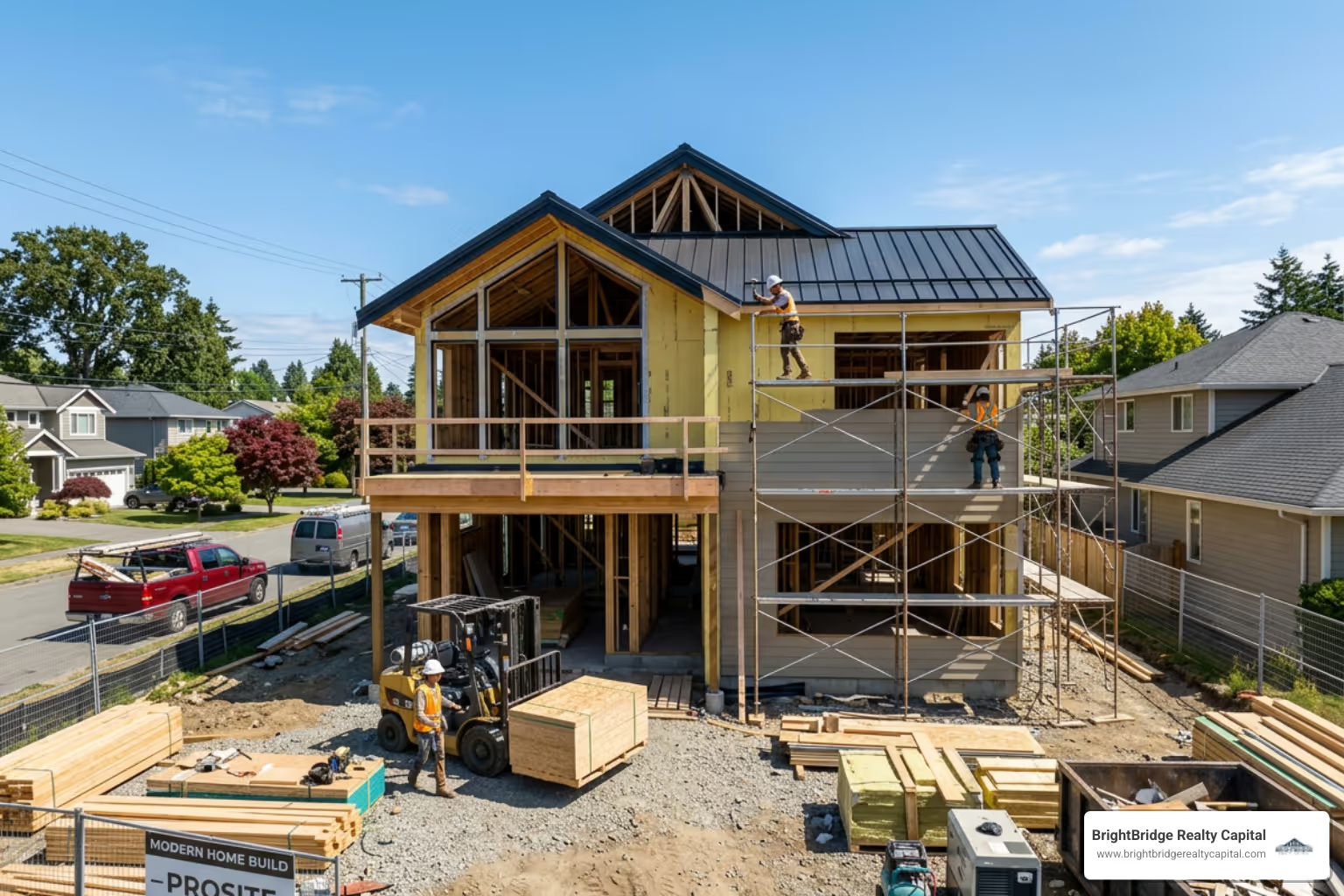
Nationwide construction loans are specialized, short-term financing solutions designed to fund the building of new structures or the significant renovation of existing ones. Unlike a traditional mortgage, where the lender provides the full purchase price at the closing table, construction financing is disbursed in stages, known as "draws," as specific construction milestones are achieved. This structure ensures that the lender's capital is protected and that the project remains on track according to the approved plans and budget.
For real estate investors, these loans are the lifeblood of development. In a market where inventory is often low, the ability to create new housing or commercial space from the ground up provides a significant competitive advantage. However, because the collateral (the finished building) does not yet exist, these loans are inherently riskier for financial institutions. This risk profile dictates the higher interest rates, stricter qualification criteria, and more intensive oversight that characterize the construction lending landscape.
Here's a comprehensive breakdown of how these loans compare to traditional financing:
| Feature | Construction Loan | Traditional Mortgage |
|---|---|---|
| Loan term | 12–48 months | 15–30 years |
| Disbursement | Staged draws (by milestone) | Lump sum at closing |
| Payments during build | Interest-only | Principal + interest |
| Rates | Variable (typically higher) | Fixed or adjustable |
| Collateral | Future value of completed property | Existing property |
| Approval difficulty | Stricter (plans, budgets, builder required) | Standard credit/income check |
| Exit Strategy | Sale or Refinance | Long-term amortization |
Construction financing is not one-size-fits-all. Depending on your specific project goals, you may be looking at several different loan products:
- Ground-up construction loans: These are intended for building from scratch on either raw land or improved lots. They cover everything from site preparation to the final certificate of occupancy.
- Construction-to-permanent loans: Often called "one-time close" loans, these automatically convert into a long-term mortgage once the construction is complete, saving the borrower on a second set of closing costs.
- Construction-only (stand-alone) loans: These are strictly short-term. Once the building is finished, the borrower must either pay the loan in full (usually by selling the property) or refinance into a separate permanent mortgage.
- Renovation/rehab loans: These are for investors purchasing distressed properties that require significant structural improvements or cosmetic overhauls before they can be rented or sold.
- Owner-builder loans: These are specialized products for licensed builders who intend to act as their own general contractor, requiring proof of expertise and financial stability.
The core challenge for real estate investors is that nationwide construction loans carry more risk for lenders because there is no finished asset to use as collateral during the build phase. This means you will face tighter qualification standards, higher interest rates, and a more complex approval process than you would with a standard mortgage. Lenders will scrutinize not just your credit, but your builder's track record, the feasibility of your project, and the local market demand.
Whether you're breaking ground on a new development or scaling a rental portfolio, understanding how these loans work—and where to find reliable nationwide lenders—can be the difference between a deal that closes on time and one that stalls entirely. I'm Daniel Lopez, a loan officer at BrightBridge Realty Capital with hands-on experience structuring nationwide construction loans for investors navigating everything from competitive fix-and-flip timelines to large-scale ground-up developments. Let's walk through everything you need to know to secure the right financing and keep your project moving.
Basic nationwide construction loans terms and related guides:
Nationwide Construction Loans vs. Standard Mortgages
When we talk about nationwide construction loans, the most important thing to realize is that they are temporary by design. Unlike a 30-year mortgage that you might hold for decades, a construction loan is a "bridge" to get you from an empty lot to a finished certificate of occupancy. This temporary nature dictates everything from the interest rate to the way the loan is serviced.
The fundamental difference lies in the collateral. With a standard mortgage, the bank looks at a house that already exists. If you stop paying, they can sell the house to recoup their investment. With a construction loan, the collateral is often just a patch of dirt and a promise. Because of this, lenders focus heavily on the "as-completed" value (ARV - After Repair Value). We aren't just lending against what the property is worth today; we are lending against what it will be worth once your vision is realized and the structure is fully functional.
Key Characteristics of Nationwide Construction Loans
Understanding the mechanics of these loans is vital for your cash flow and project management. Most nationwide construction loans share four distinct traits that set them apart from traditional debt:
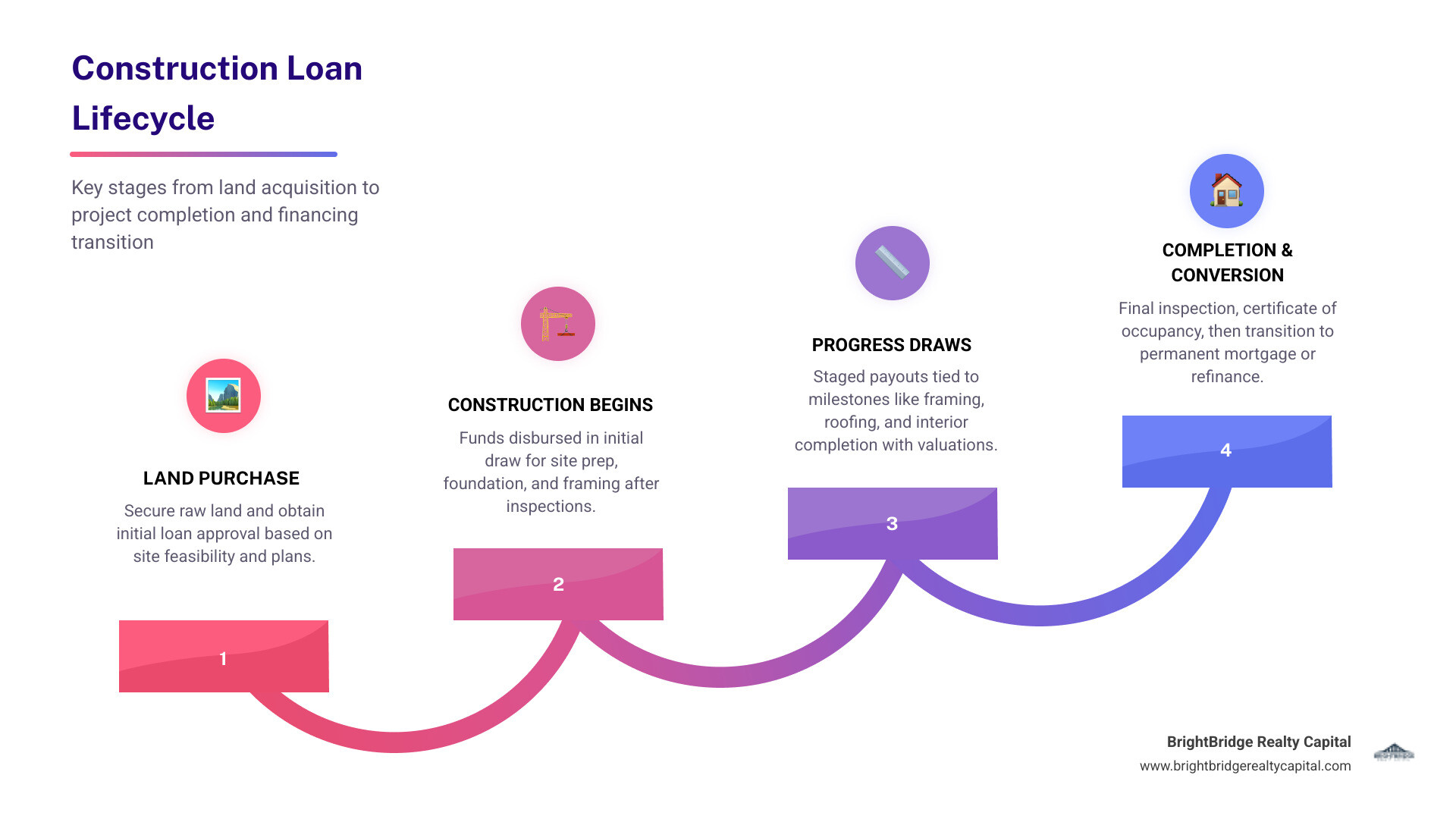
- Draw Schedules: You don't get $500,000 on day one. Instead, we set up a "draw schedule" based on your project's budget. As your builder hits specific milestones—like pouring the foundation, finishing the framing, or installing the roof—we release a "draw" of funds to cover those specific costs. This protects the lender from over-funding a project that might never be finished.
- Variable Rates: These loans usually have floating interest rates. Most are pegged to a benchmark like the Secured Overnight Financing Rate (SOFR) or the Prime Rate. If the benchmark goes up, your monthly interest-only payment might tick up too. This makes it essential to have a contingency fund for interest rate fluctuations.
- Short Terms: Expect a timeline of 12 to 48 months. This gives you enough time to build and either sell the property or refinance into a long-term Real Estate Construction Financing solution. If the project takes longer than expected, many lenders offer extension options, though these usually come with additional fees.
- Inspection Requirements: Before we release money for a draw, we typically send a third-party inspector to the site. They verify that the work you're asking to be paid for has actually been completed to a professional standard and matches the plans submitted during the application process.
Understanding Construction Loan Structures
Choosing how to structure your loan can save you thousands in closing costs and administrative headaches. Some investors prefer a "one-time close" (construction-to-permanent), which rolls the construction debt into a standard mortgage once the build is done. This is popular for long-term buy-and-hold strategies because it locks in the permanent rate early and saves on a second set of closing fees.
However, for many professional investors, a "two-time close" or a stand-alone construction loan offers more flexibility. If you plan to sell the property immediately upon completion (a fix-and-flip or spec build), you don't need a 30-year mortgage. You just need a fast, flexible construction loan that gets the job done. This allows you to move capital quickly from one project to the next without being tied down by long-term debt structures.
At BrightBridge, we focus on making this process seamless. You can learn more about what we look for by reviewing BrightBridge's Construction Loan Requirements. We prioritize speed because we know that in development, time is literally money. Every day your project sits idle is a day you are paying interest on a non-productive asset.
Types of Construction Financing and Contract Structures
The type of contract you sign with your builder is just as important as the loan itself. In fact, most lenders will scrutinize your building contract before they ever look at your credit score. Why? Because the contract determines who bears the risk if the price of lumber spikes or the project takes six months longer than expected. A poorly drafted contract can lead to disputes that freeze the funding and kill the project.
Choosing the Right Type of Nationwide Construction Loans
Depending on your investment strategy, you’ll likely fall into one of three categories, each with its own set of requirements and benefits:
- Ground-Up Development Loans: These are for the boldest investors. You are starting with raw land. These loans cover everything from "horizontal" work (roads, sewers, utilities, and grading) to "vertical" construction (the actual building). Because of the complexity of site work, these loans often require more significant equity and more detailed environmental and engineering reports. If you are looking for experienced partners in this space, check out Ground Up Construction Lenders.
- Commercial Construction Financing: This is for multifamily units, retail spaces, or industrial warehouses. These loans are often larger—sometimes upwards of $20 million—and require a deep dive into the projected income of the finished project. Lenders will look at "Debt Service Coverage Ratios" (DSCR) based on projected rents to ensure the project can support its debt once stabilized.
- Bridge-to-Construction: Sometimes you need to move fast to secure a property before your full construction plans are finalized. A bridge loan allows you to acquire the land or property quickly, which you then "take out" with a construction loan once your permits are in hand. This is a common strategy in competitive markets where sellers won't wait for a 90-day construction loan approval.
For those ready to start from the dirt up, we offer specialized BrightBridge's Ground-Up Construction Services designed to move at the speed of your business, providing the capital needed for every phase of the development lifecycle.
The Advantages of Turnkey and Fixed-Price Contracts
We generally advise investors to look toward fixed-price contracts. In a fixed-price scenario, the builder agrees to complete the project for a set amount. If the cost of materials goes up, the builder eats that cost, not you. This provides "budget certainty," which lenders love. It minimizes the risk of the loan becoming "out of balance," where the remaining loan funds are insufficient to finish the project.
A turnkey build is the ultimate version of this. The developer handles everything from design and permitting to the final coat of paint. You often pay a deposit upfront, and the rest is settled when you get the keys. This is frequently the easiest financing option because it minimizes the risk of the "meat in the sandwich" problem—where the builder demands money for work that the bank isn't ready to release yet because it hasn't been inspected.
On the flip side, "cost-plus" or "labour-only" contracts are much riskier. In these, you pay the actual cost of materials plus a percentage for the builder. If material prices double, your budget blows up. Most banks will require a much higher deposit (sometimes 40% or more) for these because the risk of a budget blowout is significantly higher. For most investors, the peace of mind offered by a fixed-price contract is worth the slightly higher initial quote from the builder.
Managing Progress Payments, Valuations, and Interest
One of the most complex parts of nationwide construction loans is the "draw" process. It’s a constant dance between you, your builder, and us (the lender). If the rhythm gets off, the project can grind to a halt, leading to disgruntled subcontractors and potential mechanics' liens on the property.
How the Draw Process Works
Think of the draw process as a series of mini-closings that happen throughout the life of the loan. Here is how we typically handle it to ensure transparency and security:
- The Request: Your builder submits a draw request or invoice for work completed (e.g., "Foundation and Underground Plumbing Complete"). This should be accompanied by lien waivers from subcontractors to prove they've been paid for previous work.
- The Inspection: We send an independent, third-party inspector to the site. They aren't checking the aesthetic choices; they are verifying that the foundation is indeed 100% finished and matches the engineering plans. They will often take photos to document the progress for the loan file.
- The Valuation: For larger or more complex projects, we might require updated valuations or "date-down" endorsements on the title policy to ensure the "as-is" value of the project still supports the amount of money we've lent and that no new liens have been filed.
- The Release: Once the inspection report is approved, we release the funds. These funds are typically sent via wire transfer to ensure the builder can pay their crew and suppliers immediately.
This rigorous process ensures that we never lend more than the property is worth at any given stage. It protects the lender's capital, but it also protects you from overpaying a builder for work that hasn't been done or for materials that haven't arrived on site. For a deeper dive into this, see our Fast Construction Loans Complete Guide.
Handling Interest and Principal Repayments
During the construction phase, you typically aren't paying back the "principal" (the actual amount you borrowed). Instead, you make interest-only payments based only on the amount of money that has been drawn down. If you have a $1 million loan but have only drawn $100,000 for the foundation, you only pay interest on that $100,000.
Even better, many of our nationwide construction loans allow for capitalized interest or an "interest reserve." This means the interest payments are built into the loan balance and paid out of the loan itself rather than out of your pocket every month. This is a massive benefit for investor cash flow, as it allows you to keep your liquid capital working on other parts of the project or on entirely different deals until the building is ready to be sold or rented.
Most of these loans use floating rates based on SOFR. While this means your payment could change if the Fed adjusts rates, construction loans are generally short-term enough that these fluctuations are manageable within a well-planned contingency budget. Understanding these nuances helps you maintain a healthy "burn rate" and ensures the project remains profitable from start to finish.
Mitigating Risks: Builder Selection and Budget Blowouts
Every construction project has surprises—it's the nature of the industry. The goal of a good financing plan is to make sure those surprises don't bankrupt you or stall your development. The two biggest risks in any project are hiring the wrong builder and failing to account for the "hidden" costs that inevitably arise.
Selecting a Qualified Building Team
Your builder is essentially your business partner for the next 12 to 24 months. We recommend looking for a builder with at least 10 years of experience in the specific type of construction you are undertaking. A builder who excels at luxury single-family homes might struggle with the regulatory requirements of a 20-unit multifamily complex.
Key things to ask for during your due diligence:
- Third-party guarantees and Warranties: Does the builder offer a structural warranty? Do they have "Performance and Payment Bonds"? These protect you if the builder goes out of business mid-build.
- Financial statements: Is the builder solvent? You don't want your loan draws being used to pay off the builder's debts from their last project. A reputable builder should be willing to provide references from their bank and major suppliers.
- References: Talk to their last three clients. Were they on time? Did they stick to the budget? Did they communicate well when problems arose? A builder's reputation in the local community is often their most valuable asset.
For help finding licensed professionals, you can search the NAHB’s directory of local home builders’ associations. This is a great starting point for finding vetted contractors in your specific region.
Documentation Needed for Nationwide Construction Loans
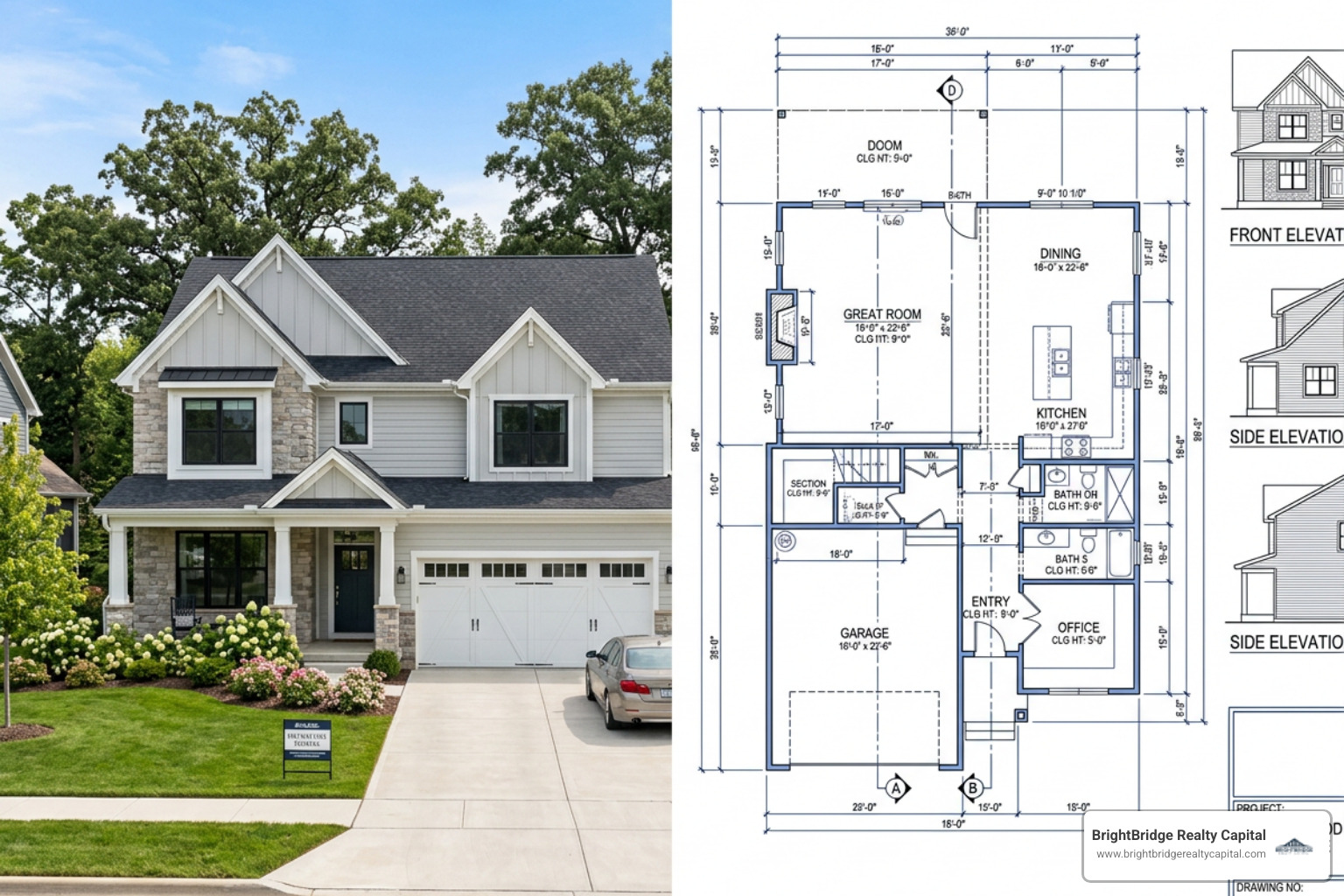
To get a "yes" from a lender, you need more than just a good credit score and a piece of land. You need a comprehensive "spec book" and a detailed project narrative. This is a document that lists every single thing going into the building—from the R-value of the insulation to the specific brand and model of the HVAC system.
You will also need to provide:
- Approved Building Permits: Most lenders will not close a loan until the permits are "ready to issue." We cannot fund a project that isn't legally authorized by the local municipality.
- Itemized Budgets (Hard and Soft Costs): Your budget should distinguish between "hard costs" (bricks, mortar, labor) and "soft costs" (architect fees, permits, taxes, insurance). It must also include a "contingency reserve" (usually 5-10% of the total cost) for the unexpected.
- Site Works and Landscaping: Many investors forget to include the cost of clearing the land, building retaining walls, or putting in a driveway. If it's not in the budget, you'll be paying for it out of pocket, which can quickly drain your cash reserves.
Detailed preparation is the key to passing Construction Loan Requirements and getting your funding in record time. The more professional your presentation, the more confidence the lender will have in your ability to execute the project.
Frequently Asked Questions about Construction Financing
What are typical equity requirements for construction loans?
Most lenders look for a "Loan-to-Cost" (LTC) ratio of 75% to 85%. This means you, as the developer, need to bring about 15% to 25% of the total project cost to the table. This equity can often be the land itself. If you bought the land for $100,000 and it's now worth $200,000 because you secured the necessary permits and zoning changes, that $100,000 in "sweat equity" or appreciation can often count toward your down payment, reducing the amount of cash you need to bring to closing.
How do PC sums lead to budget blowouts?
A "PC Sum" (Provisional Cost) is an estimate for an item that hasn't been chosen yet—like "Kitchen Cabinets: $10,000." If you later decide you want custom mahogany cabinets that cost $25,000, you just created a $15,000 hole in your budget. We recommend keeping PC sums to an absolute minimum. If your contract is full of them, your "fixed-price" contract isn't actually fixed, and you are at high risk for cost overruns that the loan may not cover.
What happens if there are construction delays or cost overruns?
Delays are common in construction due to weather, labor shortages, or supply chain issues. Most nationwide construction loans include an option to extend the loan for a small fee (often 0.25% to 1% of the loan amount). If you run into cost overruns, you will usually need to cover those out of your contingency reserve. If you run out of money entirely, you may need to bring in more equity or seek a second mortgage, though this is a position every investor wants to avoid. This is why a 10% contingency is considered the industry standard for safety.
Can I use a construction loan for a fix-and-flip?
Yes, many investors use construction-to-bridge loans for major fix-and-flip projects. If the renovation is extensive (e.g., adding a second story or changing the footprint), it is treated as a construction loan with a draw schedule. For lighter cosmetic flips, a standard bridge loan might be faster and require less documentation.
What is the minimum credit score for a nationwide construction loan?
While requirements vary, most nationwide lenders look for a credit score of 680 or higher. However, for experienced developers with a strong track record and significant equity in the deal, there may be more flexibility. The strength of the project and the experience of the builder are often just as important as the borrower's personal credit score.
Conclusion
Navigating the world of nationwide construction loans doesn't have to be a headache. Whether you are building a single-family home, a luxury spec house, or a massive multifamily complex, the key to success is alignment. Your builder, your contract, and your lender all need to be on the same page before the first shovel hits the ground. Clear communication and a well-documented plan are the best defenses against the risks inherent in ground-up development.
At BrightBridge Realty Capital, we pride ourselves on being more than just a source of cash. We are direct lenders who understand the nuances of the construction industry from the inside out. We know that every day matters, and we've built our process to support the fast-paced needs of modern real estate investors. We offer:
- Fast Closings: Often within a week for qualified projects, so you don't lose out on a prime piece of land or a time-sensitive opportunity.
- Direct Lending: No middlemen, no "broker fees," and no waiting for a committee at a big bank. You deal directly with the decision-makers.
- Nationwide Solutions: While we are based in New York, we fund projects across the country, bringing institutional-grade capital to local markets.
- Flexible Terms: We work with you to structure draws and interest reserves that match your project's specific cash flow needs.
If you’re ready to take your project from blueprint to reality, we’re here to help you build. More info about ground-up construction services is just a click away. Let's build something great together and turn your vision into a tangible, profitable asset.