Unlock Potential: Renovation Loans for Your Next Investment Project

Summary
Unlock profit! Discover how renovation loans for investment property can boost value, attract tenants, and maximize your investment ROI.
Why Renovation Loans for Investment Property Matter
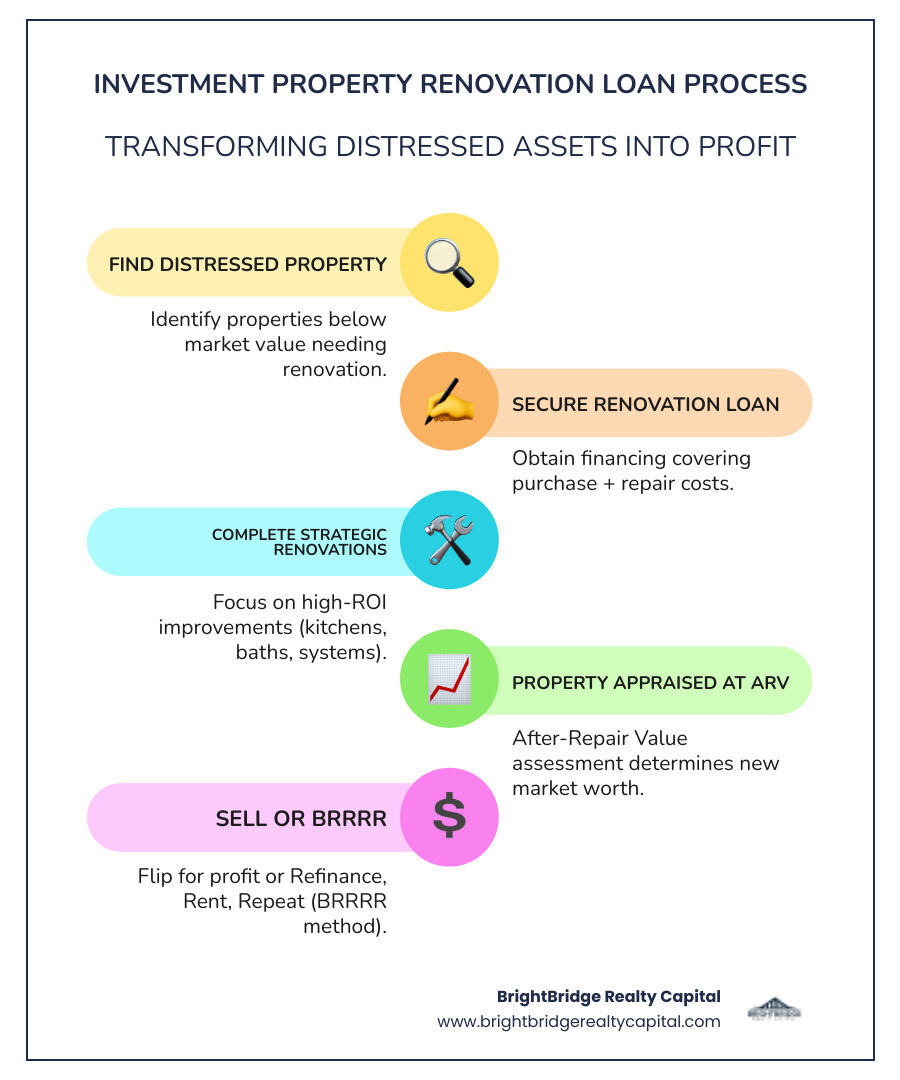
Renovation loans for investment property are a powerful financial tool that allows real estate investors to finance both the purchase and the necessary repairs of a property within a single loan agreement. This integrated approach opens up a world of opportunities that are often inaccessible to cash-only investors or those relying on separate, more cumbersome financing methods. Whether your strategy is to quickly fix and flip houses for a profit or to build a long-term rental portfolio using the BRRRR (Buy, Rehab, Rent, Refinance, Repeat) method, these specialized loans provide the capital needed to transform distressed, undervalued properties into profitable, income-generating assets.
Key benefits of renovation loans for investment property, explained:
A True Single-Financing Solution: One of the greatest advantages is the consolidation of costs. Instead of juggling a mortgage for the purchase and a separate, high-interest personal loan or line of credit for the repairs, you get one streamlined package. This means a single application, a single closing process, and a single monthly payment, significantly reducing administrative headaches and potentially lowering overall closing costs.
Leverage a Property's Future Potential: These loans are unique because they allow you to borrow based on the property's After Repair Value (ARV)—its projected market value once the renovations are complete. A traditional loan only considers the property's current, often dilapidated, condition. By lending against the ARV, you can secure more capital, enabling you to fund substantial renovations that create significant equity.
A Diverse Toolkit of Loan Types: The real estate investment world isn't one-size-fits-all, and neither are its financing options. You can choose from fast and flexible hard money loans, stable and lower-rate conventional renovation loans, or creative private funding solutions. This variety allows you to match the loan product to your specific project timeline, risk tolerance, and investment strategy.
Achieve Faster Deal Closings and Greater Competitiveness: In competitive real estate markets, speed is a critical advantage. Hard money renovation loans, in particular, offer rapid access to capital, with some lenders closing in a matter of days. This allows you to compete with cash buyers and secure promising deals before they are snapped up by others.
Generate Higher Returns on Investment: The fundamental goal of investing is to generate profit. Renovation loans enable the core strategy of value-add investing: buying a fixer-upper at a discount, forcing appreciation through strategic improvements, and then either selling it for a substantial profit (flipping) or refinancing it to pull your capital out while retaining a premium, cash-flowing rental property.
Why savvy investors use renovation loans:
Acquiring a distressed property below market value is only the first step. The real wealth creation happens during the transformation. Strategic renovations—modernizing a kitchen, updating bathrooms, improving curb appeal, or fixing major systems—are what dramatically increase the property's value and rental appeal. These improvements attract higher-quality tenants who are willing to pay premium rents, reduce long-term maintenance costs, and enable a quick, profitable sale. Renovation loans provide the necessary liquidity to execute this value-add strategy without depleting all of your personal capital on a single project, allowing you to pursue multiple opportunities simultaneously.
Different loan types serve different strategies. Hard money loans provide the speed and flexibility essential for fix-and-flip investors where every day counts. Conventional renovation loans, with their lower rates and longer terms, are better suited for buy-and-hold investors who plan to stabilize the property and refinance into permanent financing. Meanwhile, alternative options like an investment property line of credit (IPLOC) can provide experienced investors with a revolving source of capital for ongoing projects.
The right financing structure is not just a detail; it is a cornerstone of a successful real estate investment. It can be the deciding factor between a highly profitable deal and a frustrating, capital-intensive missed opportunity.
I'm Daniel Lopez, a loan officer at BrightBridge Realty Capital, and I've helped investors across the country structure renovation loans for investment property that align with their strategy—whether that's rapid flips or long-term rental growth. Let me walk you through how these loans work and which option might be best for your next project.
Renovation loans for investment property terms made easy:
Navigating the Main Types of Renovation Loans for Investment Property
When it comes to financing property makeovers, investors operate under a different set of rules and objectives than owner-occupants. While both groups aim to improve a property, an investor's primary goal is quantifiable: maximizing return on investment (ROI) and generating passive income or capital gains. This core difference leads to higher down payments, stricter qualification criteria, and a focus on the deal's economics for investment property renovation loans. Lenders shift their evaluation from the borrower's personal housing needs to the property's potential as a profitable business venture. Central to this evaluation is the After Repair Value (ARV), which allows investors to borrow against the property's future, fully-renovated potential, not just its distressed current state.
Understanding the interplay between ARV and Loan-to-Value (LTV) is fundamental. LTV represents the loan amount as a percentage of the property's value. For investment property renovation loans, this LTV is often calculated against the ARV. This means you can finance a significant portion of the total project cost (purchase price plus renovation costs) based on what the property will be worth. For example, non-owner occupied renovation loans are commonly available for up to 80% LTV based on the After-Improved Value, a powerful leveraging tool.
Let's explore the primary types of renovation loans available for investors, each designed to help you turn those diamonds in the rough into gleaming gems of real estate.
| Feature | Hard Money Loans | Conventional Renovation Loans |
|---|---|---|
| Interest Rates | Higher (often 8% to 18% or more) | Lower (more competitive) |
| Terms | Shorter (typically 6 to 24 months) | Longer (e.g., 15-30 years) |
| Speed | Very fast (days to weeks) | Slower (weeks to months) |
| Qualification | Primarily asset-based (ARV, collateral focus) | Borrower-based (credit score, income, DTI) |
| Down Payment | Can be higher (e.g., 25-35% of purchase + rehab) | Varies (often 20-30% for investment properties) |
| Best For | Fix-and-flip, quick turnaround projects | Buy-and-hold, long-term rentals, refinances |
Conventional Renovation Loans
Conventional renovation loans represent a more traditional, long-term financing path for real estate investors. Characterized by lower interest rates and extended repayment terms (often 15 or 30 years), these loans are ideal for buy-and-hold strategies. Because they are often backed by government-sponsored enterprises (GSEs) like Fannie Mae and Freddie Mac, they offer some of the most competitive rates available to those who can meet the stringent qualification standards.
For investors in New York and nationwide, the Fannie Mae HomeStyle Renovation Mortgage and Freddie Mac CHOICERenovation loan are premier options. A key advantage is that, unlike many government-backed loans (like the FHA 203k) that are reserved for owner-occupants, these conventional programs explicitly permit financing for single-unit investment properties. The HomeStyle loan allows you to roll the costs of improvements, repairs, or extensive remodels into your mortgage, as long as the improvements are permanently affixed to the property and add value. Similarly, CHOICERenovation loans provide a single-close transaction for financing the purchase and renovation of a one-unit investment property.
However, these favorable terms come with rigorous qualification criteria. For a Fannie Mae HomeStyle loan, you'll generally need a minimum credit score of 620, though many lenders prefer higher scores for investors. For a Freddie Mac CHOICERenovation loan, the minimum credit score is often 660 or higher. The underwriting process is thorough, scrutinizing your credit history, income stability, debt-to-income (DTI) ratio, and any existing real estate experience. Lenders will also require a detailed renovation plan and bids from a licensed contractor. Our team at BrightBridge Realty Capital is experienced in navigating the complex requirements of these loans, helping you assemble a compelling application package that highlights your financial strength and the project's viability.
Hard Money & Private Money Loans
If your investment strategy is built on speed and you're targeting a fix-and-flip project in a competitive market like New York, hard money and private money loans are your most powerful allies. These are short-term, asset-based loans where the lender's primary focus is the property's economic potential—specifically its After Repair Value (ARV)—rather than your personal financial profile. This asset-centric approach provides incredible flexibility and, most importantly, speed.
Hard money lenders typically finance up to 70-75% of the ARV. While these loans carry higher interest rates (often 8% to 18% or more) and origination fees (points), their short terms of 6 to 24 months are perfectly aligned with the rapid turnaround of a fix-and-flip project. They provide the capital to acquire a distressed property, fund its complete renovation, and position you to either sell for a profit or refinance into a long-term rental loan.
Understanding Hard Money Costs and Exit StrategyBeyond the interest rate, hard money loans include origination points (an upfront fee, typically 1-3% of the loan amount) and other closing costs. Payments are usually interest-only, which keeps monthly carrying costs lower during the renovation phase. The most critical component of any hard money deal is a clear and viable exit strategy. Before you even close, you must know how you will pay off the loan. The two primary exits are:
- Selling the Property (The Flip): After renovations are complete, you sell the property on the open market, using the proceeds to pay off the hard money loan and realize your profit.
- Refinancing into a Long-Term Loan (The BRRRR Method): Once the property is renovated and stabilized (often with a tenant in place), you refinance the high-interest hard money loan into a permanent, lower-rate mortgage, such as a conventional loan or a DSCR (Debt Service Coverage Ratio) loan. This allows you to pull out your initial capital and hold the property as a cash-flowing rental.
The unparalleled advantage of hard money is speed. While a conventional loan can take 45-60 days to close, a hard money loan can be funded in as little as 7-10 days. This allows you to make aggressive, near-cash offers and seize opportunities that other investors cannot.
At BrightBridge Realty Capital, we specialize in providing this kind of quick, flexible funding. As a direct lender, we eliminate intermediaries, allowing us to offer competitive rates and close deals in as little as one week. This makes us an ideal partner for investors who need to act decisively.
Alternative Financing: Beyond Renovation Loans for Investment Property
Sometimes, a standard renovation loan isn't the right tool for the job. Experienced investors in New York often build a diverse financial toolkit, using alternative methods to fund renovations by leveraging existing assets or establishing flexible credit lines.
Investment Property Line of Credit (IPLOC): For investors with a portfolio of properties and significant equity, an IPLOC is an excellent tool. It allows you to open a revolving line of credit against the equity in your existing rental properties. This functions like a powerful credit card, giving you ongoing access to funds for renovations, down payments, or other investment needs. You draw funds as needed, pay interest only on what you use, and can repay and redraw funds repeatedly. It's ideal for investors who have multiple smaller projects running concurrently.
Cash-Out Refinance: If you own an investment property with substantial equity, you can refinance the existing mortgage for a larger loan amount and receive the difference in cash. This tax-free lump sum can then be used to fund renovations on that property or another one in your portfolio. While this is a great way to access trapped equity, it does mean replacing your old mortgage with a new one, which could have a different interest rate and will reset the loan term.
Bridge Loans: These are short-term loans designed to "bridge" a financial gap, typically between the purchase of a new property and the sale of an existing one, or while waiting for long-term financing to be secured. For example, an investor might use a bridge loan to quickly purchase a new property and cover initial renovation costs while their application for a conventional renovation loan is being processed. Like hard money, they are short-term (6-12 months) and have higher interest rates, but they serve a specific strategic purpose.
Seller Financing: In some cases, you can negotiate directly with the property seller to have them finance a portion of the purchase price. This is known as a seller-carryback. This can reduce the amount of capital you need to bring to the table and the size of the loan you need from a traditional lender, making a deal possible that might otherwise be out of reach.
Business Credit Cards: While not suitable for large-scale renovations due to their high interest rates, business credit cards with a 0% introductory APR can be a strategic tool for smaller costs. They can be used for material purchases, to cover minor unexpected expenses that fall outside a draw schedule, or to manage cash flow in a pinch. This should be used with extreme caution and a clear plan to pay off the balance before the introductory period ends.
At BrightBridge Realty Capital, we understand that every investor's situation is unique. We offer customized real estate financing solutions that can encompass these alternative methods, providing you with the flexibility you need to manage your investment portfolio effectively.
The Application & Approval Process: From Blueprint to Funding
So, you've identified a property with potential and picked your financing strategy. What's next? The application and approval process for renovation loans for investment property is a meticulous, multi-step journey designed to validate the project for both you and the lender, ensuring everyone is aligned for success.

The path from concept to capital typically begins with a pre-approval, which establishes your borrowing capacity and strengthens your offers. This is followed by a deep dive into documentation, where you'll provide your financial history, entity documents, and a highly detailed renovation plan. A critical component is the contractor's Scope of Work (SOW) and budget, which outlines every facet of the project. Finally, the appraisal process, which hinges on determining the After Repair Value (ARV), will ultimately define the property's future worth and the final loan amount.
Understanding Eligibility for Renovation Loans for Investment Property
Lenders scrutinize several key factors to determine your eligibility for a renovation loan for investment property. While requirements differ between conventional and hard money lenders, these are the universal elements they will assess:
- Credit Score: For conventional loans like Fannie Mae HomeStyle, a minimum credit score of 620 is the baseline, but lenders often require 680+ for investors to secure the best terms. Freddie Mac CHOICERenovation loans typically look for 660 or higher. Hard money lenders are less focused on your FICO score, but they will still check for major derogatory events like recent bankruptcies or foreclosures. A clean credit report signals financial responsibility, reducing perceived risk even in an asset-based loan.
- Income & Debt-to-Income (DTI) Ratio: Conventional lenders will rigorously verify your income and calculate your DTI ratio to ensure you can service the new debt. For experienced investors, some lenders may consider a portion of the projected rental income from the subject property to help you qualify. Hard money lenders, by contrast, are far less concerned with your personal DTI, focusing instead on the property's ability to generate profit and your plan to pay off the loan.
- Down Payment and Liquidity: Investment properties universally require larger down payments than primary homes. While an FHA 203(k) loan (for owner-occupants) might allow a 3.5% down payment, investors should expect to contribute 20-30% for conventional renovation loans. Hard money loans often require a down payment of 10-25% of the total project cost (purchase price + rehab budget). Lenders will verify the source of these funds to comply with anti-money laundering regulations.
- Real Estate Experience (The Investor's Resume): This is especially crucial for hard money and private lenders. A proven track record of successful projects is your best asset. A strong investor resume might include a portfolio summary detailing properties you've flipped or rented, including purchase prices, rehab costs, final sale prices or rental income, and timelines. This demonstrates your ability to manage a project and deliver results, which can lead to better loan terms.
- Cash Reserves: Lenders need to see that you have a financial cushion. They will want to verify that you have sufficient liquid cash reserves to cover several months of mortgage payments (including taxes and insurance), as well as your renovation budget's contingency fund. This ensures you can handle unexpected costs or delays without defaulting on the loan, particularly when the property is not yet generating income.
Our team at BrightBridge Realty Capital can help you understand these requirements and prepare a strong application custom to your specific investment goals.
The Power of ARV: How After-Repair Value Drives Your Loan
The After Repair Value (ARV) is the single most important metric in the world of renovation loans for investment property. It represents the appraiser's expert opinion of the property's market value after all your planned renovations are successfully completed. Unlike traditional mortgages that are based on a property's current value, renovation loans unlock a property's hidden potential by allowing you to borrow against this future, enhanced value.
A Practical ARV Calculation Example:Imagine you find a distressed single-family home in a desirable New York suburb for a purchase price of $300,000. Your contractor provides a detailed bid for a full gut renovation totaling $100,000. Your total project cost is therefore $400,000.
- The Appraisal: An independent appraiser analyzes your detailed renovation plan and compares your project to recently sold, fully renovated homes (comparable sales or "comps") in the immediate vicinity.
- Determining ARV: Based on these comps, the appraiser determines that your property, once renovated to the planned specifications, will have a market value of $550,000. This is your ARV.
- Calculating the Loan Amount: A hard money lender offers to finance up to 75% of the ARV. The maximum loan amount would be $412,500 (0.75 x $550,000). This loan is more than enough to cover your entire project cost of $400,000, meaning you may only need to bring cash to closing to cover your down payment on the purchase and some initial costs.
This ARV-based lending is what makes value-add investing possible with leverage. It's also important to understand the difference between Loan-to-Cost (LTC) and Loan-to-Value (LTV). Lenders will often cap their loan at a certain LTC (e.g., 90%) and a certain LTV (e.g., 75% of ARV), whichever is lower, to ensure you have skin in the game.
The Draw Process: Managing Funds and Inspections
Once your renovation loan for investment property is approved, the renovation funds are not given to you as a lump sum. Instead, they are placed in an escrow account and disbursed through a structured "draw process." This system is designed to protect both you and the lender by ensuring work is completed to standard before funds are paid out.
Here’s a step-by-step breakdown:
- Escrow Account: The total renovation budget is held by the lender or a third-party title company in an escrow account.
- Draw Schedule: Before closing, you, your contractor, and the lender agree on a detailed draw schedule. This schedule breaks the project into distinct phases (e.g., demolition, framing, rough-ins, finishes) and assigns a portion of the budget to each.
- Work Completion & Draw Request: Your contractor completes the work for the first phase. They then submit a "draw request" to the lender for the funds allocated to that phase.
- Lender Inspection: The lender sends an inspector to the property to verify that the work outlined in the draw request has been completed satisfactorily and in accordance with the original plan. They will take photos and complete a report.
- Funding Release: Once the inspection is approved, the lender releases the funds from escrow. The funds may be wired directly to you or your contractor, as specified in your loan agreement. This process repeats for each phase of the project until it is complete.
Handling Change Orders and Delays:No renovation is perfect. When unexpected issues arise or you decide to make a change, a "change order" is created. This document details the new work and its cost. You must submit the change order to the lender for approval. Crucially, any costs associated with change orders that exceed your initial budget (including the contingency fund) must typically be paid out-of-pocket by you, the investor. This underscores the importance of thorough initial planning and a healthy contingency fund.
Strategic Renovations: Maximizing ROI and Minimizing Risk
Investing in property renovations isn't just about swinging a hammer or picking out new paint colors; it's about making calculated, strategic choices that directly increase value and market appeal. For investors using renovation loans for investment property, every dollar spent must be viewed through the lens of return on investment (ROI). The goal is to fund improvements that will contribute more to the After Repair Value (ARV), rental income, or sales price than they cost to implement.
Prioritizing Renovations for Maximum ROI
Not all renovations are created equal. Some provide a significant boost in value, while others are money pits. Successful investors focus their budgets on items that appeal to the broadest range of buyers or tenants.
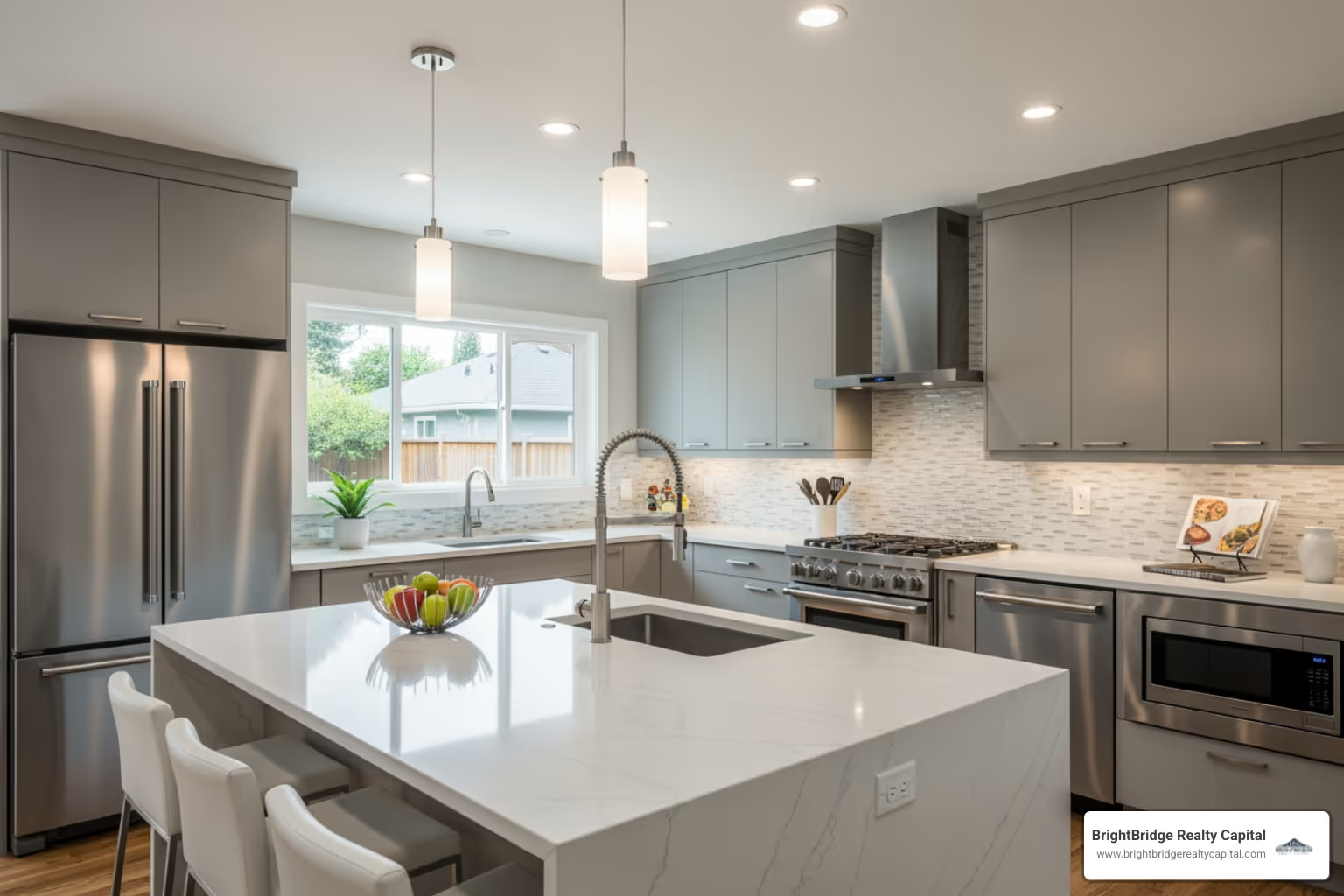
- The Money Makers: Kitchens and Bathrooms: These are the heart and soul of a property's appeal. A modern, functional kitchen and clean, updated bathrooms consistently provide the highest ROI. You don't need to install professional-grade appliances, but focusing on a mid-range remodel with clean lines, durable surfaces like quartz countertops, new cabinetry or freshly painted old ones, and stainless steel appliances can completely transform a property's perceived value.
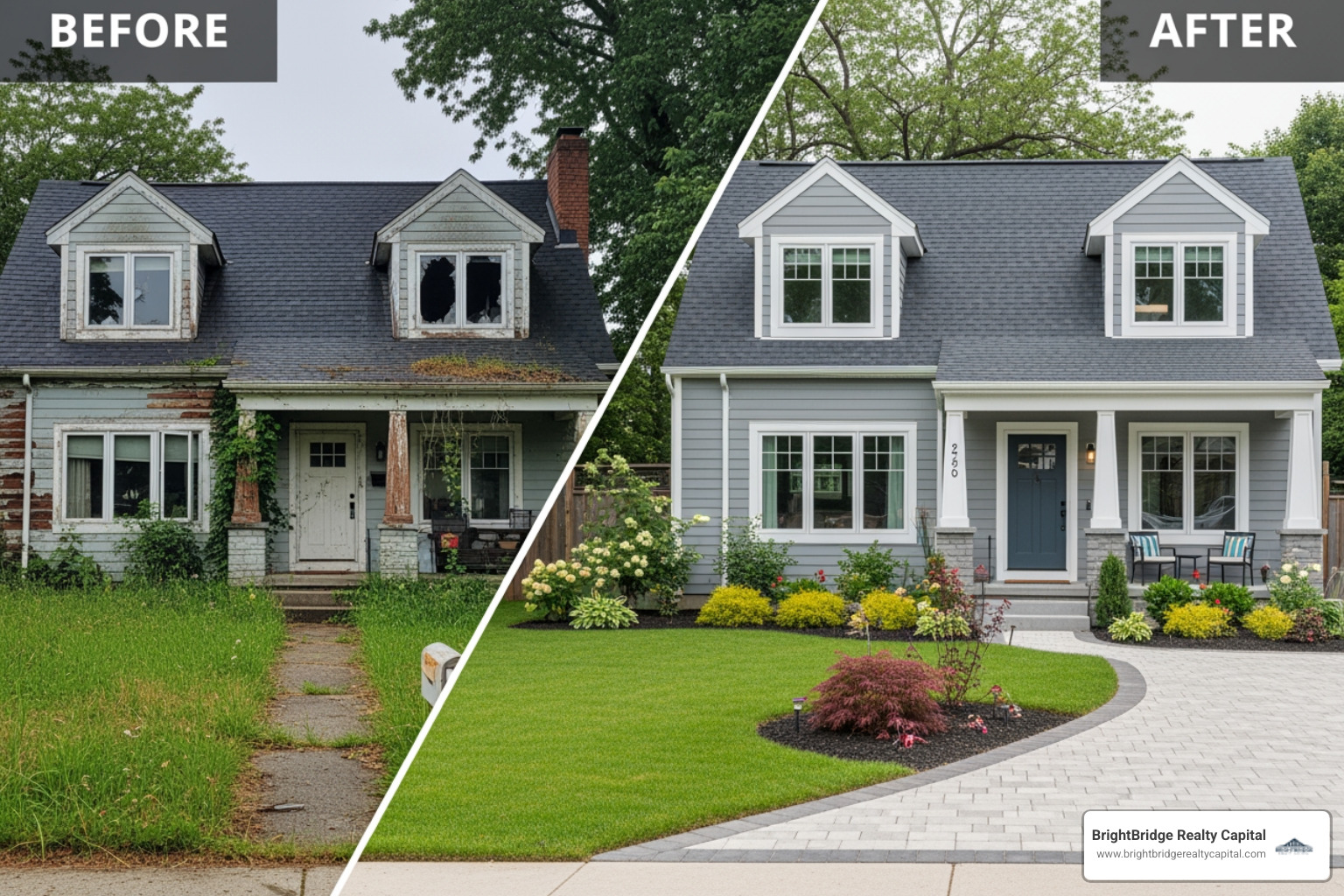
- Curb Appeal: The First Impression: A potential buyer or tenant forms an opinion within seconds of seeing a property. Low-cost, high-impact curb appeal improvements are essential. This includes fresh exterior paint, a new or painted front door, updated exterior lighting, manicured landscaping, and a well-maintained driveway or walkway. It sets a positive tone before they even step inside.
- Value-Add Renovations: Increasing Functionality: The most direct way to force appreciation is by improving a property's core stats. This can include finishing a basement to add legal living space, converting an attic into a master suite, or reconfiguring a floor plan to add a bedroom or bathroom. These projects have a high upfront cost but can dramatically increase the ARV, especially in markets where price-per-square-foot is a key metric.
- The "Unsexy" but Critical Upgrades: While a new roof, updated HVAC system, new windows, or a modern electrical panel won't be the highlight of a property showing, they are critical. These upgrades provide peace of mind to buyers and tenants, eliminate major red flags during a home inspection, and reduce your long-term maintenance liability as a landlord. Neglecting them in favor of purely cosmetic fixes is a common and costly mistake.
Budgeting, Contingencies, and Finding a Reputable Contractor
A renovation project's success hinges on meticulous financial planning and a reliable team. A project that goes over budget and past its deadline can erase your entire profit margin.
- Creating a Detailed Budget: Your budget should be a line-item spreadsheet, not a number on a napkin. Work with your contractor to create a detailed Scope of Work (SOW) that breaks down all anticipated costs for both labor and materials, from demolition and permits to final finishes and cleanup.
- The Non-Negotiable Contingency Fund: Every experienced investor will tell you to expect the unexpected. Always build a contingency fund of 10-20% of your total renovation cost into your budget. This is not "extra" money; it is a dedicated fund to cover unforeseen problems like hidden water damage, outdated wiring, or foundation issues. Without it, a single surprise can derail your entire project.
- Getting Multiple, Detailed Bids: Never accept the first quote. Obtain at least three itemized bids from different, well-vetted contractors. This allows you to compare not just the final price, but also the quality of materials, the proposed timeline, and the thoroughness of their plan. A suspiciously low bid is often a red flag.
- Vetting Your Contractor: A bad contractor can destroy your investment. Your vetting process should be exhaustive:
- Verify Licenses and Insurance: Confirm they have a valid contractor's license in your state and carry both general liability insurance and worker's compensation coverage. Ask for proof.
- Check References and Past Work: Speak to their last 3-5 clients. Ask specific questions: Did they stick to the budget? Did they finish on time? How did they handle problems? Was communication clear? If possible, visit a completed project.
- Insist on a Watertight Contract: The contract should clearly define the SOW, a payment schedule tied to completion milestones (the draw schedule), a firm timeline with penalties for delays, and details on warranties for their work.
For further guidance on home improvement loans for rental properties, Bay Management Group provides a comprehensive resource.
Exploring State and Local Renovation Programs
While most renovation loans for investment property come from national private or conventional lenders, savvy investors should always investigate state and local programs that can supplement funding or provide financial incentives. In New York, for instance, several avenues are worth exploring:
- Energy Efficiency Incentives: The New York State Energy Research and Development Authority (NYSERDA) offers various programs, rebates, and incentives for installing energy-efficient windows, insulation, heating systems, and appliances. Incorporating these upgrades can lower a rental property's utility costs (a major selling point for tenants) and provide you with cash back.
- Historic Preservation Tax Credits: If your investment property is a certified historic structure or located in a designated historic district, you may be eligible for significant state and federal tax credits for conducting a historically appropriate rehabilitation. Check with the New York State Historic Preservation Office (SHPO) for details on eligibility and requirements.
- Lead Hazard Reduction Programs: For older properties (built before 1978), lead-based paint is a major concern. Local housing authorities or health departments sometimes offer grants or low-cost loans to property owners for lead abatement. Addressing these hazards is not only a legal and ethical responsibility but also makes your property safer and more valuable.
- Local Revitalization Initiatives: Check with city or county economic development offices. Some municipalities offer grants or favorable loan terms for investors who are renovating properties in specific targeted revitalization zones, as this helps improve the local housing stock and increase property values.
Frequently Asked Questions about Investment Property Renovation Loans
What is the main difference between a construction loan and a renovation loan?
A construction loan is designed for building a new structure from the ground up on a piece of land. It involves a complex process with architectural plans, permits, and a longer timeline, with funds disbursed as the new build progresses. A renovation loan, by contrast, is for improving an existing structure. These loans are generally more flexible and are often based on the property's after-repair value (ARV). The key distinction is new-build versus existing-build; construction loans create something from nothing, while renovation loans improve what is already there.
Can I use a government-backed renovation loan for a pure investment property?
Generally, no. Most government-backed renovation loans, most notably the FHA 203(k) loan, have a strict owner-occupancy requirement. This means you must intend to live in the property as your primary residence for at least one year after the renovation is complete. While there are niche exceptions (e.g., using a 203(k) to convert a large single-family home into a 2-4 unit property where you will occupy one unit), they are not suitable for pure investment properties. Investors should focus on specialized investment property renovation loans like the Fannie Mae HomeStyle or Freddie Mac CHOICERenovation programs, or private/hard money loans. For suitable options, we encourage you to consult with BrightBridge Realty Capital.
How quickly can I get a hard money renovation loan?
Speed is the primary advantage of hard money. While a conventional renovation loan can easily take 45 to 60 days to underwrite and close, many direct hard money lenders like BrightBridge Realty Capital can close in as little as 7 to 14 business days. This rapid execution is a game-changer in competitive real estate markets, as it allows investors to make offers that can compete with all-cash buyers, securing properties quickly and starting renovations without the long delays associated with traditional bank financing.
Can I do the renovation work myself (DIY) and use a renovation loan?
This depends heavily on the lender and loan type. For conventional loans like Fannie Mae HomeStyle, the answer is almost always no. They require a licensed and insured general contractor to oversee the project to ensure the work is done to code and on schedule. Hard money lenders may be more flexible, especially if the borrower is a licensed contractor themselves or can demonstrate extensive, documented experience with similar projects. However, lenders will still heavily scrutinize the budget and timeline. The concept of "sweat equity" (your own labor) cannot typically be used as part of your down payment, but it can significantly increase your final profit margin by reducing labor costs.
What happens if my renovation goes significantly over budget?
This is precisely why a contingency fund of 10-20% is critical. If that fund is exhausted and costs continue to rise, you have limited and often costly options. The first and best option is to fund the overages with your own cash reserves. Other possibilities include seeking a second, subordinate loan (which can be difficult to find and expensive) or applying for a personal loan. In rare cases, you might be able to renegotiate with your primary lender for a loan modification, but this is not guaranteed. The best strategy is prevention: create a highly detailed budget, get multiple bids, and vet your contractor thoroughly to minimize the risk of major overages.
How is interest handled on a renovation loan during the construction phase?
For most renovation loans, particularly hard money and construction-style loans, you typically pay interest only on the funds that have been drawn and disbursed from your renovation escrow account. For example, if you have a $400,000 loan with a $100,000 renovation budget, you will initially make payments based on the $300,000 used for the purchase. After you complete the first phase of work and take a $25,000 draw, your next interest payment will be calculated on a new principal balance of $325,000. This structure helps keep your monthly carrying costs manageable during the renovation period when the property is not yet generating any income.
Conclusion: Build Your Real Estate Empire
Renovation loans for investment property are far more than a simple financing mechanism; they are a strategic lever for unlocking hidden value and accelerating wealth creation in real estate. By enabling you to combine the purchase and repair costs into a single, streamlined loan and, most importantly, to leverage a property's future After Repair Value (ARV), these financial tools empower you to turn underperforming properties into highly profitable assets.
Throughout this guide, we've delved into the diverse landscape of financing options. We've contrasted the stability and low rates of conventional renovation loans with the unparalleled speed and flexibility of hard money, and explored creative alternatives like IPLOCs and cash-out refinances for seasoned investors. We've highlighted the critical importance of understanding the eligibility requirements, the meticulous nature of the draw process, and the central role of the ARV in determining your loan's potential. Success in this arena is built on a foundation of strategic renovation choices that maximize ROI, diligent budgeting with a robust contingency fund, and partnering with reputable, vetted contractors.
At BrightBridge Realty Capital, we pride ourselves on providing customized real estate financing solutions nationwide. We specialize in delivering the quick, flexible funding that serious real estate investors need to thrive. Our commitment to fast closings, often within a week, and our status as a direct lender without intermediaries ensures a seamless, transparent process with highly competitive rates.
For investors seeking fast, flexible, and reliable funding to seize opportunities and scale their portfolio, exploring specialized rental loan programs is the critical next step. Let us be your financial partner in turning your next renovation project into a resounding success.