From Warehouse to Wealth: A Guide to Commercial Property Financing

Summary
Secure an industrial property loan for your next venture. Explore financing types, qualification, and market trends to invest wisely.
Why Industrial Property Financing is Critical in Today's Market
An industrial property loan is a specialized commercial real estate loan used to purchase, construct, refinance, or renovate income-producing industrial buildings. The industrial sector is experiencing unprecedented growth, fueled by the rise of e-commerce and fundamental shifts in global supply chains. This has pushed demand for warehouse and distribution space to record highs, causing property values to soar and creating attractive opportunities for investors who can secure competitive financing. The need for rapid delivery has intensified the demand for last-mile logistics facilities close to urban centers, while the growth in online grocery and pharmaceutical sales has created a new frontier in cold storage development. Furthermore, a trend toward onshoring and reshoring manufacturing to improve supply chain resilience is driving demand for modern production facilities. In this dynamic environment, having access to the right capital is not just an advantage; it's a necessity for capitalizing on these trends.
What is an industrial property loan?
An industrial property loan is a form of commercial real estate (CRE) financing specifically designed for properties used in industrial operations. Unlike a residential mortgage, which is underwritten based primarily on a borrower's personal income and credit, a CRE loan is evaluated on the property's ability to generate income and the borrower's business acumen. These loans are for business purposes, whether for an owner-occupied facility where a business operates or an investment property leased to one or more tenants. The loans are secured by the industrial real estate itself and are typically granted to business entities like LLCs or corporations to protect the personal assets of the investors.
Industrial properties include a diverse range of facilities, each with unique characteristics:
- Warehouses and Distribution Centers: These are the workhorses of the logistics industry. They range from massive bulk warehouses (over 500,000 sq. ft.) located near major ports and transportation hubs to regional distribution centers that service a wide geographic area, and smaller last-mile delivery stations essential for rapid e-commerce fulfillment.
- Manufacturing Facilities: These buildings are equipped for production and assembly. They are categorized as either light assembly, which involves smaller products and less intensive processes, or heavy manufacturing, which requires specialized infrastructure like reinforced flooring, high-capacity electrical systems, and overhead cranes.
- Flex/Hybrid Properties: These versatile buildings offer a combination of office space with warehouse or light industrial functions. They are popular with businesses that need administrative, R&D, and storage/distribution capabilities under one roof.
- Research and Development (R&D) Facilities: Often found in technology or life science parks, these spaces are dedicated to innovation and may include specialized infrastructure like clean rooms, laboratories, and testing equipment.
- Storage Facilities: This category includes traditional self-storage units for personal and business use, as well as more specialized industrial storage for bulk materials, equipment, or temperature-sensitive goods.
Key Features of Industrial Property Loans:
- Loan amounts typically start at $1 million but can be significantly higher for large-scale developments or portfolio acquisitions.
- Terms range from 5 to 25 years. Shorter terms (5-10 years) often come with a balloon payment, while longer terms are fully amortized.
- Amortization schedules often extend up to 30 years, which spreads out the principal repayment over a longer period, resulting in lower monthly payments and improved cash flow for the investor.
- Leverage is typically capped at 75-80% of the property's value (Loan-to-Value or LTV), though higher leverage can be achieved through programs like the SBA 504 or by adding mezzanine financing.
- Common types include conventional bank loans, government-backed SBA 504 loans, conduit (CMBS) loans, and flexible bridge financing.
Understanding your financing options is crucial. Bank loans suit stabilized properties with strong cash flow, SBA 504 loans are ideal for business owners buying their own facilities, bridge loans offer speed for value-add opportunities, and CMBS loans provide non-recourse financing for investors seeking to limit personal liability. As Daniel Lopez, a loan officer at BrightBridge Realty Capital, I've seen that aligning the right loan product with your investment strategy is the key to success in this competitive market.

Industrial property loan terms made easy:
Types of Financing for Industrial Real Estate
Financing an industrial property isn't a one-size-fits-all process. The best financing path depends on your specific goals, whether you're buying a stabilized warehouse, constructing a new distribution center, or repositioning an underused facility. Understanding the landscape of industrial property loan options helps you match the right tool to your investment strategy. A deep dive into the nuances of each loan type reveals significant differences in structure, cost, and flexibility.

Industrial financing generally falls into three categories: conventional bank loans, government-backed programs, and private or bridge loans.
| Feature | Conventional Bank Loans | Government-Backed Loans (e.g., SBA 504) | Private/Bridge Loans |
|---|---|---|---|
| Loan-to-Value (LTV) | Typically 65-75% | Up to 90% (SBA 504 combined with bank loan) | Varies, often higher for value-add (up to 75% LTC) |
| Loan Terms | 5-10 years (with balloon) or 15-20 years (amortized) | 10, 20, or 25 years (fixed-rate, fully amortized) | 6 months - 5 years (short-term, interest-only) |
| Interest Rates | Fixed or adjustable, competitive | Fixed, tied to Treasury rates, generally lower | Floating (e.g., SOFR-based), higher than conventional |
| Recourse | Often full or partial recourse | Typically partial or limited recourse | Often non-recourse, but can vary |
| Speed of Closing | Moderate to slow (45-90 days) | Slow (60-120 days due to government processing) | Fast (7-30 days) |
| Best Use Case | Stabilized properties, strong financials | Owner-occupied facilities, job creation, fixed assets | Value-add, repositioning, construction, quick acquisition |
Conventional Bank and Credit Union Loans
Traditional banks and credit unions are a primary source for commercial real estate lending. They offer competitive rates and reliable terms for qualified borrowers with strong credit and a stabilized property. These lenders provide both fixed and adjustable-rate programs, as well as term loans and construction loans for acquisitions, refinancing, or ground-up development. The underwriting process is thorough, requiring a comprehensive package including personal and business tax returns for the last three years, a personal financial statement, property rent rolls, and historical operating statements. The main trade-offs are that these are often recourse loans (meaning you are personally liable for the debt) and the underwriting process can be slower, typically taking 45 to 90 days to close. These lenders are often relationship-based, favoring borrowers with a strong local presence and a history with the institution.
Government-Backed Loan Programs
For small business owners purchasing their own industrial facility, government-backed loans from the Small Business Administration (SBA) are a powerful option. The SBA 504 loan program is specifically designed for long-term, fixed-rate financing of major fixed assets like owner-occupied buildings. Its structure is unique: a conventional bank provides a senior loan for 50% of the project cost, an SBA-certified development company (CDC) provides a junior loan for 40%, and the borrower contributes just 10% equity. This allows for up to 90% financing with repayment terms of 10, 20, or 25 years. The main requirement is that the business must occupy at least 51% of the property. Under certain conditions outlined in 13 CFR 120.882, these loans can also be used for refinancing existing debt. The SBA 7(a) program is another versatile option that can be used for real estate, working capital, and equipment. For industrial properties in rural areas, the USDA Business & Industry (B&I) Loan Guarantee Program can also be an excellent choice, offering guarantees of up to 80% on loans up to $25 million. The primary drawback of all government programs is a longer processing time due to the additional layer of agency approval.
Private and Bridge Loans
When speed and flexibility are critical, private and bridge loans are the solution. These are ideal for time-sensitive deals or value-add strategies that don't fit the conventional mold. Bridge loans are short-term financing (up to five years) designed to help you reposition a property, complete improvements, or secure an asset quickly while arranging permanent financing. Lenders focus on the property's future potential, making them perfect for value-add opportunities.
Construction loans provide capital for new builds, often with a construction-to-permanent feature that converts to long-term debt upon completion. For higher leverage, mezzanine financing can supplement senior debt. This is a form of subordinate debt that is secured not by the property itself, but by a pledge of the ownership equity in the company that holds the property. In case of default, the mezzanine lender can foreclose on the equity and take control of the property-owning entity. CMBS (Commercial Mortgage-Backed Securities) loans offer non-recourse financing with fixed rates, focusing on property strength over borrower credit. The loans are pooled together with other commercial mortgages and sold to investors on the secondary market. This structure allows for competitive rates but often comes with strict prepayment penalties. The key advantage of private and bridge loans is speed—closings can happen in as little as a week, allowing investors to seize opportunities. At BrightBridge Realty Capital, we specialize in these fast, flexible solutions.
Qualifying for an Industrial Property Loan
Securing an industrial property loan requires presenting yourself and your property as a solid, low-risk investment. Lenders conduct a thorough underwriting process to assess risk, digging into your financial health, your experience, and the property's income potential. Understanding what they look for in detail will help you position yourself as a strong candidate and secure better terms. The process is about building a compelling case that you can successfully acquire, manage, and service the debt on the asset.

The Role of LTV, LTC, and DSCR
Three key metrics dominate commercial real estate lending: LTV, LTC, and DSCR.
Loan-to-Value (LTV) Ratio: This measures the loan amount against the property's appraised value. A 75% LTV on a $2 million property means a maximum loan of $1.5 million, requiring a $500,000 down payment. For industrial properties, LTVs typically max out around 75-80%. For construction or significant renovation projects, lenders use Loan-to-Cost (LTC), which measures the loan amount against the total project cost (purchase price plus renovation budget). LTC is often more conservative than LTV.
Debt Service Coverage Ratio (DSCR): This is the single most important metric for determining a property's cash flow health. It shows if the property's income can cover its debt payments. It's calculated by dividing the Net Operating Income (NOI) by the total annual debt service (principal and interest payments). Most lenders require a minimum DSCR of 1.25x, meaning the property generates 25% more income than needed for debt payments. This provides a safety cushion against vacancies or unexpected expenses. A higher DSCR (e.g., 1.40x or above) indicates lower risk and can help you negotiate a lower interest rate. For refinancing, SBA 504 regulations in 13 CFR 120.882 define what qualifies as debt for consolidation.
Key requirements for an industrial property loan
Beyond the numbers, lenders assess the borrower's qualifications. Key requirements include:
- Experience and Financial Strength: Lenders prefer borrowers with a proven track record in commercial real estate. For financial strength, they will analyze your personal financial statement to assess your net worth and liquidity (cash on hand). Many lenders require post-closing liquidity equal to 6-12 months of debt service.
- Credit History: A strong personal FICO score (typically 680+) and a clean credit history are crucial, especially for recourse loans. For business entities, a strong business credit profile and a history of successful projects are equally important.
- Management Expertise: For owner-occupied facilities, lenders want to see an experienced management team with a solid business plan. For investment properties, they will scrutinize your plan for managing the property, whether through self-management or a professional third-party firm.
- Ability to Repay: Your historical financial statements (personal and business) and forward-looking cash flow projections must demonstrate a consistent and reliable ability to handle the proposed debt payments.
- Collateral Due Diligence: The industrial property itself serves as the primary collateral. Lenders will commission a full commercial appraisal to determine its value, a Phase I Environmental Site Assessment (ESA) to check for contamination risks, and often a Property Condition Assessment (PCA) to evaluate the building's physical state and identify any deferred maintenance.
How Industrial Financing Differs from Other CRE
Lenders often view industrial properties more favorably than other commercial real estate sectors like retail or office, which can lead to better financing terms. Here’s why:
- Lower Perceived Risk: Demand for logistics, storage, and manufacturing is resilient and often counter-cyclical, providing stability even in economic downturns.
- Stable Cash Flow and NNN Leases: Industrial properties typically have long-term leases (5-10+ years) with creditworthy tenants. Furthermore, many are structured as Triple Net (NNN) leases, where the tenant is responsible for paying property taxes, insurance, and maintenance. This creates highly predictable, passive income for the landlord and reduces operating risk.
- Strong Tenant Quality: Tenants are often large, established companies with strong credit ratings (e.g., Amazon, FedEx, major manufacturers), which significantly reduces default risk.
- E-commerce Boom: The secular growth of online shopping has created unprecedented and sustained demand, strengthening the market for commercial property funding.
- Functionality Over Aesthetics: Value is driven by functional aspects like clear heights, truck court depth, loading docks, and power capacity. These are easier to assess, quantify, and re-tenant compared to the more subjective aspects of office or retail space.
Navigating Loan Terms and Market Conditions
Understanding loan terms and market trends is essential for a successful financing strategy. The market for industrial property loan financing is dynamic, shaped by economic conditions, technological advancements, and supply chain dynamics. Staying informed helps you secure financing that aligns with your investment goals and avoid potential pitfalls. A savvy investor knows not only what terms to ask for but also how current market forces can create negotiating leverage.
Typical Loan Terms and Interest Rates
When pursuing an industrial property loan, here are the terms you can generally expect:
- Loan Amounts: Typically start at $1 million, but can range from $25,000 for small business loans to over $150 million for large institutional-grade assets.
- Amortization Periods: Often extend up to 30 years, which lowers monthly payments and improves cash flow. A loan with a 10-year term and a 30-year amortization schedule will have a large balloon payment (the remaining principal balance) due at the end of the 10th year.
- Loan Terms: The contract length can range from 3 to 25 years. Bridge loans are short-term (1-3 years), while bank and CMBS loans are longer (5-10 years), and SBA 504 loans can go up to 25 years.
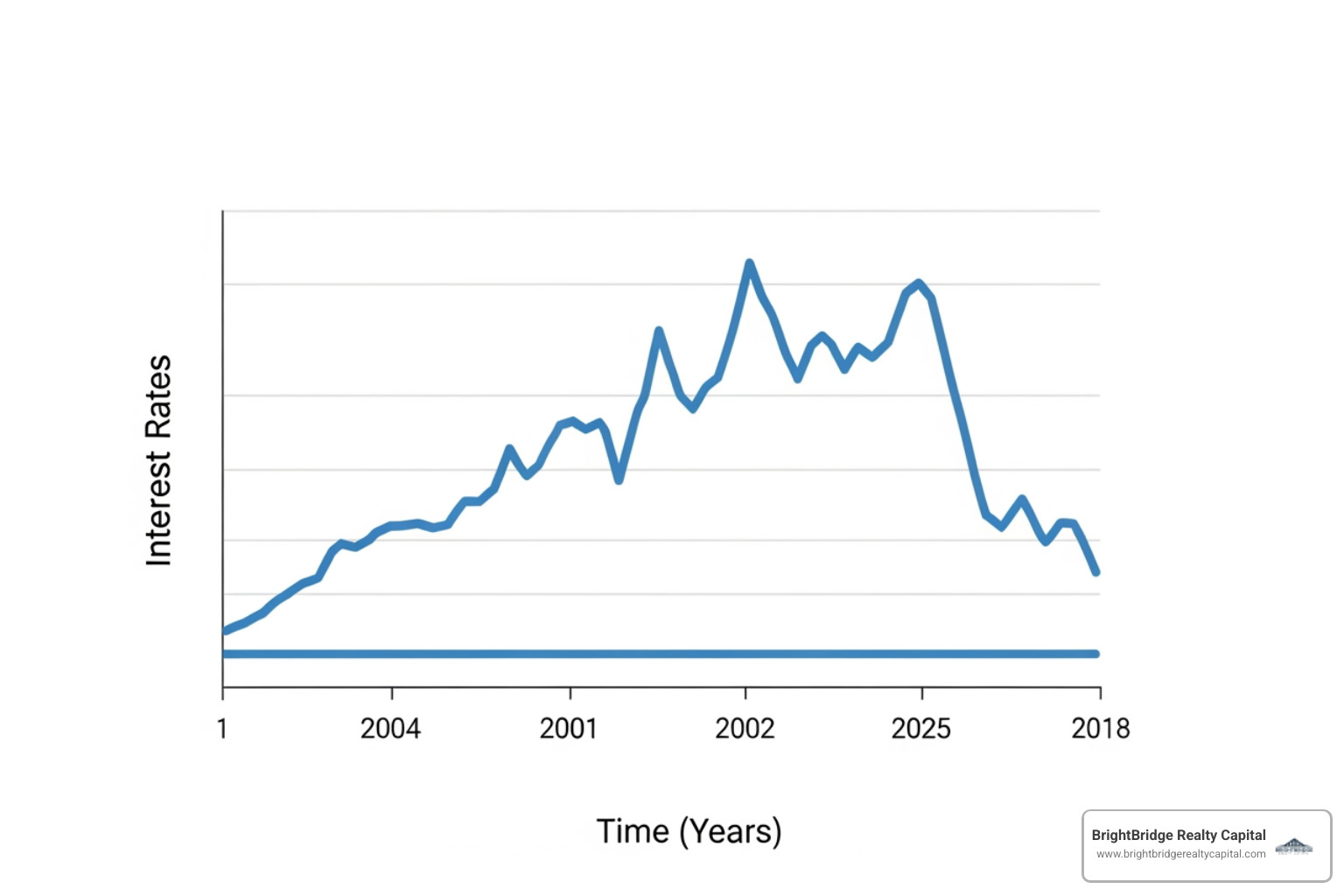
- Interest Rates: Rates vary based on asset class, location (e.g., New York, NY), tenant quality, leverage (LTV), and borrower strength (credit and DSCR). You can choose between fixed-rate loans for predictable payments and floating-rate loans. Floating rates are typically quoted as a spread over a benchmark index like SOFR (Secured Overnight Financing Rate). The spread is determined by the lender's assessment of the loan's risk.
- Recourse vs. Non-Recourse: Many bank loans are recourse, meaning your personal assets are at risk. CMBS and some bridge loans are non-recourse, limiting liability to the property itself. However, non-recourse loans always include "bad boy" carve-outs, which trigger personal liability in cases of fraud, intentional waste, or unauthorized transfer of the property.
Current Market Trends Affecting Your Loan
The industrial sector is currently very strong, which directly impacts industrial property loan availability and terms.
- E-commerce and Supply Chain Onshoring: Sustained growth in online shopping and a strategic push to bring manufacturing back to North America continue to drive massive demand for warehouse and production space.
- The Rise of Automation: Modern warehouses are increasingly incorporating robotics and automation. Lenders are becoming more sophisticated in valuing these tech-enabled facilities, which can command higher rents and valuations.
- ESG Considerations: Environmental, Social, and Governance (ESG) criteria are becoming more important. Lenders may offer preferential terms for green buildings (e.g., LEED-certified) or properties that contribute to local job creation, reflecting a broader market trend toward sustainable investing.
- Interest Rate Environment: While central bank policies cause rates to fluctuate, the underlying strength and low default rates of the industrial market keep lenders highly willing to finance strong projects, ensuring capital remains available.
- Investor Appetite: Broad investor interest, from institutional REITs to private equity and smaller players, signals deep confidence in the asset class and keeps the lending market competitive.
How to Secure Favorable Terms
Even in a strong market, strategic preparation is key to getting the best loan terms.
- Build a Strong Loan Package: A professional, comprehensive application makes a powerful first impression. This should include: a loan request summary, 3 years of personal and business tax returns, a detailed personal financial statement, year-to-date property operating statements, a full rent roll, a pro forma budget, and a copy of the purchase and sale agreement.
- Maintain Good Credit: A high FICO score and a clean financial history are critical for securing the best rates.
- Demonstrate Healthy Financials: A strong DSCR (ideally above 1.25x) and a reasonable LTV show lenders you are a low-risk borrower.
- Negotiate Key Points: Don't be afraid to negotiate terms like the interest rate, origination fees, prepayment penalties, and extension options on short-term loans.
- Shop Around: Compare offers from multiple lenders, including banks, credit unions, private capital sources, and CMBS lenders.
- Work with an Expert: An experienced financing partner like BrightBridge Realty Capital can navigate the market, connect you with the right lenders for your specific scenario, and help you close quickly—often in as little as a week.
Frequently Asked Questions about Industrial Property Loans
Here are answers to some of the most common questions we receive about industrial property loans.
Can I finance an industrial property that is still under construction?
Yes. Lenders offer specialized products for this purpose. Construction loans are short-term financing tools that fund your project in stages, or "draws," as work is completed and inspected. This ensures that loan proceeds are used appropriately for the construction process. A popular option is a construction-to-permanent loan, which starts as a construction loan and automatically converts to long-term financing once the building receives its Certificate of Occupancy. This hybrid approach streamlines the process, saving you time and money by requiring only one closing and one set of underwriting and legal fees.
What are the main differences between a fixed-rate and a floating-rate loan?
This choice impacts your budget and risk exposure.
A fixed-rate loan has an interest rate that remains the same for the entire loan term. This provides predictable monthly payments, making it ideal for long-term holds or investors who want to eliminate the risk of rising rates.
A floating-rate loan (or variable-rate loan) has an interest rate tied to a benchmark index like the Secured Overnight Financing Rate (SOFR), plus a fixed margin (e.g., SOFR + 3.00%). As the index changes, so does your payment. These loans often start with a lower rate and are well-suited for short-term strategies, like a bridge loan for a property you plan to stabilize and refinance quickly. To mitigate the risk of sharp rate increases, borrowers can often purchase an interest rate cap, which sets a ceiling on how high the rate can go.
Are industrial property loans typically recourse or non-recourse?
It varies by loan type and lender, which significantly impacts your personal financial risk.
Recourse loans mean you are personally liable for the debt. If you default and the property sale doesn't cover the loan balance, the lender can pursue your personal assets (e.g., your home, savings). Many conventional bank loans are full or partial recourse.
Non-recourse loans limit the lender's claim to the property itself. If you default, your personal assets are protected. This structure is common with larger, more sophisticated products like CMBS loans. However, all non-recourse loans have "bad boy" carve-outs. These are specific clauses that trigger personal liability for actions like fraud, misrepresentation, committing a crime on the property, or declaring bankruptcy.
Bridge loans can be either recourse or non-recourse. While non-recourse loans offer greater protection, they may come with slightly higher rates or lower leverage because the lender assumes more risk.
What are prepayment penalties and how do they work?
Prepayment penalties are fees charged by a lender if you pay off your loan before the end of its term. They are common in fixed-rate commercial loans, especially CMBS and bank loans, as they compensate the lender for the loss of future interest income. Common types include:
- Yield Maintenance: This is a complex calculation designed to ensure the lender receives the same yield as if the loan were held to maturity. It is common in CMBS loans and can be very expensive.
- Defeasance: Instead of paying a cash penalty, the borrower replaces the collateral (the property) with a portfolio of government securities (like U.S. Treasury bonds) that generates the same cash flow as the original loan payments. This is also common in CMBS loans.
- Step-Down Penalty: This is a simpler structure where the penalty is a percentage of the outstanding loan balance that declines over time. For example, a 5-year loan might have a penalty of 5% in year one, 4% in year two, 3% in year three, and so on. This is the most common type of prepayment penalty for bank and private loans.
Conclusion: Your Next Step in Industrial Real Estate
The industrial real estate market continues to present compelling investment opportunities, driven by the relentless growth of e-commerce, evolving supply chains, and the resurgence of domestic manufacturing. Warehouses, distribution centers, and manufacturing facilities are the backbone of the modern economy, making them a resilient and attractive asset class for savvy investors.
We've covered the complex landscape of industrial property loan options, from stable conventional bank loans and high-leverage government-backed programs to fast and flexible private bridge loans. We've detailed how the right choice depends entirely on your specific project—whether it's a stabilized, income-producing asset or a value-add repositioning play. Success hinges on thorough preparation: understanding key metrics like DSCR and LTV, building a comprehensive and professional loan package, and knowing how to leverage the industrial sector's favorable risk profile to negotiate better terms.
Navigating the world of commercial financing doesn't have to be overwhelming. In a market where speed and certainty of execution are paramount, having the right guidance can be the difference between securing a deal and losing it. With the right financing partner, you can cut through the complexity and secure a loan that positions you for long-term success.
At BrightBridge Realty Capital, we provide customized real estate financing solutions nationwide, with a focus on speed, simplicity, and certainty. As direct lenders, we eliminate the intermediaries and bureaucratic delays common with traditional institutions, allowing us to close deals in as little as a week. Whether you need a stabilized bridge loan to acquire a property quickly or other forms of commercial property funding to execute your business plan, we're here to make the process seamless.
The industrial property market in places like New York, NY, and across the country is strong. The fundamentals are robust, and capital is available for well-structured deals. Now is the time to act with a financing partner who can deliver.