How to Navigate Commercial Bridging Loans for Property Investors

Summary
Discover bridge loans for new construction investors: fast funding, flexible terms, and expert tips to fuel your ground-up projects.
Why Bridge Loans for New Construction Investors Are a Game-Changer in Real Estate Finance
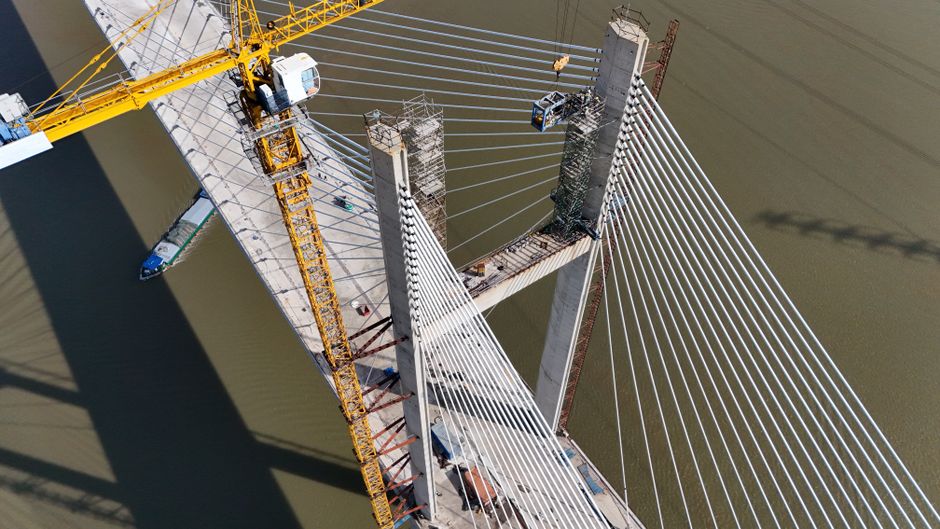
Bridge loans for new construction investors are short-term financing tools designed to fund the gap between breaking ground and securing permanent financing or completing a sale. In the current economic landscape, where traditional banking institutions have tightened their lending criteria, these asset-based loans have become the lifeblood of the residential and commercial development sectors. They provide the necessary liquidity to transform a vacant lot into a high-value asset without the bureaucratic delays associated with conventional mortgages.
Here's a quick snapshot of what you need to know:
| Feature | Typical Range |
|---|---|
| Interest Rates | 6% – 16% |
| Loan Terms | 6 – 24 months |
| Max Loan-to-Cost (LTC) | Up to 85% |
| Max Loan-to-Value (LTV) | Up to 70–85% of ARV |
| Loan Amounts | $100K – $5M+ |
| Payment Structure | Interest-only |
| Approval Speed | As fast as 15 days |
| Common Exit Strategies | Refinance or property sale |
New construction projects move fast — and traditional bank financing rarely keeps up. Permits get approved, land deals close overnight, and contractors need to be paid on schedule. A slow loan process can cost you the deal entirely. In many competitive markets, the ability to close in two weeks rather than two months is the difference between securing a prime development site and losing it to a cash buyer. Bridge loans level the playing field for investors who need to leverage their capital while maintaining the speed of a cash transaction.
That's exactly where bridge loans come in. They give investors the speed and flexibility to act decisively — whether you're acquiring land, funding a ground-up build, or finishing a mid-construction project that stalled. These loans are specifically structured to handle the unique risks of construction, such as fluctuating material costs and labor availability, by providing a flexible capital stack that evolves with the project's needs.
The challenge? Not all bridge loans are built the same. Rates, terms, eligibility requirements, and lender experience vary widely. Some lenders specialize in urban infill, while others prefer suburban subdivisions. Knowing how to navigate those differences is what separates investors who scale from those who get stuck. It requires a deep understanding of how to present a project to a lender to ensure the highest leverage and lowest possible cost of capital.
I'm Daniel Lopez, a loan officer at BrightBridge Realty Capital with hands-on experience structuring bridge loans for new construction investors across a wide range of project types and markets. From single-family spec homes to complex multi-unit developments, I've seen how the right financing structure can accelerate a developer's portfolio growth. In this guide, I'll walk you through everything you need to make a confident financing decision — from how these loans work to how to strengthen your application and plan your exit.
Bridge loans for new construction investors terms made easy:
- Direct investor financing
- Bridge loan for real estate investors
- Bridge loans for fix and flip investors
Understanding Bridge Loans for New Construction Investors
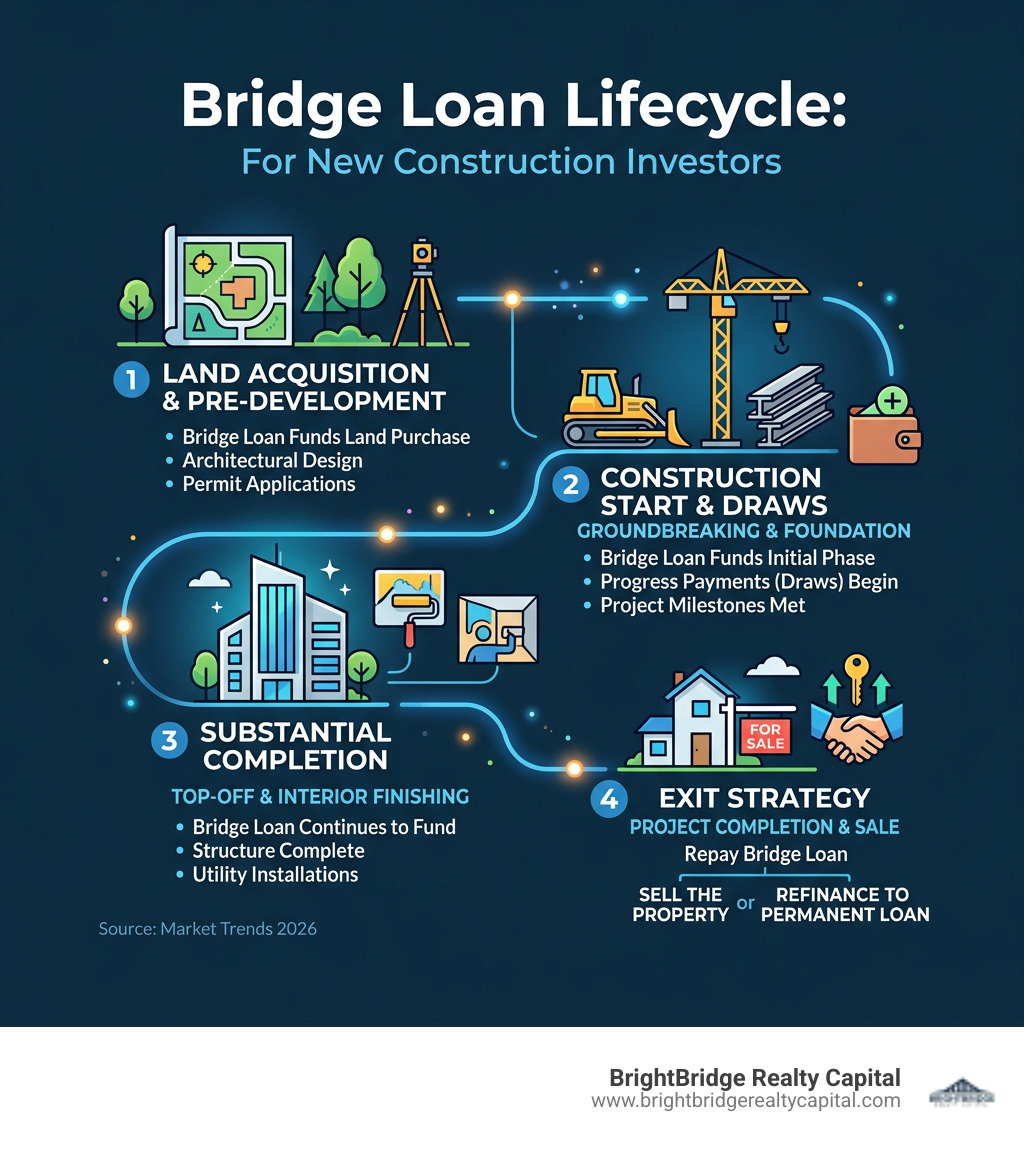
When we talk about bridge loans for new construction investors, we are describing a specific breed of collateral-based lending. Unlike a standard mortgage that looks at your personal paycheck, debt-to-income ratios, and tax returns, these loans look at the project's potential. They are designed to "bridge" the time between the initial purchase of land and the moment the building is finished and ready for a long-term mortgage or a "For Sale" sign. This focus on the asset rather than the individual borrower allows for much higher levels of creativity in how the deal is structured.
For those diving into ground-up construction loans, the bridge loan serves as the primary engine. It covers everything from the initial land acquisition to the "vertical" phase where the walls actually go up. Whether you are working on bridge-ground-up-construction-loan projects or smaller infill projects (building on vacant lots in established neighborhoods), this capital is what keeps the bulldozers moving. The loan is essentially a revolving line of credit secured by the real estate, where the value of the collateral increases as the construction progresses.
In bridge-loan-for-new-construction, the loan is often split into two parts: the purchase of the land and the construction budget. Many investors use these loans for horizontal development—getting the utilities, roads, and permits ready—before they even start on the actual houses. This "entitlement" phase is often the most difficult to finance through traditional means, making bridge loans an essential tool for land developers who need to add value before the vertical build begins.
Key Benefits of Bridge Loans for New Construction Investors
Why do savvy developers choose these over a standard bank loan? The answer usually comes down to four critical factors: speed, flexibility, leverage, and the ability to scale.
- Funding Speed: In a hot market like New York or Florida, waiting 60 to 90 days for a big bank to say "maybe" is a recipe for losing a deal. At BrightBridge, we focus on fast-construction-loans-complete-guide principles, often closing in a fraction of that time. This allows developers to capitalize on distressed land sales or time-sensitive opportunities that require immediate capital.
- Capital Flexibility: These loans are often interest-only. This is huge for your cash flow. Instead of paying down the principal while you're still waiting for the roof to be installed, you only pay the interest on the funds you have actually drawn. This keeps more cash in your pocket for unexpected costs, such as price hikes in lumber or specialized labor.
- Capital Preservation: By securing up to 85% of total project costs (LTC), you aren't tying up every cent of your own money in one project. This allows you to scale and perhaps start a second or third project simultaneously. In the world of real estate development, liquidity is king, and bridge loans allow you to keep your liquid reserves for new opportunities.
- Competitive Edge: As noted in the Forbes Guide to Construction Bridge Loans, having a reliable source of construction-project-funding allows you to waive financing contingencies. When a seller sees a pre-approval from a known bridge lender, they view your offer as nearly equivalent to cash, which can help you win bids even if you aren't the highest offer.
Using new-construction-loans-for-investors effectively means you can move as fast as the market demands, pivoting between different project types as demand shifts.
Eligibility Criteria for Ground-Up Projects
Getting approved for a bridge loan for new construction investors is different from getting a car loan. We aren't just looking at your credit score (though a 700+ is often preferred for the best rates). We are looking at the "Three Ps": Project, Property, and Person.
- Project Viability: Does the budget make sense? Is the timeline realistic? We look for a clear path from dirt to a finished building. This includes a detailed line-item budget (pro-forma) that accounts for hard costs, soft costs (permits, architectural fees), and a healthy contingency fund.
- Asset Value: The collateral is the star of the show. We look at the After Repair Value (ARV)—what the property will be worth once it's built. We use specialized appraisals that look at comparable sales of newly constructed homes to ensure the loan-to-value ratio remains within safe limits.
- Developer Track Record: While we do have programs for those with less experience, having a few successful builds under your belt definitely helps. If you're new, partnering with an experienced General Contractor (GC) who has a proven history of finishing projects on time and on budget is a great way to meet construction-loan-requirements.
- Permit-Ready Status: While some lenders require permits in hand before closing, others just need the project to be "permit-ready." This means the plans are approved by the local municipality, and you just need to pay the final fees to pull the permit. This allows for a faster closing while ensuring the project is legally viable.
- Exit Strategy: You must have a plan to pay us back. Usually, this is through selling the finished home or refinancing into a construction-to-permanent loan. We look for a "Plan B" as well—what happens if the market cools? Can the property be rented to cover the debt service?
Meeting construction-loan-credit-requirements is about proving you have the skin in the game, the financial reserves to handle overruns, and the expertise to finish what you start.
How the Financing Process and Draw Schedules Work

The process of a bridge loan is a bit like a dance. It doesn't all happen at once. Once the loan is approved and closed, the funds for the construction are usually held in "escrow" or a "construction holdback" and released in stages called "draws." This protects the lender by ensuring that money is only paid out for work that has actually been completed and verified.
The Draw Schedule
You don't get a $1 million check on day one. Instead, we follow a construction-financing-process that protects everyone involved. A typical draw schedule might look like this:
- Foundation Draw: Released once the site is cleared, the footings are poured, and the foundation is inspected.
- Framing Draw: Released once the "skeleton" of the house is up, including the roof trusses and exterior sheathing.
- Mechanical/Rough-in Draw: Released once the plumbing, electrical, and HVAC systems are installed inside the walls.
- Drywall and Finish Draw: Released once the walls are closed, painted, and flooring or cabinetry begins.
- Final Draw: Released upon receipt of a Certificate of Occupancy (CO) and final inspection.
This ensures the how-does-a-construction-loan-work cycle stays on track. It prevents the nightmare scenario of a contractor disappearing with half the budget before the walls are up. Furthermore, most bridge loans utilize an "interest reserve," where a portion of the loan is set aside to pay the monthly interest payments, meaning the developer doesn't have to make out-of-pocket payments during the build phase.
Bridge Loans vs. Traditional Bank Loans
| Feature | Bridge Loan (BrightBridge) | Traditional Bank Loan |
|---|---|---|
| Closing Time | 1–3 weeks | 2–4 months |
| Documentation | Low (No-doc options) | High (Tax returns, W2s, DTI) |
| Flexibility | High (Asset-based) | Low (Strict regulatory ratios) |
| Interest Rates | Higher (8%–12% typical) | Lower (6%–8% typical) |
| Experience | Preferred but flexible | Strict multi-year requirements |
| LTC/LTV | Up to 85% LTC | Often capped at 65-70% LTC |
Typical Terms and Rates for Bridge Loans for New Construction Investors
Let's talk numbers. Because bridge loans for new construction investors are higher risk for the lender (it’s harder to sell a half-finished house than a whole one!), the rates are higher than a 30-year mortgage. However, the speed and higher leverage often result in a higher Return on Equity (ROE) for the developer.
- Interest Rates: Typically range from 6% to 16%. In today's market, many construction-loan-interest-rates for ground-up projects hover around 10% to 11%. These rates are influenced by the borrower's experience and the project's location.
- Loan-to-Cost (LTC): We can often fund up to 80% or 85% of the total project cost. This includes the purchase price of the land and 100% of the construction budget. This high leverage is what allows developers to keep their capital moving across multiple sites.
- Origination Fees: Expect to pay 1% to 2.5% of the loan amount as an upfront fee. This covers the cost of underwriting, legal review, and setting up the draw management system.
- Term Length: Usually 12 to 24 months. This is designed to give you enough time to build and sell, with a small buffer for delays.
- Extension Options: Most of our loans include the ability to extend for 3 to 6 months if weather or supply chain issues slow you down. Keeping an eye on construction-loan-rates-today is vital for planning your budget, as some extension options may involve a rate adjustment.
Property Types and Project Stages
Bridge loans aren't just for single-family houses. We see a huge variety of projects that require specialized funding structures:
- Single-Family Residential: The classic ground-up build for a spec home or a custom client.
- Multi-Family Units: Building a 4-plex or a small apartment building. We specialize in multifamily-construction-loans for investors looking to create long-term rental income or sell the entire building to a REIT.
- Mixed-Use: Projects with retail or office space on the bottom and apartments on top. These require a lender who understands both commercial and residential valuation.
- Mid-Construction Funding: Did your original lender run out of money? Or did you start with cash and now need a boost to finish? We provide construction-completion-financing to get you across the finish line, even if the project is already 50% complete.
Comparing Alternatives and Managing Risks
Every investment has risks, and new construction is the "extreme sport" of real estate. Cost overruns are the most common pitfall, often driven by unforeseen site conditions or sudden spikes in commodity prices. According to Reuters industry data on financing, material costs can fluctuate by 10% or more in a single quarter, which can quickly erode a developer's profit margin if not properly managed.
When looking at a bridge-loan-vs-construction-loan-guide, you have to weigh the cost of capital against the cost of delays. A "cheaper" bank loan that takes four months to close might actually cost you more in lost time, rising material prices, and missed market windows than a bridge loan you get in two weeks. In a rising interest rate environment, the speed of execution is often more valuable than a 1% difference in the interest rate.
CNBC market demand insights suggest that the biggest risk right now isn't just building the house—it's the "exit." If interest rates for home buyers spike, your finished house might sit on the market longer than expected. This is why having a "Plan B" (like turning the property into a rental) is essential. Smart investors build in a 15% contingency in their budget and a 3-month contingency in their timeline to account for these market shifts.
Strengthening Your Application and Documentation
Want to get a "Yes" faster? Be organized. When we review construction-loan-documentation, we love to see a "deal book" that tells the story of the project from start to finish. A well-prepared application reduces the lender's perceived risk and can often lead to better terms.
Your Application Checklist:
- Detailed Budget: Don't just guess. Have a line-item breakdown of every nail and board, including soft costs like permits and engineering.
- Construction Timeline: A Gantt chart or a clear schedule showing when each phase starts and ends, including milestones for inspections.
- Purchase Contract: For the land or the existing structure, showing a clear title and any contingencies.
- Zoning & Permits: Proof that you are legally allowed to build what you're planning. If permits aren't issued, show the status of the application.
- The Team: Bios or resumes of your General Contractor, Architect, and Project Manager. We want to see that the team has done this before.
- Liquidity Proof: Bank statements showing you have the cash for the down payment and the first few months of construction before the first draw.
Getting a construction-loan-pre-approval before you even find the land can give you a massive advantage when negotiating with sellers, as it proves you are a serious and capable buyer.
Common Pitfalls and Exit Strategies
The most dangerous part of a bridge loan is the "maturity date." If your 12-month loan is up and the house isn't finished, you could face heavy penalties, default interest rates, or even foreclosure. Managing the timeline is just as important as managing the budget.
Common Exit Strategies:
- The Sale: Selling the property to a homeowner or another investor. This is the most common exit for spec builders.
- Refinance: Moving the debt into a 30-year DSCR loan once the property is "stabilized" (built and rented). This is the preferred strategy for "Buy and Hold" investors.
- The "Bridge-to-Bridge": If the project is almost done but needs three more months due to a slow city inspector, we can sometimes refinance you into a new, short-term bridge-financing-real-estate-development product to avoid default.
Always watch out for interest rate fluctuations. If rates go up while you're building, your exit refinance might be more expensive than you planned, which could impact your long-term cash flow. We recommend running your numbers at several different interest rate scenarios to ensure the project remains profitable even in a "worst-case" market.
Frequently Asked Questions about New Construction Bridge Financing
What is the typical timeline for closing a bridge loan?
While banks take months, we move at the speed of business. Once we have your full package—including your budget, plans, and contractor info—we can often issue a term sheet within 24 hours. Closing typically takes 10 to 15 business days. The main bottlenecks are usually the appraisal and the title search, so starting those early is key to a fast close.
Can I get a bridge loan if I have no previous development experience?
Yes, but you’ll need a strong team. If you haven't built a house before, we will look closely at your General Contractor’s experience. We want to see that someone on the project knows how to handle ground-up-construction-financing and the physical build. We may also require a slightly higher down payment (lower LTC) for first-time developers to mitigate the risk.
What happens if my project exceeds the 12-24 month loan term?
Don't panic, but don't wait until the last day to call us. Most short-term-construction-loans have extension clauses built into the contract. You might have to pay an extension fee (typically 0.25% to 1% of the loan balance), but it’s a standard part of the business. Communication is the most important factor; lenders are much more likely to work with you if you provide regular updates on your progress.
Do bridge loans require a personal guarantee?
In most cases, yes. While the loan is primarily based on the asset, most private lenders require a personal guarantee from the principals of the LLC. This ensures that the developer remains committed to finishing the project. However, there are "non-recourse" options available for very large projects or for borrowers with exceptionally strong balance sheets.
Can I use a bridge loan to buy the land and then get construction funding later?
Absolutely. This is often called a "land bridge." You can use the initial loan to secure the property while you finalize your architectural plans and permits. Once you are ready to break ground, we can modify the loan or refinance it into a full construction bridge loan that includes the build budget.
How do inspections work during the construction phase?
When you request a draw, we send a third-party inspector to the site. They aren't there to check for code compliance (that's the city's job); they are there to verify that the work you are asking to be paid for has actually been completed. They will take photos and sign off on a report, which then triggers the release of funds. This process usually takes 3 to 5 business days.
Conclusion
Navigating bridge loans for new construction investors doesn't have to be a headache. At BrightBridge Realty Capital, we pride ourselves on being more than just a source of cash—we are your partners in the build. With our roots in New York and a nationwide reach, we understand the local nuances that make or break a development project, from the high-density requirements of urban centers to the sprawling needs of suburban developments.
Whether you need a stabilized-bridge loan to hold a finished property while you wait for the right buyer, or a ground-up construction loan to start your next masterpiece from the dirt up, we offer the fast-track funding and direct lending expertise you need to stay ahead of the curve. Our goal is to provide the capital that allows you to focus on what you do best: building and developing.
Ready to break ground? Let's build something great together. Reach out to our team today to see how we can customize a financing solution for your next project and help you scale your real estate investment business to new heights.